Zum Druck wechseln
 Weiterlesen







































 Bei Kunstwerken oder Reproduktionen, die an einer Seite größer als 105 cm (ca. 41 Zoll) sind, wird der Rahmen zerlegt als Bausatz geliefert. Diese Methode gewährleistet eine sichere Zustellung und verhindert Schäden während des Transports.


A Visual Dialogue with Modernity
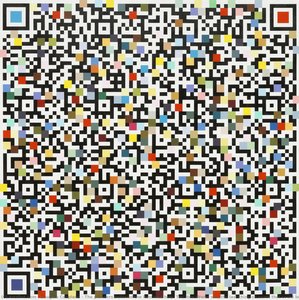
In the evocative piece Meditation on Plastic and Stacking Studies, the boundary between the tangible and the ephemeral dissolves into a profound exploration of our contemporary condition. Douglas Coupland, an artist renowned for his ability to diagnose the subtle anxieties of the digital age, presents us with a visual composition that feels both architectural and deeply introsive. The work invites the viewer into a grand, vaulted space—a sanctuary of thought where the weight of physical materials meets the lightness of conceptual inquiry. Through a masterful arrangement of forms, Coupland captures the essence of an era defined by rapid technological shifts and the pervasive presence of synthetic life, turning what could be mere industrial observation into a poetic meditation on existence.
The composition is anchored by a striking interplay of geometry and color. Within a setting reminiscent of a classical rotunda or a modern museum atrium, several vibrant sculptures appear to float, suspended in a delicate dance beneath a central dome. This arrangement creates a rhythmic tension; while the room itself suggests stability and permanence, the colorful, layered elements introduce a sense of kinetic energy and flux. The contrast between the monochromatic architectural backdrop and the vivid, saturated hues of the hanging pieces serves as a metaphor for the intrusion of modern consumer culture into our traditional structures of meaning. It is a scene that demands attention, pulling the eye upward in a gesture of both awe and scrutiny.
The Symbolism of the Synthetic Era
At its core, this work functions as a layered commentary on the materials that define our lives. By focusing on plastic—a substance synonymous with both convenience and ecological consequence—Coupland forces a confrontation with the textures of modern consumerism. The "stacking studies" within the piece suggest an accumulation of history, waste, and innovation, much like the digital layers of data that constitute our current reality. Each sculpture acts as a totem of the Anthropocene, representing the way human ingenuity and industrial output have physically reshaped the planet. There is a haunting beauty in this recognition; even in the critique of environmental impact, there is an undeniable aesthetic allure to the bright, synthetic forms that Coupland so skillfully manipulates.
For the discerning collector or interior designer, this artwork offers more than just visual splendor; it provides a sophisticated intellectual anchor for any space. The piece possesses a unique ability to transform a room, acting as a focal point that sparks conversation and invites deep contemplation. Whether placed in a minimalist contemporary gallery or a richly textured residential study, Meditation on Plastic and Stacking Studies brings with it an atmosphere of intellectual curiosity and modern elegance. It is a profound choice for those who seek art that does not merely decorate a wall, but rather challenges the viewer to look closer at the very fabric of the world they inhabit.
Fragen & Antworten
Kann ich "Meditation on Plastic and Stacking Studies" von Douglas Coupland unter verschiedenen Lichtverhältnissen sehen?
„Meditation on Plastic and Stacking Studies“ kann auf der Röntgenblick-Seite des Kunstwerks Schicht für Schicht untersucht werden – ein Viewer, inspiriert von der Leuchttisch eines Restaurators, mit elf optischen Ebenen des Bildes.
Kann ich Augmented Reality nutzen, um "Meditation on Plastic and Stacking Studies" von Douglas Coupland in meinem Raum zu sehen?
Auf der AR-Vorschau-Seite von "Meditation on Plastic and Stacking Studies" von Douglas Coupland können Sie das Kunstwerk mithilfe von Augmented Reality auf einem kompatiblen Gerät direkt in Ihren eigenen Räumlichkeiten erleben.
Ist "Meditation on Plastic and Stacking Studies" von Douglas Coupland im Hoch-, Quer- oder Quadratformat angeordnet?
Das Format von „Meditation on Plastic and Stacking Studies“ ist Portrait. Dies ist hilfreich bei der Planung, wo eine Reproduktion platziert werden soll.
 Vorschau anzeigen
 Versenden
 Teilen
 Details anzeigen
 Leitfaden

 Herunterladen
 Ähnliche Objekte
 Röntgenaufnahme
 Diashow
 Q&A
Q&A Statistiken