

 Versenden als Grußkarte
 Teilen
 Details anzeigen
 Leitfaden öffnen

 Herunterladen
 Ähnliche Objekte
 Diashow
 Besucherstatistiken
LA GLORIFICATION DE SAINT ANTOINE DE PADOUE


 Mehr anzeigen
Giclée / Kunstdruck
Giclée- oder Leinwanddruck in Museumsqualität mit schneller Produktion und flexiblen Veredelungsoptionen. ( Handgemalte Reproduktion kaufen Zum digitalen Bild wechseln)




































Wählen Sie aus unseren vordefinierten Formaten, die den ursprünglichen Proportionen des Kunstwerks entsprechen.

Sie können Ihre eigenen Maße eingeben, um ein bestimmtes Format oder einen speziellen Platz einzupassen. Wenn das von Ihnen gewählte Format nicht den Proportionen des Originalbildes entspricht, werden wir das Kunstwerk entweder beschneiden oder das Bild mit einem gespiegelten oder einfarbigen Rand erweitern. Ein digitaler Entwurf wird Ihnen zur Genehmigung zugesandt, bevor die Produktion beginnt.
Bitte beachten Sie, dass die Vorschau auf dem Bildschirm nicht den tatsächlichen Zuschnitt oder die Erweiterung widerspiegelt. Nur der Entwurf zeigt die endgültige Komposition präzise an.
Obwohl Sondermaße verfügbar sind, empfehlen wir die Auswahl eines Maßes aus der vordefinierten Liste, um die ursprünglichen Proportionen zu bewahren.
Weltweiter Versand () innerhalb von 2 Wochen statt der üblichen 4/5 Wochen. (27 September)

Kostenloser weltweiter Expressversand

Hochwertige Leinenleinwand

Vollständiger Versicherungsschutz beim Versand

Zollgebühren-Rückerstattungsgarantie

Garantie für exakte Farbtreue

100-tägiges Rückgaberecht (nur bei Mängeln)

100% Geld-zurück-Garantie

Angebot für Mengenrabatt
 Die Glasoption ist nur für Größen unter 110 cm verfügbar.

LA GLORIFICATION DE SAINT ANTOINE DE PADOUE
Giclée / Kunstdruck
Format der Reproduktion
-


Gesamtpreis
$ 80
A Celestial Dance: Unveiling Donato Creti’s “La Glorification de Saint Antoine de Padoue”
Donato Creti's "La Glorification de Saint Antoine de Padoue" isn’t merely a fresco; it’s an immersive experience, a vibrant testament to the theatricality and spiritual fervor of the Baroque era. Painted in 1728 for the church of San Giorgio Maggiore in Venice, this monumental work depicts a pivotal moment in the life of Saint Anthony of Padua – his ascension into heaven, surrounded by angels and enveloped in a cascade of golden light. The sheer scale of the fresco, combined with Creti’s masterful handling of color, texture, and movement, immediately commands attention, drawing the viewer into a world of divine grace and ecstatic celebration.
Creti's artistic journey was marked by a fascinating transition. Initially trained in architectural depictions under his father, Gioseffo Creti, he quickly embraced the dramatic potential of painting, particularly within the context of religious subjects. His relocation to Bologna proved crucial, exposing him to the established artistic traditions of the city and allowing him to refine his skills before returning to Venice. This period saw a shift from purely decorative elements towards a more profound engagement with narrative and emotional expression – qualities that are powerfully evident in “La Glorification de Saint Antoine.”
The Language of Light and Movement: Technique and Composition
The fresco’s technique is a testament to Creti's skill and the enduring legacy of the *buon fresco* method. Applied directly to freshly laid, wet plaster – a process demanding meticulous planning and execution – the pigments meld seamlessly with the material, creating an astonishingly durable and luminous surface. Observe closely how the artist builds up layers of color, starting with lighter tones in the background to create a sense of depth and receding space. The swirling clouds are rendered not as static forms but as dynamic masses of color and texture, conveying a palpable feeling of movement and ascension.
The composition itself is a carefully orchestrated spectacle. At its heart lies a female figure – often interpreted as the Virgin Mary or another divine intermediary – seated on a cloud, radiating serenity and offering guidance to Saint Anthony’s ascent. The saint himself, identifiable by his characteristic brown habit, rises dramatically towards her, surrounded by a host of angels engaged in a swirling dance of praise and adoration. Below, a collection of figures, likely representing devotees or saints, gaze upwards with expressions of reverence and hope. The arrangement isn't haphazard; it’s a deliberate pyramid of visual energy, culminating in the central figure and radiating outwards.
Symbolism Woven into Divine Glory
Beyond its immediate visual impact, “La Glorification de Saint Antoine” is rich with symbolic meaning. The dominant use of gold isn't simply decorative; it represents divine light, grace, and the glory of heaven. The upward trajectory of Saint Anthony’s ascent symbolizes his spiritual journey towards salvation – a potent metaphor for the aspirations of all believers. The angels themselves embody heavenly joy and celebration, their wings outstretched in a gesture of welcoming and adoration. Even the carefully chosen colors contribute to the overall message: blues and whites evoke purity and spirituality, while browns and creams ground the scene in earthly reality.
A Legacy of Baroque Drama
“La Glorification de Saint Antoine de Padoue” stands as a remarkable example of Creti’s artistic prowess and his ability to capture the emotional intensity of the Baroque style. While foreshadowing elements of the Rococo's more playful approach, it retains the drama, theatricality, and profound spiritual depth that characterize this pivotal period in art history. Its enduring appeal lies not only in its technical brilliance but also in its capacity to transport the viewer to a realm of celestial beauty and divine grace – a testament to the power of art to inspire awe and reverence.
Biografie des Künstlers
Donato Creti: Leben und Werk
Frühes Leben und Ausbildung
Donato Creti (geboren am 24. Februar 1671 in Cremona, Italien – gestorben am 31. Januar 1749) war ein bedeutender italienischer Maler der Rokoko-Periode, hauptsächlich in Bologna tätig. Sein Vater, Gioseffo Creti, war ebenfalls Maler, jedoch von geringerer Bekanntheit und spezialisiert auf architektonische Malerei. Die Familie zog früh in das Leben von Donato nach Bologna. Er begann seine künstlerische Ausbildung bei Giorgio Rasparini und wurde später Schüler von Lorenzo Pasinelli, einer bedeutenden Figur, die mit der Bologneser Schule der Malerei verbunden ist, die von Guido Reni stammt.
Künstlerische Entwicklung und Einflüsse
Creti zeichnete sich schnell als begabter Schüler aus und erhielt den Spitznamen ‘ragazzino’ für seine Frühreife. Er profitierte vom Mäzenaturschutz von Conte Alessandro Fava, der ihm Möglichkeiten zur Studien- und Schaffensarbeit verschaffte. Frühe Einflüsse waren die Fresken der Carracci-Brüder und ein potenzieller Besuch in Venedig. Sein Stil entwickelte sich, zeigte zunächst Veronese-inspirierte Theatralik in architektonischen Umgebungen. Er lernte von Pasinelli, entwickelte aber einen einzigartigen Ansatz, der über rein dekorative Elemente hinaus zu einer formaleren, neoklassizistischen Sensibilität hinausging.
Wesentliche Merkmale des Stils Creti
- Akademischer Großstil: Creti's Werk ist durch einen bewussten und raffinierten Ansatz gekennzeichnet, der sich an klassischen Prinzipien orientiert.
- Manneristisches Neoklassizismus: Eine Mischung aus eleganten Formen mit einer etwas stilisierten und präzisen Modellierung von Figuren.
- Mythologische und allegorische Themen: Er stellte häufig Szenen aus der Mythologie und Allegorien dar, oft durchdacht und intellektuell.
- Himmelsbeobachtungen: Eine besondere Eigenheit seines Œuvres ist die Reihe kleiner Leinwände, die Himmelskörper gegen nächtliche Landschaften darstellen.
Wichtige Leistungen und bemerkenswerte Werke
Creti’s wichtigste Leistung liegt in seiner Reihe von Gemälden, die 1711 von Graf Luigi Marsili in Auftrag gegeben wurden. Diese Darstellungen der Sonne, des Mondes, eines Kometen und der fünf bekannten Planeten (Merkur, Venus, Mars, Jupiter, Saturn) sollten ein Geschenk an Papst Clemens XI sein. Ziel war es, die Gründung eines Observatoriums in Bologna zu befürworten – ein Ziel, das letztendlich mit päpstlicher Unterstützung verwirklicht wurde. Jupiter aus dieser Reihe ist besonders bemerkenswert für seine genaue Darstellung des Großen Roten Flecks und mindestens zweier Monde.
Weitere bedeutende Werke umfassen:
- Die Mystische Hochzeit der Heiligen Katharina von Alexandrien
- Allegorischer Grabstein von Joseph Addison
- Artemisia, die die Asche von Mausolus trinkt
Historische Bedeutung und Vermächtnis
Wittkower beschrieb Creti als den “Bologneser Marco Benefial”, der seine Übergänge von den dekorativen Tendenzen des Rokokos zu einem strukturierteren neoklassizistischen Stil hervorhebt. Er spielte eine Rolle bei der Gestaltung der künstlerischen Landschaft Bolognas im 18. Jahrhundert und beeinflusste mehrere Künstler, darunter Aureliano Milani, Francesco Monti und Ercole Graziani the Younger. Seine einzigartige Kombination aus wissenschaftlichem Interesse (demonstriert durch seine astronomischen Gemälde) mit künstlerischer Begabung macht ihn zu einer faszinierenden Figur in der Kunstgeschichte.
Schüler
- Aureliano Milani
- Francesco Monti
- Ercole Graziani the Younger
- Domenico Maria Fratta
- Giuseppe Peroni

Donato Creti
1671 - 1749 , Italien
Eckdaten zum Künstler
- Artistic Movement Or Style: Rokoko und Neoklassizismus
- Artists Who Influenced This Artist:
- Carracci Brüder
- Lorenzo Pasinelli
- Paolo Veronese
- Date Of Birth: Feb 24, 1671
- Date Of Death: Jan 31, 1749
- Full Name: Donato Creti
- Nationality: Italienisch
- Notable Artworks:
- Jupiter
- Mercury und Paris
- Saint Bernardin
- Astronomische Saturn
- Allegorische Tomb von Joseph Addison
- Place Of Birth: Cremona, Italien
Verwandte Artikel

Das Familienerbe an die Wand bringen: Wandgemälde als Generationenschatz
Verwandeln Sie Ihre Familiengeschichte in ein beeindruckendes Wandgemälde! Expertenrat & hochwertige Handwerkskunst für einzigartige Kunstwerke, die Generationen verbinden. Entdecken Sie jetzt!

The Enduring Legacy of Fresco: Technique, History & Artistic Expression Across Cultures
Explore the rich history & enduring legacy of fresco painting! Discover ancient techniques, Giotto's masterpieces, and modern applications. Expert insights for art lovers & professionals.
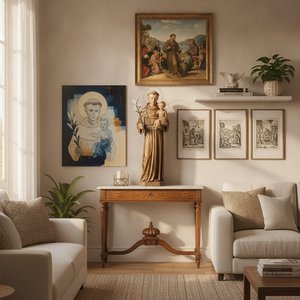
Discover the Divine: Inspiring Saint Anthony Artworks to Elevate Your Home Decor
Transform your home with the profound beauty of Saint Anthony artworks. Explore exquisite Baroque reproductions by Murillo and Zurbarán, hand-painted on 100% cotton canvas to bring divine serenity and timeless elegance to your interior design.

Drama and Light: A Definitive Guide to the Italian Baroque Masterpieces and the Revolution of Chiaroscuro
Explore the dramatic world of Italian Baroque art. Discover how masters like Caravaggio used chiaroscuro and tenebrism to revolutionize painting through light, shadow, and profound realism. A definitive guide for history lovers and art collectors.

The Enduring Legacy of Fresco Painting: Techniques, History & Contemporary Relevance
Explore the rich history & enduring artistry of fresco painting – from Giotto to Michelangelo! Discover techniques, conservation efforts, & modern applications. Learn how OriginalUniqueArt brings this timeless art form to your home.