Versenden als Grußkarte
 Teilen
 Details anzeigen
 Leitfaden öffnen

 Herunterladen
 Ähnliche Objekte
 Diashow
 Besucherstatistiken
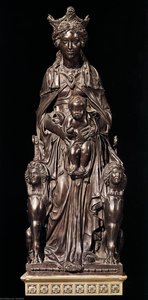
Crucifixion
 Bronze
- Skulptur
- Renaissance Sculpture
 1465
1465- Renaissance
 93.0 x 70.0 cm
 Museo Nazionale del Bargello
 Mehr anzeigen
Handgefertigte Ölreproduktion
Handgemaltes Ölgemälde auf Leinwand in Ihrer Wunschgröße und mit Rahmen, auf Bestellung von unseren Künstlern angefertigt. ( Zum Druck wechseln Zum digitalen Bild wechseln)




































Wählen Sie aus unseren vordefinierten Formaten, die den ursprünglichen Proportionen des Kunstwerks entsprechen.

Geben Sie die Breite und die Höhe an, die Sie für Ihren Rahmen oder Ihre Wand benötigen. Da dieses Werk handgemalt ist, kann der Künstler bei einer anderen Form etwas mehr um das Bild herum malen oder etwas abschneiden – Sie entscheiden. Wir senden Ihnen ein digitales Mockup zur Freigabe, bevor mit dem Malen begonnen wird. Das auf dieser Seite gezeigte Bild stellt nicht das tatsächliche Ergebnis dar – dies tut nur das Mockup.
Nach der Bestellung wird das OriginalUniqueArt.com-Team dem Kunden Anweisungen per E-Mail zusenden und eine Mockup-Vorschau bereitstellen.
Weltweiter Versand () in nur 3 bis 4 Wochen statt der üblichen 5 Wochen. (21 Oktober). Keine Kompromisse bei der Qualität.

Kostenloser weltweiter Expressversand

Hochwertige Leinenleinwand

Vollständiger Versicherungsschutz beim Versand

Zollgebühren-Rückerstattungsgarantie

Garantie für exakte Farbtreue

100-tägiges Rückgaberecht (nur bei Mängeln)

100% Geld-zurück-Garantie

Angebot für Mengenrabatt
 Die Glasoption ist nur für Größen unter 110 cm verfügbar.

Crucifixion
Reproduktionsmedium
Format der Reproduktion
-


Gesamtpreis
€ 262
A Moment Frozen in Time: Donatello’s Crucifixion
The bronze sculpture “Crucifixion” by Donatello stands as an enduring testament to the artistic fervor of the Florentine Renaissance, capturing not merely a biblical narrative but also the profound emotional complexities inherent within it. Created in 1465 for Santa Croce Basilica in Florence, this masterpiece transcends its religious subject matter to become a cornerstone of humanist ideals and sculptural innovation.The Artist’s Vision: Classical Influence Meets Spiritual Depth
Donatello (1386-1466), born into a family of sculptors, emerged as one of the foremost figures shaping the artistic landscape of his era. His formative years were steeped in classical sculpture—the rediscovery and emulation of Greek and Roman forms fueled an unprecedented stylistic revolution. Unlike preceding medieval art, which prioritized stylized representations and symbolic ornamentation, Donatello championed anatomical accuracy and naturalistic detail, mirroring the humanist preoccupation with human form and intellect. This commitment to realism is palpable throughout his oeuvre, most notably in “David,” a monumental statue that redefined nude sculpture and cemented Donatello’s reputation as a pioneer of Renaissance aesthetics.Technical Mastery: Bronze Casting and Anatomical Precision
The Crucifixion exemplifies Donatello's unparalleled technical skill. Crafted from bronze—a material chosen for its durability and ability to capture subtle nuances of form—the sculpture underwent a complex casting process, utilizing the lost wax method. This technique allowed for exceptional precision in replicating human anatomy, resulting in a remarkably lifelike depiction of Jesus Christ on the cross. Donatello meticulously studied cadavers to achieve an unprecedented level of anatomical accuracy, surpassing previous artistic conventions and establishing a new standard for sculptural representation. The surface finish is polished to a luminous sheen, enhancing the sculpture’s visual impact and conveying a sense of solemn grandeur.Symbolism and Narrative Resonance: A Reflection of Renaissance Thought
Beyond its technical brilliance, “Cruifixion” resonates deeply with the philosophical currents of the Renaissance. The sculpture portrays Jesus Christ in agony—a deliberate choice that underscores the humanist preoccupation with human suffering and mortality. Unlike depictions emphasizing divine majesty, Donatello’s portrayal focuses on Christ's physical torment, prompting contemplation on themes of compassion, sacrifice, and redemption. The positioning of Christ’s body—with arms outstretched—is a deliberate allusion to classical iconography, symbolizing humility and acceptance of divine judgment. Furthermore, the sculpture’s placement within Santa Croce Basilica served as a powerful visual reminder of Christian faith and spiritual devotion.Emotional Impact: A Timeless Expression of Suffering
“Cruifixion” continues to captivate viewers centuries after its creation due to its profound emotional impact. Donatello skillfully conveys Christ's anguish through subtle gestures and facial expressions—a testament to his mastery of psychological realism. The sculpture’s solemn atmosphere evokes feelings of empathy and reverence, prompting reflection on the human condition and the significance of faith. Its enduring presence within Santa Croce Basilica ensures that “Cruifixion” remains a poignant symbol of Christian piety and artistic excellence, inspiring awe and contemplation for generations to come.Further Exploration
For those interested in delving deeper into Donatello’s legacy, consider visiting Museo Nazionale del Bargello in Florence, where David resides alongside numerous other sculptures showcasing his distinctive style. Examining reproductions of “Crucifixion” can offer valuable insight into the artistic innovations that defined the Florentine Renaissance and solidified Donatello's place as one of history’s greatest sculptors.Fragen & Antworten
Welcher Kunstrichtung lässt sich "Crucifixion" von Donatello zuordnen?
„Crucifixion“ ist ein Werk der Renaissance Sculpture. Die Stilrichtung gibt die künstlerische Tradition an, der das Werk angehört.
Welcher Strömung und welcher Epoche ist "Crucifixion" von Donatello zuzuordnen?
In "Crucifixion" von Donatello trifft die Renaissance Sculpture-Strömung auf die Ära der Renaissance.
Welche Emotion vermittelt "Crucifixion" von Donatello?
Die für "Crucifixion" von Donatello festgelegte emotionale Stimmung ist Melancholisch. Sie fasst das Gefühl zusammen, das das Werk ausdrückt.
Biografie des Künstlers
Frühes Leben und Karriere
Donato di Niccolò di Betto Bardi, bekannt als Donatello, wurde um 1386 in Florenz, Italien geboren. Er studierte klassische Bildhauerei, was seine Entwicklung eines frühen Renaissance-Stils stark beeinflusste. Dieser neue Ansatz für Kunst und Kultur sollte schließlich zum Kennzeichen der florentinischen Renaissance werden.Schlüsselwerke und Innovationen
Donatellos berühmtestes Werk, David, war seit der Antike die erste freistehende nackte männliche Skulptur. Sie wurde von der Familie Medici in Auftrag gegeben und zeigte seinen innovativen Stil und seine technische Expertise. Zu den anderen bemerkenswerten Werken gehören:- St. Louis von Toulouse (jetzt im Museum der Basilika di Santa Croce), das einen klassischen Rahmen aufwies, der von Donatello entworfen wurde.
- Das Opfer des Isaak, geschaffen für den Campanile von Santa Maria del Fiore in Florenz, zeichnete sich durch starke Porträtdetails aus.
- Kreuzifix (1425) für Santa Croce, das Christus in einem Moment der Agonie darstellte.
Künstlerischer Stil und Vermächtnis
Donatellos Stil lässt sich in breite Phasen einteilen, beginnend mit der Entwicklung von Ausdruckskraft und klassischer Monumentalität. Seine Arbeit wurde nicht sofort von der Gemeinschaft akzeptiert, entwickelte sich aber schließlich zum beliebtesten und beeinflusste andere italienische Höfe und europäische Künstler. Wichtige Kunstbewegungen:Persönliches Leben und Arbeitsweise
Donatello war bekannt dafür, liebenswert und gutmütig zu sein, aber schlecht in der geschäftlichen Seite seiner Karriere. Er nahm oft mehr Aufträge an, als er bewältigen konnte, und vollendete Werke häufig verspätet oder übergab sie anderen Bildhauern. Bemerkenswerte Kunstwerke und Künstler:- Leonardo da Vinci: Ankündigung (Detail)
- Amico Aspertini: Statua di Pan/Leone che azzanna un cavallo
- Michelangelo Buonarroti: Tondo Pitt
Museen und Kunstsammlungen:
- Museo della Collegiata (Empoli, Italien): Ein verstecktes Juwel der Renaissance mit Werken von Francesco Botticini und Raffaello Botticini.
- Die frühe italienische Kunstbewegung der Renaissance

Donatello
1386 - 1466 , Italien
Eckdaten zum Künstler
- Beeinflusste Künstler:
- Leonardo da Vinci
- Michelangelo Buonarroti
- Bemerkenswerte Werke:
- David
- St. Louis von Toulouse
- Das Opfer des Isaak
- Kreuzifix (1425)
- Geburtsdatum: ca. 1386
- Geburtsort: Florenz, Italien
- Künstlerische Bewegung:
- Frührenaissance
- Florentiner Renaissance
- Künstlerische Einflüsse: ['Antike Skulptur']
- Nationalität: Italiener
- Sterbedatum: 1466
- Vollständiger Name: Donatello (Donato di Niccolò)
Verwandte Artikel

Die 10 legendärsten Bronzestatuen: Meisterwerke, die Kunstgeschichte schrieben | OriginalUniqueArt
Entdecken Sie die 10 legendärsten Bronzestatuen der Kunstgeschichte! Von Rodin bis Michelangelo – erfahren Sie die Geschichten hinter ikonischen Skulpturen und finden Sie hochwertige Reproduktionen für Ihr Zuhause. Jetzt bei OriginalUniqueArt entdecken!

The Enduring Legacy of Bronze: A Historical & Artistic Exploration for the Collector
Explore the rich history & enduring appeal of bronze sculpture with expert insights for collectors at OriginalUniqueArt. Learn about casting techniques, iconic artists, collecting tips & contemporary interpretations.
The Enduring Legacy of Bronze: History, Technique & Artistic Expression for the Collector
Explore the rich history & enduring appeal of bronze sculpture with expert insights for collectors at OriginalUniqueArt. Learn about casting techniques, iconic artists, and collecting tips.
Das bleibende Erbe der Bronzeskulptur: Geschichte, Techniken und zeitgenössische Interpretationen
Entdecken Sie die faszinierende Geschichte der Bronzeskulptur – von den Anfängen bis zur modernen Kunst. Expertenwissen, Techniken & Tipps für Sammler.

Bronze-Meisterwerke: Die 10 Skulpturen, die Kunstgeschichte schrieben | OriginalUniqueArt
Entdecken Sie die 10 legendärsten Bronze Skulpturen der Kunstgeschichte! Von Michelangelo bis Rodin – erfahren Sie die Geschichten hinter den Meisterwerken und lassen Sie sich von Wanddeko-Ideen inspirieren. Hochwertige Kunstdrucke auf OriginalUniqueArt.com.