In echtem Maßstab anzeigen
 Versenden als Grußkarte
 Teilen
 Details anzeigen
 Leitfaden öffnen

 Herunterladen
 Ähnliche Objekte
 Röntgenaufnahme
 Diashow
 Besucherstatistiken
Ciborium


 Mehr anzeigen
Giclée / Kunstdruck
Giclée- oder Leinwanddruck in Museumsqualität mit schneller Produktion und flexiblen Veredelungsoptionen. ( Handgemalte Reproduktion kaufen Zum digitalen Bild wechseln)




P118B €10

P118H €10

P118W €10

P438Z €10

P508JH €12

P508YH €12

P805H €10

P805Z €10

P919BZ €10

P919G €10

P919XJ €10

P959ZH €10

P968JZ €12

W106C €8

W218G €10

W218JH €8

W218Y €10

W307PJ €10

W316G €10

W316PJ €8

W316Y €10

W398PJ €8

W4111J €10

W500HY €15

W500JH €15

W692G €12

W849H €8

W940BG €15

W953PJ €8




Wählen Sie aus unseren vordefinierten Formaten, die den ursprünglichen Proportionen des Kunstwerks entsprechen.

Geben Sie die Breite und die Höhe an, die Sie benötigen, damit der Druck perfekt in Ihren Rahmen oder an Ihre Wand passt. Ein Druck kann nur beschnitten werden und niemals größer als das Originalbild gemacht werden; daher verliert ein Format mit einer anderen Proportion einen Teil des Bildes. Wir senden Ihnen ein digitales Mockup zur Freigabe, bevor wir den Druck ausführen. Das auf dieser Seite gezeigte Bild zeigt nicht den tatsächlichen Beschnitt – dies ist nur im Mockup ersichtlich.
Weltweiter Versand () innerhalb von 2 Wochen statt der üblichen 4/5 Wochen. (21 Oktober)

Kostenloser weltweiter Expressversand

Hochwertige Leinenleinwand

Vollständiger Versicherungsschutz beim Versand

Zollgebühren-Rückerstattungsgarantie

Garantie für exakte Farbtreue

100-tägiges Rückgaberecht (nur bei Mängeln)

100% Geld-zurück-Garantie

Angebot für Mengenrabatt
 Die Glasoption ist nur für Größen unter 110 cm verfügbar.

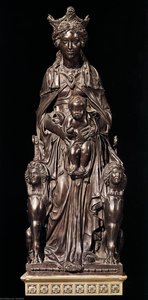
Ciborium
Giclée / Kunstdruck
Format der Reproduktion
-


Gesamtpreis
€ 70
A Glimpse into Sacred Space: Donatello's Ciborium
Donatello’s 1432 *Ciborium*, currently residing within the Treasury of St. Peter’s Basilica, offers a profound and remarkably intimate window into the artistic sensibilities of the Early Renaissance in Florence. More than simply a container for the Eucharist, this sculpted masterpiece is a carefully constructed dialogue between classical antiquity, Christian iconography, and the burgeoning humanist ideals that defined the era. Donatello, already establishing his signature style—characterized by expressive realism and a masterful command of both form and emotion—crafted this work not just as an object of religious devotion but as a testament to his evolving artistic vision.
The ciborium itself is a marvel of Carrara marble, meticulously carved with a sophisticated architectonic composition. Pilasters frame the central relief, creating a sense of depth and drawing the viewer’s eye towards the heart of the piece: a depiction of Mary holding the infant Jesus. This image, often referred to as *Madonna della Febbre* (Our Lady of the Fever), is not merely a representation of the Virgin but embodies a potent symbol of compassion and divine grace. The choice of this particular Madonna—a figure associated with healing and protection—underscores the ciborium’s function as a sacred space intended for contemplation and prayer.
Classical Echoes and Renaissance Innovation
Donatello's debt to classical sculpture is immediately apparent in the *Ciborium*. The composition echoes the grandeur of Roman triumphal arches, with its soaring attic and carefully arranged figures. However, Donatello doesn’t simply replicate ancient forms; he imbues them with a distinctly Renaissance sensibility. Notice the horizontal orientation of the deposition scene—a deliberate departure from the verticality often favored in medieval sculpture—and the use of drapery that is both realistically rendered and subtly theatrical. The inclusion of putti, playful cherubs drawn from classical mythology, further reinforces this fusion of styles.
The upper relief depicts the deposition of Christ, a scene rich with symbolic meaning. The curtains drawn back by these youthful figures—a direct reference to ancient Greco-Roman depictions of mourning—reveal the body of Christ, presented in a manner that is both vulnerable and dignified. The careful attention to detail – from the folds of Mary’s robes to the expressions on the faces of the surrounding angels – speaks volumes about Donatello's technical skill and his desire to capture not just the likeness but also the essence of each figure.
Symbolism, Light, and Spiritual Resonance
Beyond its formal elements, the *Ciborium* is saturated with symbolism. The use of light—particularly in the depiction of Christ’s body—is crucial. The rays emanating from the heavens suggest divine intervention and the promise of salvation. The placement of angels at the base of the ciborium further emphasizes the sacred nature of the space, acting as intermediaries between humanity and God. The overall effect is one of profound reverence and devotion, inviting viewers to contemplate the mysteries of faith.
Donatello’s *Ciborium* stands as a pivotal work in his artistic development—a testament to his ability to synthesize classical influences with Christian iconography and humanist ideals. It's a piece that continues to resonate today, offering a glimpse into the spiritual landscape of Renaissance Florence and demonstrating Donatello’s enduring legacy as one of art history’s most innovative and influential figures.
Fragen & Antworten
Welche emotionale Stimmung vermittelt "Ciborium" von Donatello?
„Ciborium“ ist mit einem Spiritual Gefühl verbunden. Der emotionale Ton beschreibt den Eindruck, den das Werk vermittelt.
Wie kann ich einen Druck von "Ciborium" von Donatello erwerben?
"Ciborium" ist als ein Fine Art Print auf Baumwollkanvas oder Archiv-Leinwandpapier erhältlich. Bestellungen können in der gewünschten Größe auf der Kunstdruck-Seite aufgegeben werden.
Für wen ist "Ciborium" als Geschenk geeignet und für welchen Anlass?
Die Geschenkempfehlung für "Ciborium" von Donatello verbindet Wedding mit Statement.
Biografie des Künstlers
Frühes Leben und Karriere
Donato di Niccolò di Betto Bardi, bekannt als Donatello, wurde um 1386 in Florenz, Italien geboren. Er studierte klassische Bildhauerei, was seine Entwicklung eines frühen Renaissance-Stils stark beeinflusste. Dieser neue Ansatz für Kunst und Kultur sollte schließlich zum Kennzeichen der florentinischen Renaissance werden.Schlüsselwerke und Innovationen
Donatellos berühmtestes Werk, David, war seit der Antike die erste freistehende nackte männliche Skulptur. Sie wurde von der Familie Medici in Auftrag gegeben und zeigte seinen innovativen Stil und seine technische Expertise. Zu den anderen bemerkenswerten Werken gehören:- St. Louis von Toulouse (jetzt im Museum der Basilika di Santa Croce), das einen klassischen Rahmen aufwies, der von Donatello entworfen wurde.
- Das Opfer des Isaak, geschaffen für den Campanile von Santa Maria del Fiore in Florenz, zeichnete sich durch starke Porträtdetails aus.
- Kreuzifix (1425) für Santa Croce, das Christus in einem Moment der Agonie darstellte.
Künstlerischer Stil und Vermächtnis
Donatellos Stil lässt sich in breite Phasen einteilen, beginnend mit der Entwicklung von Ausdruckskraft und klassischer Monumentalität. Seine Arbeit wurde nicht sofort von der Gemeinschaft akzeptiert, entwickelte sich aber schließlich zum beliebtesten und beeinflusste andere italienische Höfe und europäische Künstler. Wichtige Kunstbewegungen:Persönliches Leben und Arbeitsweise
Donatello war bekannt dafür, liebenswert und gutmütig zu sein, aber schlecht in der geschäftlichen Seite seiner Karriere. Er nahm oft mehr Aufträge an, als er bewältigen konnte, und vollendete Werke häufig verspätet oder übergab sie anderen Bildhauern. Bemerkenswerte Kunstwerke und Künstler:- Leonardo da Vinci: Ankündigung (Detail)
- Amico Aspertini: Statua di Pan/Leone che azzanna un cavallo
- Michelangelo Buonarroti: Tondo Pitt
Museen und Kunstsammlungen:
- Museo della Collegiata (Empoli, Italien): Ein verstecktes Juwel der Renaissance mit Werken von Francesco Botticini und Raffaello Botticini.
- Die frühe italienische Kunstbewegung der Renaissance

Donatello
1386 - 1466 , Italien
Eckdaten zum Künstler
- Beeinflusste Künstler:
- Leonardo da Vinci
- Michelangelo Buonarroti
- Bemerkenswerte Werke:
- David
- St. Louis von Toulouse
- Das Opfer des Isaak
- Kreuzifix (1425)
- Geburtsdatum: ca. 1386
- Geburtsort: Florenz, Italien
- Künstlerische Bewegung:
- Frührenaissance
- Florentiner Renaissance
- Künstlerische Einflüsse: ['Antike Skulptur']
- Nationalität: Italiener
- Sterbedatum: 1466
- Vollständiger Name: Donatello (Donato di Niccolò)
Verwandte Artikel

Die 10 legendärsten Bronzestatuen: Meisterwerke, die Kunstgeschichte schrieben | OriginalUniqueArt
Entdecken Sie die 10 legendärsten Bronzestatuen der Kunstgeschichte! Von Rodin bis Michelangelo – erfahren Sie die Geschichten hinter ikonischen Skulpturen und finden Sie hochwertige Reproduktionen für Ihr Zuhause. Jetzt bei OriginalUniqueArt entdecken!

The Enduring Form: Sculpture Across History, Technique & Emotional Resonance
Explore the rich history of sculpture with OriginalUniqueArt. Discover key techniques, influential artists & investment potential for discerning collectors. Expert insights into valuing and collecting timeless masterpieces.

The Enduring Form: Exploring Themes & Techniques in Sculpture Across Historical Periods
Explore the rich history of sculpture from ancient masterpieces to contemporary innovations. Discover key techniques, influential artists & investment potential for discerning art collectors.
Das bleibende Erbe der Bronzeskulptur: Geschichte, Techniken und zeitgenössische Interpretationen
Entdecken Sie die faszinierende Geschichte der Bronzeskulptur – von den Anfängen bis zur modernen Kunst. Expertenwissen, Techniken & Tipps für Sammler.

Bronze-Meisterwerke: Die 10 Skulpturen, die Kunstgeschichte schrieben | OriginalUniqueArt
Entdecken Sie die 10 legendärsten Bronze Skulpturen der Kunstgeschichte! Von Michelangelo bis Rodin – erfahren Sie die Geschichten hinter den Meisterwerken und lassen Sie sich von Wanddeko-Ideen inspirieren. Hochwertige Kunstdrucke auf OriginalUniqueArt.com.