
 Vorschau anzeigen
 Versenden
 Teilen
 Details anzeigen
 Leitfaden

 Herunterladen
 Ähnliche Objekte
 Röntgenaufnahme
 Diashow
 Statistiken
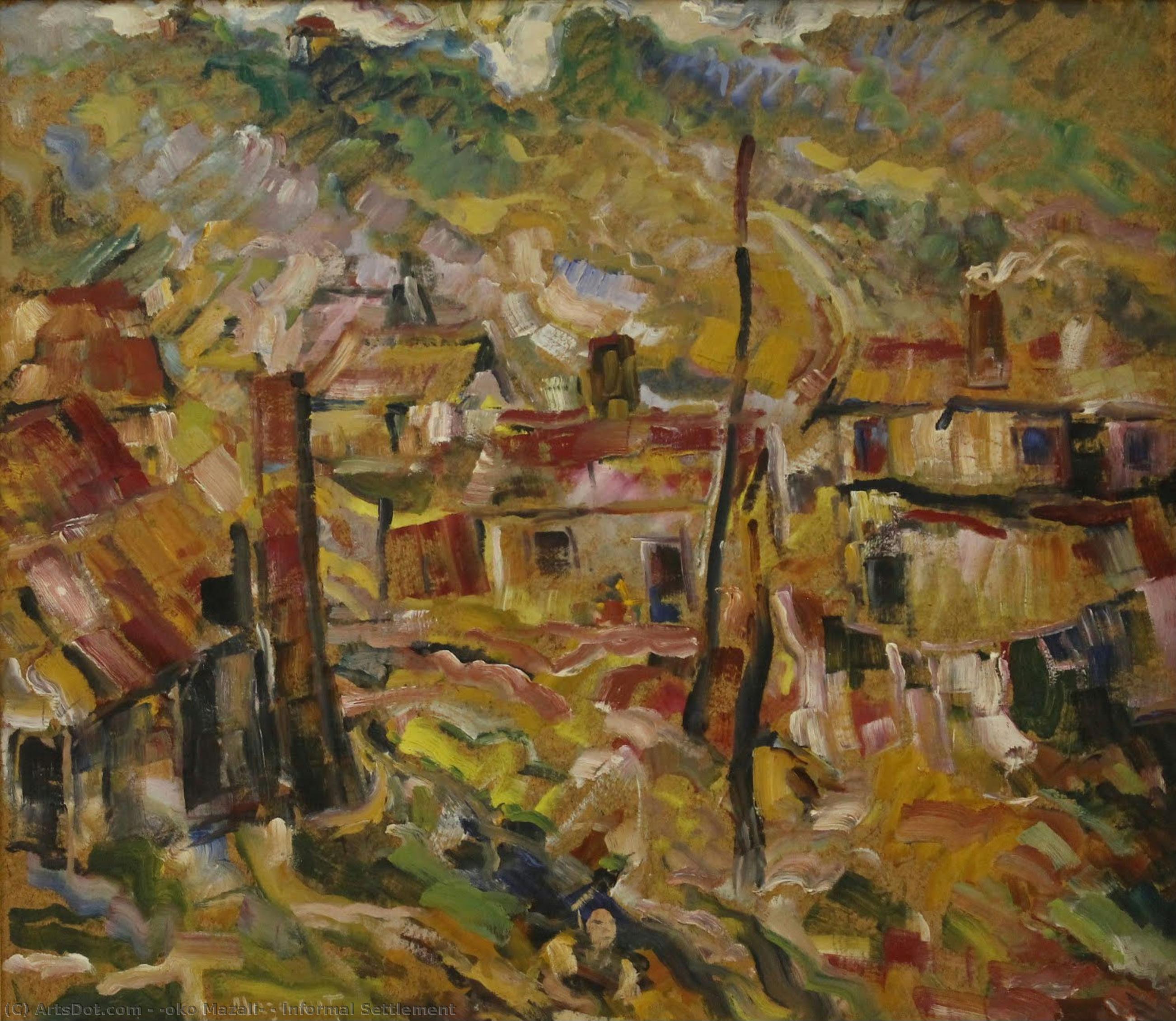
Informal Settlement


 Weiterlesen
Die auf dieser Seite dargestellten Kunstwerke sind urheberrechtlich geschützt, was bedeutet, dass wir keine identische Reproduktion rechtmäßig erstellen oder verkaufen dürfen. Dieser Schutz wird durch internationale Abkommen wie die Berner Übereinkunft und durch nationale Gesetze, einschließlich derer, die von den US-Urheberrecht – Titel 17.
Diese Methode entspricht vollumfänglich den Urheberrechtsbestimmungen, da sie keine Kopie oder Vervielfältigung des geschützten Kunstwerks darstellt. Stattdessen handelt es sich um eine kreative Neuinterpretation – ein neues Gemälde, das vom Original inspiriert, aber nicht identisch mit ihm ist.
Giclée / Kunstdruck
Giclée- oder Leinwanddruck in Museumsqualität mit schneller Produktion und flexiblen Veredelungsoptionen. ( Handgemalte Reproduktion bestellen Zum digitalen Bild wechseln)




P118B €10

P118H €10

P118W €10

P438Z €10

P508JH €12

P508YH €12

P805H €10

P805Z €10

P919BZ €10

P919G €10

P919XJ €10

P959ZH €10

P968JZ €12

W106C €8

W218G €10

W218JH €8

W218Y €10

W307PJ €10

W316G €10

W316PJ €8

W316Y €10

W398PJ €8

W4111J €10

W500HY €15

W500JH €15

W692G €12

W849H €8

W940BG €15

W953PJ €8




Wählen Sie aus unseren vordefinierten Formaten, die den ursprünglichen Proportionen des Kunstwerks entsprechen.

Geben Sie die benötigte Breite und Höhe an, damit der Druck perfekt in Ihren Rahmen oder an Ihre Wand passt. Ein Druck kann nur beschnitten, aber niemals größer als das Originalbild angefertigt werden; daher verliert ein Format mit anderen Proportionen einen Teil des Bildes. Wir senden Ihnen ein digitales Mockup zur Freigabe, bevor wir den Druck ausführen. Das auf dieser Seite gezeigte Bild zeigt nicht den tatsächlichen Beschnitt – dies ist nur im Mockup ersichtlich.
Weltweiter Versand () innerhalb von 2 Wochen statt der üblichen 4/5 Wochen. (26 Oktober)

Kostenloser weltweiter Expressversand

Hochwertige Leinenleinwand

Umfassender Versicherungsschutz beim Versand

Zollgebühren-Rückerstattungsgarantie

Garantie für exakte Farbtreue

100 Tage Rückgaberecht (nur bei Mängeln)

100% Geld-zurück-Garantie

Mengenrabatt verfügbar
 Die Glasoption ist nur für Größen unter 110 cm verfügbar.

Informal Settlement
Giclée / Kunstdruck
Format der Reproduktion
-


Endpreis
€ 70
A Vibrant Tapestry of Life: Exploring Đoko Mazalić’s Informal Settlement
In the evocative masterpiece Informal Settlement, painted in 1962, the renowned Bosnian master Đoko Mazalić invites us into a world that breathes with the rhythm of communal existence. This work is far more than a mere depiction of a mountain village; it is a soulful window into a way of life where humanity, nature, and architecture exist in a delicate, bustling harmony. As the eye wanders across the canvas, one is immediately struck by the vividness of the scene, where the rugged contours of the mountains serve as a protective cradle for a community teeming with vitality. Mazali::ć captures a moment frozen in time, yet vibrating with the energy of a thousand small, daily interactions.
The composition is a masterclass in narrative layering. Within this mountainous enclave, the artist meticulously places elements that suggest both movement and stillness. A dog rests near the threshold of a home, while a horse stands poised on the periphery, grounding the scene in the rustic reality of pastoral life. The presence of a church, marked by its humble cross, provides a spiritual anchor to the landscape, suggesting that faith and tradition are the bedrock upon which these dwellings are built. Through his brush, the village becomes a living organism, where every figure—whether standing in quiet contemplation or moving through the streets—contributes to a larger story of resilience and togetherness.
Technique and the Mastery of Light
Mazalić’s technique in Informal Settlement showcases the stylistic versatility that defined his illustrious career. Having refined his skills at the Academy of Fine Arts in Budapest, he brought a sophisticated understanding of color theory and light to the Bosnian landscape. In this piece, the artist employs a palette that is both earthy and luminous, using light to define the textures of stone, wood, and fabric. The interplay of shadows across the hills creates a sense of depth that pulls the viewer into the heart of the settlement, making the mountains feel tangible and immense.
The brushwork serves to enhance the atmosphere of the piece; it is deliberate yet fluid, capturing the "lively and bustling" essence mentioned in historical accounts. There is a rhythmic quality to how he depicts the various buildings, ranging from simple huts to more structured dwellings, creating a visual cadence that mimics the heartbeat of the village itself. For collectors and interior designers, this painting offers a profound sense of warmth and structural complexity, making it an ideal centerpiece for spaces that require a touch of historical depth and organic beauty.
A Legacy of Connection and Nostalgia
To behold Informal Settlement is to experience a deep sense of nostalgia for a simpler, more interconnected era. Mazalić, a pivotal figure in the Bosnian art scene, had an unparalleled ability to interpret the natural world through a lens of human emotion. This painting does not merely document a location; it celebrates the spirit of the community. The way the figures are scattered throughout the landscape suggests a lack of isolation, emphasizing a social fabric that is tightly woven and inseparable from the land itself.
For those seeking to adorn their homes with art that inspires conversation and emotional resonance, this reproduction offers an unparalleled opportunity. It brings into a modern interior the timeless charm of the 1960s Balkan landscape, providing a sophisticated balance of rustic character and academic excellence. Owning a piece of Mazalić’s legacy is an invitation to reflect on our own connections to place, community, and the enduring beauty of the natural world.
Fragen & Antworten
Für welches Format wird die Platzierung von „Informal Settlement“ im Format Landscape empfohlen?
Das Format Landscape von "Informal Settlement" von Đoko Mazalić wird für ein Coffee Shop empfohlen. Format und Raumgestaltung leiten gemeinsam die Platzierung einer Reproduktion.
Ist eine rechtmäßige Reproduktion von "Informal Settlement" von Đoko Mazalić aus dem Bestand des Nationalgalerie Bosnien und Herzegowina zulässig?
Das Original "Informal Settlement" befindet sich im Nationalgalerie Bosnien und Herzegowina; das Werk ist noch urheberrechtlich geschützt.
Welcher Phase der Karriere von Đoko Mazalić ist „Informal Settlement“ (1962) zuzuordnen?
Angesichts seiner Datierung auf 1962 fällt "Informal Settlement" in die Late Period von Đoko Mazalić.
Künstlerbiografie
Early Life and Education
Đoko Mazalić, a name inextricably linked to the vibrant artistic landscape of Bosnia and Herzegovina, was born in 1888 in Bosanska Kostajnica – a small town nestled amidst the rolling hills of the country. His early life, steeped in the traditions and natural beauty of his homeland, would profoundly shape his artistic vision. Mazalić’s journey into the world of art began with his enrollment at the prestigious Academy of Fine Arts in Budapest in 1910. This marked a pivotal moment, exposing him to the influential currents of European art movements like Secessionism and Naturalism – influences that would subtly permeate his later work. Alongside him were other rising stars of Bosnian art, including Gabrijel Jurkić, Petar Tiješić, and Špiro Bočarić, forming a cohort that would collectively contribute significantly to the nation’s artistic identity. Mazalić's time in Budapest wasn't merely an academic pursuit; it was a period of intense learning and experimentation, laying the foundation for his distinctive style.Artistic Career and Style
Mazalić’s artistic career unfolded over six decades, during which he established himself as one of Bosnia and Herzegovina’s most respected painters. His body of work is characterized by remarkable stylistic versatility – a testament to his adaptability and deep understanding of artistic techniques. While landscapes undoubtedly constitute the core of his oeuvre, they are not rendered in a simplistic or conventional manner. Instead, Mazalić imbued them with a profound sense of observation and emotion, capturing the essence of the Bosnian countryside with an almost poetic sensibility. His 1920 painting, “Motif from Vranduk,” exemplifies this ability – it’s not just a depiction of a landscape; it's a distillation of light, shadow, and atmosphere, conveying a powerful sense of place and time. Throughout his career, Mazalić navigated various influences, drawing inspiration from magic realism, pointillism, plein air painting, classicism, and even hinting at the nascent possibilities of abstract expressionism. He never fully embraced abstraction, preferring to maintain a dialogue with tradition while simultaneously engaging with the changing artistic landscape.Notable Works and Recognition
Mazalić’s legacy is secured by a collection of significant works that continue to resonate with audiences today. “Motif from Vogošća” (1930), held in the National Gallery of Bosnia and Herzegovina, offers a glimpse into his ability to capture urban life and its interplay with the natural world. “Village under snow” (1930) similarly showcases his talent for portraying the stark beauty of winter landscapes. Beyond these individual pieces, Mazalić’s influence extends to his role as a teacher and mentor. From 1923 to 1945, he served as a professor of drawing in Sarajevo and Travnik grammar schools, nurturing the talents of a new generation of artists. His dedication to art extended beyond teaching; he was actively involved in the formation of the Art Gallery of the National Museum of Bosnia and Herzegovina in 1930, managing it on a voluntary basis until 1943. He further solidified his contribution through publications such as “Lexicon of Artists of B&H” (1965) and “The Art of Painting in B&H in the Turkish Era” (1967), cementing his position as a leading scholar and art historian. His achievements were recognized with several awards and accolades, reflecting the esteem held for his artistic and intellectual contributions.Legacy and Influence
Đoko Mazalić’s impact on Bosnian art extends far beyond his individual creations. His innovative approach to landscape painting, combined with his deep connection to his homeland, established a distinctively Bosnian aesthetic. He was one of the few Bosnian painters who chose to return home after studying abroad, dedicating himself entirely to capturing the beauty and spirit of Bosnia and Herzegovina. This commitment ensured that his work would remain deeply rooted in the national identity. Even towards the end of his career, Mazalić continued to experiment with color palettes and painting techniques, demonstrating a remarkable consistency in quality and an unwavering dedication to his craft. His retrospective exhibition held in 1970 at the National Gallery of Bosnia and Herzegovina served as a powerful testament to his enduring legacy. Today, his works continue to inspire artists and art enthusiasts alike, solidifying his place as a pivotal figure in Bosnian art history – a painter who not only documented the beauty of his country but also embodied its spirit.
Đoko Mazalić
1888 - 1975 , Bosnien und Herzegovina
Kurzinfos
- Artistic Movement Or Style: Landschaft & Porträt
- Artists Or Movements Influenced By This Artist: ['Expressionismus']
- Artists Who Influenced This Artist:
- Gabrijel Jurkić
- Petar Tiješić
- Špiro Bočarić
- Date Of Birth: 1888-04-23
- Date Of Death: 1975-02-28
- Full Name: Đoko Mazalić
- Nationality: Bosnisch
- Notable Artworks:
- Motiv vranduk (1920)
- Motiv vogošća (1930)
- Dorf unter Schnee (1930)
- Place Of Birth: Bosanska Kostajnica, BH
Ähnliche Artikel

Romantische Landschaften: Die 10 Meisterwerke, die eine Epoche prägten | OriginalUniqueArt
Entdecken Sie die 10 Meisterwerke der Romantischen Landschaftsmalerei! Von Caspar David Friedrich bis Turner – erleben Sie die Kunst, Emotion & Natur. Hochwertige Reproduktionen auf OriginalUniqueArt.com

Evocations of Place: A Historical Journey Through Landscape Art
Explore the rich history of landscape art with OriginalUniqueArt. Discover renowned artists, movements like Impressionism & Romanticism, and expert guidance for collecting timeless pieces. Find your perfect serene escape today!

Katsushika Hokusai: Die 25 Meisterwerke des Ukiyo-e – Kunst für Ihr Zuhause | OriginalUniqueArt
Entdecken Sie die 25 Meisterwerke von Katsushika Hokusai! Tauchen Sie ein in die Welt des Ukiyo-e, berühmte Holzschnitte wie 'Die große Welle' & Fuji-Ansichten. Hochwertige Kunstdrucke für Ihr Zuhause – jetzt auf OriginalUniqueArt.com!

John Constable: Die 25 Meisterwerke des englischen Landschaftsgenies – OriginalUniqueArt
Entdecken Sie die 25 Meisterwerke von John Constable! Erleben Sie englische Landschaftsmalerei vom Hay Wain bis zur Stour Valley. Hochwertige Reproduktionen & Kunst für Ihr Zuhause auf OriginalUniqueArt.com.

Capturing Nostalgia: The Timeless Allure and Art History of Village Scene Landscapes
Explore the profound beauty of village scene art. From Impressionist light to pastoral realism, discover how timeless landscapes capture nostalgia through expert artistry and historical depth. Perfect for collectors seeking evocative, museum-quality landscape inspirations.