

 In echtem Maßstab anzeigen
 Versenden als Grußkarte
 Teilen
 Details anzeigen
 Leitfaden öffnen

 Herunterladen
 Ähnliche Objekte
 Röntgenaufnahme
 Diashow
 Besucherstatistiken
Young Man Singing
 Acrylic
- WallArt
- Dutch Baroque
 1622
1622 58.0 x 71.0 cm
 Städel Museum
 Mehr anzeigen
Giclée / Kunstdruck
Giclée- oder Leinwanddruck in Museumsqualität mit schneller Produktion und flexiblen Veredelungsoptionen. ( Handgemalte Reproduktion kaufen Zum digitalen Bild wechseln)




P118B $10

P118H $10

P118W $10

P438Z $10

P508JH $12

P508YH $12

P805H $10

P805Z $10

P919BZ $10

P919G $10

P919XJ $10

P959ZH $10

P968JZ $12

W106C $8

W218G $10

W218JH $8

W218Y $10

W307PJ $10

W316G $10

W316PJ $8

W316Y $10

W398PJ $8

W4111J $10

W500HY $15

W500JH $15

W692G $12

W849H $8

W940BG $15

W953PJ $8




Wählen Sie aus unseren vordefinierten Formaten, die den ursprünglichen Proportionen des Kunstwerks entsprechen.

Sie können Ihre eigenen Maße eingeben, um ein bestimmtes Format oder einen speziellen Platz einzupassen. Wenn das von Ihnen gewählte Format nicht den Proportionen des Originalbildes entspricht, werden wir das Kunstwerk entweder beschneiden oder das Bild mit einem gespiegelten oder einfarbigen Rand erweitern. Ein digitaler Entwurf wird Ihnen zur Genehmigung zugesandt, bevor die Produktion beginnt.
Bitte beachten Sie, dass die Vorschau auf dem Bildschirm nicht den tatsächlichen Zuschnitt oder die Erweiterung widerspiegelt. Nur der Entwurf zeigt die endgültige Komposition präzise an.
Obwohl Sondermaße verfügbar sind, empfehlen wir die Auswahl eines Maßes aus der vordefinierten Liste, um die ursprünglichen Proportionen zu bewahren.
Weltweiter Versand () innerhalb von 2 Wochen statt der üblichen 4/5 Wochen. (26 September)

Kostenloser weltweiter Expressversand

Hochwertige Leinenleinwand

Vollständiger Versicherungsschutz beim Versand

Zollgebühren-Rückerstattungsgarantie

Garantie für exakte Farbtreue

100-tägiges Rückgaberecht (nur bei Mängeln)

100% Geld-zurück-Garantie

Angebot für Mengenrabatt
 Die Glasoption ist nur für Größen unter 110 cm verfügbar.

Young Man Singing
Giclée / Kunstdruck
Format der Reproduktion
-


Gesamtpreis
$ 80
A Portrait Steeped in Emotion: Exploring Dirck van Baburen’s ‘Young Man Singing’
The painting “Young Man Singing,” executed by Dirck van Baburen in 1622, stands as a testament to the Utrecht School's embrace of Caravaggio’s revolutionary approach to Baroque art. More than just a depiction of an individual, it’s a carefully constructed tableau brimming with symbolic resonance and masterful execution—a piece that continues to captivate viewers centuries later.Subject Matter and Composition
At its core lies a portrait of a young man dressed in attire typical for the period – a hat adorned with feathers, indicative of social status and artistic aspiration – engaged in an activity that transcends mere observation: he sings or speaks intently into a book held firmly in his hand. This posture isn’t simply one of reading; it conveys a palpable sense of passion and vulnerability. The artist skillfully utilizes chiaroscuro—the dramatic interplay between light and shadow—to sculpt the man's form, emphasizing musculature and conveying an emotional depth rarely seen in portraits of this era. Two birds are subtly integrated into the composition – one perched near the upper left corner and another positioned at the lower right – adding visual interest and potentially symbolizing themes of freedom or contemplation.Style and Technique: Caravaggisti Influence
Van Baburen’s style is undeniably indebted to Caravaggio, whose dramatic use of tenebrismo—extreme contrasts between light and dark—created an illusionistic effect that heightened emotional impact. Like Caravaggio, van baburen employed a direct approach to painting, eschewing idealized beauty for realism infused with psychological insight. The artist meticulously rendered textures – the feathers on the hat, the folds of the man’s clothing – demonstrating considerable technical skill. Furthermore, he achieved remarkable depth and luminosity through careful layering of glazes, capturing the subtle nuances of skin tone and fabric texture.Historical Context: Utrecht's Artistic Renaissance
The painting emerged during a period of significant artistic flourishing in Utrecht—a city that had become a magnet for Caravaggisti artists seeking inspiration beyond Florence and Rome. This movement represented a decisive break from Mannerism, prioritizing naturalistic representation and conveying intense emotion. Van Baburen’s work reflects the broader cultural currents of the time, signaling an interest in humanist ideals and exploring the complexities of human experience. The Utrecht School championed a style characterized by dynamism and expressive intensity—a stylistic hallmark that distinguishes it from its predecessors.Symbolism and Emotional Impact
Beyond its technical brilliance, “Young Man Singing” resonates with profound symbolic significance. The book symbolizes knowledge and contemplation, while the singing gesture embodies passion and vulnerability – emotions central to Baroque art’s preoccupation with human psychology. The birds could represent aspiration or spiritual freedom, subtly enriching the narrative conveyed by the image. Ultimately, the painting evokes a feeling of intimacy and introspection, inviting viewers to contemplate the inner life of its subject and reflecting the broader artistic ethos of Utrecht during its golden age.Biografie des Künstlers
Schatten und Licht: Das Leben von Dirck van Baburen
In den Annalen des Goldenen Zeitalters der Niederlande beschwören nur wenige Namen das viszerale Drama von Schatten und plötzlicher Erleuchtung so sehr herauf wie Dirck van Baburen. Geboren um 1595 in Wijk bij Duurstede, war sein Leben ein kurzer, aber brillanter Meteoreinschlag auf der Leinwand der Kunstgeschichte. Obwohl seine Jahre tragischerweise kurz waren und bereits 1624 endeten, gelang es ihm, eine stilistische Revolution zu entfachen, die die nordeuropäische Ästhetik neu definieren sollte. Als zentrale Säule der Utrechter Caravaggisten-Schule malte van Baburen nicht bloß Szenen; er inszenierte Momente tiefgreifender Spannung und nutzte die karge Sprache des Tenebrismus, um die Betrachter in die intime, oft raue Realität seiner Motive zu ziehen.
Das Fundament seiner Meisterschaft wurde in den Ateliers von Utrecht unter der Anleitung des angesehenen Paulus Moreelse gelegt. Die wahre Metamorphose seiner Seele und seines Pinselstrichs vollzog sich jedoch während seiner transformativen Pilgerreise nach Rom zwischen 1612 und 1615. In den sonnenverwöhnten und doch schattendurchsetzten Gassen der Ewigen Stadt begegnete van Baburen dem revolutionären Geist Caravaggios. Durch seine enge Verbindung zu Bartolomeo Manfredi, einem ergebenen Anhänger der Methoden Caravaggios, sog der junge Niederländer die Geheimnisse des Chiaroscuro auf – der Kunst, extreme Kontraste zwischen Licht und Dunkelheit zu nutzen, um Volumen und psychologische Tiefe zu erzeugen. Dieses Eintauchen in das römische Leben war nicht nur akademischer Natur; es war ein sozialer und beruflicher Aufstieg, da er Aufträge von prestigeträchtigen Gönnern wie Kardinal Scipione Borghese erhielt, was ihn in das Herz der Barockbewegung versetzte.
Die Geburtsstunde der Utrechter Caravaggisten
Nach seiner Rückkehr in die Niederlande kehrte van Baburen nicht als bloßer Schüler zurück, sondern als Vorreiter. Zusammen mit Zeitgenossen wie Hendrick ter Brugghen und Gerard van Honthorst leitete er eine Bewegung ein, welche die Flugbahn der niederländischen Malerei für immer verändern sollte. Dieses Kollektiv, bekannt als die Utrechter Caravaggisten, strebte danach, die dramatische Intensität des italienischen Barock in die lokale Ausdrucksweise zu übertragen. Ihre Arbeit zeichnete sich durch eine Abkehr von den polierten, heiteren Landschaften ihrer Vorgänger aus und bevorzugte stattdessen:
- Genreszenen: Lebendige, oft ausgelassene Darstellungen des alltäglichen Lebens, einschließlich Musikanten, Trinker und Bauern, die mit einer erstaunlichen Präsenz dargestellt wurden.
- Tenebrismus: Der Einsatz tiefer, undurchdringlicher Schatten, die den Hintergrund verschlingen und das Auge des Betrachters dazu zwingen, sich ausschließlich auf die beleuchteten Figuren zu konzentrieren.
- Emotionale Unmittelbarkeit: Ein Fokus auf die menschliche Verfassung, der flüchtige Ausdrücke von Freude, Trauer oder kontemplativer Stille einfängt.
Seine technische Brillanz erlaubte es ihm, das Licht so zu manipulieren, als wäre es eine physische Substanz, wobei er Figuren mit einer Präzision aus der Dunkelheit meißelte, die sich fast greifbar anfühlte. Ob er religiösen Eifer oder die bescheidenen Aktivitäten in einer Taverne darstellte, sein Pinselstrich besaß eine Energie, welche die Lücke zwischen der monumentalen Skala italienischer Kunst und dem intimen, häuslichen Fokus der niederländischen Tradition überbrückte.
Vermächtnis und historische Bedeutung
Die Wirkung von Dirck van Baburen reicht weit über die Grenzen von Utrecht hinaus. Obwohl seine Karriere in seinen frühen Dreißigern jäh endete, verbreiteten sich die Wellen seiner Innovation über Jahrzehnte hinweg, beeinflussten die Entwicklung des niederländischen Barock und dienten sogar als stilistischer Vorläufer für die Werke von Rembrandt van Rijn. Die Art und Weise, wie Rembrandt später das Licht manipulierte, um tiefgreifende psychologische Wahrheiten hervorzurufen, verdankt der Vorarbeit der Utrechter Meister eine bedeutende Schuld.
Heute wird van Baburen nicht nur als Nachfolger eines italienischen Meisters in Erinnerung behalten, sondern als Architekt einer neuen visuellen Sprache. Er verwandelte die Leinwand in eine Bühne, auf der Licht und Schatten ein ewiges Drama aufführen, und stellte so sicher, dass sein Name als Meister des Tiefgründigen, des Dramatischen und des zutiefst Menschlichen in der Kunstgeschichte verankert bleibt. Seine Fähigkeit, das Außergewöhnliche im Gewöhnlichen zu finden, zieht Gelehrte und Kunstliebhaber gleichermaßen in ihren Bann und dient als Zeugnis für die beständige Kraft des caravaggesken Geistes.

Dirck Van Baburen
1595 - 1624 , Niederlande
Eckdaten zum Künstler
- Artistic Movement Or Style: Caravaggisti; Utrecht Schule
- Artists Or Movements Influenced By This Artist: ['Rembrandt van Riijn']
- Artists Who Influenced This Artist:
- Paulus Moreelse
- Bartolomeo Manfredi
- Date Of Birth: Utrecht, Niederlande (1595)
- Date Of Death: Utrecht, Niederlande (1624)
- Full Name: Dirck Jaspersz. van Baburen
- Nationality: Niederländisch
- Notable Artworks:
- Die Grablegung Christi
- Prometheus
- Die Kupplerin
- Place Of Birth: Wijk bij Duurstede
Verwandte Artikel

Golden Age Reflections: Dutch Baroque Painting & Cultural Innovation
Explore the Dutch Golden Age of painting! Discover key artists like Vermeer & ter Borch, their innovative techniques, and the rich cultural context behind these Baroque masterpieces. Learn about collecting & appreciating this iconic art period.

Barock Meisterwerke: Die 10 prägendsten Kunstwerke für Ihr Zuhause |
Entdecken Sie die 10 prägendsten Meisterwerke des Barock! Caravaggio, Rembrandt & Co. – Erfahren Sie die Geschichten hinter ikonischen Gemälde und finden Sie hochwertige Kunst Reproduktionen für Ihr Zuhause auf .

Golden Light & Dutch Skies: The Timeless Magic of Dutch Golden Age Landscapes
Discover the breathtaking beauty of Dutch Golden Age landscapes. Explore the mastery of light, chiaroscuro, and 17th-century realism through an expert art history lens, celebrating the enduring legacy of the Dutch Masters for discerning collectors and art lovers.
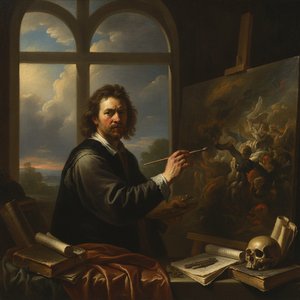
Dutch Baroque Unlocked: Mastering Chiaroscuro, Epic Drama, and the High-Impact Legacy of Rembrandt
Explore the dramatic power of Dutch Baroque art. Master the secrets of Rembrandt’s chiaroscuro, discover the epic scale of the Golden Age, and learn how to bring high-impact, hand-painted historical masterpieces into your modern collection with expert precision.

Die 10 Meisterwerke der niederländischen Barockmalerei – Kunst für Ihr Zuhause | OriginalUniqueArt
Entdecken Sie die 10 prägendsten Meisterwerke der niederländischen Barockmalerei! Von Rembrandt bis Vermeer – erleben Sie Kunstgeschichte, Techniken & Emotionen. Hochwertige Reproduktionen für Ihr Zuhause auf OriginalUniqueArt.com.