Zum Druck wechseln
 Weiterlesen







































 Bei Kunstwerken oder Reproduktionen, die an einer Seite größer als 105 cm (ca. 41 Zoll) sind, wird der Rahmen zerlegt als Bausatz geliefert. Diese Methode gewährleistet eine sichere Zustellung und verhindert Schäden während des Transports.


Das Porträt von Philipp IV: Ein Fenster in die spanische Seele
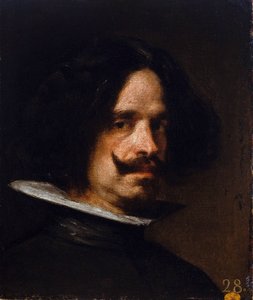
Diego Velázquez’s “Philip IV,” painted in 1655, is more than just a royal portrait; it's a meticulously crafted distillation of power, piety, and the subtle anxieties of a kingdom at its zenith. Housed within the Museo del Prado in Madrid, this oil-on-canvas masterpiece offers an unparalleled glimpse into the mind of King Philip IV of Spain – a man grappling with weighty responsibilities amidst the splendor of his court. Velázquez, already recognized as “El Maestro de la Luz y la Sombra,” masterfully employs chiaroscuro to sculpt the king’s figure, drawing our attention immediately to his face and conveying an undeniable sense of gravity.
- Die Komposition: The painting's composition is deceptively simple. Philip IV sits slightly turned away from the viewer, a pose that invites intimacy while simultaneously maintaining a dignified reserve. A doorway in the background subtly frames the scene, creating depth and drawing our eye towards the king – a strategic device Velázquez frequently employed to anchor his subjects within their environment.
- Kleidung und Symbolik: The King’s attire is laden with symbolic meaning. His formal suit and tie, while seemingly anachronistic for the 17th century (a detail that adds a layer of intriguing complexity), underscore his position as a powerful sovereign – a ruler accustomed to formality and protocol. The rich fabrics and intricate details speak volumes about the wealth and authority of the Spanish crown.
Velázquez’s Meisterschaft: Technik und Ausdruck
What truly elevates “Philip IV” is Velázquez's extraordinary technical skill. He doesn’t simply depict a king; he captures his essence, his demeanor, and even a hint of the burdens he carries. His brushstrokes are remarkably loose and expressive, creating an illusion of immediacy – as if we are witnessing a fleeting moment captured in time. The subtle variations in tone and texture suggest a remarkable understanding of light’s interaction with surface, contributing to the painting's palpable realism.
- Der Einsatz von Licht: Velázquez’s mastery of *chiaroscuro* – the dramatic contrast between light and shadow – is particularly evident. He uses light to highlight key features of the king’s face, emphasizing his expression and drawing attention to his eyes, which seem to hold a quiet contemplation.
- Realismus und Detail: Notice the incredible detail in the King's beard and mustache, rendered with painstaking accuracy. This level of realism was revolutionary for portraiture at the time, moving beyond idealized representations towards a more honest and psychologically nuanced portrayal of the subject.
Historischer Kontext und künstlerische Bedeutung
“Philip IV” exists within a broader context of royal portraiture during the Spanish Golden Age. Velázquez was commissioned to paint numerous portraits of the Habsburg family, each serving as a powerful statement of dynastic legitimacy and imperial grandeur. These paintings were not merely decorative; they were carefully constructed propaganda pieces designed to reinforce the image of the monarchy. However, Velázquez’s work transcends mere political messaging. He subtly reveals Philip IV's humanity, imbuing the portrait with an emotional resonance that sets it apart from its contemporaries.
Furthermore, “Philip IV” reflects a shift in artistic sensibilities. Velázquez’s approach – his willingness to depict subjects in everyday attire and his focus on capturing psychological realism – paved the way for future generations of artists, including Francesco Solimena, who admired Velázquez's naturalism and rich colors. The influence of this painting can be seen throughout European art history.
Ein Vermächtnis der Kunst: Emotionale Wirkung und zeitlose Anziehungskraft
“Philip IV” is a profoundly moving work of art. It’s not simply a portrait; it's a window into the soul of a king, and through him, a glimpse into the complexities of 17th-century Spain. The painting’s enduring appeal lies in its ability to evoke a sense of both grandeur and intimacy – a testament to Velázquez’s genius as a painter and his profound understanding of human nature. Whether viewed in person or reproduced, “Philip IV” continues to captivate viewers with its masterful technique, subtle symbolism, and timeless emotional impact. A high-quality reproduction offers an accessible way to appreciate this extraordinary masterpiece and bring a touch of Spanish history into your home.
Fragen & Antworten
Wie stark ist der Kontrast in "Philipp IV" von Diego Rodríguez de Silva y Velázquez?
"Philipp IV" von Diego Rodríguez de Silva y Velázquez zeigt einen Kräftig Kontrast zwischen hellen und dunklen Bereichen.
Unter welchen Pseudonymen oder Alternativnamen ist Diego Rodríguez de Silva y Velázquez bekannt?
Weitere unter denen Diego Rodríguez de Silva y Velázquez, Schöpfer von „Philipp IV“, bekannt ist, umfassen Velázquez, Diego Rodriguez de Silva y Velazquez, Velazquez, Diego Velázquez.
Wie kann ich eine Vorschau einer Reproduktion von "Philipp IV" von Diego Rodríguez de Silva y Velázquez aufrufen?
Eine Vorschau von "Philipp IV" von Diego Rodríguez de Silva y Velázquez finden Sie auf der Vorschau im Raum-Seite des Kunstwerks.
 Vorschau anzeigen
 Versenden
 Teilen
 Details anzeigen
 Leitfaden

 Herunterladen
 Ähnliche Objekte
 Röntgenaufnahme
 Diashow
 Q&A
Q&A Statistiken