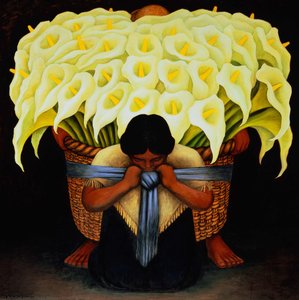
Vorschau anzeigen
 Versenden
 Teilen
 Details anzeigen
 Leitfaden

 Herunterladen
 Ähnliche Objekte
 Röntgenaufnahme
 Diashow
 Fragen & Antworten
 Statistiken
Woman at a Well


 Weiterlesen
Die auf dieser Seite dargestellten Kunstwerke sind urheberrechtlich geschützt, was bedeutet, dass wir keine identische Reproduktion rechtmäßig erstellen oder verkaufen dürfen. Dieser Schutz wird durch internationale Abkommen wie die Berner Übereinkunft und durch nationale Gesetze, einschließlich derer, die von den US-Urheberrecht – Titel 17.
Diese Methode entspricht vollumfänglich den Urheberrechtsbestimmungen, da sie keine Kopie oder Vervielfältigung des geschützten Kunstwerks darstellt. Stattdessen handelt es sich um eine kreative Neuinterpretation – ein neues Gemälde, das vom Original inspiriert, aber nicht identisch mit ihm ist.
Giclée / Kunstdruck
Giclée- oder Leinwanddruck in Museumsqualität mit schneller Produktion und flexiblen Veredelungsoptionen. ( Handgemalte Reproduktion bestellen Zum digitalen Bild wechseln)




P118B €10

P118H €10

P118W €10

P438Z €10

P508JH €12

P508YH €12

P805H €10

P805Z €10

P919BZ €10

P919G €10

P919XJ €10

P959ZH €10

P968JZ €12

W106C €8

W218G €10

W218JH €8

W218Y €10

W307PJ €10

W316G €10

W316PJ €8

W316Y €10

W398PJ €8

W4111J €10

W500HY €15

W500JH €15

W692G €12

W849H €8

W940BG €15

W953PJ €8




Wählen Sie aus unseren vordefinierten Formaten, die den ursprünglichen Proportionen des Kunstwerks entsprechen.

Geben Sie die benötigte Breite und Höhe an, damit der Druck perfekt in Ihren Rahmen oder an Ihre Wand passt. Ein Druck kann nur beschnitten, aber niemals größer als das Originalbild angefertigt werden; daher verliert ein Format mit anderen Proportionen einen Teil des Bildes. Wir senden Ihnen ein digitales Mockup zur Freigabe, bevor wir den Druck ausführen. Das auf dieser Seite gezeigte Bild zeigt nicht den tatsächlichen Beschnitt – dies ist nur im Mockup ersichtlich.
Weltweiter Versand () innerhalb von 2 Wochen statt der üblichen 4/5 Wochen. (8 November)

Kostenloser weltweiter Expressversand

Hochwertige Leinenleinwand

Umfassender Versicherungsschutz beim Versand

Zollgebühren-Rückerstattungsgarantie

Garantie für exakte Farbtreue

100 Tage Rückgaberecht (nur bei Mängeln)

100% Geld-zurück-Garantie

Mengenrabatt verfügbar
 Die Glasoption ist nur für Größen unter 110 cm verfügbar.

Woman at a Well
Giclée / Kunstdruck
Format der Reproduktion
-


Endpreis
€ 72
The Cubist Vision of Daily Life
Diego Rivera’s Woman at a Well, dating from 1913, transports us into a moment suspended between the mundane and the profoundly symbolic. This piece is a fascinating confluence of Mexican muralist tradition meeting the radical intellectual currents of early Cubism. Rather than presenting a straightforward narrative scene, Rivera employs fragmented planes and geometric deconstruction to suggest form, inviting the viewer not just to look at the women and the well, but to actively participate in assembling the image within their own mind's eye. The composition is rich with life—two central female figures are depicted, one attending to a wheel while the other cradles a bird. These elements, set against an outdoor backdrop punctuated by the steady presence of a clock on the wall, speak to themes of cyclical time and domestic ritual.
A Dialogue Between Cultures and Styles
Rivera’s early engagement with Cubism is particularly telling. While his later work would become synonymous with monumental narrative frescoes celebrating Mexican history and labor, this piece shows him grappling with avant-garde European techniques. The cubist approach breaks down solid reality into intersecting facets, giving the figures a simultaneously present and disassembled quality. Yet, beneath this modernist veneer lies Rivera’s inherent commitment to storytelling and human dignity. The inclusion of scattered birds throughout the scene adds an organic counterpoint to the sharp angles of the geometry, suggesting the persistent, fluttering beauty that resists rigid categorization.
Symbolism Woven into Form
The symbolism within Woman at a Well is multilayered and deeply resonant. The well itself has historically been a potent symbol—a source of life, sustenance, and often, hidden knowledge. Paired with the wheel, which suggests cycles of time or perhaps agricultural labor, the scene speaks to enduring feminine roles and the passage of time. The bird, an ancient motif across global art, typically represents the soul, freedom, or the spirit itself. By placing these potent symbols—the source, the cycle, the spirit—within a cubist framework, Rivera suggests that even in moments of apparent stasis, life is constantly undergoing intellectual and structural transformation.
Bringing the Masterpiece Home
For collectors and designers seeking to infuse a space with the vibrant energy of early 20th-century modernism, this reproduction offers an unparalleled opportunity. The hand-painted quality ensures that the complexity of Rivera’s brushwork—the interplay between solid form and fractured plane—is faithfully captured. It is not merely a picture; it is an intellectual conversation piece. Imagine this artwork anchoring a room: its dynamic energy will challenge the eye while simultaneously inviting contemplation on time, nature, and the enduring strength found in human connection.
Fragen & Antworten
Wer hat "Woman at a Well" geschaffen und in welchem Stil ist es gehalten?
"Woman at a Well" wurde von Diego Rivera im Stil der Cubism geschaffen. Künstler und Epoche bestimmen die Tradition des Werkes.
Welche Größe und Ausrichtung werden für einen Druck von "Woman at a Well" von Diego Rivera empfohlen?
Format Format, Ausrichtung Hochformat: Dies ist die empfohlene Druckeinstellung für "Woman at a Well" von Diego Rivera.
Welche Druckgröße wird für "Woman at a Well" von Diego Rivera empfohlen?
Für "Woman at a Well" von Diego Rivera wird eine Reproduktion im Format Format empfohlen. Die Größe kann angepasst werden, wobei die Proportionen erhalten bleiben.
Künstlerbiografie
Frühes Leben und künstlerische Ausbildung
- Geboren: 8. Dezember 1886, Guanajuato, Mexiko
- Gestorben: 24. November 1957
- Diego Riveras künstlerischer Weg begann früh; er zeigte ab seinem dritten Lebensjahr Interesse an der Kunst.
- Er studierte an der Akademie von San Carlos in Mexiko-Stadt.
- Teodoro A. dehesa Méndez finanzierte sein Studium in Europa, beginnend 1907.
- Zunächst studierte er bei Eduardo Chicharro in Madrid, Spanien.
- Er zog nach Paris, Frankreich und wurde Teil der Montparnasse-Künstlergemeinschaft.
Europäische Einflüsse und künstlerische Entwicklung
- Frühe europäische Arbeiten waren vom Realismus beeinflusst.
- Die Auseinandersetzung mit dem Kubismus hatte ab 1912 einen bedeutenden Einfluss auf seinen Stil.
- Beeinflusst von Künstlern wie Pablo Picasso und Georges Seurat.
- Seine Gemälde dieser Zeit begannen, geometrische Formen und sich kreuzende Ebenen zu integrieren, was die kubistische Bewegung widerspiegelte.
Rückkehr nach Mexiko und die mexikanische Wandmalbewegung
- Rivera kehrte 1921 nach Mexiko zurück, ein entscheidender Moment in seiner Karriere.
- Er wurde eine führende Figur der mexikanischen Wandmalbewegung, mit dem Ziel, öffentlich zugängliche Kunst zu schaffen.
- Seine Wandgemälde stellten oft Szenen aus der mexikanischen Geschichte und sozialen Themen dar.
- Bemerkenswerte frühe Werke sind „Schöpfung“ (1922) und Wandgemälde im Secretaría de Educación Pública in Mexiko-Stadt.
Hauptwerke und künstlerischer Stil
- Schöpfung (1922): Sein erstes bedeutendes Wandgemälde, das die Enkaustiktechnik verwendete.
- Träume eines Sonntags im Alameda: Kontrovers wegen seiner Darstellung von Atheismus.
- Wandgemälde der Secretaría de Educación Pública: Zeigten seinen einzigartigen Stil mit großen, vereinfachten Figuren und kräftigen Farben, die vom aztekischen Kunst beeinflusst waren.
- Detroit Industry Wandgemälde (1933): In Auftrag gegeben für das Detroit Institute of Arts, darstellend industrielle Prozesse und Arbeiter.
- Riveras Stil: Charakterisiert durch monumentale Größe, vereinfachte Formen, lebendige Farben und einen Fokus auf soziale und historische Erzählungen. Er integrierte Elemente der mexikanischen Volkskunst und präkolumbianischer Ästhetik in seine Arbeit.
Vermächtnis und historische Bedeutung
- Diego Rivera gilt als einer der wichtigsten Künstler des 20. Jahrhunderts.
- Seine Wandgemälde sind bedeutende Beispiele für Sozialrealismus und öffentliche Kunst.
- Er spielte eine entscheidende Rolle bei der Etablierung des mexikanischen Muralismus als einflussreiche künstlerische Bewegung.
- Riveras Werk spiegelt seine politischen Überzeugungen wider, insbesondere seine marxistischen Ansichten.
- Sein Privatleben, einschließlich seiner Ehe mit Frida Kahlo, hat zu seinem bleibenden Ruhm und zur kulturellen Bedeutung beigetragen.

Diego Rivera
1886 - 1957 , Mexiko
Kurzinfos
- Beeinflusste Künstler:
- El Greco
- Francisco Goya
- Diego Velazquez
- Pablo Picasso
- Bemerkenswerte Werke:
- Schöpfung (1922)
- Sonntagstraum
- Detroit Industry
- Geburtsdatum: 8. Dezember 1886
- Geburtsort: Guanajuato, Mexiko
- Künstlerische Bewegung: Mexikanischer Muralismus
- Nationalität: Mexikaner
- Sterbedatum: 24. November 1957
- Vollständiger Name: Diego Rivera
Ähnliche Artikel

The Enduring Legacy of Fine Art Prints: Technique, History & Aesthetic Impact
Explore the rich history & techniques of fine art prints. Discover investment potential, assess authenticity, and learn how to preserve your collection with expert guidance. Trusted insights for discerning collectors.
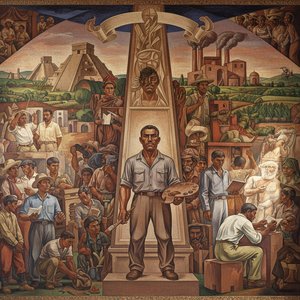
Diego Rivera: Eine revolutionäre Vision mexikanischer Identität durch die Wandmalerei
Entdecken Sie die revolutionäre Wandmalerei Diego Riveras und ihre Bedeutung für die mexikanische Identität. Analysen, Hintergründe & Einblicke in das Werk des Muralismus-Pioniers.

Echoes of Time: Exploring the Enduring Appeal & Historical Context of Vintage Art Prints
Explore the captivating world of vintage art prints! Discover their history, collecting tips & enduring appeal. Expert insights on chromolithography and building a legacy collection with OriginalUniqueArt.

Giclée-Prints: Hochwertige Kunstreproduktionen mit Archivqualität für Ihr Zuhause
Erfahren Sie alles über die Archivqualität und Technik echter Giclée-Drucke. Jetzt Expertenwissen für Ihre Kunstsammlung entdecken!
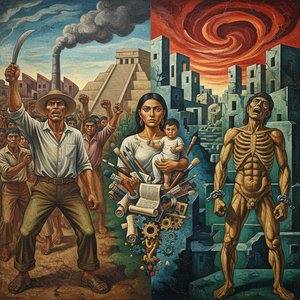
Revolution on Canvas: Exploring the Socio-Political Power & Artistic Legacy of Mexican Muralism
Explore the powerful world of Mexican muralism! Discover Diego Rivera, Frida Kahlo & Orozco's revolutionary art, social impact & lasting legacy. Expert insights & high-quality reproductions at OriginalUniqueArt.