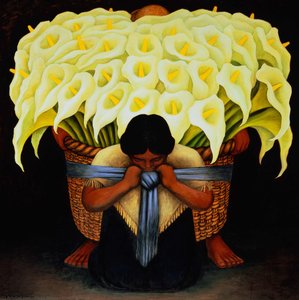
In echtem Maßstab anzeigen
 Versenden als Grußkarte
 Teilen
 Details anzeigen
 Leitfaden öffnen

 Herunterladen
 Ähnliche Objekte
 Röntgenaufnahme
 Diashow
 Besucherstatistiken
Dancer Resting
 Acrylic On Canvas
- WallArt
- Social Realist Painting
 1939
1939- 19th Century
 95.0 x 166.0 cm
 Mehr anzeigen
Die auf dieser Seite dargestellten Kunstwerke sind urheberrechtlich geschützt, was bedeutet, dass wir keine identische Reproduktion rechtmäßig erstellen oder verkaufen dürfen. Dieser Schutz wird durch internationale Abkommen wie die Berner Übereinkunft und durch nationale Gesetze, einschließlich derer, die von den ... festgelegt wurden US-Urheberrecht – Titel 17.
Diese Methode entspricht vollumfänglich den Urheberrechtsbestimmungen, da sie keine Kopie oder Vervielfältigung des geschützten Kunstwerks darstellt. Stattdessen handelt es sich um eine kreative Neuinterpretation – ein neues Gemälde, das vom Original inspiriert, aber nicht identisch mit ihm ist.
Giclée / Kunstdruck
Giclée- oder Leinwanddruck in Museumsqualität mit schneller Produktion und flexiblen Veredelungsoptionen. ( Handgemalte Reproduktion kaufen Zum digitalen Bild wechseln)




P118B €10

P118H €10

P118W €10

P438Z €10

P508JH €12

P508YH €12

P805H €10

P805Z €10

P919BZ €10

P919G €10

P919XJ €10

P959ZH €10

P968JZ €12

W106C €8

W218G €10

W218JH €8

W218Y €10

W307PJ €10

W316G €10

W316PJ €8

W316Y €10

W398PJ €8

W4111J €10

W500HY €15

W500JH €15

W692G €12

W849H €8

W940BG €15

W953PJ €8




Wählen Sie aus unseren vordefinierten Formaten, die den ursprünglichen Proportionen des Kunstwerks entsprechen.

Geben Sie die Breite und die Höhe an, die Sie benötigen, damit der Druck perfekt in Ihren Rahmen oder an Ihre Wand passt. Ein Druck kann nur beschnitten werden und niemals größer als das Originalbild gemacht werden; daher verliert ein Format mit einer anderen Proportion einen Teil des Bildes. Wir senden Ihnen ein digitales Mockup zur Freigabe, bevor wir den Druck ausführen. Das auf dieser Seite gezeigte Bild zeigt nicht den tatsächlichen Beschnitt – dies ist nur im Mockup ersichtlich.
Weltweiter Versand () innerhalb von 2 Wochen statt der üblichen 4/5 Wochen. (21 Oktober)

Kostenloser weltweiter Expressversand

Hochwertige Leinenleinwand

Vollständiger Versicherungsschutz beim Versand

Zollgebühren-Rückerstattungsgarantie

Garantie für exakte Farbtreue

100-tägiges Rückgaberecht (nur bei Mängeln)

100% Geld-zurück-Garantie

Angebot für Mengenrabatt
 Die Glasoption ist nur für Größen unter 110 cm verfügbar.

Dancer Resting
Giclée / Kunstdruck
Format der Reproduktion
-


Gesamtpreis
€ 70
Diego Rivera’s *Dancer Resting*: A Study in Form and Sensuality
This meticulously crafted hand-painted reproduction of Diego Rivera's 1939 work, *Dancer Resting*, offers a captivating glimpse into the artist’s masterful approach to portraiture and his exploration of the human form. Measuring 95 x 166 cm, this piece immediately draws the viewer in with its intimate scale and the undeniable presence of the reclining dancer. Rivera, a titan of Mexican muralism, was renowned for his large-scale narratives that celebrated social and political themes, yet this smaller work reveals a more personal and arguably more sensual side to his artistic vision.
- Subject Matter: The central focus is undeniably the woman herself – a figure rendered with remarkable anatomical precision and a palpable sense of repose. Her prominent form, accentuated by the soft lighting, invites contemplation on themes of beauty, vulnerability, and perhaps even the fleeting nature of existence.
- Style & Technique: Rivera’s brushwork is characterized by its bold confidence and expressive dynamism, hallmarks of his style developed during his time in Europe. Here, he employs a looser, more painterly approach than might be seen in his monumental murals, allowing for a greater emphasis on the tactile quality of the surface and the subtle nuances of light and shadow. The use of color is restrained – primarily earthy tones – contributing to the painting’s overall mood of quiet contemplation.
Historical Context: Rivera's Parisian Influences
Painted in 1939, *Dancer Resting* reflects Diego Rivera’s evolving artistic journey following his extended sojourns in Europe. After initially studying Realism in Madrid under Eduardo Chicharro, Rivera found himself profoundly influenced by the vibrant and experimental art scene of Paris. The Montparnasse district, a hub for avant-garde artists, provided him with exposure to Cubism, Surrealism, and other movements that challenged traditional artistic conventions. While he continued to develop his own distinct style, these influences are subtly present in *Dancer Resting* – particularly in the flattened perspective and simplified forms of the figure’s body.
- Rivera's Experimentation: This work represents a period of experimentation for Rivera, moving away from purely narrative depictions towards a more focused exploration of individual character and emotion.
- Political Undertones (Subtle): Although not overtly political like many of his murals, the painting’s sensual depiction of the female form can be interpreted as a subtle challenge to prevailing social norms and expectations.
Symbolism and Emotional Impact
*Dancer Resting* transcends a simple portrait; it's an evocative meditation on the human condition. The dancer’s pose – head resting on her hand, suggesting both fatigue and serenity – invites viewers to consider themes of rest, vulnerability, and perhaps even the artist’s own relationship with his subject. The carefully controlled lighting enhances this emotional impact, creating a sense of intimacy and drawing us into the dancer's private moment. Rivera masterfully uses chiaroscuro—the dramatic contrast between light and dark—to sculpt the figure’s form and heighten its expressive power.
- The Chair as Symbol: The chair itself, positioned towards the right of the composition, could be interpreted as a symbol of transition or repose, further reinforcing the theme of rest.
- A Moment Frozen in Time: Rivera captures a fleeting moment – a pause between movements – creating an image that is both timeless and intensely personal.
Perfect for Your Collection
This hand-painted reproduction of *Dancer Resting* offers a unique opportunity to own a piece of art history, crafted with the same meticulous attention to detail as the original. Its size (95 x 166 cm) makes it suitable for a variety of interior design settings – from a formal salon to a more relaxed living room. Whether you are an established collector of Rivera’s work or simply seeking a stunning piece of art to elevate your space, this reproduction is sure to be a captivating addition to your collection.
Fragen & Antworten
Verwendet "Dancer Resting" von Diego Rivera starke Kontraste oder sanfte Harmonien?
Die Farbkomposition von "Dancer Resting" von Diego Rivera vereint einen Serene Kontrast mit einer Balanced Harmony Harmonie.
Welche Stimmung und welche Emotion vermittelt "Dancer Resting" von Diego Rivera?
In "Dancer Resting" begleitet eine Romantic-Stimmung eine Nostalgic Emotion.
Wo kann ich einen Druck von "Dancer Resting" von Diego Rivera kaufen?
Um einen Druck von "Dancer Resting" von Diego Rivera zu erhalten, bestellen Sie ihn einfach auf der Seite Kunstdruck: ein Fine Art Print auf Baumwollkanvas oder Archiv-Leinwandpapier.
Biografie des Künstlers
Frühes Leben und künstlerische Ausbildung
- Geboren: 8. Dezember 1886, Guanajuato, Mexiko
- Gestorben: 24. November 1957
- Diego Riveras künstlerischer Weg begann früh; er zeigte ab seinem dritten Lebensjahr Interesse an der Kunst.
- Er studierte an der Akademie von San Carlos in Mexiko-Stadt.
- Teodoro A. dehesa Méndez finanzierte sein Studium in Europa, beginnend 1907.
- Zunächst studierte er bei Eduardo Chicharro in Madrid, Spanien.
- Er zog nach Paris, Frankreich und wurde Teil der Montparnasse-Künstlergemeinschaft.
Europäische Einflüsse und künstlerische Entwicklung
- Frühe europäische Arbeiten waren vom Realismus beeinflusst.
- Die Auseinandersetzung mit dem Kubismus hatte ab 1912 einen bedeutenden Einfluss auf seinen Stil.
- Beeinflusst von Künstlern wie Pablo Picasso und Georges Seurat.
- Seine Gemälde dieser Zeit begannen, geometrische Formen und sich kreuzende Ebenen zu integrieren, was die kubistische Bewegung widerspiegelte.
Rückkehr nach Mexiko und die mexikanische Wandmalbewegung
- Rivera kehrte 1921 nach Mexiko zurück, ein entscheidender Moment in seiner Karriere.
- Er wurde eine führende Figur der mexikanischen Wandmalbewegung, mit dem Ziel, öffentlich zugängliche Kunst zu schaffen.
- Seine Wandgemälde stellten oft Szenen aus der mexikanischen Geschichte und sozialen Themen dar.
- Bemerkenswerte frühe Werke sind „Schöpfung“ (1922) und Wandgemälde im Secretaría de Educación Pública in Mexiko-Stadt.
Hauptwerke und künstlerischer Stil
- Schöpfung (1922): Sein erstes bedeutendes Wandgemälde, das die Enkaustiktechnik verwendete.
- Träume eines Sonntags im Alameda: Kontrovers wegen seiner Darstellung von Atheismus.
- Wandgemälde der Secretaría de Educación Pública: Zeigten seinen einzigartigen Stil mit großen, vereinfachten Figuren und kräftigen Farben, die vom aztekischen Kunst beeinflusst waren.
- Detroit Industry Wandgemälde (1933): In Auftrag gegeben für das Detroit Institute of Arts, darstellend industrielle Prozesse und Arbeiter.
- Riveras Stil: Charakterisiert durch monumentale Größe, vereinfachte Formen, lebendige Farben und einen Fokus auf soziale und historische Erzählungen. Er integrierte Elemente der mexikanischen Volkskunst und präkolumbianischer Ästhetik in seine Arbeit.
Vermächtnis und historische Bedeutung
- Diego Rivera gilt als einer der wichtigsten Künstler des 20. Jahrhunderts.
- Seine Wandgemälde sind bedeutende Beispiele für Sozialrealismus und öffentliche Kunst.
- Er spielte eine entscheidende Rolle bei der Etablierung des mexikanischen Muralismus als einflussreiche künstlerische Bewegung.
- Riveras Werk spiegelt seine politischen Überzeugungen wider, insbesondere seine marxistischen Ansichten.
- Sein Privatleben, einschließlich seiner Ehe mit Frida Kahlo, hat zu seinem bleibenden Ruhm und zur kulturellen Bedeutung beigetragen.

Diego Rivera
1886 - 1957 , Mexiko
Eckdaten zum Künstler
- Beeinflusste Künstler:
- El Greco
- Francisco Goya
- Diego Velazquez
- Pablo Picasso
- Bemerkenswerte Werke:
- Schöpfung (1922)
- Sonntagstraum
- Detroit Industry
- Geburtsdatum: 8. Dezember 1886
- Geburtsort: Guanajuato, Mexiko
- Künstlerische Bewegung: Mexikanischer Muralismus
- Nationalität: Mexikaner
- Sterbedatum: 24. November 1957
- Vollständiger Name: Diego Rivera
Verwandte Artikel
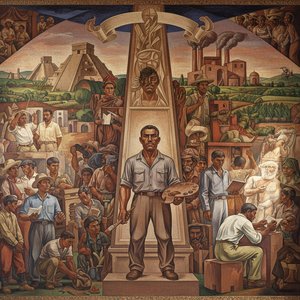
Diego Rivera: Eine revolutionäre Vision mexikanischer Identität durch die Wandmalerei
Entdecken Sie die revolutionäre Wandmalerei Diego Riveras und ihre Bedeutung für die mexikanische Identität. Analysen, Hintergründe & Einblicke in das Werk des Muralismus-Pioniers.

10 Meisterwerke des Romantischen Realismus: Wenn Emotion auf Wahrheit trifft
Entdecken Sie 10 Meisterwerke des Romantischen Realismus. Erleben Sie die emotionale Tiefe von Künstlern wie Constable und Friedrich – perfekt als Inspiration für Ihre Kunstsammlung oder Wandgestaltung. Finden Sie museale Reproduktionen auf OriginalUniqueArt.com.

Mexican Muralism for Commercial Interiors: A Procurement Guide to Large-Scale Masterpiece Reproductions
Elevate commercial interiors with premium Mexican Muralism reproductions. Our guide for hotel designers covers large-scale Diego Rivera-style murals, custom sizing, and bulk procurement solutions for high-impact hospitality spaces. Reliable global shipping and professional art consultation.
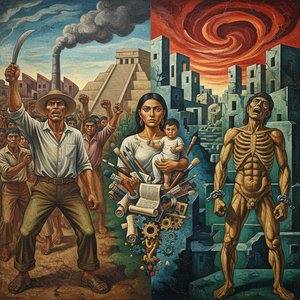
Revolution on Canvas: Exploring the Socio-Political Power & Artistic Legacy of Mexican Muralism
Explore the powerful world of Mexican muralism! Discover Diego Rivera, Frida Kahlo & Orozco's revolutionary art, social impact & lasting legacy. Expert insights & high-quality reproductions at OriginalUniqueArt.

Walls of Revolution: The Powerful Legacy and Social Realism of Mexican Muralism
Explore the profound legacy of Mexican Muralism. Discover how masters like Diego Rivera used social realism to redefine history through powerful, large-scale frescoes and revolutionary iconography.