
 Vorschau anzeigen
 Versenden
 Teilen
 Details anzeigen
 Leitfaden

 Herunterladen
 Ähnliche Objekte
 Röntgenaufnahme
 Diashow
 Q&A
Q&A Statistiken
Skating during Carnival

- 57.0 x 100.0 cm


 Weiterlesen
Giclée / Kunstdruck
Giclée- oder Leinwanddruck in Museumsqualität mit schneller Produktion und flexiblen Veredelungsoptionen. ( Handgemalte Reproduktion bestellen Zum digitalen Bild wechseln)




P118B €10

P118H €10

P118W €10

P438Z €10

P508JH €12

P508YH €12

P805H €10

P805Z €10

P919BZ €10

P919G €10

P919XJ €10

P959ZH €10

P968JZ €12

W106C €8

W218G €10

W218JH €8

W218Y €10

W307PJ €10

W316G €10

W316PJ €8

W316Y €10

W398PJ €8

W4111J €10

W500HY €15

W500JH €15

W692G €12

W849H €8

W940BG €15

W953PJ €8




Wählen Sie aus unseren vordefinierten Formaten, die den ursprünglichen Proportionen des Kunstwerks entsprechen.

Geben Sie die benötigte Breite und Höhe an, damit der Druck perfekt in Ihren Rahmen oder an Ihre Wand passt. Ein Druck kann nur beschnitten, aber niemals größer als das Originalbild angefertigt werden; daher verliert ein Format mit anderen Proportionen einen Teil des Bildes. Wir senden Ihnen ein digitales Mockup zur Freigabe, bevor wir den Druck ausführen. Das auf dieser Seite gezeigte Bild zeigt nicht den tatsächlichen Beschnitt – dies ist nur im Mockup ersichtlich.
Weltweiter Versand () innerhalb von 2 Wochen statt der üblichen 4/5 Wochen. (1 November)

Kostenloser weltweiter Expressversand

Hochwertige Leinenleinwand

Umfassender Versicherungsschutz beim Versand

Zollgebühren-Rückerstattungsgarantie

Garantie für exakte Farbtreue

100 Tage Rückgaberecht (nur bei Mängeln)

100% Geld-zurück-Garantie

Mengenrabatt verfügbar
 Die Glasoption ist nur für Größen unter 110 cm verfügbar.

Skating during Carnival
Giclée / Kunstdruck
Format der Reproduktion
-


Endpreis
€ 71
Skating during Carnival by ALSLOOT, Denis van
Denis van Alsloot (c. 1570-1626), a Flemish painter of vibrant landscapes & festive scenes! Court artist famed for detailed depictions of Brussels life, winter views & the Sonian Forest. His legacy resides in capturing moments of aristocratic grandeur interwoven with the spirited energy of everyday existence—a duality that resonates powerfully within his celebrated artwork, “Skating during Carnival.” This captivating painting transports us back to 1620, a pivotal year marking the zenith of Flemish Baroque artistry and reflecting the burgeoning fascination with winter landscapes as symbols of nobility and celebration. Alsloot’s masterful execution employs oil on panel—a technique favored by artists of his era—resulting in an image brimming with rich color palettes and meticulous textural detail. The canvas breathes life into a bustling Antwerp carnival scene, capturing not merely visual splendor but also the social customs and artistic sensibilities of the time. The composition unfolds with remarkable clarity. Dominating the central space is a substantial brick fortification – likely a section of the Kipdorppoort Moats—serving as a backdrop to an exuberant gathering of skaters. These figures, dressed in opulent costumes adorned with masks and hats, embody the aristocratic spirit of the Baroque period, engaging in merriment amidst the frosty air. Scattered along the waterfront are trees bearing sparse winter foliage, subtly reinforcing the overarching theme of seasonal splendor and highlighting the artistic preoccupation with portraying nature’s beauty even during its dormant phase. A closer examination reveals Alsloot's profound understanding of visual storytelling. The artist skillfully utilizes perspective to create depth and atmosphere, guiding the viewer’s gaze across the scene—from the towering fortifications in the background to the animated skaters in the foreground. Notice the careful rendering of light and shadow, enhancing the dramatic effect and conveying a palpable sense of warmth against the cold winter landscape. This juxtaposition underscores the painting's symbolic significance: Carnival represents indulgence and merriment, while the winter setting symbolizes resilience and beauty—themes central to Baroque artistic ideals. The artwork’s provenance traces back to the Royal Collection (specifically Isabella Farnese), demonstrating its esteemed status within European art history. It was subsequently housed in the Museo Nacional del Prado and later acquired by Charles III of Spain, cementing its place as a cornerstone of Flemish landscape painting. Furthermore, Alsloot's meticulous attention to detail—evident in the intricate costumes, architectural elements, and atmospheric effects—reflects the Baroque commitment to realism and grandeur. “Skating during Carnival” stands not merely as a depiction of a festive occasion but as an embodiment of artistic excellence and a testament to Alsloot’s enduring contribution to European art heritage.- Artist: Denijs van Alsloot
- Birth Year: 1570
- Death Year: 1626
- Birth City: Mechelen
- Birth Country: Belgium
Fragen & Antworten
Mit welcher Technik wurde "Skating during Carnival" erstellt?
Das Medium von "Skating during Carnival" von Denijs van Alsloot ist Oil On Panel. Die Reproduktionen zielen darauf ab, die Optik dieser Technik wiederzugeben.
In welcher Phase der Karriere von Denijs van Alsloot lässt sich „Skating during Carnival“ angesichts seines Entstehungsdatums einordnen?
"Skating during Carnival", entstanden im Jahr 1620, stammt aus der Mature Baroque von Denijs van Alsloot.
Ist "Skating during Carnival" von Denijs van Alsloot ein Gemälde, eine Zeichnung oder ein Druck?
"Skating during Carnival" ist ein Werk der Gattung wall art.
Künstlerbiografie
Leben und Ursprünge
- Name: Denijs van Alsloot (auch bekannt als Denis van Alsloot)
- Geboren: ca. 1570, Mechelen oder möglicherweise Brüssel, Belgien
- Gestorben: ca. 1626, wahrscheinlich in oder vor 1628
- Hintergrund: Van Alsloots Vater war ein Wandteppichweber, was eine frühe Auseinandersetzung mit den Textilkunsten und dem Design signalisierte. Einzelheiten über seine künstlerische Ausbildung sind spärlich; es ist unbekannt, wer seine Lehrer waren.
- Frühe Karriere: Er trat 1599 als Wandteppichdesigner der Brüsseler Gilde von St. Lukas bei, was darauf hindeutet, dass er sich zunächst diesem Handwerk widmete, bevor er zur Malerei überging. Er nahm 1599 seinen ersten Schüler auf und bildete zwischen 1599 und 1625 mehrere Lehrlinge aus.
- Gerichtliche Ernennung: Ein bedeutender Wendepunkt war seine Ernennung zum Hofmaler von Albert und Isabella, den Gouverneuren der Spanischen Niederlande, ab etwa 1606. Diese Position brachte ihn in Kontakt mit einflussreichen Mäzenen und sicherte ihm einen stetigen Strom von Aufträgen.
Künstlerischer Stil und Werk
- Genre: Hauptsächlich bekannt für Landschaftsbilder und Szenen, die Zivilprozessionen, lokale Feste und Zeremonien darstellen.
- Übergangsfigur: Seine Arbeit gilt als Übergang in der Entwicklung der Landschaftsmalerei im frühen 17. Jahrhundert.
- Topographische Genauigkeit: Van Alsloots Landschaften kombinierten oft topografische Genauigkeit mit fantasievollen Elementen und schufen so eine einzigartige Mischung aus Realismus und künstlerischer Freiheit.
- Sonian Forest School: Er war mit der Sonian Forest Schule der Landschaftsmaler verbunden, die Darstellungen von Szenen aus den Wäldern in der Nähe von Brüssel bevorzugte. Seine Serie von Ansichten von Klöstern im Sonian Forest wurde wahrscheinlich vom Erzherzog Albert in Auftrag gegeben.
- Winterlandschaften: Van Alsloot spezialisierte sich auf realistische Winterlandschaften und stellte oft das Kloster Groenendael in verschiedenen Jahreszeiten und Bedingungen dar.
- Zusammenarbeit mit Hendrick de Clerck: Er arbeitete häufig mit Hendrick de Clerck zusammen, der seine Staffage (Figuren) in seinen Landschaftsbildern malte. Diese Zusammenarbeit führte zu Werken mit lebhaft gefärbten Figuren vor Alsloots Landschaften.
- Bemerkenswerte Aufträge: Er erhielt von Erzherzogin Isabella einen bedeutenden Auftrag, acht Tafeln zu malen, die den Ommegang-Umzug in Brüssel im Jahr 1615 darstellten, wofür er 10.000 Gulden bezahlt wurden.
Einflüsse und künstlerische Entwicklung
- Frühe Einflüsse: Seine frühen Werke zeigten eine Affinität zur Landschaftsmalerei des 16. Jahrhunderts, was auf Einflüsse früherer Meister hindeutet.
- Gillis van Coninxloo: Sein Stil weist Ähnlichkeiten mit Gillis van Coninxloos Werk auf, aber Van Alsloots Arbeit ist im Allgemeinen ruhiger und statischer und verwendet eine weichere Palette und zeigt größere Präzision im Detail.
- Jan Brueghel der Ältere: Er synthetisierte Elemente sowohl von Van Coninxloos als auch von Jan Brueghel dem Älteren Stil und schuf so seinen eigenen unverwechselbaren Ansatz in der Landschaftsmalerei.
- Evolution des Stils: Seine künstlerische Entwicklung entwickelte sich vom Wandteppichdesign zu unabhängigen Landschaftsbildern, was eine Erweiterung seines kreativen Spektrums demonstrierte.
Wichtige Errungenschaften und historische Bedeutung
- Hofmaler der Elite: Seine Ernennung zum Hofmaler festigte seine Position in den künstlerischen Kreisen Brüssels und verschaffte ihm Zugang zu prestigeträchtigen Aufträgen.
- Dokumentation des lokalen Lebens: Van Alsloots Gemälde bieten wertvolle Einblicke in das Leben im 17. Jahrhundert in Brüssel, insbesondere durch seine Darstellungen von Festen, Prozessionen und Landschaften.
- Vertreter der Sonian Forest School: Er gilt als wichtiger Vertreter der Sonian Forest Schule und trägt zu ihrem unverwechselbaren Stil und Thema bei.
- Übergangsrolle: Seine Arbeit überbrückt die Lücke zwischen früheren Landschaftstraditionen und dem aufkommenden Barockstil, was ihn zu einer wichtigen Figur in der Entwicklung der flämischen Kunst macht.
Nachlass
- Van Alsloots Gemälde befinden sich heute in großen Museen auf der ganzen Welt, darunter im Museo Nacional del Prado in Madrid und im Victoria and Albert Museum in London.
- Seine detaillierten Landschaften werden weiterhin für ihre topografische Genauigkeit, atmosphärische Perspektive und die Darstellung des täglichen Lebens im 17. Jahrhundert in Brüssel geschätzt.
- Er bleibt eine bedeutende Figur in der Erforschung der flämischen Landschaftsmalerei und der künstlerischen Kultur der Spanischen Niederlande.

Denijs van Alsloot
1570 - 1626 , Belgien
Kurzinfos
- Beeinflusste Künstler:
- Gillis van Coninxloo
- Jan Brueghel der Ältere
- Bemerkenswerte Werke:
- Tervuren
- Tobias und Engel
- Geburtsdatum: ca. 1570
- Geburtsort: Mechelen, Belgien
- Künstlerische Bewegung: Sonian Forest Schule
- Nationalität: Flemish
- Sterbedatum: ca. 1626
- Vollständiger Name: Denijs van Alsloot
- Von Künstlern Beeinflusst:
- Jacques d'Arthois
- Lucas Achtschellinck
- Lodewijk de Vadder
Ähnliche Artikel
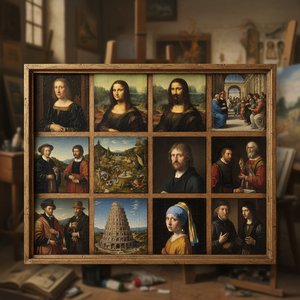
Öl auf Holz: 10 Meisterwerke, die Kunstgeschichte veränderten |
Entdecken Sie die 10 legendärsten Gemälde auf Holz – von Renaissance bis Impressionismus! Erfahren Sie die Geschichten der Künstler & ihre Meisterwerke. Hochwertige Reproduktionen bei .

Barocke Pracht entschlüsselt: Licht, Drama und Emotion im 17. Jahrhundert
Entdecken Sie die Dramatik des Barock von Caravaggio bis Rubens. Erleben Sie meisterhafte Lichtführung und Emotionen jetzt online.

Baroque Classicism: The Grandeur of Order and Drama in 17th-Century Art History
Explore the profound elegance of Baroque Classicism. Discover how 17th-century masters synthesized dramatic emotion with classical order through the lens of the Counter-Reformation and the works of legends like Carlo Maratta and Andrea Sacchi.

Öl auf Holz: Die technische Meisterschaft von Präzision und Tiefe in der Tafelmalerei
Erfahren Sie alles über die technische Meisterschaft der Ölmalerei auf Holztafel. Entdecken Sie die Tiefe klassischer Meisterwerke jetzt.

The Timeless Charm of Oil on Board: Reimagining Texture and Light through the Impressionist Lens
Discover the profound intimacy of oil on panel. Explore how Impressionist masters used rigid supports to capture light, texture, and impasto depth through exquisite, handmade oil reproductions for discerning collectors.
