

 In echtem Maßstab anzeigen
 Versenden als Grußkarte
 Teilen
 Details anzeigen

 Herunterladen
 Ähnliche Objekte
 Röntgenaufnahme
 Diashow
 Besucherstatistiken
Sketch for the play
 Acrylic On Canvas
- WallArt
- Expressionist Modernism
 1947
1947 30.0 x 30.0 cm
 Kunstpalast Georgiens – Museum für Kulturgeschichte
 Mehr anzeigen
Giclée / Kunstdruck
Giclée- oder Leinwanddruck in Museumsqualität mit schneller Produktion und flexiblen Veredelungsoptionen. ( Handgemalte Reproduktion kaufen Zum digitalen Bild wechseln)




P118B $10

P118H $10

P118W $10

P438Z $10

P508JH $12

P508YH $12

P805H $10

P805Z $10

P919BZ $10

P919G $10

P919XJ $10

P959ZH $10

P968JZ $12

W106C $8

W218G $10

W218JH $8

W218Y $10

W307PJ $10

W316G $10

W316PJ $8

W316Y $10

W398PJ $8

W4111J $10

W500HY $15

W500JH $15

W692G $12

W849H $8

W940BG $15

W953PJ $8




Wählen Sie aus unseren vordefinierten Formaten, die den ursprünglichen Proportionen des Kunstwerks entsprechen.

Sie können Ihre eigenen Maße eingeben, um ein bestimmtes Format oder einen speziellen Platz einzupassen. Wenn das von Ihnen gewählte Format nicht den Proportionen des Originalbildes entspricht, werden wir das Kunstwerk entweder beschneiden oder das Bild mit einem gespiegelten oder einfarbigen Rand erweitern. Ein digitaler Entwurf wird Ihnen zur Genehmigung zugesandt, bevor die Produktion beginnt.
Bitte beachten Sie, dass die Vorschau auf dem Bildschirm nicht den tatsächlichen Zuschnitt oder die Erweiterung widerspiegelt. Nur der Entwurf zeigt die endgültige Komposition präzise an.
Obwohl Sondermaße verfügbar sind, empfehlen wir die Auswahl eines Maßes aus der vordefinierten Liste, um die ursprünglichen Proportionen zu bewahren.
Weltweiter Versand () innerhalb von 2 Wochen statt der üblichen 4/5 Wochen. (18 September)

Kostenloser weltweiter Expressversand

Hochwertige Leinenleinwand

Vollständiger Versicherungsschutz beim Versand

Zollgebühren-Rückerstattungsgarantie

Garantie für exakte Farbtreue

100-tägiges Rückgaberecht (nur bei Mängeln)

100% Geld-zurück-Garantie

Angebot für Mengenrabatt
 Die Glasoption ist nur für Größen unter 110 cm verfügbar.

Sketch for the play
Giclée / Kunstdruck
Format der Reproduktion
-


Gesamtpreis
$ 80
David Kakabadze’s ‘Sketch for the Play’: A Window into Georgian Modernism
David Kakabadze's “Sketch for the Play,” painted in 1947, isn’t merely a depiction of a mountainous landscape; it’s a vibrant portal into the heart of Georgian modernism. Born in the remote village of Kukhi near Khoni, Kakabadze’s life was one of profound transformation, shifting from rural simplicity to the bustling intellectual circles of St. Petersburg University and the avant-garde fervor of Paris. This painting embodies that journey – a synthesis of his native Georgian traditions with the burgeoning influences of European artistic movements like Expressionism and Cubism. The work immediately commands attention not through photographic realism, but through an intensely emotional response; it’s a landscape imbued with a palpable sense of drama, urgency, and perhaps even melancholy.
The scene itself is dominated by a colossal wooden structure – a bridge or some other significant architectural element – that pierces the dramatic sky. Mountains loom in the background, rendered not as serene vistas but as imposing, almost threatening forms. The color palette is deliberately cool: deep blues and grays dominate, punctuated by flashes of ochre and burnt umber. This restrained use of color contributes to a feeling of atmospheric depth and creates an unsettling tension within the composition. Kakabadze masterfully employs impasto – thick, textured brushstrokes – particularly evident in the foreground elements, lending a tactile quality to the scene and drawing the viewer’s eye into its depths.
A Pioneer of Georgian Modernism: Context and Influences
Kakabadze's artistic trajectory is remarkable. Initially trained as a natural scientist, he was drawn to art through the patronage of local philanthropists who secured him an education in St. Petersburg. This exposure to Western European movements – particularly Cubism’s fragmentation of form and Fauvism’s bold use of color – profoundly shaped his approach. However, Kakabadze never abandoned his Georgian roots. He sought to fuse these foreign influences with the rich traditions of his homeland, creating a uniquely Georgian modern style. His work reflects a deep engagement with Georgian folklore, mythology, and landscape, often imbued with symbolic meaning.
The painting’s creation occurred during a pivotal moment in Georgian history – the interwar period following the Russian Revolution. Georgia was navigating a complex political landscape, grappling with Soviet influence while striving to maintain its cultural identity. Kakabadze's art became a powerful expression of this struggle, reflecting both the anxieties and aspirations of his time. His work served as a bridge between the old world of Georgian tradition and the uncertain promise of the new.
Symbolism and Emotional Resonance
Beyond its formal qualities, “Sketch for the Play” is rich in symbolic interpretation. The imposing wooden structure could represent both progress and constraint – a symbol of human ambition reaching towards the heavens while simultaneously grounding itself in the earth. The turbulent sky suggests conflict, uncertainty, and perhaps even impending doom. The solitary figure on the left side of the composition adds another layer of complexity, hinting at contemplation, observation, or perhaps a sense of isolation within this dramatic landscape.
Kakabadze’s use of light and shadow is particularly effective in creating an emotional atmosphere. The strong contrasts between illuminated areas and deep shadows heighten the drama and contribute to the painting's overall sense of unease. The viewer isn’t simply observing a scene; they are invited to experience it – to feel the weight of the mountains, the chill of the wind, and the uncertainty of the future.
Bringing Kakabadze’s Vision Home: Reproduction Options
A high-quality reproduction of “Sketch for the Play” offers a captivating addition to any interior space. OriginalUniqueArt.com provides exceptional reproductions that faithfully capture the artist's original vision, utilizing archival-quality materials and printing techniques to ensure lasting beauty and vibrancy. Whether you’re drawn to its evocative atmosphere, its symbolic depth, or simply its striking visual impact, this painting remains a testament to David Kakabadze’s genius and a window into the heart of Georgian modernism. Consider a standard size for immediate impact, or explore custom dimensions to perfectly complement your space.
Biografie des Künstlers
Einführung zu David Kakabadze
David Kakabadze war ein bedeutender georgischer Avantgarde-Maler, Grafiker und Bühnenbildner. Geboren am 20. August 1889 in dem Dorf Kukhi in der Nähe der Stadt Khoni, sind Kakabdzes Werke bekannt für ihre innovative Interpretation von europäischer "linksliberaler" Kunst in Verbindung mit georgischen Traditionen.Frühes Leben und Ausbildung
Kakabadze wurde in einer armen Bauernfamilie geboren. Dank der Unterstützung lokaler Philanthropen studierte er Naturwissenschaften an der Universität St. Petersburg, wo er 1916 seinen Abschluss machte. Gleichzeitig besuchte er Malkurse im Atelier von Dmitroyev-Kavkazsky und forschte über die alte georgische Kunst.Künstlerische Karriere
Nach einer kurzen Tätigkeit als Maler und Pädagoge in Tiflis reiste Kakabadze nach Paris, wo er von 1919 bis 1927 lebte. Er nahm an Ausstellungen der Société des Artistes Indépendants teil und stellte gemeinsam mit den georgischen Künstlern Lado Gudiashvili und Shalva Kikodze aus. Die Serie von Landschaftsbildern, die die Natur seiner Heimatprovinz Imereti wiedergeben, gehören zu seinen interessantesten frühen Werken.Stil und Einflüsse
Während seines Aufenthalts in Paris fühlte sich Kakabadze dem "gegenstandslosen Malerei" zugewandt und arbeitete an Problemen der bildlichen Technik, wobei er gelegentlich Metall, Spiegelscheiben, Buntglas und andere Materialien anstelle von Farben verwendete. Er entwickelte bald eine noch "linksliberalere" Position und erwies dem Kubismus große Anerkennung. Zu seinen bemerkenswertesten Werken gehören Bretagne, Segelboote und eine Skizze zur Erzielung verschiedener Lichtgrade in einer einzigen Glühbirne. Diese Gemälde zeugen von seiner innovativen Interpretation der Kunst und seiner Fähigkeit, europäische "linksliberale" Kunst mit georgischen Traditionen zu verbinden. Kakabadze wurde durch die Zdanevich-Brüder und Le Dentu mit dem Kubismus und dem russischen Futurismus sowie der Kunst des georgischen Malers Niko Pirosmani bekannt gemacht.Vermächtnis
Kakabdzes Vermächtnis kann in den zahlreichen Künstlern gesehen werden, denen er Vorbild war. Seine Arbeit wurde in verschiedenen Museen ausgestellt, darunter das Kunstpalast Georgiens - Museum für Kulturgeschichte in Tiflis, Georgien. Kakabdzes Beiträge zur Welt der Kunst sind unbestreitbar, und sein Vermächtnis inspiriert Künstler bis heute. Wichtige Punkte über David Kakabadze:- Er war ein führender georgischer Avantgarde-Maler, Grafiker und Bühnenbildner.
- Seine Werke verbinden eine innovative Interpretation von europäischer "linksliberaler" Kunst mit georgischen Traditionen.
- Er nahm an Ausstellungen der Société des Artistes Indépendants teil und stellte gemeinsam mit anderen georgischen Künstlern aus.
- Zu seinen bemerkenswertesten Werken gehören Segelboote, Bretagne und eine Skizze zur Erzielung verschiedener Lichtgrade in einer einzigen Glühbirne.
- Sein Vermächtnis inspiriert Künstler bis heute.

David Kakabadze
1889 - 1952 , Georgien
Eckdaten zum Künstler
- Beeinflusste Künstler: ['Georgische Avantgarde']
- Bemerkenswerte Werke:
- Segelboote
- Bretagne
- Skizze für Lichtgrade
- Einflüsse:
- Kubismus
- Russischer Futurismus
- Geburtsdatum: 20. August 1889
- Geburtsort: Kutaisi, Georgien
- Kunstbewegung: Avantgarde, Kubismus
- Nationalität: Georgisch
- Sterbedatum: 1952
- Vollständiger Name: David Kakabadze
Verwandte Artikel

David Cox the Elder: Landscape, Light & the Romantic Vision of Rural England
Explore the captivating landscapes of David Cox the Elder, a pivotal figure in British Romanticism. Discover his masterful watercolour techniques, enduring legacy & find timeless art for your home at OriginalUniqueArt.
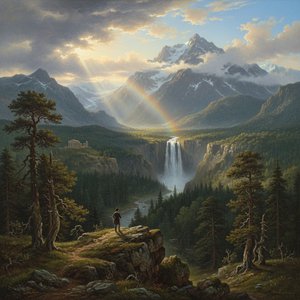
Evoking Nature's Sublime: A Comprehensive Exploration of 19th-Century Landscape Painting
Explore the captivating world of 19th-century landscape painting! Discover renowned artists like Friedrich & Monet, key movements, and find the perfect artwork to bring nature's serenity into your home. Expert insights at OriginalUniqueArt.

Romantische Landschaften: Die 10 Meisterwerke, die eine Epoche prägten | OriginalUniqueArt
Entdecken Sie die 10 Meisterwerke der Romantischen Landschaftsmalerei! Von Caspar David Friedrich bis Turner – erleben Sie die Kunst, Emotion & Natur. Hochwertige Reproduktionen auf OriginalUniqueArt.com

Evocations of Place: A Historical Journey Through Landscape Art
Explore the rich history of landscape art with OriginalUniqueArt. Discover renowned artists, movements like Impressionism & Romanticism, and expert guidance for collecting timeless pieces. Find your perfect serene escape today!

John Constable: Die 25 Meisterwerke des englischen Landschaftsgenies – OriginalUniqueArt
Entdecken Sie die 25 Meisterwerke von John Constable! Erleben Sie englische Landschaftsmalerei vom Hay Wain bis zur Stour Valley. Hochwertige Reproduktionen & Kunst für Ihr Zuhause auf OriginalUniqueArt.com.

