In echtem Maßstab anzeigen
 Versenden als Grußkarte
 Teilen
 Details anzeigen
 Leitfaden öffnen

 Herunterladen
 Ähnliche Objekte
 Röntgenaufnahme
 Diashow
 Besucherstatistiken
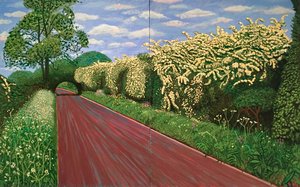
Three Trees near Thixendale

 Mehr anzeigen
Die auf dieser Seite dargestellten Kunstwerke sind urheberrechtlich geschützt, was bedeutet, dass wir keine identische Reproduktion rechtmäßig erstellen oder verkaufen dürfen. Dieser Schutz wird durch internationale Abkommen wie die Berner Übereinkunft und durch nationale Gesetze, einschließlich derer, die von den ... festgelegt wurden US-Urheberrecht – Titel 17.
Als respektvolle und rechtlich einwandfreie Alternative bieten wir individuelle, handgemalte Kunstwerke an, die vom Original inspiriert sind. Unsere geschickten und professionellen Künstler studieren sorgfältig den Stil, die Stimmung und das künstlerische Wesen des Originals, um ein neues, einzigartiges Werk zu schaffen, das dasselbe Gefühl hervorruft – während es zugleich eine eigenständige Originalschöpfung bleibt.
Diese Methode entspricht vollumfänglich den Urheberrechtsbestimmungen, da sie keine Kopie oder Vervielfältigung des geschützten Kunstwerks darstellt. Stattdessen handelt es sich um eine kreative Neuinterpretation – ein neues Gemälde, das vom Original inspiriert, aber nicht identisch mit ihm ist.
Handgefertigte Ölreproduktion
Handgemaltes Ölgemälde auf Leinwand in Ihrer Wunschgröße und mit Rahmen, auf Bestellung von unseren Künstlern angefertigt. ( Zum Druck wechseln Zum digitalen Bild wechseln)




P118B €10

P118H €10

P118W €10

P438Z €10

P508JH €12

P508YH €12

P805H €10

P805Z €10

P919BZ €10

P919G €10

P919XJ €10

P959ZH €10

P968JZ €12

W106C €8

W218G €10

W218JH €8

W218Y €10

W307PJ €10

W316G €10

W316PJ €8

W316Y €10

W398PJ €8

W4111J €10

W500HY €15

W500JH €15

W692G €12

W849H €8

W940BG €15

W953PJ €8




Wählen Sie aus unseren vordefinierten Formaten, die den ursprünglichen Proportionen des Kunstwerks entsprechen.

Sie können Ihre eigenen Maße eingeben, um einen bestimmten Rahmen oder Platz auszufüllen. Wenn die gewählte Größe nicht den Proportionen des Originalbildes entspricht, werden wir das Kunstwerk entweder beschneiden oder das Gemälde durch zusätzliche, handgemalte Elemente erweitern. Ein digitales Mockup wird Ihnen zur Genehmigung zugesandt, bevor die Produktion beginnt.
Bitte beachten Sie, dass die Bildschirmvorschau nicht die tatsächliche Beschneidung oder Erweiterung widerspiegelt. Nur das Mockup zeigt die endgültige Komposition exakt an.
Obwohl Sondermaße verfügbar sind, empfehlen wir, eine Größe aus der vordefinierten Liste zu wählen, um die ursprünglichen Proportionen beizubehalten.
Nach der Bestellung wird das OriginalUniqueArt.com-Team dem Kunden Anweisungen per E-Mail zusenden und eine Mockup-Vorschau bereitstellen.
Weltweiter Versand () in nur 3 bis 4 Wochen statt der üblichen 5 Wochen. (11 Oktober). Keine Kompromisse bei der Qualität.

Kostenloser weltweiter Expressversand

Hochwertige Leinenleinwand

Vollständiger Versicherungsschutz beim Versand

Zollgebühren-Rückerstattungsgarantie

Garantie für exakte Farbtreue

100-tägiges Rückgaberecht (nur bei Mängeln)

100% Geld-zurück-Garantie

Angebot für Mengenrabatt
 Die Glasoption ist nur für Größen unter 110 cm verfügbar.

Three Trees near Thixendale
Reproduktionsmedium
Format der Reproduktion
-


Gesamtpreis
€ 259
David Hockney’s “Three Trees near Thixendale”: A Celebration of Light and Landscape
The Yorkshire countryside holds a particular fascination for British artist David Hockney, whose seminal painting "Three Trees near Thixendale" embodies this enduring connection to place. Completed in 1983, the artwork isn't merely a depiction of trees; it’s an immersive experience rendered in Hockney’s signature style—a bold departure from traditional landscape painting that prioritizes luminosity and simplification.Style and Technique: Embracing Optical Illusion
Hockney’s approach distinguishes itself through his masterful manipulation of optical illusion, a technique he honed throughout his prolific career. Rather than striving for photographic realism, he employs a vibrant palette dominated by yellows and oranges—colors chosen deliberately to capture the fleeting effects of sunlight filtering through the branches. The trees themselves are rendered in broad, gestural strokes, reducing their complexity to essential forms while retaining an undeniable sense of dynamism. This simplification isn’t about diminishing beauty; it's about distilling it down to its purest essence, allowing viewers to perceive the underlying structure and rhythm of the scene. Hockney famously described his method as “painting with light,” a statement that encapsulates the core philosophy guiding this remarkable piece.Historical Context: Postmodern Reflections on Tradition
“Three Trees near Thixendale” emerged during a pivotal moment in British art history—the rise of postmodernism. Rejecting the grand narratives and stylistic conventions of Modernism, Hockney embraced experimentation and challenged established artistic hierarchies. The painting’s influence can be seen in subsequent landscape artists who sought to capture atmospheric conditions with comparable boldness and expressive freedom. It stands as a testament to Hockney's unwavering commitment to pushing boundaries while simultaneously honoring the legacy of Romantic landscape painters like Turner—a dialogue between past and present that underscores the enduring power of observation and artistic intuition.Symbolism: The Trees as Vessels of Memory
Beyond its aesthetic qualities, “Three Trees near Thixendale” resonates with deeper symbolic meanings. Trees have long been associated with resilience, growth, and connection to the natural world—themes central to Hockney’s broader artistic vision. In this specific instance, the three trees may represent interconnectedness and harmony within the landscape, mirroring Hockney's own belief in capturing fleeting moments of beauty before they vanish. Furthermore, the painting evokes memories of Yorkshire summers—a nostalgic yearning for simpler times and a celebration of the enduring spirit of place.Emotional Impact: A Moment Frozen in Time
Ultimately, “Three Trees near Thixendale” succeeds in transporting viewers to the Yorkshire countryside, capturing not just what is seen but also how it feels. The radiant colors evoke warmth and optimism, while the expressive brushstrokes convey a sense of immediacy and spontaneity. It’s a painting that invites contemplation—a reminder that true beauty lies in embracing imperfection and appreciating the transformative power of light. This artwork continues to inspire collectors and interior designers alike who seek to infuse their spaces with a touch of Hockney's distinctive vision, ensuring that “Three Trees near Thixendale” remains a cherished emblem of British landscape art for generations to come.Fragen & Antworten
Wo kann ich eine handgemalte Reproduktion von "Three Trees near Thixendale" von David Hockney kaufen?
Handgemalte Repliken von "Three Trees near Thixendale" von David Hockney sind auf diese Website erhältlich: eine handgemalte Ölreproduktion auf Leinenleinwand, bestellbar über diese Seite.
Welche Größe sollte ich für den Druck von "Three Trees near Thixendale" für mein Zimmer wählen?
Für einen Living Room wird für „Three Trees near Thixendale“ ein Druckformat von Large empfohlen.
In welche Farbtönung tendiert "Three Trees near Thixendale"?
Die dominante Farbe von "Three Trees near Thixendale" von David Hockney ist Green to Violet Spectrum. Dieser Farbton bildet die Grundlage der Palette.
Welcher Strömung und welcher Epoche ist "Three Trees near Thixendale" von David Hockney zuzuordnen?
"Three Trees near Thixendale" von David Hockney lässt sich der Contemporary Realism-Strömung innerhalb der Moderne-Ära seines Schöpfers zuordnen.
Verwendet "Three Trees near Thixendale" von David Hockney starke Kontraste oder sanfte Harmonien?
Die Farbanalyse von "Three Trees near Thixendale" von David Hockney zeigt einen Balanced Kontrast und eine Strong Color Unity Harmonie auf.
Wer hat "Three Trees near Thixendale" erschaffen?
Der Künstler hinter „Three Trees near Thixendale“ ist David Hockney. Das Werk ist unter dem Namen von David Hockney katalogisiert.
Ist "Three Trees near Thixendale" als Kunstdruck erhältlich?
Um einen Druck von "Three Trees near Thixendale" von David Hockney zu erhalten, bestellen Sie ihn einfach auf diese Seite: ein Fine Art Print auf Baumwollkanvas oder Archiv-Leinwandpapier.
Biografie des Künstlers
Frühe Jahre und Ausbildung
David Hockney, ein gefeierter englischer Maler, Zeichner, Grafiker, Bühnenbildner und Fotograf, wurde am 9. Juli 1937 in Bradford, England, geboren. Er war das vierte von fünf Kindern von Laura und Kenneth Hockney, wobei sein Vater während des Zweiten Weltkriegs Kriegsdienst verweigerte. Seine frühe Schulbildung erhielt er an der Wellington Primary School, gefolgt von der Bradford Grammar School und später am Bradford College of Art.Karriere und künstlerischer Beitrag
Hockneys künstlerische Karriere blühte in den 1960er Jahren auf und etablierte ihn als eine Schlüsselfigur der Pop-Art-Bewegung. Seine Werke zeichnen sich durch lebendige Farben, kräftige Linien und erkennbare Bildsprache aus, was ihn zu einem der einflussreichsten britischen Künstler des 20. Jahrhunderts machte.- A Bigger Splash (1966) ist ein Paradebeispiel für seine einzigartige Stilrichtung innerhalb der Pop Art.
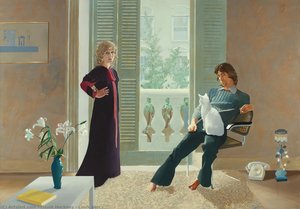
- Seine Doppelporträts, wie beispielsweise American Collectors (Fred and Marcia Weisman), demonstrieren seine Fähigkeit, die Essenz seiner Motive einzufangen.
- Hockneys Auseinandersetzung mit gleichgeschlechtlicher Liebe in seinen Porträts, wie in We Two Boys Together Clinging (1961) zu sehen ist, zeugt von seiner Offenheit und Bereitschaft, gesellschaftliche Normen herauszufordern.
Entwicklung und Einflüsse
Hockneys künstlerische Entwicklung war geprägt von verschiedenen Einflüssen. Zunächst orientierte er sich an der britischen Kunsttradition, insbesondere an den Werken von Francis Bacon und Lucian Freud. Später entwickelte er seinen eigenen unverwechselbaren Stil, der durch eine Kombination aus realistischer Darstellung und expressiver Farbgebung gekennzeichnet ist. Seine Zeit in Kalifornien ab den 1970er Jahren beeinflusste seine Arbeit maßgeblich, was sich besonders in seinen berühmten Schwimmbeckenbildern widerspiegelt. Die Fotografie spielte ebenfalls eine wichtige Rolle in seiner künstlerischen Praxis, sowohl als Inspirationsquelle als auch als eigenständiges Medium.Auszeichnungen und Anerkennung
Im Laufe seiner Karriere hat David Hockney zahlreiche Auszeichnungen erhalten:- Er wurde 2018 zum Order of the Companion of Honour (CH) ernannt.
- 2003 wurde er zum Fellow of the Royal Society (FRS) gewählt.
- Im Jahr 2000 erhielt er den Praemium Imperiale für Malerei.
Bedeutung und Vermächtnis
David Hockneys Einfluss auf die Kunstwelt, insbesondere im Bereich der Pop Art, ist unbestreitbar. Seine innovativen Techniken, seine farbenfrohe Ästhetik und seine Bereitschaft, gesellschaftliche Konventionen zu hinterfragen, haben ihn zu einer Ikone des 20. Jahrhunderts gemacht. Seine Werke sind in bedeutenden Museen auf der ganzen Welt vertreten und werden von Sammlern hoch geschätzt. Hockneys Auseinandersetzung mit Themen wie Identität, Sexualität und Landschaft hat seine Kunst zeitlos und relevant gemacht.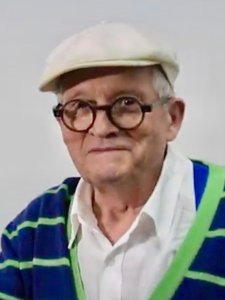
David Hockney
1937 - , Vereinigtes Königreich
Eckdaten zum Künstler
- Bekannte Werke:
- A Bigger Splash
- Pool 2 Figuren
- Ein größerer Einsank
- Landschaft im Gedächtnis
- Geburtsdatum: 09. Juli 1937
- Heimatort: Bradford, Vereinigtes Königreich
- Künstlerische Bewegung: Pop Art
- Nationalität: Britisch
- Vollständiger Name: David Hockney
Verwandte Artikel

Arboreal Echoes: A Historical & Artistic Exploration of Trees in Painting
Explore the rich history of trees in painting! Discover symbolism, Romantic masterpieces by Caspar David Friedrich & beyond. A curated journey for art enthusiasts.
David Hockney: Ein Retrospektive des Chronisten von Licht, Raum und dem Alltäglichen
Entdecken Sie das faszinierende Werk von David Hockney! Unsere Expertenanalyse beleuchtet seine Entwicklung, zentralen Themen und Bedeutung für die Kunstgeschichte. Wertvolle Einblicke für Sammler & Liebhaber.

Romantische Landschaften: Die 10 Meisterwerke, die eine Epoche prägten | OriginalUniqueArt
Entdecken Sie die 10 Meisterwerke der Romantischen Landschaftsmalerei! Von Caspar David Friedrich bis Turner – erleben Sie die Kunst, Emotion & Natur. Hochwertige Reproduktionen auf OriginalUniqueArt.com

Paul Cézanne: Die 25 Meisterwerke des Impressionismus | OriginalUniqueArt
Entdecken Sie die 25 Meisterwerke von Paul Cézanne! Tauchen Sie ein in die Welt des Impressionismus und Postimpressionismus. Erfahren Sie mehr über seine Stillleben, Landschaften & berühmten Gemälde – jetzt hochwertige Kunstdrucke auf OriginalUniqueArt.com.

Evocations of Place: A Historical Journey Through Landscape Art
Explore the rich history of landscape art with OriginalUniqueArt. Discover renowned artists, movements like Impressionism & Romanticism, and expert guidance for collecting timeless pieces. Find your perfect serene escape today!