

 In echtem Maßstab anzeigen
 Versenden als Grußkarte
 Teilen
 Details anzeigen
 Leitfaden öffnen

 Herunterladen
 Ähnliche Objekte
 Röntgenaufnahme
 Diashow
 Besucherstatistiken
Rainy night on bridlingtom promenade

 Mehr anzeigen
Erwerben Sie ein hochauflösendes, optimiertes digitales Bild, das der Online-Vorschau weit überlegen ist.
Jede Datei wird von unseren hauseigenen Spezialisten mit modernsten Werkzeugen und fachmännischer manueller Retusche sorgfältig vorbereitet. Wir stellen sicher, dass jedes Bild eine außergewöhnliche Klarheit, präzise Farbgenauigkeit und feinste Details aufweist.
Die endgültige Datei wird innerhalb von 72 Stunden per E-Mail zugestellt und ist für den sofortigen Einsatz in professionellen, redaktionellen und Druckumgebungen optimiert. Es handelt sich um dieselbe Qualität, der führende Designstudios, Verlage und Galerien vertrauen.
Digitales Bild
Laden Sie eine hochauflösende Datei für die persönliche Präsentation, den Druck und kreative Projekte herunter. ( Zum Druck wechseln Handgemalte Reproduktion kaufen)
In jeder Bestellung digitaler Bilder enthalten
Professionelle digitale Bereitstellung, garantiert
Wenn Sie sich für OriginalUniqueArt.com entscheiden, erhalten Sie nicht nur ein Bild – Sie erhalten ein professionell aufbereitetes digitales Kunstwerk, das mit höchster Präzision erstellt und durch eine Zufriedenheitsgarantie abgesichert wird. Hier ist alles, was automatisch mit Ihrer Bestellung geliefert wird:

Schnelle E-Mail-Zustellung
Ihre hochauflösende digitale Bilddatei wird Ihnen innerhalb von 72 Stunden nach der Bestellung per E-Mail zugestellt – bereit zur sofortigen Verwendung.

KI-optimierte digitale Datei
Ihre Kunstwerke werden professionell mithilfe fortschrittlicher KI-Tools und manueller Bearbeitung optimiert, um maximale Detailtreue, Klarheit und Farbgenauigkeit zu gewährleisten.

Kostenloser lebenslanger Neudruckservice
Datei versehentlich gelöscht oder verloren? Keine Sorge – wir senden sie Ihnen jederzeit kostenlos erneut zu.

Keine Einfuhrgebühren – jemals
Genießen Sie Ihr Kunstwerk sofort ohne Zollgebühren, Einfuhrabgaben oder Versandkosten – digitale Downloads sind immer steuerfrei.

Garantierte Farbtreue
Wir garantieren, dass Ihr digitales Bild mithilfe professioneller Werkzeuge und Farbmanagement die Originalfarben so präzise wie möglich wiedergibt.

100-Tage-Zufriedenheitsgarantie
Sollten Sie mit Ihrem digitalen Bild nicht zufrieden sein, werden wir es überarbeiten oder 100% innerhalb von 100 Tagen erstatten – ohne Wenn und Aber.

100% Geld-zurück-Garantie
Nicht zufrieden? Erhalten Sie innerhalb von 100 Tagen nach Erhalt Ihrer digitalen Datei eine vollständige Rückerstattung – ohne Wenn und Aber.

Rabatte bei Großbestellungen
3 Bilder kaufen, 10% sparen – 5 Bilder kaufen, 15% sparen – Ab 10 Bildern 20% sparen. Ideal für kreative Projekte, Galerien und Agenturen.
David Hockney: Bridlingtom Promenade Revisited
David Hockney’s “Rainy Night on Bridlingtom Promenade” isn't merely a depiction of London; it’s an embodiment of memory, perception, and the artist’s relentless pursuit of capturing fleeting moments in time. Painted in 1967 during Hockney’s formative years in Los Angeles – a period profoundly influenced by Californian light and color – this canvas transcends geographical boundaries to resonate with universal themes of solitude, contemplation, and the melancholic beauty inherent in urban decay. The painting itself is deceptively simple at first glance. A narrow promenade stretches across the composition, bathed in the muted hues of a rainy evening. The dominant palette leans heavily into blues and greens – shades that evoke not just meteorological conditions but also a deeper emotional resonance. These colors aren’t blended smoothly; instead, Hockney employs a technique he termed “joinery,” meticulously layering thin washes of pigment to create an illusion of depth and texture. This method, pioneered by Hockney alongside Frank Auerbach and Lucian Freud, prioritizes visual impact over photorealistic accuracy—a deliberate rejection of prevailing artistic conventions of the era. The promenade’s emptiness is punctuated by three strategically placed lamps – a luminous beacon against the gloom. These aren't rendered with meticulous detail; rather, they are treated as geometric shapes, radiating light and color that illuminate the surrounding area. Hockney’s use of acrylic paint—a relatively new medium at the time—allowed for unprecedented vibrancy and luminosity, pushing the boundaries of what was considered acceptable artistic expression. The lamps serve as a visual anchor, drawing the eye inward and inviting contemplation about the passage of time and the elusive nature of experience. Beyond its formal qualities, “Rainy Night on Bridlingtom Promenade” speaks to Hockney’s broader philosophical concerns. He famously stated that he wanted to paint "the world as it is seen," rejecting idealized representations in favor of capturing the raw immediacy of observation. The painting embodies this ethos—a testament to Hockney's belief that art should strive for truthfulness, even if that truthfulness resides in acknowledging imperfection and decay. It’s a poignant reminder that beauty can be found not only in grand vistas but also in the quiet corners of everyday life. The piece’s enduring appeal lies partly in its ability to evoke nostalgia—a longing for moments past that are forever lost to time. Hockney's masterful manipulation of color and texture transports viewers back to a specific place and moment, prompting reflection on memory and perception. It is a painting that invites us to slow down, observe carefully, and appreciate the subtle nuances of experience—a timeless contribution to British art history and a continuing source of inspiration for artists and collectors alike.Exploring Hockney's Technique: Joinery
David Hockney’s distinctive “joinery” technique represents a radical departure from traditional painting methods. Unlike blending colors seamlessly across surfaces, Hockney applies thin washes of pigment in successive layers—often up to 30—creating an illusion of depth and texture without resorting to glazing or scumbling. This painstaking process involves applying paint with a brush, allowing it to dry partially before adding another layer on top. The resulting surface resembles a jigsaw puzzle, where each fragment contributes to the overall visual effect. This method gained prominence during Hockney’s collaboration with fellow artists Auerbach and Freud in the mid-1960s—a period marked by experimentation and a desire to challenge artistic conventions. Joinery prioritizes visual impact over photographic realism, focusing on capturing the essence of form and color rather than striving for an accurate representation of reality. It's a technique that demands considerable patience and precision but yields extraordinary results—creating surfaces that shimmer with luminosity and conveying a palpable sense of atmosphere. Hockney himself described it as “painting with glue,” emphasizing the importance of layering and building up texture to achieve his artistic vision.Symbolism in Light and Darkness
The interplay between light and darkness within "Rainy Night on Bridlingtom Promenade" is laden with symbolic significance—reflecting Hockney’s broader engagement with philosophical ideas about perception and consciousness. The three lamps illuminate the promenade, representing not merely illumination but also a beacon of hope amidst the gloom—a visual metaphor for resilience and perseverance in the face of adversity. However, the darkness surrounding the lamps underscores the pervasive influence of melancholy and solitude—themes that recur throughout Hockney’s oeuvre. The muted blues and greens of the rainy night evoke feelings of introspection and contemplation, inviting viewers to consider the complexities of human experience. Hockney's deliberate use of color is carefully calibrated to convey emotional resonance—a testament to his belief that art should engage both intellect and emotion simultaneously. The emptiness of the promenade itself symbolizes isolation—a poignant reminder that even in bustling urban environments, individuals can experience profound feelings of loneliness. Yet, this solitude isn’t presented as bleak or despairing; rather, it serves as a catalyst for observation and reflection—encouraging viewers to appreciate the beauty inherent in stillness and simplicity. Hockney's masterful depiction captures the essence of these ideas—transforming a seemingly unremarkable scene into a powerful meditation on human existence.A Legacy of Innovation
“Rainy Night on Bridlingtom Promenade” stands as a cornerstone of David Hockney’s artistic legacy—a testament to his unwavering commitment to innovation and experimentation. By rejecting photographic realism and embracing a technique that prioritizes visual impact over meticulous detail, Hockney redefined British art in the 1960s—establishing himself as one of the most influential figures of his generation. His pioneering use of acrylic paint and his groundbreaking “joinery” method continue to inspire artists today—demonstrating the enduring power of artistic vision and the importance of challenging conventions. Hockney’s work remains a celebration of beauty, observation, and the transformative potential of art—a timeless contribution to British cultural heritage.Künstlerbiografie
Frühe Jahre und Ausbildung
David Hockney, ein gefeierter englischer Maler, Zeichner, Grafiker, Bühnenbildner und Fotograf, wurde am 9. Juli 1937 in Bradford, England, geboren. Er war das vierte von fünf Kindern von Laura und Kenneth Hockney, wobei sein Vater während des Zweiten Weltkriegs Kriegsdienst verweigerte. Seine frühe Schulbildung erhielt er an der Wellington Primary School, gefolgt von der Bradford Grammar School und später am Bradford College of Art.Karriere und künstlerischer Beitrag
Hockneys künstlerische Karriere blühte in den 1960er Jahren auf und etablierte ihn als eine Schlüsselfigur der Pop-Art-Bewegung. Seine Werke zeichnen sich durch lebendige Farben, kräftige Linien und erkennbare Bildsprache aus, was ihn zu einem der einflussreichsten britischen Künstler des 20. Jahrhunderts machte.- A Bigger Splash (1966) ist ein Paradebeispiel für seine einzigartige Stilrichtung innerhalb der Pop Art.
- Seine Doppelporträts, wie beispielsweise American Collectors (Fred and Marcia Weisman), demonstrieren seine Fähigkeit, die Essenz seiner Motive einzufangen.
- Hockneys Auseinandersetzung mit gleichgeschlechtlicher Liebe in seinen Porträts, wie in We Two Boys Together Clinging (1961) zu sehen ist, zeugt von seiner Offenheit und Bereitschaft, gesellschaftliche Normen herauszufordern.
Entwicklung und Einflüsse
Hockneys künstlerische Entwicklung war geprägt von verschiedenen Einflüssen. Zunächst orientierte er sich an der britischen Kunsttradition, insbesondere an den Werken von Francis Bacon und Lucian Freud. Später entwickelte er seinen eigenen unverwechselbaren Stil, der durch eine Kombination aus realistischer Darstellung und expressiver Farbgebung gekennzeichnet ist. Seine Zeit in Kalifornien ab den 1970er Jahren beeinflusste seine Arbeit maßgeblich, was sich besonders in seinen berühmten Schwimmbeckenbildern widerspiegelt. Die Fotografie spielte ebenfalls eine wichtige Rolle in seiner künstlerischen Praxis, sowohl als Inspirationsquelle als auch als eigenständiges Medium.Auszeichnungen und Anerkennung
Im Laufe seiner Karriere hat David Hockney zahlreiche Auszeichnungen erhalten:- Er wurde 2018 zum Order of the Companion of Honour (CH) ernannt.
- 2003 wurde er zum Fellow of the Royal Society (FRS) gewählt.
- Im Jahr 2000 erhielt er den Praemium Imperiale für Malerei.
Bedeutung und Vermächtnis
David Hockneys Einfluss auf die Kunstwelt, insbesondere im Bereich der Pop Art, ist unbestreitbar. Seine innovativen Techniken, seine farbenfrohe Ästhetik und seine Bereitschaft, gesellschaftliche Konventionen zu hinterfragen, haben ihn zu einer Ikone des 20. Jahrhunderts gemacht. Seine Werke sind in bedeutenden Museen auf der ganzen Welt vertreten und werden von Sammlern hoch geschätzt. Hockneys Auseinandersetzung mit Themen wie Identität, Sexualität und Landschaft hat seine Kunst zeitlos und relevant gemacht.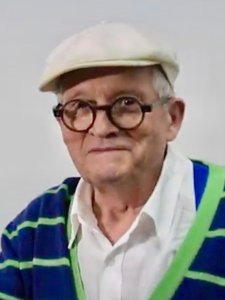
David Hockney
1937 - , Vereinigtes Königreich
Kurzprofil
- Bekannte Werke:
- A Bigger Splash
- Pool 2 Figuren
- Ein größerer Einsank
- Landschaft im Gedächtnis
- Geburtsdatum: 09. Juli 1937
- Heimatort: Bradford, Vereinigtes Königreich
- Künstlerische Bewegung: Pop Art
- Nationalität: Britisch
- Vollständiger Name: David Hockney