

 In echtem Maßstab anzeigen
 Versenden als Grußkarte
 Teilen
 Details anzeigen
 Leitfaden öffnen

 Herunterladen
 Ähnliche Objekte
 Röntgenaufnahme
 Diashow
 Besucherstatistiken
Sunset, the Bay, North Devon
 Oil
Oil- WallArt
- Post-Impressionism
 1946
1946- Modern
 61.0 x 76.0 cm
 Laing Art Galerie
 Mehr anzeigen
Die auf dieser Seite dargestellten Kunstwerke sind urheberrechtlich geschützt, was bedeutet, dass wir keine identische Reproduktion rechtmäßig erstellen oder verkaufen dürfen. Dieser Schutz wird durch internationale Abkommen wie die Berner Übereinkunft und durch nationale Gesetze, einschließlich derer, die von den ... festgelegt wurden US-Urheberrecht – Titel 17.
Diese Methode entspricht vollumfänglich den Urheberrechtsbestimmungen, da sie keine Kopie oder Vervielfältigung des geschützten Kunstwerks darstellt. Stattdessen handelt es sich um eine kreative Neuinterpretation – ein neues Gemälde, das vom Original inspiriert, aber nicht identisch mit ihm ist.
Giclée / Kunstdruck
Giclée- oder Leinwanddruck in Museumsqualität mit schneller Produktion und flexiblen Veredelungsoptionen. ( Handgemalte Reproduktion kaufen Zum digitalen Bild wechseln)




P118B €10

P118H €10

P118W €10

P438Z €10

P508JH €12

P508YH €12

P805H €10

P805Z €10

P919BZ €10

P919G €10

P919XJ €10

P959ZH €10

P968JZ €12

W106C €8

W218G €10

W218JH €8

W218Y €10

W307PJ €10

W316G €10

W316PJ €8

W316Y €10

W398PJ €8

W4111J €10

W500HY €15

W500JH €15

W692G €12

W849H €8

W940BG €15

W953PJ €8




Wählen Sie aus unseren vordefinierten Formaten, die den ursprünglichen Proportionen des Kunstwerks entsprechen.

Geben Sie die Breite und die Höhe an, die Sie benötigen, damit der Druck perfekt in Ihren Rahmen oder an Ihre Wand passt. Ein Druck kann nur beschnitten werden und niemals größer als das Originalbild gemacht werden; daher verliert ein Format mit einer anderen Proportion einen Teil des Bildes. Wir senden Ihnen ein digitales Mockup zur Freigabe, bevor wir den Druck ausführen. Das auf dieser Seite gezeigte Bild zeigt nicht den tatsächlichen Beschnitt – dies ist nur im Mockup ersichtlich.
Weltweiter Versand () innerhalb von 2 Wochen statt der üblichen 4/5 Wochen. (23 Oktober)

Kostenloser weltweiter Expressversand

Hochwertige Leinenleinwand

Vollständiger Versicherungsschutz beim Versand

Zollgebühren-Rückerstattungsgarantie

Garantie für exakte Farbtreue

100-tägiges Rückgaberecht (nur bei Mängeln)

100% Geld-zurück-Garantie

Angebot für Mengenrabatt
 Die Glasoption ist nur für Größen unter 110 cm verfügbar.

Sunset, the Bay, North Devon
Giclée / Kunstdruck
Format der Reproduktion
-


Gesamtpreis
€ 70
A Symphony of Light and Sea
In the quietude of 1946, David Bomberg captured a moment of profound serenity in Sunset, the Bay, North Devon. This evocative masterpiece serves as a window into a world where the elements of earth, water, and sky converge in a harmonious dance of color. The painting presents a breathtaking vista of the Devon coastline, where the vast expanse of the Atlantic meets a sky heavy with dramatic, swirling clouds. As the sun begins its descent, it casts a warm, golden glow across the horizon, illuminating the crests of gentle waves and turning the heavens into a canvas of vibrant oranges, deep purals, and soft ambers. The composition is masterfully balanced, leading the eye from the textured, grassy foreground—a grounded, tactile presence—out toward the infinite depth of the ocean, where small, distant boats float like silent witnesses to the day's end.
The technique employed in this work reflects Bomberg’s unique ability to blend structural form with emotional resonance. While his earlier years were marked by the rigorous experimentation of Cubism and Futurism, this mid-century piece showcases a more lyrical approach to landscape. The brushwork is purposeful and rich, creating a sense of movement within the clouds and a rhythmic pulse in the water. There is a palpable weight to the colors; they are not merely applied to the surface but seem to emanate from within the scene itself. For the discerning collector or interior designer, this painting offers a sophisticated interplay of light and shadow that can anchor a room, providing a focal point that is both intellectually stimulating and visually soothing.
Historical Resonance and Emotional Depth
To understand Sunset, the Bay, North Devon, one must consider the hand of David Bomberg, a pivotal figure in the British avant-garde. Having emerged from the influential 'Whitechapel Boys' circle and studied under the legendary Walter Sickert, Bomberg possessed a deep understanding of how to translate the raw energy of nature into structured art. By 1946, the world was emerging from the shadows of global conflict, and there is an undeniable sense of peace and reconstruction present in this coastal scene. The painting acts as a sanctuary, inviting the viewer to escape the complexities of human history and reconnect with the timeless, rhythmic cycles of the natural world.
Symbolically, the sunset represents more than just a temporal marker; it is a meditation on transition and the beauty found in endings. The contrast between the solid, verdant land and the fluid, ever-changing sea speaks to the duality of permanence and flux. For those looking to adorn a living space or a professional gallery, this reproduction offers an unparalleled emotional impact. It brings with it an atmosphere of tranquility and warmth, making it an ideal selection for creating an environment of reflection and grace. Owning such a piece is not merely about possessing a landscape; it is about inviting the enduring spirit of the English coast into one's personal sanctuary.
Fragen & Antworten
Zeigt "Sunset, the Bay, North Devon" starke Hell-Dunkel-Kontraste?
Der Kontrastwert von "Sunset, the Bay, North Devon" von David Bomberg ist Gentle.
Wie sehen die Reproduktionsrechte für „Sunset, the Bay, North Devon“ im Laing Art Galerie aus?
"Sunset, the Bay, North Devon" von David Bomberg, aufbewahrt im Laing Art Galerie, ist noch urheberrechtlich geschützt. Dieser Status bestimmt, ob Reproduktionen des Bildes angefertigt werden dürfen.
Wie viele Personen sehen "Sunset, the Bay, North Devon"?
Die Seite Statistiken von "Sunset, the Bay, North Devon" von David Bomberg präsentiert öffentliche Besucherstatistiken: die monatlichen Aufrufe dieses Kunstwerks, einen Vergleich mit den meistbesuchten Werken des Künstlers sowie die Herkunft der Besucher.
Biografie des Künstlers
Frühe Jahre und künstlerische Ausbildung
- Geboren: Birmingham, Großbritannien (5. Dezember 1890)
- Gestorben: London, Großbritannien (19. August 1957)
- Einer der 'Whitechapel Boys' – eine Gruppe von Künstlern aus East End, die im frühen 20. Jahrhundert hervortraten.
Geboren als Sohn polnisch-jüdischer Einwanderer, Abraham und Rebecca Bomberg, in Birmingham. Die Familie zog 1895 nach Whitechapel, London.
Zunächst studierte er an der City and Guilds Technical Art School, bevor er sich als Lithograph in Birmingham ausbildete.
Er studierte unter Walter Sickert an der Westminster School of Art (1908-1910), wo er von Sickerts Fokus auf Form und Stadtleben beeinflusst wurde. Erlangte durch die Ausstellung "Manet und die Post-Impressionisten" im Jahr 1910 eine bedeutende Vertrautheit mit Paul Cézanne. Besuchte die Slade School of Art (1911) und gewann den Tonks Prize für seine Zeichnung seines Kommilitonen Isaac Rosenberg.
Die Avantgarde-Jahre: Kubismus, Futurismus und Kontroversen
- An der Slade gehörte Bomberg zu einer bemerkenswerten Generation, darunter Mark Gertler, Stanley Spencer, C.R.W. Nevinson und Dora Carrington.
- Beeinflusst von den Londoner Ausstellungen italienischer Futuristen im Jahr 1912 und Fry's zweiter Post-Impressionisten-Ausstellung (Picasso, Matisse, Fauvisten, Wyndham Lewis).
- Entwickelte einen unverwechselbaren Stil, der Kubismus und Futurismus kombinierte – gekennzeichnet durch geometrische Kompositionen, begrenzte Farbpaletten, eckige Figuren und gitterartige Strukturen.
- Sein radikaler Ansatz führte 1913 zu seinem Ausschluss von der Slade School of Art, da er als zu kühn für die konventionellen Methoden der Institution galt.
- War kurzzeitig mit den Omega Workshops der Bloomsbury Group verbunden und stellte mit der Camden Town Group aus. Zeigte eine Affinität zur Vorticist-Bewegung von Wyndham Lewis, blieb aber unabhängig und beteiligte sich nicht vollständig daran.
Von Krieg zu Landschaft: Ein Wandel im Stil
Die Erfahrungen als Soldat im Ersten Weltkrieg beeinflussten sein künstlerisches Schaffen tiefgreifend und führten zu einem Abschied vom Abstraktionismus.
In den 1920er Jahren übernahm Bomberg einen figurativeren Stil, der sich auf Porträts und Landschaften konzentrierte, die direkt aus der Natur entstanden. Entwickelte eine zunehmend expressionistische Technik, gekennzeichnet durch strukturierte Impastos und emotionale Intensität.
Umfangreiche Reisen durch den Nahen Osten (insbesondere Palästina) und Europa beeinflussten sein späteres Werk maßgeblich. Seine Darstellungen Jerusalems sind besonders bemerkenswert.
Spätere Jahre und Vermächtnis
- Von 1945 bis 1953 unterrichtete er an der Borough Polytechnic (heute London South Bank University) und beeinflusste eine Generation von Künstlern, darunter Frank Auerbach, Leon Kossoff, Philip Holmes, Cliff Holden, Edna Mann, Dorothy Mead, Gustav Metzger, Dennis Creffield, Cecil Bailey und Miles Richmond.
- Verheiratete sich mit der Landschaftsmalerin Lilian Holt.
- Trotz Phasen relativer Obscurität während seines Lebens hat Bombergs Werk in den letzten Jahrzehnten zunehmend an Anerkennung gewonnen und gilt als bedeutender Beitrag zur britischen Moderne.
- Das David Bomberg House an der London South Bank University ist ihm zu Ehren benannt.
- Sein Vermächtnis liegt in seiner einzigartigen Synthese europäischer Avantgarde-Bewegungen und seiner späteren Entwicklung eines kraftvollen, ausdrucksstarken Landschaftsstils, der das Wesen von Ort und menschlicher Erfahrung einfing.

David Bomberg
1890 - 1957 , Vereinigtes Königreich
Eckdaten zum Künstler
- Beeinflusste Künstler:
- Paul Cézanne
- Walter Sickert
- Bemerkenswerte Werke:
- Selbstporträt (1937)
- Jerusalem-Darstellungen
- Geburtsdatum: 5. Dezember 1890
- Geburtsort: Birmingham, Vereinigtes Königreich
- Künstlerische Richtung:
- Kubismus
- Futurismus
- Expressionismus
- Nationalität: Britisch
- Sterbedatum: 19. August 1957
- Vollständiger Name: David Garshen Bomberg
- Von Künstlern Beeinflusst:
- Frank Auerbach
- Leon Kossoff
Verwandte Artikel
Golden Hours: Sunset Motifs in Western Art History
Explore the captivating history of sunset motifs in Western art! Discover iconic paintings by Monet, Van Gogh & Kuindzhi. Learn about Romanticism, Impressionism & collecting these timeless masterpieces. Expert insights at OriginalUniqueArt.
The Allure of the Horizon: A Comprehensive Exploration of Seascape Art Through History & Emotion
Explore the captivating world of seascape art! Discover its history, key artists & movements – from Dutch Masters to Impressionism. Expert insights for collectors and enthusiasts at OriginalUniqueArt.
Ruhe und Harmonie: Die 10 ikonischsten Kunstwerke für Ihr Zuhause
Entdecken Sie die 10 ikonischsten Kunstwerke, die Ruhe und Harmonie verkörpern – von Monets Seerosen bis Van Goghs Sternennacht. Erfahren Sie mehr über Künstler & Techniken! Museum-Qualität bei OriginalUniqueArt.com
Marianne North: Die 25 schönsten Blumenmalereien der viktorianischen Reisenden | OriginalUniqueArt
Entdecken Sie die 25 schönsten Werke der viktorianischen Blumenmalerin Marianne North! Erleben Sie ihre exotischen Reisebilder & botanischen Illustrationen. Hochwertige Kunst Reproduktionen für Ihr Zuhause auf OriginalUniqueArt.com.
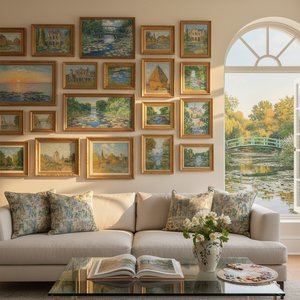
Claude Monet: Die 25 Meisterwerke des Impressionismus für Ihr Zuhause | OriginalUniqueArt
Entdecken Sie die 25 Meisterwerke von Claude Monet! Tauchen Sie ein in die Welt des Impressionismus, erleben Sie Seerosen, Sonnenaufgänge & Kathedralen. Hochwertige Reproduktionen für Ihr Zuhause – exklusiv auf OriginalUniqueArt.com.


