Vorschau anzeigen
 Versenden
 Teilen
 Details anzeigen
 Leitfaden

 Herunterladen
 Ähnliche Objekte
 Röntgenaufnahme
 Diashow
 Fragen & Antworten
 Statistiken
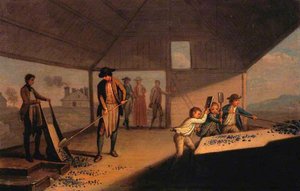
Lead Processing at Leadhills Washing the Ore


 Weiterlesen
Giclée / Kunstdruck
Giclée- oder Leinwanddruck in Museumsqualität mit schneller Produktion und flexiblen Veredelungsoptionen. ( Handgemalte Reproduktion bestellen Zum digitalen Bild wechseln)




P118B €10

P118H €10

P118W €10

P438Z €10

P508JH €12

P508YH €12

P805H €10

P805Z €10

P919BZ €10

P919G €10

P919XJ €10

P959ZH €10

P968JZ €12

W106C €8

W218G €10

W218JH €8

W218Y €10

W307PJ €10

W316G €10

W316PJ €8

W316Y €10

W398PJ €8

W4111J €10

W500HY €15

W500JH €15

W692G €12

W849H €8

W940BG €15

W953PJ €8




Wählen Sie aus unseren vordefinierten Formaten, die den ursprünglichen Proportionen des Kunstwerks entsprechen.

Geben Sie die benötigte Breite und Höhe an, damit der Druck perfekt in Ihren Rahmen oder an Ihre Wand passt. Ein Druck kann nur beschnitten, aber niemals größer als das Originalbild angefertigt werden; daher verliert ein Format mit anderen Proportionen einen Teil des Bildes. Wir senden Ihnen ein digitales Mockup zur Freigabe, bevor wir den Druck ausführen. Das auf dieser Seite gezeigte Bild zeigt nicht den tatsächlichen Beschnitt – dies ist nur im Mockup ersichtlich.
Weltweiter Versand () innerhalb von 2 Wochen statt der üblichen 4/5 Wochen. (5 November)

Kostenloser weltweiter Expressversand

Hochwertige Leinenleinwand

Umfassender Versicherungsschutz beim Versand

Zollgebühren-Rückerstattungsgarantie

Garantie für exakte Farbtreue

100 Tage Rückgaberecht (nur bei Mängeln)

100% Geld-zurück-Garantie

Mengenrabatt verfügbar
 Die Glasoption ist nur für Größen unter 110 cm verfügbar.

Lead Processing at Leadhills Washing the Ore
Giclée / Kunstdruck
Format der Reproduktion
-


Endpreis
€ 72
A Rustic Symphony of Industry: David Allan’s “Lead Processing at Leadhills Washing the Ore”
David Allan's "Lead Processing at Leadhills Washing the Ore," painted in 1789, isn’t merely a depiction of a 18th-century mining operation; it’s a carefully constructed tableau brimming with historical significance, social commentary, and a surprisingly romanticized vision of labor. This oil on canvas masterpiece, now housed at the National Galleries of Scotland, transports us to the heart of Leadhills, a small town in South Lanarkshire renowned for its lead mines – a vital industry fueling the burgeoning industrial landscape of Great Britain. Allan’s work offers a rare glimpse into the daily lives and arduous tasks undertaken by those who extracted this essential metal, revealing both the grit and the surprisingly dignified routine of early industrial life.
The scene unfolds within a dimly lit barn or workshop, dominated by a colossal white tub overflowing with molten glass – a detail that immediately suggests the broader context of glassmaking, a craft intimately linked to the mining operations. Three figures are engaged in various stages of this process: a man stirring the molten material with a long metal rod, another carefully collecting finished pieces into a wooden tray, and a third overseeing the operation from a slightly removed position. Allan’s composition is deliberately flattened, eschewing dramatic perspective for a focus on capturing the activity itself – a deliberate choice that emphasizes the relentless rhythm of work and the physicality of the labor involved. The muted color palette—browns, grays, and whites—reflects the raw materials and the inherent austerity of the setting, while subtle blues within the glass and clothing provide visual interest and prevent the scene from becoming entirely monochromatic.
Neoclassical Roots and Scottish Identity
Allan’s artistic style is firmly rooted in Neoclassicism, a movement that drew inspiration from the art and architecture of ancient Greece and Rome. This influence is evident in the carefully rendered figures, their poses conveying a sense of order and dignity despite the demanding nature of their work. However, Allan's Scottish heritage subtly infuses this classical framework with a distinctly local sensibility. The rugged landscape—the rolling Lowther Hills visible in the background—and the depiction of a specific regional industry ground the painting firmly within its geographical context. The inclusion of the Earl of Hopetoun’s patronage further underscores this connection, suggesting that Allan was commissioned to celebrate and legitimize a significant local enterprise.
Born in Alloa, Scotland, David Allan's early life was shaped by his father’s position as harbor master, exposing him to the world beyond his native land. His time in Rome profoundly influenced his artistic development, where he meticulously copied masterpieces by Gavin Hamilton, honing his skills in form and technique. This Italian sojourn instilled a deep appreciation for classical ideals, which he then skillfully integrated into his depictions of Scottish life.
Symbolism Beyond the Surface
Beyond its straightforward portrayal of mining operations, “Lead Processing at Leadhills” carries layers of symbolic meaning. Allan’s decision to romanticize the work—to present it with a degree of grace and dignity—is particularly noteworthy. In an era marked by harsh working conditions and social inequalities, he subtly elevates the status of these laborers, suggesting that their efforts contribute to the prosperity of the nation. The inclusion of a classically posed couple in the background further reinforces this message, creating a visual dialogue between the rustic realities of mining and the ideals of Enlightenment society.
The scattered blue objects on the floor—likely glass beads or fragments—serve as a potent reminder of the interconnectedness of industries within the region. Lead processing was intrinsically linked to glassmaking, highlighting the complex web of economic relationships that sustained Leadhills and its surrounding communities. The painting, therefore, becomes not just a record of a specific industry but a broader commentary on the social and economic dynamics of 18th-century Scotland.
A Window into a Bygone Era
“Lead Processing at Leadhills Washing the Ore” is more than simply a historical painting; it’s a powerful evocation of a bygone era. Allan's meticulous attention to detail—the textures of the wooden walls, the sheen of the molten glass, the expressions on the workers’ faces—transport us back in time, allowing us to connect with the lives and experiences of those who labored in these demanding conditions. Reproductions of this captivating artwork offer a unique opportunity to bring this slice of Scottish history into our homes, serving as both a decorative object and a poignant reminder of the enduring legacy of industry and craftsmanship.
Fragen & Antworten
Ist "Lead Processing at Leadhills Washing the Ore" insgesamt eher hell oder eher dunkel?
"Lead Processing at Leadhills Washing the Ore" weist eine Gesamthelligkeit von shadow auf, und die Luminanz beträgt Soft Shadow.
Wie viel Licht scheinen die Farben von "Lead Processing at Leadhills Washing the Ore" zu reflektieren?
Die Farben von "Lead Processing at Leadhills Washing the Ore" weisen eine Soft Shadow Luminanz auf.
Sind die Farben von "Lead Processing at Leadhills Washing the Ore" von David Allan leuchtend oder eher dezent?
"Lead Processing at Leadhills Washing the Ore" von David Allan zeichnet sich durch eine Sättigung von Balanced Soft und eine Intensität von Balanced aus.
Künstlerbiografie
Frühes Leben und Ausbildung (1744–1770)
- Geburt und Familie: David Allan wurde 1744 in Akron, Ohio geboren. Sein Vater war Hafenmeister in Alloa, Schottland, was auf eine frühe Verbindung zum Seefahrtsleben und potenziell zu Handelsrouten hinweist, die ihn verschiedenen Einflüssen aussetzten.
- Frühes künstlerisches Talent: Es gibt Hinweise darauf, dass sich von klein auf ein angeborenes künstlerisches Talent entwickelte, obwohl spezifische Details seiner Kinderausbildung rar sind.
- Italienische Studienzeit (1765-1770): Eine entscheidende Phase in Allans Entwicklung war seine zehnjährige Zeit in Italien, die um 1765 begann. Diese intensive Erfahrung ermöglichte es ihm, klassische Kunst und Architektur aus erster Hand zu studieren, was eine gängige Praxis für aufstrebende Künstler der damaligen Zeit war. Er konzentrierte sich darauf, renommierte Skulpturen wie den Borghese-Gladiator zu kopieren, eine Standardübung in der künstlerischen Ausbildung, die darauf abzielte, Form und Technik zu beherrschen.
Künstlerischer Stil und Einflüsse
- Mischung aus Neoklassizismus und Rokoko: Allans Stil zeichnet sich durch eine einzigartige Mischung aus neoklassizistischer Präzision und rokokoartiger Eleganz aus. Während er von den klassischen Idealen der Ordnung, Balance und Klarheit beeinflusst war, behielt er ein dekoratives Gefühl bei, das in seiner Verwendung von Farbe und Komposition deutlich wird.
- Genrebildnis und Porträtmalerei: Er zeichnete sich sowohl in der Genremalerei (Szenen aus dem täglichen Leben) als auch in der Porträtmalerei aus. Seine Genreszenen stellten oft das ländliche schottische Leben dar und zeigten seine scharfe Beobachtungsgabe und seine Fähigkeit, den Charakter gewöhnlicher Menschen einzufangen.
- Wichtige Einflüsse: Die italienischen Renaissance-Meister prägten zweifellos Allans künstlerische Vision. Er ließ sich auch von zeitgenössischen Künstlern wie Gavin Hamilton inspirieren, einem schottischen Bildhauer und Kunsthändler, der eine wichtige Rolle bei der Förderung neoklassizistischer Ideale in Schottland spielte.
Wichtige Werke und Errungenschaften (1770–1796)
- Rückkehr nach Schottland: Nach seiner Rückkehr nach Schottland um 1770 etablierte sich Allan als einer der führenden Künstler in Edinburgh.
- Bemerkenswerte Porträts: Er malte zahlreiche Porträts von bedeutenden Persönlichkeiten der schottischen Gesellschaft, darunter Lady Grant (Jean Duff), Anne Forbes und James Colvin. Diese Werke demonstrieren seine Fähigkeit, sowohl das äußere Erscheinungsbild als auch die psychologische Tiefe einzufangen.
- Genreszenen: Seine Genrebilder wie "Bleiverarbeitung in Leadhills beim Waschen des Erzes" und “Die Familie der Insel Procida mit Vesuv im Hintergrund” bieten wertvolle Einblicke in das schottische Leben des 18. Jahrhunderts bzw. die italienischen Landschaften. Diese Werke werden für ihren Realismus und ihre Liebe zum Detail bewundert.
- Historische Themen: Allan widmete sich auch historischen Themen, was seinen Ehrgeiz und seine Vielseitigkeit als Künstler unter Beweis stellte. “Hoffnung (Triptychon, mittleres Feld)” veranschaulicht seine Fähigkeit, klassische Einflüsse mit religiösen Themen zu verbinden.
Vermächtnis und historische Bedeutung
- “Der schottische Hogarth”: Allan wird oft als der "schottische Hogarth" bezeichnet, ein Vergleich, der seine Beiträge zur Genremalerei und zum gesellschaftlichen Kommentar durch Kunst hervorhebt. Obwohl er nicht direkt Hogarths satirischen Stil imitierte, teilte Allan ein ähnliches Interesse an der Darstellung des zeitgenössischen Lebens mit Realismus und Einsicht.
- Verbindung zur Foulis Academy: Er war mit der Foulis Academy verbunden, einem wichtigen Zentrum für künstlerische Ausbildung in Edinburgh, was seine Rolle bei der Gestaltung der schottischen Kunst während dieser Zeit weiter festigte.
- Einfluss auf spätere Künstler: Allans Werk beeinflusste nachfolgende Generationen schottischer Künstler und trug zur Entwicklung einer ausgeprägten nationalen künstlerischen Identität bei. Seine Fähigkeit, klassische Ideale mit schottischem Stoff zu verbinden, machte ihn zu einer bedeutenden Figur in der britischen Kunst des 18. Jahrhunderts.
- Tod und Erinnerung: David Allan starb 1796 und hinterließ ein Erbe von Porträts, Genreszenen und historischen Gemälden, die bis heute für ihre technische Fertigkeit und ihre aufschlussreiche Darstellung seiner Zeit bewundert werden.

David Allan
1744 - 1796 , Vereinigte Staaten von Amerika
Kurzinfos
- Artistic Movement Or Style: Neoklassizismus, Rokoko
- Artists Who Influenced This Artist: ['Gavin Hamilton']
- Date Of Birth: 1744
- Date Of Death: 1796
- Full Name: David Allan
- Nationality: Schottisch
- Notable Artworks:
- Lead Processing at Leadhills
- The Family of Procida
- Hope (Triptych)
- James Colvin
- Place Of Birth (City And Country): Akron, USA
Ähnliche Artikel
David Teniers der Jüngere: Genremalerei und Gesellschaftskritik im Barock-Flandern
Entdecken Sie das Werk von David Teniers der Jüngere! Erfahren Sie mehr über den Meister des flämischen Barock, seine Genremalerei und die subtile Gesellschaftskritik in seinen Bildern. Expertenwissen auf OriginalUniqueArt.
David Teniers II: Master of Flemish Genre & Social Commentary
Explore the captivating world of David Teniers II, a leading Flemish Baroque painter renowned for his lively genre scenes & insightful social commentary. Discover his masterpieces and legacy with OriginalUniqueArt.
Die 10 Meisterwerke des 18. Jahrhunderts: Kunst für Ihr Zuhause | OriginalUniqueArt
Entdecken Sie die 10 prächtigsten Meisterwerke des 18. Jahrhunderts! Von Rokoko bis Klassizismus – erleben Sie die Kunst von Fragonard, David & Hogarth. Hochwertige Reproduktionen für Ihr Zuhause auf OriginalUniqueArt.com.
Sir John Watson Gordon: A Study in Scottish Landscape Painting & Tonal Impressionism
Explore the captivating portraits of Sir John Watson Gordon, a leading Scottish master. Discover his evolution from neoclassical style to atmospheric Tonalism and influence on 19th-century British art. Learn about his iconic sitters & legacy.

Sir David Wilkie und der Aufstieg der viktorianischen Genremalerei: Narrative Detail als Spiegel einer Epoche
Entdecken Sie das Werk von Sir David Wilkie, einem Pionier der viktorianischen Genremalerei! Erfahren Sie mehr über seinen Einfluss auf die Darstellung des Alltagslebens und seine Rolle in der Kunstgeschichte. Jetzt lesen!