
 Vorschau anzeigen
 Versenden
 Teilen
 Details anzeigen
 Leitfaden

 Herunterladen
 Ähnliche Objekte
 Röntgenaufnahme
 Diashow
 Q&A
Q&A Statistiken
Two Home Homes

- 27.0 x 35.0 cm


 Weiterlesen
Die auf dieser Seite dargestellten Kunstwerke sind urheberrechtlich geschützt, was bedeutet, dass wir keine identische Reproduktion rechtmäßig erstellen oder verkaufen dürfen. Dieser Schutz wird durch internationale Abkommen wie die Berner Übereinkunft und durch nationale Gesetze, einschließlich derer, die von den US-Urheberrecht – Titel 17.
Diese Methode entspricht vollumfänglich den Urheberrechtsbestimmungen, da sie keine Kopie oder Vervielfältigung des geschützten Kunstwerks darstellt. Stattdessen handelt es sich um eine kreative Neuinterpretation – ein neues Gemälde, das vom Original inspiriert, aber nicht identisch mit ihm ist.
Giclée / Kunstdruck
Giclée- oder Leinwanddruck in Museumsqualität mit schneller Produktion und flexiblen Veredelungsoptionen. ( Handgemalte Reproduktion bestellen Zum digitalen Bild wechseln)




P118B €10

P118H €10

P118W €10

P438Z €10

P508JH €12

P508YH €12

P805H €10

P805Z €10

P919BZ €10

P919G €10

P919XJ €10

P959ZH €10

P968JZ €12

W106C €8

W218G €10

W218JH €8

W218Y €10

W307PJ €10

W316G €10

W316PJ €8

W316Y €10

W398PJ €8

W4111J €10

W500HY €15

W500JH €15

W692G €12

W849H €8

W940BG €15

W953PJ €8




Wählen Sie aus unseren vordefinierten Formaten, die den ursprünglichen Proportionen des Kunstwerks entsprechen.

Geben Sie die benötigte Breite und Höhe an, damit der Druck perfekt in Ihren Rahmen oder an Ihre Wand passt. Ein Druck kann nur beschnitten, aber niemals größer als das Originalbild angefertigt werden; daher verliert ein Format mit anderen Proportionen einen Teil des Bildes. Wir senden Ihnen ein digitales Mockup zur Freigabe, bevor wir den Druck ausführen. Das auf dieser Seite gezeigte Bild zeigt nicht den tatsächlichen Beschnitt – dies ist nur im Mockup ersichtlich.
Weltweiter Versand () innerhalb von 2 Wochen statt der üblichen 4/5 Wochen. (1 November)

Kostenloser weltweiter Expressversand

Hochwertige Leinenleinwand

Umfassender Versicherungsschutz beim Versand

Zollgebühren-Rückerstattungsgarantie

Garantie für exakte Farbtreue

100 Tage Rückgaberecht (nur bei Mängeln)

100% Geld-zurück-Garantie

Mengenrabatt verfügbar
 Die Glasoption ist nur für Größen unter 110 cm verfügbar.

Two Home Homes
Giclée / Kunstdruck
Format der Reproduktion
-


Endpreis
€ 71
A Fragmented Reality: Dan Graham’s “Two Home Homes”
Dan Graham's "Two Home Homes," created in 1966, isn’t merely a photograph; it’s an invitation to reconsider the very nature of perception and space. This seemingly simple image – two modest brick houses with their front doors open – immediately destabilizes our expectations, hinting at a deeper conceptual engagement. Graham, a pivotal figure in the development of Conceptual Art, wasn't interested in replicating reality but rather in exposing its constructedness, challenging the viewer to actively participate in the process of seeing. The photograph’s stark black and white palette amplifies this effect, stripping away any superficial distractions and forcing us to confront the inherent artificiality of the scene.
The context surrounding “Two Home Homes” is crucial to understanding its significance. Graham was operating within a vibrant artistic milieu in New York during the 1960s – a period marked by experimentation with new media, performance art, and a growing skepticism towards traditional notions of representation. He drew heavily from Minimalism and Structuralism, employing techniques like mirrored pavilions and site-specific installations to explore how our experience of space is shaped by its physical boundaries and our own cognitive processes. “Two Home Homes” embodies this approach perfectly; it’s not about depicting two houses, but about creating a visual puzzle that prompts us to question the relationship between the image and reality.
Mirroring and Distortion: The Technique
The photograph itself is deceptively straightforward, yet reveals layers of complexity upon closer inspection. Graham utilized gelatin silver prints on paper, a technique known for its fine grain and tonal range. Crucially, he employed a process of double printing – essentially creating two identical images that were then combined. This layering introduces subtle distortions and shifts in perspective, subtly altering the spatial relationships within the scene. The slight blurring around the edges suggests an awareness of the photograph’s own materiality, reminding us that it's a representation, not a direct transcription of what was observed.
Furthermore, Graham incorporated graphite markings onto the prints – a deliberate act of intervention that further disrupts any sense of objective observation. These lines aren’t intended to add detail or enhance clarity; instead, they subtly alter the tonal values and create an unsettling feeling of unease. They serve as a visual reminder of the artist's hand in shaping the image, highlighting the inherent subjectivity involved in artistic creation.
Symbolism of Domesticity and Isolation
The two houses themselves are imbued with potent symbolism. The unassuming brick construction speaks to the commonplace, the everyday – yet this familiarity is immediately undermined by the photograph’s unsettling atmosphere. The open doors invite us into these spaces, suggesting a potential for connection or intimacy, but the stark lighting and the lack of any human presence create a sense of isolation and detachment. It's a scene frozen in time, devoid of narrative, prompting us to project our own interpretations onto the image.
The repetition of the architectural elements – the identical houses, the symmetrical arrangement – further reinforces this feeling of artificiality. Graham is deliberately stripping away any sense of individual character or personality, presenting a generalized representation of domestic space. This can be interpreted as a commentary on the alienation and anonymity of modern urban life, where individuals are often lost within the vastness of their surroundings.
A Legacy of Conceptual Inquiry
“Two Home Homes” remains a remarkably prescient work, anticipating many of the concerns that would dominate contemporary art in the decades following its creation. It’s a testament to Graham's ability to use seemingly simple visual elements – a photograph of two houses – to explore profound philosophical questions about perception, space, and the nature of reality. Reproductions of this piece offer more than just an image; they provide a portal into the mind of one of art history’s most innovative thinkers, inviting us to engage in a continuous dialogue with its enduring mysteries.
Fragen & Antworten
Was stellt "Two Home Homes" von Daniel Graham dar und welche Stimmung vermittelt es?
"Two Home Homes" von Daniel Graham zeigt brick houses, white doors, staircase, windows, urban landscape, 1966, americana in einer Calm Stimmung. Motiv und Atmosphäre beschreiben gemeinsam das Werk.
Wie lassen sich die Farben von "Two Home Homes" von Daniel Graham mit dessen emotionaler Wirkung in Verbindung bringen?
In "Two Home Homes" begleiten Earthy-Farbtöne ein Reflective Gefühl.
Welche Atmosphäre vermittelt "Two Home Homes"?
Die allgemeine Stimmung von "Two Home Homes" von Daniel Graham ist Calm. Diese Stimmung beschreibt die Atmosphäre des Werkes.
Künstlerbiografie
Frühes Leben und Karriere
daniel graham, ein amerikanischer bildender Künstler, Schriftsteller und Kurator, wurde am 31. März 1942 in Urbana, Illinois geboren. Seine Arbeit, die sich über mehrere Disziplinen erstreckte, hatte einen nachhaltigen Einfluss auf die Kunstwelt.
Künstlerische Beiträge
Grahams visuelle Arbeiten zeichnen sich durch den innovativen Einsatz von Fotografie, Video, Performance-Kunst, Glas- und Spiegelinstallationsstrukturen sowie Closed-Circuit-Fernsehen aus. Dieser eklektische Ansatz in der Kunstproduktion spiegelt seine Verbindung zur Schriftsteller-Künstler-Tradition wider.
- Fotografie: Grahams fotografische Arbeiten untersuchten oft kulturelle Phänomene und boten eine einzigartige Perspektive auf gesellschaftliche Normen.
- Video- und Performance-Kunst: Sein Einsatz von Video- und Performance-Kunst ermöglichte ein immersives Erlebnis, das die Grenzen zwischen Künstler, Betrachter und Subjekt weiter verwischte.
- Installationskunst: Grahams Installationen, oft mit Glas und Spiegeln, erzeugten ein Gefühl von Tiefe und Introspektion und forderten die Betrachter heraus, ihre Beziehung zum Raum neu zu bewerten.
Schriftliche Arbeiten und kritische Essays
Neben seiner bildenden Kunst veröffentlichte Graham eine Vielzahl kritischer und spekulativer Schriften. Dieses Werk umfasst:
- Theoretische Essays über Kunst: Bieten eingehende Analysen der Kunstwelt und ihrer vielen Feinheiten.
- Rezensionen von Rockmusik: Ein Beweis für Grahams vielfältige Interessen und seinen Wunsch, sich mit verschiedenen Formen künstlerischen Ausdrucks auseinanderzusetzen.
- Dwight D. Eisenhowers Gemälde: Demonstriert Grahams Bereitschaft, unkonventionelle Themen im Bereich der Kunstkritik zu erforschen.
- Dean Martins Fernsehshow: Hebt sein Interesse an Populärkultur und ihrem Einfluss auf die Gesellschaft hervor.
Vermächtnis und spätere Jahre
Graham verstarb am 19. Februar 2022 in New York City. Sein Vermächtnis inspiriert weiterhin neue Generationen von Künstlern, Schriftstellern und Kuratoren. Um mehr über seine Arbeit und ihren Einfluss zu erfahren, besuchen Sie daniel grahams Seite auf OriginalUniqueArt, wo Sie sich mit seinen visuellen Arbeiten vertiefen, Auszüge aus seinen schriftlichen Werken lesen und den Kontext verstehen können, in dem er tätig war.
Bemerkenswerte Werke:- The Present, eine Sammlung von Essays, die die moderne Kunst und ihren Platz in der Gesellschaft kritisieren.
- Eine Sammlung von Fotografien, die Grahams Einsatz von Fotografie als Medium für Geschichtenerzählen zeigt.
- Das Museum of Modern Art (New York, Vereinigte Staaten)
- Die Phillips Collection (Washington, D.C.)
Erkunden Sie die Wahoo-Art-Zeitleiste, um den breiteren Kontext zu verstehen, in dem Grahams Werk in die Entwicklung der westlichen Kunst passt.

Daniel Graham
1942 - 2022 , Vereinigte Staaten von Amerika
Kurzinfos
- Bemerkenswerte Werke: ['The Present']
- Geburtsdatum: 31. März 1942
- Geburtsort (Stadt, Land): Urbana, USA
- Künstlerische Bewegung/Stil: Konzeptkunst
- Nationalität: Amerikanisch
- Sterbedatum: 19. Februar 2022
- Vollständiger Name: Daniel Graham
Ähnliche Artikel
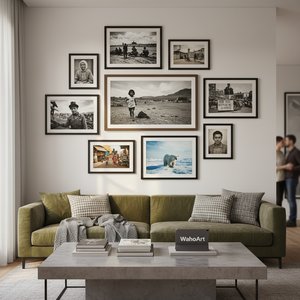
Die 10 Meisterwerke der Dokumentarfotografie – Kunst für Ihr Zuhause |
Entdecken Sie die 10 prägendsten Meisterwerke der Dokumentarfotografie! Von Cartier-Bresson bis Capa – erleben Sie ikonische Bilder, ihre Geschichte & Techniken. Hochwertige Reproduktionen für Ihr Zuhause auf

Pictorialism: A Search for Artistic Photography's Soul – Aesthetics, Techniques & Legacy
Explore the captivating world of Pictorialism – a pivotal movement that transformed photography into fine art. Discover key artists like Stieglitz & Käsebier, techniques, and collecting tips from experts.

Monochrome Visions: Exploring the Aesthetic & Historical Significance of Black & White Photography
Explore the rich history & artistic power of black and white photography. From early techniques to iconic masters like Ansel Adams, discover why monochrome continues to captivate art lovers today. Expert insights for collectors.

Beyond the Lens: Photography's Enduring Influence on Modern & Contemporary Art
Explore photography's pivotal role in shaping modern & contemporary art. Discover key movements, influential artists like Stieglitz, and expert collecting advice from OriginalUniqueArt.

Witnessing History Through Lens & Light: Documentary Photography's Enduring Legacy
Explore the powerful history of documentary photography – from its origins to contemporary masters like Gordon Parks & W. Eugene Smith. Discover how this art form shapes our understanding of society and witness pivotal moments in time.