

 Vorschau anzeigen
 Versenden
 Teilen
 Details anzeigen

 Herunterladen
 Ähnliche Objekte
 Röntgenaufnahme
 Diashow
St Pancras, Cleaning Yard
 Abstract Expressionism
 1945
1945 46.0 x 72.0 cm
 Weiterlesen
Giclée / Kunstdruck
Giclée- oder Leinwanddruck in Museumsqualität mit schneller Produktion und flexiblen Veredelungsoptionen. ( Handgemalte Reproduktion bestellen Bild kaufen)




































Wählen Sie aus unseren vordefinierten Formaten, die den ursprünglichen Proportionen des Kunstwerks entsprechen.

Sie können Ihre eigenen Maße eingeben, um ein bestimmtes Format oder einen speziellen Platz einzupassen. Wenn das von Ihnen gewählte Format nicht den Proportionen des Originalbildes entspricht, werden wir das Kunstwerk entweder beschneiden oder das Bild mit einem gespiegelten oder einfarbigen Rand erweitern. Ein digitaler Entwurf wird Ihnen zur Genehmigung zugesandt, bevor die Produktion beginnt.
Bitte beachten Sie, dass die Vorschau auf dem Bildschirm nicht den tatsächlichen Zuschnitt oder die Erweiterung widerspiegelt. Nur der Entwurf zeigt die endgültige Komposition präzise an.
Obwohl Sondermaße verfügbar sind, empfehlen wir die Auswahl eines Maßes aus der vordefinierten Liste, um die ursprünglichen Proportionen zu bewahren.
Weltweiter Versand () innerhalb von 2 Wochen statt der üblichen 4/5 Wochen. (17 August)

Kostenloser weltweiter Expressversand

Hochwertige Leinenleinwand

Umfassender Versicherungsschutz beim Versand

Zollgebühren-Rückerstattungsgarantie

Garantie für exakte Farbtreue

60 Tage Rückgaberecht (nur bei Mängeln)

100% Geld-zurück-Garantie

Mengenrabatt verfügbar
 Die Glasoption ist nur für Größen unter 110 cm verfügbar.

St Pancras, Cleaning Yard
Giclée / Kunstdruck
Format der Reproduktion
-


Gesamtpreis
$ 80
Über den Künstler
The Visionary of the Working Class: The Life and Legacy of Cliff Rowe
Born in the heart of Wimbledon, South London, to working-class parents, Clifford Rowe’s life was a profound tapestry woven from threads of social conviction and artistic mastery. His early years were defined by a dual education: the formal training at the Wimbledon School of Art and the Royal College of Art, which sharpened his technical draughtsmanship, and the raw, lived experience of London’s streets, which forged his political soul. This unique intersection of modernist experimentation and Marxist ideology would become the hallmark of his career, allowing him to bridge the gap between avant-garde aesthetics and the urgent realities of the common man.
The 1920s served as a crucible for Rowe’s developing worldview. As he navigated the turbulent economic landscapes marked by hunger marches and the global tremors of the Wall Street Crash, his art began to find its political voice. A pivotal moment occurred in 1930 when he traveled to the Soviet Union. Staying for eighteen months, Rowe immersed himself in a society that viewed art as a vital instrument of the state and the people. While he eventually returned to England, driven by the realization that the class struggle was equally potent on home soil, his time abroad left an indelible mark on his technique, introducing him to a sense of scale and purpose that would define his later compositions.
A Canvas of Social Transformation
Rowe’s artistic output was never merely decorative; it was deeply communicative. As a founding member of the Artists International Association (AIA) in 1933, he championed the idea that art should be accessible to the masses rather than sequestered in elite galleries. His work often blended the sharp, angular influences of Cubism with a gritty, grounded realism—a style some have described as a meeting point between Socialist Realism and New Realism. Whether through his evocative oil paintings or his prolific work as an illustrator, Rowe sought to capture the dignity of labor without falling into the trap of sentimentalism.
His versatility allowed him to move seamlessly between different mediums and commissions:
- Illustrative Mastery: He produced striking dust jacket designs for books and worked extensively on political publications, using imagery to disseminate progressive ideals.
- Public Commemorations: His talent was recognized on a national stage through his promotional commissions for the Attlee Labour government and his contributions to the iconic 1951 Festival of Britain.
- Graphic Activism: Through the AIA, he designed posters, banners, and placards that became the visual language of contemporary social demonstrations and trade union movements.
Symbolism and the Human Condition
In his more introspective works, Rowe explored the psychological weight of modernity. Paintings such as Man and Microscope utilize Cubist-influenced forms to examine the detachment between humanity and advancing technology, using muted tones to evoke a sense of clinical isolation. Similarly, Operating Theatre Nurse presents an unsettling, geometric depiction of clinical detachment, showcasing his ability to use abstraction to convey profound emotional states. Even in his more representational scenes of London life—from the bustling atmosphere of fish shops to the industrial grit of factories—there is an underlying tension, a careful balance between the physical reality of the subject and the symbolic weight of their social position.
The historical significance of Cliff Rowe lies in his refusal to separate the artist from the citizen. His legacy is preserved not only in the prestigious collections of the Tate and The People’s History Museum but also in the very fabric of British social history. He remains a vital figure for those studying the intersection of art and politics, reminding us that the brush can be as powerful a tool for change as any political manifesto. Through his eyes, we see a London that is both a place of struggle and a landscape of immense, quiet beauty.

cliff rowe
1904 - 1988
Kurzinfos
- Artistic Movement Or Style: Socialist Realism; New Realism
- Artists Or Movements Influenced By This Artist: ['Popular Front']
- Artists Who Influenced This Artist: ['John Reed']
- Date Of Birth: 1904
- Date Of Death: 1988
- Full Name: Clifford Rowe
- Nationality: British
- Notable Artworks:
- Cleaning Gas Retorts, St Pancras
- St Pancras, Cleaning Yard
- Place Of Birth: Wimbledon, South London
Ähnliche Artikel

Abstrakter Expressionismus: Die 10 Meisterwerke, die eine Kunstbewegung prägten |
Entdecken Sie die 10 Meisterwerke des Abstrakten Expressionismus! Von Jackson Pollock bis Mark Rothko – erfahren Sie die Geschichten hinter ikonischen Gemälde und finden Sie hochwertige Reproduktionen für Ihr Zuhause. Jetzt bei entdecken!

Kandinsky: Die 25 Meisterwerke des Abstrakten – Kunst für Ihr Zuhause | OriginalUniqueArt
Entdecken Sie die 25 bedeutendsten Gemälde von Wassily Kandinsky! Tauchen Sie ein in die Welt der abstrakten Kunst, des Expressionismus und der Farbkomposition. Hochwertige Kunstdrucke & Inspiration für Ihr Zuhause auf OriginalUniqueArt.com.

Geometrische Abstraktion: Die 10 Meisterwerke, die Kunstgeschichte prägten | OriginalUniqueArt.com
Entdecken Sie die 10 Meisterwerke der geometrischen Abstraktion! Von Kandinsky bis Mondrian – erleben Sie die Geschichte, Farben & Formen dieser revolutionären Kunstrichtung. Hochwertige Kunstreproduktionen auf OriginalUniqueArt.com
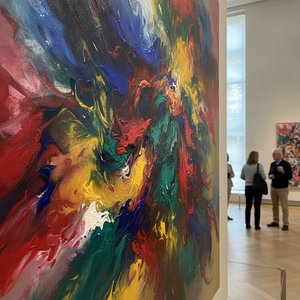
Lyrical Abstraction: The Emotional Power of Color and Form in Modern Art History
Explore the profound emotional depth of Lyrical Abstraction. Discover how masters like Raymond Parker used color and form to bridge Impressionism and Abstract Expressionism. Learn about this pivotal movement through our expert-led art history guide.
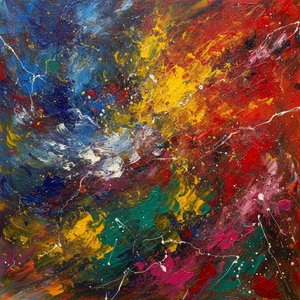
Pure Chaos & Color: The High-Voltage World of Abstract Expressionism
Dive into the high-voltage world of Abstract Expressionism. Explore the raw energy of Action Painting and the legendary masters of the New York School through a visual journey of pure chaos and color. Discover how to bring bold, high-impact abstract art into your modern space.

