Zum Druck wechseln
 Weiterlesen







































 Bei Kunstwerken oder Reproduktionen, die an einer Seite größer als 105 cm (ca. 41 Zoll) sind, wird der Rahmen zerlegt als Bausatz geliefert. Diese Methode gewährleistet eine sichere Zustellung und verhindert Schäden während des Transports.


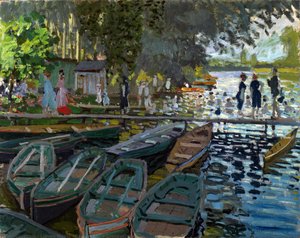
Camille on the Beach: A Moment Frozen in Impressionist Light
Claude Monet’s “Camille on the Beach,” painted in 1870, isn't merely a depiction of a seaside scene; it’s an embodiment of Impressionism’s core philosophy—capturing fleeting impressions of light and atmosphere. Located at the Musée Marmottan Monet in Paris, this canvas offers a glimpse into Monet’s personal life intertwined with his artistic vision.
The painting portrays Camille Doncieux, Monet's future wife, strolling along Trouville beach during the Franco-Prussian War. Monet meticulously rendered her figure against a backdrop of shimmering sand and gentle waves—a deliberate choice reflecting the artist’s fascination with portraying everyday life infused with natural beauty. The composition is strikingly simple yet profoundly effective.
- Subject Matter: A tranquil beach scene featuring Camille Doncieux, Monet's companion.
- Style: Impressionism—characterized by loose brushstrokes and a focus on capturing the ephemeral qualities of light.
- Technique: Monet employed oil paints applied in rapid succession to create textured surfaces that convey movement and luminosity. He utilized broken color techniques, layering shades of blues and greens to simulate the shimmering effect of sunlight reflecting off the water.
Beyond its aesthetic beauty, “Camille on the Beach” holds symbolic significance. The beach itself represents respite from the anxieties of wartime Europe—a space for contemplation and connection with nature. Camille’s posture exudes serenity and grace, symbolizing Monet's idealized vision of domestic harmony.
Monet’s decision to paint this scene during a turbulent period underscores his unwavering commitment to portraying reality as he perceived it. The painting serves as a testament to Impressionism’s ability to transcend historical events and communicate universal emotions—peacefulness, tenderness, and the sublime beauty of the natural world.
For those seeking inspiration or considering acquiring a reproduction, “Camille on the Beach” exemplifies Monet's mastery of capturing light and emotion. Its delicate palette and expressive brushstrokes continue to resonate with viewers today, cementing its place as one of Impressionism’s most cherished masterpieces.
Fragen & Antworten
Kann ich "Camille am Strand" von Claude Monet vor dem Kauf an meiner eigenen Wand sehen?
Auf der AR-Vorschau-Seite von "Camille am Strand" von Claude Monet können Sie das Kunstwerk mithilfe von Augmented Reality auf einem kompatiblen Gerät direkt in Ihren eigenen Räumlichkeiten erleben.
Ist "Camille am Strand" gemeinfrei?
Die urheberrechtliche Situation für "Camille am Strand" von Claude Monet: Das Werk ist gemeinfrei – das Urheberrecht ist abgelaufen. Dies bestimmt, ob Reproduktionen des Bildes frei erstellt werden dürfen.
Wie alt war Claude Monet, als „Camille am Strand“ geschaffen wurde?
Claude Monet schuf „Camille am Strand“ im Alter von 30. Der Künstler wurde 1840 geboren, und das Werk datiert auf 1870.
 Vorschau anzeigen
 Versenden
 Teilen
 Details anzeigen
 Leitfaden

 Herunterladen
 Ähnliche Objekte
 Röntgenaufnahme
 Diashow
 Q&A
Q&A Statistiken