In echtem Maßstab anzeigen
 Versenden als Grußkarte
 Teilen
 Details anzeigen
 Leitfaden öffnen

 Herunterladen
 Ähnliche Objekte
 Röntgenaufnahme
 Diashow
 Besucherstatistiken
Shipwreck
 Acrylic On Canvas
- WallArt
- Rococo
 1759
1759- Late Medieval
 96.0 x 134.0 cm
 Groeningemuseum
 Mehr anzeigen
Handgefertigte Ölreproduktion
Handgemaltes Ölgemälde auf Leinwand in Ihrer Wunschgröße und mit Rahmen, auf Bestellung von unseren Künstlern angefertigt. ( Zum Druck wechseln Zum digitalen Bild wechseln)




P118B €10

P118H €10

P118W €10

P438Z €10

P508JH €12

P508YH €12

P805H €10

P805Z €10

P919BZ €10

P919G €10

P919XJ €10

P959ZH €10

P968JZ €12

W106C €8

W218G €10

W218JH €8

W218Y €10

W307PJ €10

W316G €10

W316PJ €8

W316Y €10

W398PJ €8

W4111J €10

W500HY €15

W500JH €15

W692G €12

W849H €8

W940BG €15

W953PJ €8




Wählen Sie aus unseren vordefinierten Formaten, die den ursprünglichen Proportionen des Kunstwerks entsprechen.

Geben Sie die Breite und die Höhe an, die Sie für Ihren Rahmen oder Ihre Wand benötigen. Da dieses Werk handgemalt ist, kann der Künstler bei einer anderen Form etwas mehr um das Bild herum malen oder etwas abschneiden – Sie entscheiden. Wir senden Ihnen ein digitales Mockup zur Freigabe, bevor mit dem Malen begonnen wird. Das auf dieser Seite gezeigte Bild stellt nicht das tatsächliche Ergebnis dar – dies tut nur das Mockup.
Nach der Bestellung wird das OriginalUniqueArt.com-Team dem Kunden Anweisungen per E-Mail zusenden und eine Mockup-Vorschau bereitstellen.
Weltweiter Versand () in nur 3 bis 4 Wochen statt der üblichen 5 Wochen. (23 Oktober). Keine Kompromisse bei der Qualität.

Kostenloser weltweiter Expressversand

Hochwertige Leinenleinwand

Vollständiger Versicherungsschutz beim Versand

Zollgebühren-Rückerstattungsgarantie

Garantie für exakte Farbtreue

100-tägiges Rückgaberecht (nur bei Mängeln)

100% Geld-zurück-Garantie

Angebot für Mengenrabatt
 Die Glasoption ist nur für Größen unter 110 cm verfügbar.

Shipwreck
Reproduktionsmedium
Format der Reproduktion
-


Gesamtpreis
€ 263
A Tempestuous Vision: The Shipwreck by Claude-Joseph Vernet
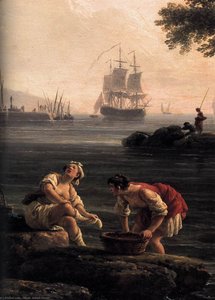
Claude-Joseph Vernet’s “Shipwreck” (1759) isn't merely a depiction of maritime disaster; it’s a visceral plunge into the heart of the sublime – that potent blend of terror, awe, and exhilaration evoked by confronting the raw power of nature. Painted during the height of the Rococo period in France, yet imbued with a dramatic intensity that anticipates Romanticism, this work transcends its subject matter to become a meditation on human vulnerability against an indifferent universe. The painting immediately commands attention with its dynamic composition, a swirling vortex of turbulent sea and bruised sky, pulling the viewer into the chaotic drama unfolding before them.
Vernet masterfully employs the techniques characteristic of his era – a meticulous attention to detail combined with a loose, expressive brushstroke. Notice how he renders the churning waves, not as smooth forms but as frothing crests and shadowed troughs, conveying an almost palpable sense of movement. The light is equally crucial; it’s fractured and diffused by the storm clouds, casting dramatic highlights on the wreckage and creating pools of deep shadow that heighten the feeling of unease. The artist's use of chiaroscuro – the stark contrast between light and dark – isn’t simply for aesthetic effect but serves to amplify the drama and underscore the precariousness of the scene.
Echoes of the Sublime: Rococo Meets Romanticism
“Shipwreck” occupies a fascinating space within art history. While firmly rooted in the decorative elegance of the Rococo style – evidenced by the vibrant palette, the intricate details of the ship’s rigging (though rendered with a slightly more rugged quality than typical for the period), and the overall sense of theatricality – it also foreshadows the Romantic movement's fascination with untamed nature. Vernet was deeply influenced by the philosophical ideas of Jean-Jacques Rousseau, who championed the beauty and power of the natural world as a counterpoint to the artificiality of courtly life. This painting embodies that sentiment, presenting a storm at sea not as a destructive force but as an overwhelming spectacle of sublime grandeur.
The historical context is equally important. Vernet’s work reflects the growing European interest in maritime exploration and trade during the 18th century. Shipwrecks were frequent occurrences, often resulting in significant loss of life and cargo – events that captured the public imagination. Vernet's painting taps into this collective anxiety about the perils of the sea while simultaneously celebrating its breathtaking beauty. It’s a reminder of humanity’s smallness within the vastness of the ocean.
Figures Amidst Ruin: Symbolism and Human Drama
Scattered along the rocky shoreline are several figures, rendered in stark silhouette against the brightly lit background. These aren't heroic rescuers; they are ordinary people – men and women – overwhelmed by the scale of the disaster. Their postures suggest a mixture of despair, frantic activity, and perhaps even a desperate hope for survival. Vernet doesn’t offer easy answers or moral judgments; he simply presents these individuals as witnesses to an event beyond their control. The inclusion of these human figures elevates the painting from a purely landscape study to a poignant meditation on mortality and resilience.
In the background, a partially obscured castle-like structure – likely a coastal fortress or lighthouse – adds another layer of symbolism. It represents both protection and vulnerability, suggesting that even the most formidable structures are ultimately subject to the forces of nature. The presence of this architectural element anchors the scene within a specific geographical context while simultaneously emphasizing the insignificance of human endeavors in the face of overwhelming natural power.
A Legacy of Dramatic Seascapes
Signed “C. J. Vernet” in the lower right corner, "Shipwreck" stands as a testament to Claude-Joseph Vernet’s mastery of marine painting. It's a work that continues to resonate with viewers today, not only for its technical brilliance but also for its profound exploration of human emotion and the sublime power of nature. Reproductions of this iconic image offer a captivating glimpse into a pivotal moment in art history – a moment when the Rococo’s decorative elegance yielded to the Romantic spirit's embrace of untamed beauty and dramatic intensity.
Fragen & Antworten
Zu welcher Stilrichtung gehört "Shipwreck"?
Die mit "Shipwreck" von Claude-Joseph Vernet verbundene Stilrichtung ist Rococo. Diese Klassifizierung ordnet das Werk in den Kontext verwandter Künstler und Kunstwerke ein.
Wie schafft "Shipwreck" das Gleichgewicht zwischen Hell und Dunkel?
Die aufgezeichneten Werte für "Shipwreck" von Claude-Joseph Vernet sind: shadow Helligkeit, Soft Shadow Luminanz.
Ist "Shipwreck" ein berühmtes Kunstwerk der Rococo-Epoche?
Innerhalb der Rococo-Strömung weist „Shipwreck“ ein Recognized Bekanntheitsniveau auf.
Biografie des Künstlers
Frühes Leben und Ausbildung
Claude-Joseph Vernet, ein renommierter französischer Maler, wurde am 14. August 1714 in Bordeaux, Frankreich, geboren. Schon im zarten Alter von fünf Jahren zeigte er eine außergewöhnliche Leidenschaft für das Zeichnen von Pferden, was später zu einem Markenzeichen seiner künstlerischen Karriere werden sollte. Vernet erhielt die traditionelle akademische Ausbildung als Schüler seines Vaters und Nicolas-Bernard Lépicié und verbesserte so seine Fähigkeiten weiter.Bemerkenswerte Leistungen
- 1782 gewann Vernet den prestigeträchtigen Prix de Rome, ein Beweis für sein künstlerisches Können.
- Sein Sohn, Antoine Charles Horace Vernet, folgte ebenfalls in den Fußstapfen seines Vaters als Maler.
Künstlerische Schwerpunkte und Stil
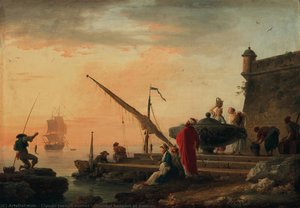
Intérieur du port de Marseille (1754) – ein Meisterwerk, das Vernets Geschicklichkeit bei der Darstellung des Wesens maritimer Szenen demonstriert. Seine Werke zeichnen sich durch eine meisterhafte Balance zwischen Landschaft und Architektur aus, wie man sie beispielsweise in einer Ansicht des Hafens von Neapel mit dem Vesuv im Hintergrund (1774) bewundern kann. Vernets Stil wird oft durch seine Liebe zum Detail und die atmosphärische Darstellung von Licht und Schatten charakterisiert. Er war bekannt für seine Fähigkeit, dramatische Stürme und ruhige Hafenansichten gleichermaßen überzeugend darzustellen. Seine Pferdezeichnungen zeugen von einem tiefen Verständnis der Anatomie und Bewegung dieser Tiere.Einfluss und Vermächtnis
Vernets Werk ist durch seine reiterliche Eleganz gekennzeichnet und zeigt sein tiefes Verständnis für Pferde. Seine Beiträge zur französischen Kunst sind unbestreitbar, mit einem Erbe, das Künstler bis heute inspiriert. Erkunden Sie weitere Werke von Claude-Joseph Vernet auf OriginalUniqueArt. Entdecken Sie das Musée des Beaux-Arts de Bordeaux, in dem einige von Vernets bemerkenswerten Werken ausgestellt sind, und erfahren Sie mehr über seine reiche Geschichte auf der OriginalUniqueArt-Seite des Musée Thomas-Henry. Lesen Sie mehr über den Prix de Rome und seine Bedeutung in der Kunstwelt auf Wikipedia.Schlussfolgerung
Claude-Joseph Vernets künstlerische Reise, die von seiner Leidenschaft für die reiterliche Kunst geprägt ist, hat ihre Spuren in der Welt der französischen Malerei hinterlassen. Durch seine Werke, die auf OriginalUniqueArt erhältlich sind, und sein Erbe inspiriert Vernet weiterhin Generationen von Kunstliebhabern und Fachleuten gleichermaßen. Empfohlene Lektüre: * Claude-Joseph Vernets ein Landschaftsbild bei Sonnenuntergang – eine eingehendere Betrachtung eines seiner bemerkenswerten Werke auf OriginalUniqueArt * Der Hafen von Bordeaux von Édouard Manet – erkunden Sie das Werk eines anderen französischen Künstlers auf OriginalUniqueArt.
Claude-Joseph Vernet
1714 - 1789 , Frankreich
Eckdaten zum Künstler
- Bekannte Werke:
- intérieur du port de Marseille
- a view of the port of Naples
- Geburtsdatum: 14. August 1714
- Geburtsort (Stadt, Land): Bordeaux, Frankreich
- Künstlerische Einflüsse: ['Nicolas-Bernard Lépicié']
- Nationalität: Französisch
- Vollständiger Name: Claude-Joseph Vernet
Verwandte Artikel

Rococo Meisterwerke: Die Top 10, die eine Epoche prägten |
Entdecken Sie die Top 10 Rokoko Meisterwerke von Watteau, Boucher & Fragonard! Erfahren Sie die Geschichten hinter diesen ikonischen Gemälden und lassen Sie sich für Ihre Inneneinrichtung inspirieren. Hochwertige Kunstdrucke auf .
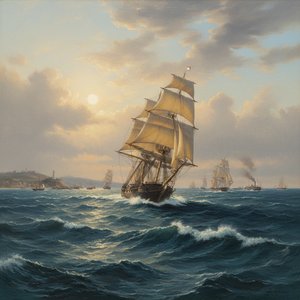
James E. Buttersworth: Navigating the Seas of Victorian Marine Painting
Explore the captivating world of James Edward Buttersworth, a foremost Victorian marine painter. Discover his meticulous ship portraits, America's Cup chronicles & enduring legacy in museums worldwide. Learn about his technique and style.

Versand und Rückgabe
APS bietet weltweiten Kunstversand auf Expertenniveau mit museumsgerechter Sorgfalt, vollständiger Sendungsverfolgung und einer 30-tägigen Geld-zurück-Garantie. Von Zollabwicklung bis Priority Production vertrauen Sie auf transparenten Service, sichere Verpackung und zuverlässige Lieferung für Sammler, Designer und Galerien.

The Rococo Aesthetic: Opulence, Rebellion & the Pursuit of Pleasure in 18th-Century Art
Explore the opulent world of Rococo art! Discover its origins, key artists like Watteau & Boucher, and lasting influence on design. Expert insights for collectors & enthusiasts.
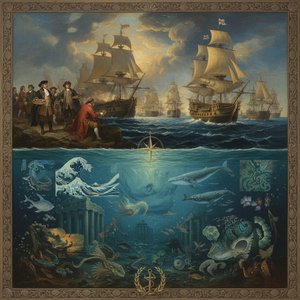
Navigating the Depths of Representation: A Historical Exploration of Marine Painting
Explore the rich history of marine painting with OriginalUniqueArt. Discover Dutch Masters, Romantic seascapes & renowned artists like Wyllie and Harris. Expert guidance for collectors & custom reproductions.