

 In echtem Maßstab anzeigen
 Versenden als Grußkarte
 Teilen
 Details anzeigen
 Leitfaden öffnen

 Herunterladen
 Ähnliche Objekte
 Röntgenaufnahme
 Diashow
 Besucherstatistiken
Kreuzigung (Detail)
 Acryl auf Leinwand
- Wandkunst
- Early Renaissance
 1268
1268 45.0 x 28.0 cm
 San Domenico
 Mehr anzeigen
Handgefertigte Ölreproduktion
Handgemaltes Ölgemälde auf Leinwand in Ihrer Wunschgröße und mit Rahmen, auf Bestellung von unseren Künstlern angefertigt. ( Zum Druck wechseln Zum digitalen Bild wechseln)




P118B €10

P118H €10

P118W €10

P438Z €10

P508JH €12

P508YH €12

P805H €10

P805Z €10

P919BZ €10

P919G €10

P919XJ €10

P959ZH €10

P968JZ €12

W106C €8

W218G €10

W218JH €8

W218Y €10

W307PJ €10

W316G €10

W316PJ €8

W316Y €10

W398PJ €8

W4111J €10

W500HY €15

W500JH €15

W692G €12

W849H €8

W940BG €15

W953PJ €8




Wählen Sie aus unseren vordefinierten Formaten, die den ursprünglichen Proportionen des Kunstwerks entsprechen.

Geben Sie die Breite und die Höhe an, die Sie für Ihren Rahmen oder Ihre Wand benötigen. Da dieses Werk handgemalt ist, kann der Künstler bei einer anderen Form etwas mehr um das Bild herum malen oder etwas abschneiden – Sie entscheiden. Wir senden Ihnen ein digitales Mockup zur Freigabe, bevor mit dem Malen begonnen wird. Das auf dieser Seite gezeigte Bild stellt nicht das tatsächliche Ergebnis dar – dies tut nur das Mockup.
Nach der Bestellung wird das OriginalUniqueArt.com-Team dem Kunden Anweisungen per E-Mail zusenden und eine Mockup-Vorschau bereitstellen.
Weltweiter Versand () in nur 3 bis 4 Wochen statt der üblichen 5 Wochen. (22 Oktober). Keine Kompromisse bei der Qualität.

Kostenloser weltweiter Expressversand

Hochwertige Leinenleinwand

Vollständiger Versicherungsschutz beim Versand

Zollgebühren-Rückerstattungsgarantie

Garantie für exakte Farbtreue

100-tägiges Rückgaberecht (nur bei Mängeln)

100% Geld-zurück-Garantie

Angebot für Mengenrabatt
 Die Glasoption ist nur für Größen unter 110 cm verfügbar.

Kreuzigung (Detail)
Reproduktionsmedium
Format der Reproduktion
-


Gesamtpreis
€ 262
A Beacon of Early Renaissance Emotion: Cimabue’s Crucifix (Detail)
Giovanni Cimabue, born Cenni di Pepo around 1240 in Florence, represents a pivotal moment in Western artistic evolution—a courageous step away from the Byzantine aesthetic and toward the burgeoning humanist spirit that would characterize the Italian Renaissance. Often nicknamed “bull-headed,” reflecting his unwavering determination, Cimabue wasn’t merely a painter; he was an innovator who subtly challenged established norms, planting the seeds for transformative changes to come. Vasari's accounts portray him as a figure of considerable eccentricity, yet scholarly research confirms his profound influence on subsequent artists and stylistic developments. His legacy resides not just in his output but also in his daring experimentation with form and expression—a characteristic that distinguishes him from many of his contemporaries.- Subject Matter: The painting depicts the crucifixion of Jesus Christ, a central motif within Christian iconography. Cimabue’s depiction prioritizes conveying spiritual anguish and sorrow over elaborate narrative detail, aligning it closely with Byzantine tradition while simultaneously hinting at emerging Renaissance sensibilities.
- Style & Technique: Cimabue's style is undeniably rooted in Byzantine art—characterized by flattened figures, stylized drapery, and a luminous halo surrounding Christ’s head. However, he skillfully incorporates innovative techniques like impasto – thick layers of paint applied to the surface – creating textural depth that transcends mere imitation. This technique lends an unparalleled sense of physicality to the image, capturing the palpable emotion conveyed by the artist.
- Material & Dimensions: Executed in tempera on wood—a medium favored for its durability and ability to achieve brilliant colors—the Crucifix measures 45 x 28 cm. The panel itself is housed at San Domenico in Arezzo, Italy, a testament to its enduring artistic significance.
Historical Context: Florence Embraces Innovation
Florence during Cimabue’s lifetime was undergoing significant transformations. The influence of Byzantine art—particularly from Constantinople—was still palpable, yet humanist thinkers and artists were beginning to champion classical ideals and human emotion. Cimabue skillfully navigated this evolving landscape, synthesizing Byzantine solemnity with nascent Renaissance expressive power. His work stands as a crucial intermediary between two artistic epochs, demonstrating the gradual shift toward prioritizing psychological realism and conveying profound spiritual experience.Symbolism & Emotional Impact
The halo surrounding Christ’s head is a deliberate symbolic gesture—representing divine holiness and illuminating the figure's suffering. Cimabue’s masterful use of color contributes to this emotional resonance, employing muted hues that evoke contemplation and sorrow. The downward gaze of Jesus embodies humility and acceptance of his fate, mirroring themes prevalent throughout Christian scripture. Viewing Cimabue’s Crucifix (detail) inspires reflection on mortality, faith, and the enduring power of compassion—elements that continue to resonate powerfully with audiences today.Further Exploration
For a deeper understanding of Cimabue's artistic contribution, consult Wikipedia (Wikipedia) and explore OriginalUniqueArt’s comprehensive collection of Cimabue reproductions (OriginalUniqueArt). Consider commissioning a high-quality print to bring this masterpiece into your home or workspace—a tangible connection to the dawn of Renaissance art.Fragen & Antworten
Welche Phase in der Entwicklung von Cimabue repräsentiert "Kreuzigung (Detail)"?
"Kreuzigung (Detail)" repräsentiert die Early Renaissance von Cimabue.
Wann und mit welchen Materialien wurde "Kreuzigung (Detail)" geschaffen?
Das Medium von "Kreuzigung (Detail)" von Cimabue ist Acryl auf Leinwand, und das Werk wird auf 1268 datiert.
Befindet sich "Kreuzigung (Detail)" von Cimabue im Heimatland des Künstlers?
Nein – das Kunstwerk wird im Ausland aufbewahrt. Das Geburtsland von Cimabue ist Italien, und das Museum, das das Original von „Kreuzigung (Detail)“ beherbergt, befindet sich in Italia.
Biografie des Künstlers
das Brechen des italo-byzantinischen Stils
Cimabue, geboren um 1240 und gestorben im Jahr 1302, war ein einflussreicher italienischer Maler und Mosaikdesigner aus Florenz, auch bekannt als Cenni di Pepo. Als Pionier des Brechens mit dem italo-byzantinischen Stil wird Cimabue für die Einführung von realistischeren Proportionen und Schattierung in seiner Arbeit gefeiert, was einen bedeutenden Übergang zum Realismus in der mittelalterlichen Kunst markierte.Frühes Leben und Ausbildung
Über Cimabues frühes Leben ist wenig bekannt. Eine Quelle, die über seine Karriere berichtet, ist Giorgio Vasaris Lives of the Most Excellent Painters, Sculptors and Architects, deren Genauigkeit jedoch ungewiss ist. Er wurde in Florenz geboren und starb in Pisa. Laut Kunsthistoriker Pietro Tosca ist Cimabues früheste zugeschriebene Arbeit, die Kreuzigung in der Kirche San Domenico in Arezzo, aus dem Jahr 1270 und zeigt eine Abweichung vom byzantinischen Stil.Bekannte Werke
* Maestà (ursprünglich in der Kirche San Francesco in Pisa ausgestellt, jetzt im Louvre): Dieses Werk etablierte einen Stil, der von zahlreichen Künstlern fortgesetzt wurde, darunter Duccio di Buoninsegna in seiner Ruccellai Madonna (früher fälschlicherweise Cimabue zugeschrieben). * Flagellation (Frick Collection): Ein Werkstattgemälde, das möglicherweise einer späteren Periode zuzuordnen ist. * Mosaike für die Florenzer Baptisterium (jetzt weitgehend restauriert): Im schlechten Zustand aufgrund der Oxidation der helleren Farben.Einfluss und Vermächtnis
Cimabues Kunst spielte eine entscheidende Rolle bei der Übergang von byzantinischen zu realistischeren Darstellungen in der italienischen Malerei, und sein Einfluss auf nachfolgende Künstler war tiefgreifend. Seine Werke, die durch einen Zusammenschnitt traditioneller und innovativer Techniken gekennzeichnet sind, markieren ein wichtiges Kapitel in der Kunstgeschichte, das den Übergang zwischen mittelalterlichen und Renaissance-Stilen überspannte.- Betrachten Sie Cimabues Werke unter https://OriginalUniqueArt.com/@/cimabue
- Erfahren Sie mehr über die Trecento-Kunstbewegung unter https://OriginalUniqueArt.com/@@/a@d3cpph
- Lesen Sie Cimabues Biografie auf Wikipedia unter https://en.wikipedia.org/wiki/cimabue

Cimabue
1240 - 1302 , Italien
Eckdaten zum Künstler
- Beeinflusste Künstler: ['Giotto di Bondone']
- Bemerkenswerte Werke:
- Maestà
- Kreuzigung (Arezzo)
- Flagellation Christi
- Geburtsdatum: ca. 1240
- Geburtsort: Florenz, Italien
- Künstlerische Bewegung: Italo-byzantinisch, Frührenaissance
- Nationalität: Italienisch
- Todestag: 1302
- Vollständiger Name: Cimabue
- Von Künstlern Beeinflusst: ['Byzantinische Kunst']
Verwandte Artikel
Spätmittelalterliche Meisterwerke: 10 Kunstwerke für Ihr Zuhause | OriginalUniqueArt
Entdecken Sie die 10 bedeutendsten Meisterwerke des Spätmittelalters! Erfahren Sie die Geschichten hinter Jan van Eyck, Rogier van der Weyden & mehr. Hochwertige Kunst Reproduktionen für Ihr Zuhause – jetzt auf OriginalUniqueArt.com!
Meisterwerke des Hochmittelalters: 10 Kunstwerke für Ihr Zuhause | OriginalUniqueArt
Entdecken Sie die 10 bedeutendsten Meisterwerke des Hochmittelalters! Erfahren Sie Geschichten von Romanik, Gotik & berühmten Künstlern. Finden Sie hochwertige Reproduktionen für Ihr Zuhause auf OriginalUniqueArt.com.
Illuminating Faith & Power: A Journey Through Medieval Art (c. 500 – c. 1500)
Explore the rich history of Medieval Art (c. 500 – c. 1500) with OriginalUniqueArt. Discover Byzantine mosaics, Gothic cathedrals & Renaissance masterpieces. Expert insights & museum-quality reproductions.
Proto-Renaissance Meisterwerke: Die 10 Kunstwerke, die eine Epoche prägten | OriginalUniqueArt
Entdecken Sie die 10 prägendsten Meisterwerke der Proto-Renaissance! Von Giotto bis Duccio – erleben Sie die Geschichten, Techniken & zeitlose Schönheit italienischer Frührenaissance Kunst. Hochwertige Reproduktionen auf OriginalUniqueArt.com.
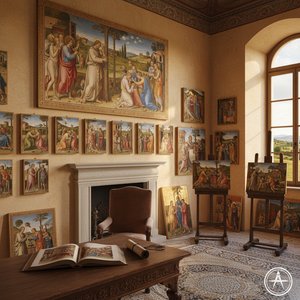
Giotto di Bondone: Die 25 Meisterwerke des Frührenaissance – Kunst für Ihr Zuhause
Entdecken Sie die 25 Meisterwerke von Giotto di Bondone! Erleben Sie die Frührenaissance, religiöse Kunst & ikonische Fresken wie in der Scrovegni Kapelle. Hochwertige Kunstdrucke online bei OriginalUniqueArt.com – für zeitlose Eleganz in Ihrem Zuhause.


