In echtem Maßstab anzeigen
 Versenden als Grußkarte
 Teilen
 Details anzeigen
 Leitfaden öffnen

 Herunterladen
 Ähnliche Objekte
 Röntgenaufnahme
 Diashow
 Besucherstatistiken
Thomas and Henry Sergeant


 Mehr anzeigen
Giclée / Kunstdruck
Giclée- oder Leinwanddruck in Museumsqualität mit schneller Produktion und flexiblen Veredelungsoptionen. ( Handgemalte Reproduktion kaufen Zum digitalen Bild wechseln)




P118B €10

P118H €10

P118W €10

P438Z €10

P508JH €12

P508YH €12

P805H €10

P805Z €10

P919BZ €10

P919G €10

P919XJ €10

P959ZH €10

P968JZ €12

W106C €8

W218G €10

W218JH €8

W218Y €10

W307PJ €10

W316G €10

W316PJ €8

W316Y €10

W398PJ €8

W4111J €10

W500HY €15

W500JH €15

W692G €12

W849H €8

W940BG €15

W953PJ €8




Wählen Sie aus unseren vordefinierten Formaten, die den ursprünglichen Proportionen des Kunstwerks entsprechen.

Geben Sie die Breite und die Höhe an, die Sie benötigen, damit der Druck perfekt in Ihren Rahmen oder an Ihre Wand passt. Ein Druck kann nur beschnitten werden und niemals größer als das Originalbild gemacht werden; daher verliert ein Format mit einer anderen Proportion einen Teil des Bildes. Wir senden Ihnen ein digitales Mockup zur Freigabe, bevor wir den Druck ausführen. Das auf dieser Seite gezeigte Bild zeigt nicht den tatsächlichen Beschnitt – dies ist nur im Mockup ersichtlich.
Weltweiter Versand () innerhalb von 2 Wochen statt der üblichen 4/5 Wochen. (23 Oktober)

Kostenloser weltweiter Expressversand

Hochwertige Leinenleinwand

Vollständiger Versicherungsschutz beim Versand

Zollgebühren-Rückerstattungsgarantie

Garantie für exakte Farbtreue

100-tägiges Rückgaberecht (nur bei Mängeln)

100% Geld-zurück-Garantie

Angebot für Mengenrabatt
 Die Glasoption ist nur für Größen unter 110 cm verfügbar.

Thomas and Henry Sergeant
Giclée / Kunstdruck
Format der Reproduktion
-


Gesamtpreis
€ 70
Thomas and Henry Sergeant: A Portrait of American Idealism
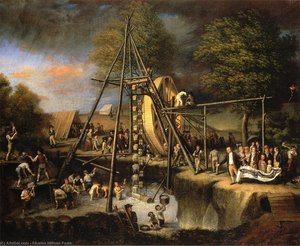
Charles Willson Peale’s “Thomas and Henry Sergeant,” completed in 1787, stands as a cornerstone of neoclassical portraiture and embodies the spirit of Enlightenment America. Currently residing within the Museum of Fine Arts in Boston, this oil on canvas masterpiece transcends mere likeness; it's a meticulously crafted tableau that speaks volumes about social status, familial affection, and the burgeoning aspirations for republican virtue.
Composition and Symbolism: Capturing Essence Through Detail
The painting’s central focus is undeniably its subjects – two young boys, Thomas and Henry Sergeant – positioned side by side with arms outstretched in a gesture of camaraderie. Their attire—suits adorned with satin linings and hats—reflects the formality prevalent during the era, signaling their privileged upbringing within Boston society. Beyond the visual representation, Peale skillfully employs symbolism to elevate the artwork’s significance.
- The Dog: Representing loyalty and guardianship, the dog symbolizes protection and companionship – values deeply ingrained in American ideals of citizenship.
- The Chair: Suggestive of comfort and stability, it anchors the scene and reinforces the notion of settled respectability.
- The Clock: A symbol of time’s passage and measured progress, mirroring the ambitions of a nation striving for advancement under republican governance.
- The Birds: Scattered throughout the composition, birds are emblems of liberty and aspiration—a deliberate allusion to the philosophical currents shaping the American Revolution.
Peale's Style and Influences: Echoes of European Tradition
Charles Willson Peale’s artistic approach was firmly rooted in European traditions, particularly those championed by Louis-Vincent-Léon Pallière, whose “View in the Gardens of the Villa d’Este” exemplifies similar neoclassical sensibilities. Like Pallière, Peale prioritized meticulous detail—evident in the rendering of fabrics and facial expressions—to achieve an unparalleled level of realism. However, he skillfully blended these techniques with stylistic elements derived from Rembrandt Peale and James Peale, creating a distinctive visual language that resonated powerfully with his contemporaries.
Comparative Artworks: Shared Visions of Republican Virtue
“Thomas and Henry Sergeant” finds kinship with several other notable portraits produced during the same period. Consider Ap Caledfryn’s “Michael Jones,” housed at The National Library of Wales, which similarly portrays a young gentleman embodying moral virtue and civic responsibility. Similarly, James Curnock's "Thomas Garrard" at Bristol Museum – Art Gallery captures the grandeur of aristocratic patronage while upholding standards of refinement. And John Partridge’s “Sir John Forbes” displayed at Royal College of Physicians exemplifies the meticulous craftsmanship characteristic of the era.
These artworks collectively illuminate the artistic landscape of Enlightenment America—a period defined by intellectual curiosity, republican ideals, and a fervent desire to emulate the cultural achievements of Europe. Peale's "Thomas and Henry Sergeant" stands as a testament to this ambition, securing its place as an enduring symbol of American identity.
Fragen & Antworten
In welchem Alter schuf Charles Willson Peale „Thomas and Henry Sergeant"?
Charles Willson Peale schuf „Thomas and Henry Sergeant“ im Alter von 46. Der Künstler wurde 1741 geboren, und das Werk datiert auf 1787.
Gibt es ein Factsheet zu "Thomas and Henry Sergeant" von Charles Willson Peale für Studierende?
Eine Leitfaden-Seite ist für "Thomas and Henry Sergeant" von Charles Willson Peale verfügbar: ein druckbares Infoblatt zum Kunstwerk, konzipiert für Schüler und den Einsatz im Unterricht.
Für wen ist "Thomas and Henry Sergeant" von Charles Willson Peale als Geschenk empfehlenswert?
"Thomas and Henry Sergeant" wird als Geschenk für Geburtstag empfohlen.
Biografie des Künstlers
Charles Willson Peale: Ein Leben zwischen Kunst, Wissenschaft und Patriotismus
- Geboren: 15. April 1741, Chester, Queen Anne's County, Maryland
- Gestorben: 22. Februar 1827, Philadelphia, Pennsylvania
Frühes Leben und künstlerische Ausbildung
- Peales frühes Leben war von finanziellen Schwierigkeiten geprägt, nachdem sein Vater gestorben war. Er absolvierte eine Lehre als Sattler, bevor er seine Leidenschaft für die Kunst entdeckte.
- Er erhielt zunächst Unterricht bei John Hesselius und studierte kurzzeitig bei John Singleton Copley, was ein frühes Talent für Porträts zeigte.
- Eine entscheidende Phase seiner Entwicklung war seine Zeit unter Benjamin West in London (1767-1770). Diese Begegnung mit europäischen Kunsttrends beeinflusste seinen Stil maßgeblich.
Künstlerische Karriere und Hauptwerke
- Porträtmalerei: Peale ist vor allem für seine Porträts bedeutender Persönlichkeiten der Amerikanischen Revolution bekannt, darunter zahlreiche Darstellungen von George Washington (insgesamt fast sechzig). Diese Porträts sind wertvolle historische Dokumente neben künstlerischen Leistungen.
- Stil: Sein Stil entwickelte sich im Laufe der Zeit weiter, anfänglich beeinflusst vom neoklassizistischen Ansatz Wests, später wurden jedoch Elemente des Realismus und das Bestreben nach einer genauen Wiedergabe des Likeness integriert.
- Bemerkenswerte Werke:
- George Washington (1772): Markierte den Beginn seiner langjährigen Verbindung zu Washington.
- Die Treppengruppe (ca. 1795): Ein beeindruckendes Beispiel für Trompe-l'oeil, das seine Söhne Raphael und Titian so darstellt, als wären sie Teil der architektonischen Umgebung.
Wissenschaftliche Bestrebungen und Peales American Museum
- Peale war ein leidenschaftlicher Naturforscher und Wissenschaftler und organisierte Expeditionen zur Erforschung der Naturgeschichte.
- Er gründete Peales American Museum in Philadelphia (1784), eines der ersten Museen in den Vereinigten Staaten. Es beherbergte botanische, biologische und archäologische Exponate.
- Das Museum spielte eine wichtige Rolle bei der Popularisierung von Wissenschaft und Bildung in Amerika. Er war besonders bekannt für seine Ausstellungen von Mammutknochen, die er bei einer Expedition im Jahr 1801 erworben hatte.
- Er lehrte sich selbst Taxidermie, um Exponate für das Museum zu konservieren, was seine vielfältigen Fähigkeiten demonstrierte.
Vermächtnis und historische Bedeutung
- Peales Werk überbrückt die Kluft zwischen Kunst und Wissenschaft und spiegelt die Ideale der Aufklärung seiner Zeit wider.
- Seine Porträts liefern unschätzbare visuelle Aufzeichnungen von Schlüsselfiguren in der amerikanischen Geschichte.
- Die Gründung von Peales American Museum war ein bahnbrechender Versuch, das Museum als eine wichtige Institution für Bildung und wissenschaftliche Erforschung zu etablieren.
- Er beeinflusste nachfolgende Generationen von Künstlern und Wissenschaftlern und trug wesentlich zur Entwicklung der amerikanischen Kultur bei.
- Sein Familienvermächtnis setzte sich durch seine Söhne fort, darunter James Peale und Rubens Peale, die ebenfalls talentierte Künstler wurden und zur Sammlung des Museums beitrugen.

Charles Willson Peale
1741 - 1827 , Vereinigtes Königreich
Eckdaten zum Künstler
- Beeinflusste Künstler:
- John Hesselius
- John Singleton Copley
- Benjamin West
- Bemerkenswerte Werke:
- Staircase Group
- George Washington Porträts
- Geburtsdatum: 15. April 1741
- Geburtsort: Chester, Vereinigtes Königreich
- Künstlerische Bewegung: Neoklassische Malerei
- Nationalität: Amerikanisch
- Todatum: 22. Februar 1827
- Vollständiger Name: Charles Willson Peale
Verwandte Artikel
Titian Ramsay Peale: Präzision und künstlerische Innovation in der frühen amerikanischen botanischen Malerei
Entdecken Sie das Werk von Titian Ramsay Peale, einem Pionier der amerikanischen botanischen Malerei! Erfahren Sie mehr über seine präzisen Illustrationen, die Long-Expedition und seinen Beitrag zur Naturforschung. OriginalUniqueArt.

Charles Willson Peale: Porträtmalerei, Aufklärungsideale und die Gestaltung amerikanischer Identität
Entdecken Sie das Leben und Werk von Charles Willson Peale – Porträtmaler, Naturforscher und Begründer des ersten amerikanischen Museums. Erfahren Sie mehr über seine Bedeutung für die Kunstgeschichte der USA und die Ideale der Aufklärung.
Die 10 Meisterwerke des 18. Jahrhunderts: Kunst für Ihr Zuhause | OriginalUniqueArt
Entdecken Sie die 10 prächtigsten Meisterwerke des 18. Jahrhunderts! Von Rokoko bis Klassizismus – erleben Sie die Kunst von Fragonard, David & Hogarth. Hochwertige Reproduktionen für Ihr Zuhause auf OriginalUniqueArt.com.

Grant Wood und der amerikanische Regionalismus: Identität, Mythos und die ländliche Landschaft
Entdecken Sie Grant Wood und den amerikanischen Regionalismus! Erfahren Sie mehr über 'American Gothic', Woods Leben, Einflüsse und sein Vermächtnis in der Kunstgeschichte. Expertenwissen & hochwertige Reproduktionen.

Amerikanischer Realismus: Die 10 Meisterwerke, die eine Ära prägten | OriginalUniqueArt
Entdecken Sie die 10 Meisterwerke des Amerikanischen Realismus! Von Edward Hopper bis Winslow Homer – erleben Sie die Geschichten, Techniken & zeitlose Schönheit. Hochwertige Kunstdrucke auf OriginalUniqueArt.com.