 Vorschau anzeigen
 Versenden
 Teilen
 Details anzeigen

 Herunterladen
 Ähnliche Objekte
 Röntgenaufnahme
 Diashow
 Statistiken
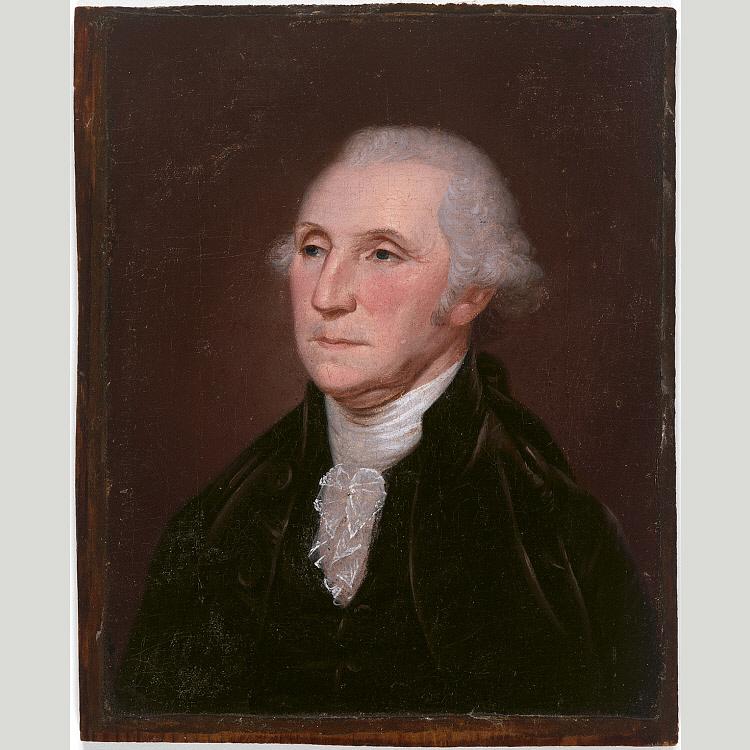
George Washington (Last Bust Portrait type)
 Oil On Canvas
- WallArt
- Neoclassicism
 1795
1795- Early Modern
 30.0 x 22.0 cm
 Weiterlesen
Handgefertigte Ölreproduktion
Handgemaltes Ölgemälde auf Leinwand in Ihrer Wunschgröße und mit Rahmen, auf Bestellung von unseren Künstlern angefertigt. ( Zu Druck wechseln Zum digitalen Bild wechseln)




P118B $10

P118H $10

P118W $10

P438Z $10

P508JH $12

P508YH $12

P805H $10

P805Z $10

P919BZ $10

P919G $10

P919XJ $10

P959ZH $10

P968JZ $12

W106C $8

W218G $10

W218JH $8

W218Y $10

W307PJ $10

W316G $10

W316PJ $8

W316Y $10

W398PJ $8

W4111J $10

W500HY $15

W500JH $15

W692G $12

W849H $8

W940BG $15

W953PJ $8




Wählen Sie aus unseren vordefinierten Formaten, die den ursprünglichen Proportionen des Kunstwerks entsprechen.

Sie können Ihre eigenen Maße eingeben, um einen bestimmten Rahmen oder Platz auszufüllen. Wenn die gewählte Größe nicht den Proportionen des Originalbildes entspricht, werden wir das Kunstwerk entweder beschneiden oder das Gemälde durch zusätzliche, handgemalte Elemente erweitern. Ein digitales Mockup wird Ihnen zur Genehmigung zugesandt, bevor die Produktion beginnt.
Bitte beachten Sie, dass die Bildschirmvorschau nicht die tatsächliche Beschneidung oder Erweiterung widerspiegelt. Nur das Mockup zeigt die endgültige Komposition exakt an.
Obwohl Sondermaße verfügbar sind, empfehlen wir, eine Größe aus der vordefinierten Liste zu wählen, um die ursprünglichen Proportionen beizubehalten.
Nach der Bestellung wird das OriginalUniqueArt.com-Team dem Kunden Anweisungen per E-Mail zusenden und eine Mockup-Vorschau bereitstellen.
Weltweiter Versand () in nur 3 bis 4 Wochen statt der üblichen 5 Wochen. (13 September). Keine Kompromisse bei der Qualität.

Kostenloser weltweiter Expressversand

Hochwertige Leinenleinwand

Umfassender Versicherungsschutz beim Versand

Zollgebühren-Rückerstattungsgarantie

Garantie für exakte Farbtreue

100-Tage-Rückgaberecht (nur bei Mängeln)

100% Geld-zurück-Garantie

Mengenrabatt verfügbar
 Die Glasoption ist nur für Größen unter 110 cm verfügbar.

George Washington (Last Bust Portrait type)
Art der Reproduktion
Format der Reproduktion
-


Gesamtpreis
$ 300
The Soul of a Nascent Republic
In the quiet, commanding presence of Charles Willson Peale’s 1795 portrait, George Washington, one finds far more than a mere likeness of a man; one encounters the very soul of a nascent republic. This particular rendition, belonging to the "Last Bust Portrait" type, captures the first President of the United States with a profound sense of Neoclassical grace. The composition is masterfully centered, focusing our gaze upon Washington’s head and shoulders, creating an intimate yet monumental encounter. Through soft, diffused lighting, Peale breathes life into the subtle contours of the face, allowing shadows to dance gently across the features, lending a weight of wisdom and gravity to the subject. It is a piece that does not merely depict a historical figure but invites the viewer into a moment of silent, dignified reflection.
Beyond its aesthetic brilliance, the painting serves as a vital historical document, capturing the essence of an era defined by revolution and the birth of American identity. As a master of his craft, Peale utilized his deep connection to the figures of the American Revolution to create works that are both personal and political. In this portrait, the subject is rendered with a resolute expression in his eyes, suggesting a leader who has weathered the storms of war and is now anchored by the heavy responsibility of peace. For the discerning collector, owning such a piece is akin to holding a fragment of history, a window into the foundational spirit of a nation.
Technical Mastery and Neoclassical Elegance
The technical mastery displayed in this oil on canvas is nothing short of breathtaking, making it an exquisite choice for those who appreciate the meticulous traditions of classical painting. Peale utilizes a sophisticated layering of colors to achieve a lifelike texture, where the smoothness of skin contrasts beautifully with the structured folds of period clothing. The palette is intentionally restrained, dominated by deep, somber tones of brown and black that evoke a sense of timelessness and authority. These dark hues are punctuated by delicate highlights of grey and white, which catch the light to define the fine details of Washington’s hair and the dignified structure of his features.
The style leans heavily towards Neoclassicism, characterized by realistic representation and an emphasis on order and balance. The lines are predominantly smooth and controlled, defining the contours of the face and clothing with surgical precision. This sense of stability is further reinforced by a deep, muted brown background, which provides a neutral anchor for the figure. Such a composition allows the portrait to command attention in any sophisticated setting without overwhelming the surrounding decor, making it an ideal centerpiece for a study, library, or formal living space.
A Timeless Addition to the Sophisticated Interior
For the interior designer or art enthusiast, this portrait offers a unique opportunity to introduce a sense of heritage and gravitas into a room. The neutral, muted tones of the work allow it to integrate seamlessly into various design aesthetics, from traditional colonial styles to modern minimalist environments. Because the painting relies on subtle tonal shifts rather than jarring colors, it provides a calming, intellectual energy to a space.
When considering a high-quality reproduction of this masterpiece, one is not just selecting a decoration, but an atmospheric element that can transform a room's character. It serves as:
- A Focal Point: The centered, monumental composition naturally draws the eye, creating a sense of importance within a gallery wall or standalone placement.
- An Anchor of Sophistication: The dark, classical palette provides a grounding effect that complements rich woods, leather, and metallic accents.
- A Conversation Piece: The historical significance of Peale’s depiction of Washington offers endless depth for storytelling and intellectual engagement with guests.
Ultimately, this portrait is an invitation to contemplate the virtues of leadership, resilience, and dignity. It remains a breathtaking testament to the power of portraiture to transcend time, offering a lasting legacy of beauty and strength to any collection.
Über den Künstler
Charles Willson Peale: Ein Leben zwischen Kunst, Wissenschaft und Patriotismus
- Geboren: 15. April 1741, Chester, Queen Anne's County, Maryland
- Gestorben: 22. Februar 1827, Philadelphia, Pennsylvania
Frühes Leben und künstlerische Ausbildung
- Peales frühes Leben war von finanziellen Schwierigkeiten geprägt, nachdem sein Vater gestorben war. Er absolvierte eine Lehre als Sattler, bevor er seine Leidenschaft für die Kunst entdeckte.
- Er erhielt zunächst Unterricht bei John Hesselius und studierte kurzzeitig bei John Singleton Copley, was ein frühes Talent für Porträts zeigte.
- Eine entscheidende Phase seiner Entwicklung war seine Zeit unter Benjamin West in London (1767-1770). Diese Begegnung mit europäischen Kunsttrends beeinflusste seinen Stil maßgeblich.
Künstlerische Karriere und Hauptwerke
- Porträtmalerei: Peale ist vor allem für seine Porträts bedeutender Persönlichkeiten der Amerikanischen Revolution bekannt, darunter zahlreiche Darstellungen von George Washington (insgesamt fast sechzig). Diese Porträts sind wertvolle historische Dokumente neben künstlerischen Leistungen.
- Stil: Sein Stil entwickelte sich im Laufe der Zeit weiter, anfänglich beeinflusst vom neoklassizistischen Ansatz Wests, später wurden jedoch Elemente des Realismus und das Bestreben nach einer genauen Wiedergabe des Likeness integriert.
- Bemerkenswerte Werke:
- George Washington (1772): Markierte den Beginn seiner langjährigen Verbindung zu Washington.
- Die Treppengruppe (ca. 1795): Ein beeindruckendes Beispiel für Trompe-l'oeil, das seine Söhne Raphael und Titian so darstellt, als wären sie Teil der architektonischen Umgebung.
Wissenschaftliche Bestrebungen und Peales American Museum
- Peale war ein leidenschaftlicher Naturforscher und Wissenschaftler und organisierte Expeditionen zur Erforschung der Naturgeschichte.
- Er gründete Peales American Museum in Philadelphia (1784), eines der ersten Museen in den Vereinigten Staaten. Es beherbergte botanische, biologische und archäologische Exponate.
- Das Museum spielte eine wichtige Rolle bei der Popularisierung von Wissenschaft und Bildung in Amerika. Er war besonders bekannt für seine Ausstellungen von Mammutknochen, die er bei einer Expedition im Jahr 1801 erworben hatte.
- Er lehrte sich selbst Taxidermie, um Exponate für das Museum zu konservieren, was seine vielfältigen Fähigkeiten demonstrierte.
Vermächtnis und historische Bedeutung
- Peales Werk überbrückt die Kluft zwischen Kunst und Wissenschaft und spiegelt die Ideale der Aufklärung seiner Zeit wider.
- Seine Porträts liefern unschätzbare visuelle Aufzeichnungen von Schlüsselfiguren in der amerikanischen Geschichte.
- Die Gründung von Peales American Museum war ein bahnbrechender Versuch, das Museum als eine wichtige Institution für Bildung und wissenschaftliche Erforschung zu etablieren.
- Er beeinflusste nachfolgende Generationen von Künstlern und Wissenschaftlern und trug wesentlich zur Entwicklung der amerikanischen Kultur bei.
- Sein Familienvermächtnis setzte sich durch seine Söhne fort, darunter James Peale und Rubens Peale, die ebenfalls talentierte Künstler wurden und zur Sammlung des Museums beitrugen.

Charles Willson Peale
1741 - 1827 , Vereinigtes Königreich
Kurzinfos
- Beeinflusste Künstler:
- John Hesselius
- John Singleton Copley
- Benjamin West
- Bemerkenswerte Werke:
- Staircase Group
- George Washington Porträts
- Geburtsdatum: 15. April 1741
- Geburtsort: Chester, Vereinigtes Königreich
- Künstlerische Bewegung: Neoklassische Malerei
- Nationalität: Amerikanisch
- Todatum: 22. Februar 1827
- Vollständiger Name: Charles Willson Peale
Ähnliche Artikel

Georges Seurat: Die 25 Meisterwerke des Pointillismus für Ihr Zuhause | OriginalUniqueArt
Entdecken Sie die 25 ikonischsten Meisterwerke von Georges Seurat! Tauchen Sie ein in die Welt des Pointillismus, der Farbtheorie und des Impressionismus. Hochwertige Kunst reproduzieren für Ihr Zuhause – jetzt auf OriginalUniqueArt.com!

Georges Braque: Die 25 Meisterwerke des Kubismus für Ihr Zuhause | OriginalUniqueArt
Entdecken Sie die 25 bedeutendsten Kunstwerke von Georges Braque – vom Kubismus bis zum Fauvismus. Erfahren Sie die Geschichten hinter den Meisterwerken und finden Sie hochwertige Reproduktionen für Ihr Zuhause auf OriginalUniqueArt.com.

Neoclassical Portraiture: The Timeless Elegance of Order, Grace, and Academic Mastery
Explore the refined world of Neoclassical portraiture. Discover the mastery of line, light, and order through an expert exploration of academic art history, from Jacques-Louis David to Jean-Antoine Houdon. Immerse yourself in the timeless elegance of classical realism.
Titian Ramsay Peale: Präzision und künstlerische Innovation in der frühen amerikanischen botanischen Malerei
Entdecken Sie das Werk von Titian Ramsay Peale, einem Pionier der amerikanischen botanischen Malerei! Erfahren Sie mehr über seine präzisen Illustrationen, die Long-Expedition und seinen Beitrag zur Naturforschung. OriginalUniqueArt.

Charles Willson Peale: Porträtmalerei, Aufklärungsideale und die Gestaltung amerikanischer Identität
Entdecken Sie das Leben und Werk von Charles Willson Peale – Porträtmaler, Naturforscher und Begründer des ersten amerikanischen Museums. Erfahren Sie mehr über seine Bedeutung für die Kunstgeschichte der USA und die Ideale der Aufklärung.