Impressionism
Iris (Charles Henry Sims)
Charles Henry Sims (1873–1928) schuf Iris. Es gehört zur Impressionism-Strömung.

 Vorschau anzeigen

 Handgemaltes Ölgemälde
 Versenden
 Teilen
 Datenblatt


 Herunterladen
 Ähnliche Objekte
 Röntgenaufnahme
 Diashow
 Fragen & Antworten

 Statistiken
Iris im Überblick
- Titel
- Iris
- Künstler
- Charles Henry Sims (1873–1928)
- Geburtsjahr des Künstlers
- Islington, Vereinigtes Königreich
- Bewegung
- Impressionism
- Motiv
- nude figure, mythological scene, floral arrangement, pastoral beauty, classical allegory, warm color palette
Was stellt Iris dar?
A Vision of Classical Reverie: Exploring Charles Henry Sims’ *Iris*
Charles Henry Sims' *Iris* is a captivating oil painting that transports viewers to a realm of classical mythology and serene beauty. The artwork depicts a nude female figure, poised with graceful dignity upon a raised platform, set against a softly rendered landscape. She presents a woven basket brimming with the bounty of nature – luscious fruits, vibrant flowers, and a delicate winged cherub or angel. This isn’t merely a depiction of physical form; it's an evocation of abundance, grace, and perhaps even divine favor. The large scale of the work further enhances its immersive quality, drawing the viewer into this idyllic scene.Impressionistic Technique & Artistic Lineage
Painted in a style reminiscent of late 19th-century Impressionism, *Iris* showcases Sims’ masterful handling of light and atmosphere. Visible brushstrokes, blended with subtle expertise, create luminous effects across the canvas. The artist prioritizes capturing a fleeting moment, an impression rather than precise detail – particularly evident in the hazy background which suggests depth through atmospheric perspective. While trained at both South Kensington College of Art and the Académie Julian in Paris, Sims developed a uniquely idiosyncratic style that places him within the realm of art outsider. This categorization stems from his artistic development alongside struggles with mental health, resulting in a deeply personal and often unconventional approach to painting.Symbolism & Mythological Echoes
The symbolism woven into *Iris* is rich and layered. The overflowing basket immediately suggests themes of abundance and fertility, harking back to classical depictions of goddesses like Ceres or Flora. The inclusion of the winged figure introduces an element of divine protection or a messenger from the heavens, elevating the scene beyond mere pastoral beauty. The central female figure herself embodies a goddess-like quality – her pose is reminiscent of ancient sculptures, and her serene expression conveys a sense of timeless wisdom. It’s a carefully constructed allegory that invites contemplation on themes of nature, spirituality, and the human condition.Emotional Resonance & Interior Design Considerations
*Iris* evokes a feeling of tranquility and warmth. The predominantly warm color palette – golds, peaches, and soft greens – contributes to this serene atmosphere. The painting’s balanced composition and flowing lines create a sense of harmony and visual pleasure. As an interior design element, *Iris*, or a high-quality reproduction thereof, would lend itself beautifully to spaces seeking a touch of classical elegance and artistic depth. It would be particularly striking in a living room, dining room, or bedroom, serving as a focal point that inspires contemplation and adds a layer of sophisticated beauty. The artwork’s soft lighting and naturalistic forms complement both traditional and contemporary décor styles, making it a versatile addition to any collection.Hochauflösende Bilder von Iris
Gemeinfrei: Der Künstler verstarb im Jahr 1928.
Charles Henry Sims, Iris. Gemeinfreiheit
Fragen zu Iris, beantwortet
Was stellt "Iris" dar?
Die Motive von "Iris" sind nude figure, mythological scene, floral arrangement, pastoral beauty, classical allegory, warm color palette, winged angel.
Ist die Abbildung von "Iris" von Charles Henry Sims gemeinfrei?
Was das Urheberrecht betrifft, so ist "Iris" gemeinfrei – das Urheberrecht ist abgelaufen.
Wer hat "Iris" geschaffen?
Der Künstler hinter „Iris“ ist Charles Henry Sims. Das Werk ist unter dem Namen von Charles Henry Sims katalogisiert.
Welcher Kunstrichtung lässt sich "Iris" von Charles Henry Sims zuordnen?
Die mit "Iris" von Charles Henry Sims verbundene Stilrichtung ist Impressionism. Diese Klassifizierung ordnet das Werk in den Kontext verwandter Künstler und Kunstwerke ein.
Aus welcher Schaffensperiode von Charles Henry Sims stammt "Iris"?
"Iris" repräsentiert die Late Period von Charles Henry Sims.
Warum ist der Urheberrechtsstatus von "Iris" so, wie er ist?
"Iris" von Charles Henry Sims ist gemeinfrei – das Urheberrecht ist abgelaufen. Die Urheberrechtsfristen werden ab dem Todesjahr des Künstlers berechnet, und Charles Henry Sims verstarb im Jahr 1928.
Wie lässt sich "Iris" in das Gesamtwerk von Charles Henry Sims einordnen?
Innerhalb des Gesamtwerks von Charles Henry Sims steht „Iris“ im Stil der Impressionism und greift die Themen edwardian elegance & symbolism, religious allegory, divine grace, outsider art's surreal shift, nature's bounty & fertility" auf.
Welche Stellung nimmt „Iris“ unter den wiederkehrenden Motiven von Charles Henry Sims ein?
"Iris" stellt nude figure, mythological scene, floral arrangement, pastoral beauty, classical allegory, warm color palette, winged angel dar, während die dokumentierten Themen von Charles Henry Sims edwardian elegance & symbolism, religious allegory, divine grace, outsider art's surreal shift, nature's bounty & fertility" sind. Ein Vergleich der beiden zeigt, wie das Werk mit den üblichen Sujets des Künstlers in Verbindung steht.
Über den Künstler, Charles Henry Sims
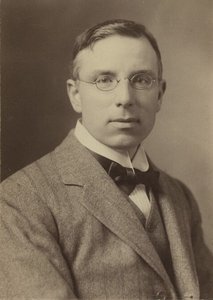
1873–1928, Vereinigtes Königreich
Charles Henry Sims
Ein Leben zwischen Licht und Schatten: Die rätselhafte Welt von Charles Henry Sims Charles Henry Sims, geboren 1873 in Islington, London, bleibt eine faszinierende Figur der britischen Kunst – ein Maler dessen Weg vom Eleganz der Edwardianer zur tiefen Melancholie und schließlich zum Outsider-Kunststil geprägt war. Sein Leben wurde von sowohl konventionellem Erfolg als auch tiefgreifender persönlicher Tragödie überschattet, Faktoren, die sich unverändert auf seine künstlerische Vision auswirkten. Ursprünglich für eine kommerzielle Karriere innerhalb seines Familienunternehmens bestimmt, lehnte Sims Erwartungen ab und verfolgte ein eigenes künstlerisches Studium am South Kensington College of Art bevor er seine Fähigkeiten in Paris bei der Académie Julian perfektionierte. Diese frühe Begegnung mit europäischen künstlerischen Strömungen legte den Grundstein für seinen ersten Ruhm als Porträtist und Landschaftsmaler, wodurch er sich innerhalb des etablierten Kunstbetriebs einen Namen machte.
Über Charles Henry Sims Bemerkenswerte Werke von Charles Henry Sims
Ebenfalls von Charles Henry Sims
 Bacchanalia1900
 Der kleine Faun1905
 Opferung1918
 Two Girls Seated - Diana, And Sarah Churchill
Essays zu Iris
 Die emotionale Farbpalette: Kunstauswahl und ihre Wirkung auf InnenräumeEntdecken Sie die Macht der Farbpsychologie für Ihr Interior Design! Expertenrat zur Auswahl von Kunstwerken & Farbschemata, die Emotionen …
 Capturing Fleeting Moments: Light, Color & Emotion in Impressionistic ArtExplore the captivating world of Impressionism! Discover the techniques, artists (Monet, Renoir, Degas), and enduring legacy of this revolu…
 Simon Vouet: Vom italienischen Barock zum französischen Klassizismus – Eine künstlerische ReiseEntdecken Sie das Leben und Werk von Simon Vouet, dem Pionier des italienischen Barock in Frankreich! Erfahren Sie mehr über seinen künstle…