

 In echtem Maßstab anzeigen
 Versenden als Grußkarte
 Teilen
 Details anzeigen
 Leitfaden öffnen

 Herunterladen
 Ähnliche Objekte
 Röntgenaufnahme
 Diashow
 Besucherstatistiken
Rural Landscape


 Mehr anzeigen
Giclée / Kunstdruck
Giclée- oder Leinwanddruck in Museumsqualität mit schneller Produktion und flexiblen Veredelungsoptionen. ( Handgemalte Reproduktion kaufen Zum digitalen Bild wechseln)




P118B €10

P118H €10

P118W €10

P438Z €10

P508JH €12

P508YH €12

P805H €10

P805Z €10

P919BZ €10

P919G €10

P919XJ €10

P959ZH €10

P968JZ €12

W106C €8

W218G €10

W218JH €8

W218Y €10

W307PJ €10

W316G €10

W316PJ €8

W316Y €10

W398PJ €8

W4111J €10

W500HY €15

W500JH €15

W692G €12

W849H €8

W940BG €15

W953PJ €8




Wählen Sie aus unseren vordefinierten Formaten, die den ursprünglichen Proportionen des Kunstwerks entsprechen.

Geben Sie die Breite und die Höhe an, die Sie benötigen, damit der Druck perfekt in Ihren Rahmen oder an Ihre Wand passt. Ein Druck kann nur beschnitten werden und niemals größer als das Originalbild gemacht werden; daher verliert ein Format mit einer anderen Proportion einen Teil des Bildes. Wir senden Ihnen ein digitales Mockup zur Freigabe, bevor wir den Druck ausführen. Das auf dieser Seite gezeigte Bild zeigt nicht den tatsächlichen Beschnitt – dies ist nur im Mockup ersichtlich.
Weltweiter Versand () innerhalb von 2 Wochen statt der üblichen 4/5 Wochen. (24 Oktober)

Kostenloser weltweiter Expressversand

Hochwertige Leinenleinwand

Vollständiger Versicherungsschutz beim Versand

Zollgebühren-Rückerstattungsgarantie

Garantie für exakte Farbtreue

100-tägiges Rückgaberecht (nur bei Mängeln)

100% Geld-zurück-Garantie

Angebot für Mengenrabatt
 Die Glasoption ist nur für Größen unter 110 cm verfügbar.

Rural Landscape
Giclée / Kunstdruck
Format der Reproduktion
-


Gesamtpreis
€ 70
A Serene Vision of Rural America: Charles Harold Davis’ “Rural Landscape”
Charles Harold Davis' "Rural Landscape," painted in 1905, isn’t merely a depiction of a field and trees; it’s an invitation to step into a moment of profound tranquility. Born in Amesbury, Massachusetts, in 1856, Davis honed his artistic skills under the tutelage of prominent figures like Jules Joseph Lefebvre and Gustave Boulanger in Paris, absorbing the vibrant energy of the European art scene before returning to America and embracing a distinctly American aesthetic. His work, particularly during his time in Mystic, Connecticut, shifted towards a Tonalist style, characterized by its muted colors, atmospheric perspective, and an almost meditative focus on capturing the essence of nature – a legacy deeply influenced by the Barbizon School’s emphasis on light and shadow.
The painting immediately draws the eye with its harmonious blend of blues, greens, and browns. Davis masterfully employs a technique reminiscent of Impressionism, though tempered with a Tonalist sensibility. He doesn't strive for photographic realism; instead, he uses broken brushstrokes and subtle gradations of color to evoke a feeling of atmosphere—the hazy warmth of the afternoon sun filtering through the trees, the gentle movement of clouds across the sky. The composition is carefully balanced, leading the viewer’s eye through the scene towards a distant horizon, creating a sense of depth and spaciousness. Note the delicate rendering of the foliage – not sharply defined, but rather suggested with loose, expressive strokes that capture the texture and vitality of the landscape.
The Language of Light and Shadow
Davis’s genius lies in his ability to translate light into color and form. The painting is bathed in a soft, diffused light, characteristic of the late afternoon. He skillfully uses shadows to define shapes and create a sense of volume, particularly in the trees that frame the scene. These aren't dark, ominous shadows; they are gentle, almost luminous, suggesting warmth and inviting the viewer into the heart of the landscape. The clouds themselves are rendered with remarkable subtlety, shifting between shades of gray and blue, creating an ethereal quality that elevates the painting beyond a simple depiction of weather.
The inclusion of figures in the foreground adds a layer of narrative to the scene without disrupting its overall sense of serenity. These individuals – likely farmers or laborers – are rendered with minimal detail, serving primarily as anchors for the viewer’s eye and subtly hinting at human connection within this vast landscape. They represent not just a rural life but also a timeless harmony between humanity and nature.
Symbolism and Emotional Resonance
“Rural Landscape” is more than just a pretty picture; it's imbued with symbolism. The scene evokes a sense of nostalgia for a simpler time, a longing for connection to the land, and an appreciation for the beauty of the natural world. It speaks to the values of hard work, community, and resilience – themes that were particularly resonant in America at the turn of the 20th century.
The painting’s quietude is profoundly calming. It invites contemplation and offers a respite from the stresses of modern life. Davis's masterful use of color and light creates an emotional atmosphere of peace, contentment, and connection to something larger than oneself. The scene feels both familiar and timeless, tapping into a deep-seated human desire for beauty and tranquility.
A Legacy in American Art
Charles Harold Davis’s “Rural Landscape” stands as a testament to the power of Tonalist and Impressionistic techniques to capture the essence of the American landscape. His work is represented in prominent museums, including the Metropolitan Museum of Art and the Corcoran Gallery of Art, solidifying his place as a significant figure in American art history. Reproductions of this evocative painting offer a beautiful way to bring a touch of rural serenity into any home or office – a reminder of the enduring beauty and tranquility of the natural world.
Fragen & Antworten
Welche Technik wurde für "Rural Landscape" verwendet und wann wurde es geschaffen?
"Rural Landscape" entstand im Jahr 1905 mit der Technik Oil On Canvas. Material und Datum beschreiben, wie und wann das Original geschaffen wurde.
Welche Sättigung und Intensität weist "Rural Landscape" von Charles Harold Davis auf?
"Rural Landscape" von Charles Harold Davis ist mit einer Sättigung von Subtle Color und einer Intensität von Balanced festgehalten.
Gibt es ein Factsheet zu "Rural Landscape" von Charles Harold Davis für Studierende?
Eine Leitfaden-Seite ist für "Rural Landscape" von Charles Harold Davis verfügbar: ein druckbares Infoblatt zum Kunstwerk, konzipiert für Schüler und den Einsatz im Unterricht.
Biografie des Künstlers
early life and training
Charles Harold Davis (1856 – 1933) war ein amerikanischer Landschaftsmaler, dessen Werk für seine ruhigen Tonalistenszenen und später für seine faszinierenden impressionistischen Wolkenlandschaften bekannt ist. Geboren wurde er am 7. Januar 1856 in Amesbury, Massachusetts. Bereits als Schüler der Bostoner Gemäldegalerie erhielt er eine umfassende künstlerische Ausbildung und wurde im Jahr 1880 nach Paris geschickt, um sein Können zu perfektionieren. Unter Anleitung von Jules Joseph Lefebvre und Gustave Boulanger an der Académie Julian entwickelte Davis ein tiefes Verständnis für die europäische Kunstszene und ließ sich maßgeblich von deren Entwicklungen prägen. Seine künstlerische Entwicklung fand ihren Ausgang in einer intensiven Beschäftigung mit den Prinzipien des Barbizon-Stil, dessen Einfluss auf seinen späteren Werkstil besonders deutlich wird.artistic style and influences
Davis's Stil zeichnete sich durch eine außergewöhnliche Präzision bei der Darstellung von Naturlandschaften aus und wurde maßgeblich von der Bewegung des Impressionismus beeinflusst. Diese Entwicklung manifestierte sich insbesondere in seinen berühmten Wolkenbildern, für die er große Anerkennung fand. Die Beobachtungsgabe und technische Fähigkeiten, die ihm diese Zeit ermöglichten, prägten sein gesamtes künstlerisches Schaffen nachhaltig. Besonders wichtig war dabei die Zusammenarbeit mit Gustave Boulanger und Jules Joseph Lefebvre an der Académie Julian, deren Lehren ihn zu einem Meister seiner Kunst wurden.notable achievements and affiliations
Davis wurde im Jahr 1906 Mitglied der National Academy of Design und erhielt einen Silberpreis bei der Pariser Ausstellung von 1889. Seine Werke fanden ihren Weg in bedeutende Museen wie das Metropolitan Museum of Art in New York, die Corcoran Gallery of Art in Washington und das Boston Museum of Fine Arts. Darüber hinaus spielte er eine zentrale Rolle bei der Gründung der Mystic Art Colony im Jahr 1913 und etablierte sich damit als einer der wichtigsten Künstler dieser einzigartigen Gemeinschaft. Seine Gemälde sind ein beeindruckendes Zeugnis für die Schönheit und Vielfalt der amerikanischen Landschaftskunst des frühen 20. Jahrhunderts.legacy
Charles Harold Davis hinterließ eine bedeutende künstlerische und gesellschaftliche Wirkung. Er wird insbesondere für seine Förderung der Mystic Art Colony und sein Engagement für die Entwicklung einer neuen Kunstrichtung in Connecticut in Erinnerung bleiben. Seine Werke werden weiterhin von Kunsthistorikern und Sammlern weltweit gefeiert und tragen zur Gestaltung unserer kulturellen Erinnerung bei.
Charles Harold Davis
1856 - 1933 , Vereinigte Staaten von Amerika
Eckdaten zum Künstler
- Artistic Movement Or Style: Impressionismus & Tonalismus
- Artists Who Influenced This Artist:
- Jules Joseph Lefebvre
- Gustave Boulanger
- Date Of Birth: 7. Januar 1856
- Date Of Death: 1933
- Full Name: Charles Harold Davis
- Nationality: Amerikaner
- Notable Artworks:
- Ein Pfad am Fluss
- ländliches Landschaftsbild
- Eine Lichtung
- Place Of Birth: Amesbury, Vereinigte Staaten
Verwandte Artikel

John Constable: Die 25 Meisterwerke des englischen Landschaftsgenies – OriginalUniqueArt
Entdecken Sie die 25 Meisterwerke von John Constable! Erleben Sie englische Landschaftsmalerei vom Hay Wain bis zur Stour Valley. Hochwertige Reproduktionen & Kunst für Ihr Zuhause auf OriginalUniqueArt.com.

The Unvarnished Truth: A Cultural Journey Through the Soul of American Realism
Explore the profound beauty of American Realism. From the Ashcan School's urban grit to intimate portraits, discover how artists captured the authentic soul of a nation through unvarnished truth and masterful observation.

Grant Wood und der amerikanische Regionalismus: Identität, Mythos und die ländliche Landschaft
Entdecken Sie Grant Wood und den amerikanischen Regionalismus! Erfahren Sie mehr über 'American Gothic', Woods Leben, Einflüsse und sein Vermächtnis in der Kunstgeschichte. Expertenwissen & hochwertige Reproduktionen.

Amerikanischer Realismus: Die 10 Meisterwerke, die eine Ära prägten | OriginalUniqueArt
Entdecken Sie die 10 Meisterwerke des Amerikanischen Realismus! Von Edward Hopper bis Winslow Homer – erleben Sie die Geschichten, Techniken & zeitlose Schönheit. Hochwertige Kunstdrucke auf OriginalUniqueArt.com.
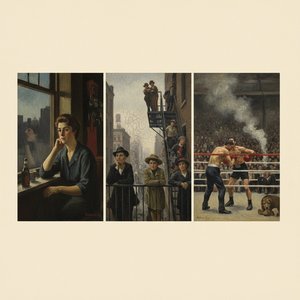
American Realism: Social Commentary & Artistic Representation in Early 20th-Century Painting
Explore the powerful social commentary & artistic representation of American Realism. Discover key artists like Bellows & Sloan, and understand the movement's lasting impact on 20th-century art history.