Menü

() ·

A painting made for you, by hand

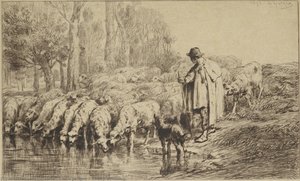
On the Pasture

Handgefertigte Ölreproduktion

Handgemaltes Ölgemälde auf Leinwand in Ihrer Wunschgröße und mit Rahmen, auf Bestellung von unseren Künstlern angefertigt. ( Zum Druck wechseln Zum digitalen Bild wechseln)

Beschreibung des Sammlerstücks

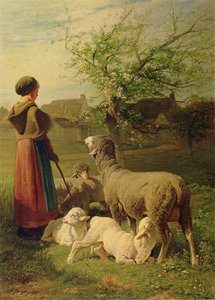
Charles-Émile Jacque's 'On the Pasture' captures a serene rural scene of a man and sheep under a tree, showcasing the Barbizon School’s idyllic landscapes and masterful detail.

Künstlerbiografie

Charles-Émile Jacque (1813-1894): Maler der Barbizon-Schule idyllischer ländlicher Szenen, Schafe & Vieh. Meisterhafte Radierungen & eine Schlüsselfigur des Realismus.

from ·

Chapter 1

How large should it be?

Slide to change the size; the picture on the left shows the frame at its real width. The proportions of the original are kept.

Standardformat
individuell anpassbar
CM
INCH

Wählen Sie aus unseren vordefinierten Formaten, die den ursprünglichen Proportionen des Kunstwerks entsprechen.

Breite
Höhe

Geben Sie die Breite und die Höhe an, die Sie für Ihren Rahmen oder Ihre Wand benötigen. Da dieses Werk handgemalt ist, kann der Künstler bei einer anderen Form etwas mehr um das Bild herum malen oder etwas abschneiden – Sie entscheiden. Wir senden Ihnen ein digitales Mockup zur Freigabe, bevor mit dem Malen begonnen wird. Das auf dieser Seite gezeigte Bild stellt nicht das tatsächliche Ergebnis dar – dies tut nur das Mockup.

Chapter 2

How should it arrive?

Choose the edges of the stretched canvas

Choose your frame

Corner sample of the WhiteWrap canvas edge finish, stretched on Massivholz bars
White €1
Corner sample of the BlurSideWrap canvas edge finish, stretched on Massivholz bars
Blurside €1
Corner sample of the ExtendedWrap canvas edge finish, stretched on Massivholz bars
Extended €1
Corner sample of the P118B picture frame: formgepresstes Polystyrol, 5 cm wide and 3 cm thick
P118B €10
Corner sample of the P118H picture frame: formgepresstes Polystyrol, 5 cm wide and 3 cm thick
P118H €10
Corner sample of the P118W picture frame: formgepresstes Polystyrol, 5 cm wide and 3 cm thick
P118W €10
Corner sample of the P438Z picture frame: formgepresstes Polystyrol, 5.5 cm wide and 3.5 cm thick
P438Z €10
Corner sample of the P508JH picture frame: formgepresstes Polystyrol, 7 cm wide and 3.5 cm thick
P508JH €12
Corner sample of the P508YH picture frame: formgepresstes Polystyrol, 7 cm wide and 3.5 cm thick
P508YH €12
Corner sample of the P805H picture frame: formgepresstes Polystyrol, 5 cm wide and 3.5 cm thick
P805H €10
Corner sample of the P805Z picture frame: formgepresstes Polystyrol, 5 cm wide and 3.5 cm thick
P805Z €10
Corner sample of the P919BZ picture frame: formgepresstes Polystyrol, 7 cm wide and 3.5 cm thick
P919BZ €10
Corner sample of the P919G picture frame: formgepresstes Polystyrol, 7 cm wide and 3.5 cm thick
P919G €10
Corner sample of the P919XJ picture frame: formgepresstes Polystyrol, 7 cm wide and 3.5 cm thick
P919XJ €10
Corner sample of the P959ZH picture frame: formgepresstes Polystyrol, 5 cm wide and 3 cm thick
P959ZH €10
Corner sample of the P968JZ picture frame: formgepresstes Polystyrol, 6 cm wide and 4 cm thick
P968JZ €12
Corner sample of the W106C picture frame: Massivholz, 5 cm wide and 3 cm thick
W106C €8
Corner sample of the W218G picture frame: Massivholz, 5 cm wide and 3 cm thick
W218G €10
Corner sample of the W218JH picture frame: Massivholz, 5 cm wide and 3 cm thick
W218JH €8
Corner sample of the W218Y picture frame: Massivholz, 5 cm wide and 3 cm thick
W218Y €10
Corner sample of the W307PJ picture frame: Massivholz, 6 cm wide and 3 cm thick
W307PJ €10
Corner sample of the W316G picture frame: Massivholz, 6 cm wide and 3 cm thick
W316G €10
Corner sample of the W316PJ picture frame: Massivholz, 6 cm wide and 3 cm thick
W316PJ €8
Corner sample of the W316Y picture frame: Massivholz, 6 cm wide and 3 cm thick
W316Y €10
Corner sample of the W398PJ picture frame: Massivholz, 5 cm wide and 3 cm thick
W398PJ €8
Corner sample of the W4111J picture frame: Massivholz, 6.5 cm wide and 3.5 cm thick
W4111J €10
Corner sample of the W500HY picture frame: Massivholz, 7 cm wide and 5 cm thick
W500HY €15
Corner sample of the W500JH picture frame: Massivholz, 7 cm wide and 5 cm thick
W500JH €15
Corner sample of the W692G picture frame: Massivholz, 8 cm wide and 4 cm thick
W692G €12
Corner sample of the W849H picture frame: Massivholz, 5 cm wide and 3 cm thick
W849H €8
Corner sample of the W940BG picture frame: Massivholz, 7.5 cm wide and 4.5 cm thick
W940BG €15
Corner sample of the W953PJ picture frame: Massivholz, 6 cm wide and 3.5 cm thick
W953PJ €8
Corner sample of the H24-GOLD picture frame: geschnitztes Holz mit Gesso, 10 cm wide and 6 cm thick
H24-GOLD €30
Corner sample of the H24-SILVER picture frame: geschnitztes Holz mit Gesso, 10 cm wide and 6 cm thick
H24-SILVER €30
Corner sample of the H36-GOLD picture frame: geschnitztes Holz mit Gesso, 15 cm wide and 6.5 cm thick
H36-GOLD €45
Corner sample of the H36-SILVER picture frame: geschnitztes Holz mit Gesso, 15 cm wide and 6.5 cm thick
H36-SILVER €45

Moulding: . Overall size with the frame: .

Chapter 3

Who paints it, and should anything change?

Examples of what can be changed: Replace face with customer photo; Add pet (e.g., replace cat with dog); Include hidden message in background; Change background landscape or elements.
After order, OriginalUniqueArt.com team will email client for instructions and provide a mockup preview

Weltweiter Versand () in nur 3 bis 4 Wochen statt der üblichen 5 Wochen. (31 Oktober). Keine Kompromisse bei der Qualität.

Chapter 4

The finishing touches

A nameplate, as in a museum?

Details der gravierten Bronzetafel

This elegant plaque features the artist's name and the title of the artwork, finely engraved for a timeless presentation.

It is made from bronze with a refined, elegant finish. The text is precisely laser-engraved for a sharp and permanent result. Measuring 9x2 cm, the plaque is compact yet easy to read. It's built to be durable and scratch-resistant, offering a professional, museum-quality look. Mounting is simple thanks to the included adhesive backing.

Details zur Acrylglas-Plakette (transparent)

The plaque includes essential engraved details such as the artist's name, the title of the artwork, the date it was created, the type of media used-like oil on canvas or watercolor-a brief description of the piece, and a QR code that links to the complete artwork information.

It is crafted from clear acrylic, offering a sleek, modern appearance. The text is UV-engraved in black to ensure strong visual contrast. With a size of 10x15 cm, it ensures optimal readability. It comes equipped with two metal hooks for secure wall mounting. The plaque is designed to be weather-resistant, making it suitable for various environments, and it includes interactive features that work seamlessly with smartphone scanning.

Details zur schwarzen Acryltafel

This elegant plaque includes engraved information such as the artist's name, the title of the artwork, the date it was created, the type of media used (like oil on canvas or watercolor), a short description of the artwork, and a QR code for quick access to more information.

The plaque itself is made from refined black acrylic with a premium finish. The text is laser-engraved in white for high contrast and readability. Its size is 10x15 cm, designed to be easy to read. It comes with two metal hooks for professional mounting. The design is sleek and fits any interior style. It is also weather-resistant and durable, with built-in digital integration for mobile compatibility.

A protective varnish?

When do you need it?

Chapter 5

Your painting, as you ordered it

On the Pasture

Art der Reproduktion

Format der Reproduktion

-

Erstklassige Meisterkünstler

Mehr Detailtiefe, Raffinesse und zusätzliche Produktionszeit

-

Rahmen für Reproduktionen

-

-

Bei Kunstwerken oder Reproduktionen, die an einer Seite größer als 105 cm (ca. 41 Zoll) sind, wird der Rahmen zerlegt als Bausatz geliefert. Diese Methode gewährleistet eine sichere Zustellung und verhindert Schäden während des Transports.

Professionelle Montage erforderlich – dies ist kein DIY-Produkt.
Der Bausatz muss von einem erfahrenen professionellen Rahmenmacher zusammengebaut und die Leinwand gespannt werden. Hierfür werden Holzleim (nicht im Lieferumfang enthalten), eine Leinwandspannzange sowie Klemmen benötigt, um die Keilleisten während des Trocknungsvorgangs rechtwinklig zu halten. Eine unsachgemäße Montage oder eine ungleichmäßige Spannung der Leinwand kann das Kunstwerk dauerhaft beschädigen und ist nicht durch unsere Garantie abgedeckt.

  • Alle Vollholzkomponenten sind enthalten, präzise auf Maß zugeschnitten.

  • Der Zusammenbau erfolgt mit den mitgelieferten Schrauben sowie Holzkleber für die Eckverbindungen, der nicht im Lieferumfang enthalten ist und vom Rahmenbauer selbst beschafft werden muss.

  • Professionelles Werkzeug ist erforderlich und nicht im Lieferumfang enthalten: eine Keilrahmenzange (Spannwerkzeug) sowie Klammern, um die Leisten während der Trocknungszeit des Klebers rechtwinklig zu fixieren.

Wichtiger Hinweis:
Für die Eckverbindungen wird Holzleim benötigt, die Leisten müssen mit Zwingen fixiert werden, bis der Leim vollständig getrocknet ist, und das Spannen der Leinwand auf dem fertigen Rahmen erfordert eine Keilrahmen-Zange. Keines dieser Utensilien ist im Set enthalten. Bitte stellen Sie sicher, dass ein erfahrener Rahmenmacher zur Verfügung steht, bevor Sie diese Größe bestellen.

Beschriftung

-

-

Schutzlackierung

Glanzlack (verstärkt die Farben, schützt vor Licht und Feuchtigkeit)

-

Mein Kunstwerk personalisieren

Beispiele für Anpassungsmöglichkeiten: Gesicht durch Kundenfoto ersetzen; Haustier hinzufügen (z. B. Katze durch Hund ersetzen); Versteckte Nachricht im Hintergrund einfügen; Hintergrundlandschaft oder -elemente ändern.

-

Eilt sehr

Weltweiter Versand () in nur 3 bis 4 Wochen statt der üblichen 5 Wochen. (31 Oktober). Keine Kompromisse bei der Qualität.

-

Expressversand

Weltweiter Versand () innerhalb von 5 Wochen. (7 November).

Inklusive Versand

Endpreis

€ 266

Gesamtpreis € 266

Die Glasoption ist nur für Größen unter 110 cm verfügbar.

Included with every order

  • Kostenloser weltweiter Expressversand
  • Hochwertige Leinenleinwand
  • Umfassender Versicherungsschutz beim Versand
  • Zollgebühren-Rückerstattungsgarantie
  • Garantie für exakte Farbtreue
  • 100 Tage Rückgaberecht (nur bei Mängeln)
  • 100% Geld-zurück-Garantie
  • Mengenrabatt verfügbar

A Pastoral Moment Frozen in Time: Charles-Émile Jacque’s “On the Pasture”

Charles-Émile Jacque's "On the Pasture" is more than just a depiction of a rural scene; it’s a poignant meditation on tranquility, connection to nature, and the quiet dignity of everyday life. Painted in 1860 during his time with the Barbizon School, this oil on canvas transports us to a sun-drenched field in France, where a solitary figure finds solace beneath the shade of an ancient tree while sheep graze peacefully around him. The painting immediately evokes a sense of serenity—a deliberate antidote to the burgeoning industrialization and urban sprawl that were rapidly reshaping 19th-century Europe.

Jacque’s artistic journey was surprisingly unconventional, beginning not with brushes and canvas but with the meticulous craft of map engraving for the French army. This early training instilled in him a remarkable attention to detail, a precision of observation, and an appreciation for capturing subtle nuances – qualities that would later become hallmarks of his pastoral paintings. He transitioned into painting after serving his military duty, initially exploring illustration before finding his true voice within the Barbizon School’s embrace of direct observation and rejection of academic conventions.

The Barbizon School: A Return to Nature

To understand “On the Pasture,” one must appreciate the context of the Barbizon School. Emerging in the 1850s, this movement represented a deliberate rebellion against the rigid formality of the French Salon system and the prevailing academic style. Artists like Jacque, Millet, and Corot sought to capture the essence of rural France—its landscapes, its people, and its rhythms—with an unprecedented level of realism and immediacy. They eschewed studio work in favor of *plein air* painting, directly observing nature and translating it onto canvas with bold brushstrokes and a focus on capturing light and atmosphere.

Unlike the idealized landscapes favored by earlier Romantic painters, the Barbizon School’s depictions were often rough-hewn and unpolished. Jacque's work is particularly notable for its earthy palette—a symphony of muted greens, browns, and ochres—that perfectly captures the weathered beauty of the French countryside. The composition itself is deceptively simple: a central tree acting as a visual anchor, framing the scene and drawing the viewer’s eye to the solitary figure and the grazing sheep.

Symbolism and Emotional Resonance

The lone man beneath the tree isn't merely an observer; he embodies a quiet contemplation, a connection to something larger than himself. He is not actively engaged in labor or social interaction—rather, he seems lost in thought, absorbing the peace of the natural world. The sheep, symbols of innocence and simplicity, further reinforce this theme of pastoral harmony. The painting’s emotional impact is profoundly calming; it invites us to slow down, breathe deeply, and appreciate the beauty of a moment suspended in time.

Furthermore, Jacque's work reflects a broader cultural shift—a growing awareness of the importance of rural life and a yearning for an escape from the pressures of modern society. The painting speaks to a desire for authenticity, for connection with the land, and for a simpler way of being.

Technical Details and Legacy

Jacque’s masterful technique is evident in his skillful rendering of texture—the rough bark of the tree, the soft wool of the sheep, the undulating grass of the field. He employs loose, expressive brushstrokes that convey both a sense of immediacy and a deep understanding of light and shadow. The painting's size – approximately 81 x 65 cm – allows for a remarkable level of detail while maintaining an overall feeling of spaciousness and tranquility.

“On the Pasture” remains a powerful example of Barbizon School art, showcasing Jacque’s unique ability to capture the essence of rural France. It's a timeless depiction of human connection with nature, offering a poignant reminder of the beauty and serenity that can be found in the simplest of moments. Reproductions of this evocative work continue to resonate with viewers today, transporting them to a world of quiet contemplation and pastoral charm.

Fragen & Antworten

Wann und mit welchen Materialien wurde "On the Pasture" geschaffen?

"On the Pasture" entstand im Jahr 1860 in Acrylic On Canvas.

Ist "On the Pasture" von Charles-Émile Jacque ein bekanntes Kunstwerk?

Die Beliebtheit von "On the Pasture" von Charles-Émile Jacque wird mit Recognized angegeben.

Wie stark ist der Kontrast in "On the Pasture" von Charles-Émile Jacque?

Der Kontrastwert von "On the Pasture" von Charles-Émile Jacque ist Statement.

More about this painting

Vorschau anzeigen In AR ansehen Zum Druck wechseln Zum digitalen Bild wechseln Versenden
Details anzeigen Leitfaden Zu Favoriten hinzufügen Herunterladen Ähnliche Objekte Röntgenaufnahme Diashow Q&A Statistiken

In numbers

  • 1860the year it was painted
  • 29frames to choose from
  • standard sizes, in its own proportions
  • 5weeks to paint and deliver it
Charles-Émile Jacque

Charles-Émile Jacque

1813 - 1894, Frankreich

Quick facts about Charles-Émile Jacque

  • Artistic Movement Or Style: Barbizon Schule
  • Artists Or Movements Influenced By This Artist: ['Realismus']
  • Artists Who Influenced This Artist: ['Adriaen van Ostade']
  • Date Of Birth: 23. Mai 1813
  • Date Of Death: 7. Mai 1894
  • Full Name: Charles-Émile Jacque
  • Nationality: Französisch
  • Notable Artworks:
    • Le Printemps
    • Schäferin
  • Place Of Birth: Paris, Frankreich

Künstlerbiografie

Eine Kindheit im Schatten der Revolution, ein Leben für die Landschaft

Charles-Émile Jacque, geboren 1813 in Paris, schien zunächst keinen geradlinigen Weg zum Künstler zu finden. Seine frühe Jugend wurde durch sieben Jahre Militärdienst geprägt – eine Erfahrung, die ihn zwar von der Freiheit künstlerischer Entfaltung entfernte, ihm aber gleichzeitig eine unschätzbare Präzision und Beobachtungsgabe vermittelte. Diese Fähigkeiten, zunächst beim Anfertigen detaillierter Karten eingesetzt, sollten sich später als entscheidend für seine malerische Arbeit erweisen. Es war ein ungewöhnlicher Beginn für einen Maler, der zu einem Sinnbild für die idyllische Schönheit der französischen Landschaft werden sollte, doch er zeugt von Jacques Anpassungsfähigkeit und seinem natürlichen Talent. Nach dem Ausscheiden aus dem Militär versuchte er sich kurzzeitig in Illustration und Karikatur, bevor er seine wahre Berufung im Bereich der Radierung und Malerei fand. Diese frühen Erfahrungen formten seinen Blick für Details und schärften sein Gespür für die Darstellung des Alltäglichen.

Die Anziehungskraft von Barbizon: Eine neue Ära der Landschaftsmalerei

In den 1840er Jahren zog es Jacque nach Barbizon, einem kleinen Dorf in der Nähe des Waldes Fontainebleau, das zum Zentrum einer revolutionären Kunstbewegung wurde. Angesichts von Choleraepidemien in Paris suchten er und Künstler wie Jean-François Millet die Inspiration direkt in der Natur. Dieser Schritt markierte eine bewusste Abkehr von den starren Konventionen der akademischen Malerei hin zu einem ehrlichen, realistischen Porträt des Lebens. Jacque fand sich in dieser neuen Herangehensweise vollkommen wieder und widmete sich leidenschaftlich der Darstellung des ländlichen Lebens – der stillen Würde der Hirten bei der Bewachung ihrer Herden, dem gemächlichen Rhythmus der Feldarbeit, der schlichten Schönheit von Vieh auf sonnendurchfluteten Wiesen. Seine Gemälde waren mehr als nur Abbildungen; sie strahlten eine tiefe Ruhe und Harmonie aus, die seine tiefe Wertschätzung für die natürliche Welt widerspiegelte. Er malte nicht einfach Schafe oder Scheunen, er vermittelte ein Gefühl, eine Atmosphäre – eine Ehrfurcht vor dem pastoralen Leben, die beim Publikum tief resonierte.

Meister der Technik: Radierung und Malerei im Einklang

Jacques künstlerisches Können beschränkte sich nicht auf die Ölmalerei. Er erwarb sich einen Ruf als Meister der Radierkunst, belebte Techniken des 17. Jahrhunderts wieder und erweiterte die Grenzen der Druckgrafik. Seine Radierungen wurden für ihre Kühnheit und durchdachten Motive gelobt und brachten ihm Anerkennung von Kritikern wie Charles Baudelaire ein. Henri Béraldi unterschied zwei Phasen in Jacques grafischem Werk: eine frühe Phase, inspiriert von niederländischen Vignetten, die sich durch Spontaneität auszeichnete, und eine spätere Phase, die durch größere, detailliertere Platten gekennzeichnet war, die akribische Handwerkskunst demonstrierten. Diese duale Beherrschung – sowohl Pinsel als auch Radiernadel – ermöglichte es ihm, ein breiteres Publikum zu erreichen und seinen Ruf als bedeutende Figur in der Kunstwelt zu festigen. Er betrachtete Malerei und Druckgrafik nicht als getrennte Disziplinen, sondern vielmehr als komplementäre Ausdrucksformen seiner künstlerischen Vision. Seine Illustrationen für literarische Klassiker, darunter Ausgaben von Goldsmiths *Der Vikar von Wakefield* und Wordsworths *Picturesque Greece*, zeigten seine Vielseitigkeit und sein Können zusätzlich.

Ein bleibendes Erbe: Jacques Einfluss auf die Kunstgeschichte

Charles-Émile Jacque verstarb 1894 und hinterließ ein reiches künstlerisches Erbe, das bis heute Betrachter in seinen Bann zieht. Er spielte eine entscheidende Rolle bei der Entwicklung des Realismus in der französischen Kunst und ebnete den Weg für zukünftige Generationen von Künstlern, die danach strebten, das Leben ehrlich und sensibel darzustellen. Seine Hingabe an die Darstellung des ländlichen Lebens erhob die Genremalerei – Szenen aus dem Alltag – zu einer herausragenden Position innerhalb der künstlerischen Landschaft.
  • Ein Pionier der Radierungsrenaissance: Jacques Wiederbelebung der Radierungstechniken des 17. Jahrhunderts hatte einen bedeutenden Einfluss auf die Druckgrafik.
  • Einfluss auf Millet: Seine frühen Arbeiten und Radierungen hatten einen tiefgreifenden Einfluss auf seinen Freund und Mitstreiter der Barbizon-Schule, Jean-François Millet.
  • Verfechter des ländlichen Lebens: Er verewigte die Schönheit und Würde des französischen Landlebens und schuf ein bleibendes visuelles Zeugnis einer verschwindenden Lebensweise.
Jacques Gemälde und Radierungen bieten mehr als nur malerische Szenen; sie gewähren einen Einblick in eine vergangene Ära und laden uns dazu ein, über die dauerhafte Verbindung zwischen Mensch und Natur nachzudenken. Sein Werk ist ein Beweis für die Kraft der Kunst, nicht nur das zu erfassen, was wir sehen, sondern auch wie wir fühlen.

Eckdaten

  • Location: Szépmûvészeti Múzeum
  • Subject or theme: Rural life
  • Title: On the Pasture
  • Artist: Jacque, Charles-Émile
  • Year: 1860

Kunst-Quiz

Jede Frage hat nur eine richtige Antwort.

Frage 1:
What is the primary subject depicted in Charles-Émile Jacque’s painting, ‘On the Pasture’?
Frage 2:
In what artistic movement was Charles-Émile Jacque primarily associated?
Frage 3:
According to the provided information, what was Charles-Émile Jacque’s early career before pursuing painting?
Frage 4:
What year does the description state that Charles-Émile Jacque was born?
Frage 5:
The description mentions that Jacque’s work influenced Jean-François Millet. What characteristic of Jacque's style is highlighted in this connection?
Entdecken Sie Kunstwerke, die nach Themen, Stilen und Merkmalen sortiert sind.