Zum Druck wechseln
 Weiterlesen







































 Bei Kunstwerken oder Reproduktionen, die an einer Seite größer als 105 cm (ca. 41 Zoll) sind, wird der Rahmen zerlegt als Bausatz geliefert. Diese Methode gewährleistet eine sichere Zustellung und verhindert Schäden während des Transports.


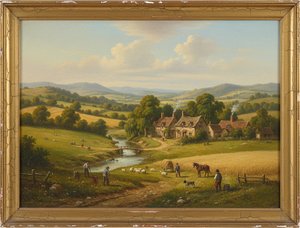
A Vision of Rural Tranquility: Exploring Jacque’s Landscape With A Herd
Charles-Émile Jacque's “Landscape With A Herd,” painted in 1872, stands as a quintessential example of Barbizon landscape painting—a movement that championed the honest depiction of rural life and celebrated the sublime beauty of the French countryside. More than just a picturesque scene, this artwork embodies a profound connection to nature and reflects the artistic sensibilities of its time.
Subject Matter & Composition: The painting captures a serene tableau featuring a solitary shepherd guiding his flock along a dusty dirt road. Dominating the canvas is a sprawling meadow bathed in soft sunlight, punctuated by scattered sheep—a deliberate choice to portray the everyday realities of rural existence. Two horses graze peacefully nearby, adding depth and visual interest to the composition.
Style & Technique: Jacque’s masterful brushwork exemplifies the Barbizon style's commitment to tonal gradation and atmospheric perspective. Thick impasto—heavy application of paint—creates a palpable sense of texture, conveying the roughness of the earth and the warmth of the sun. The artist skillfully utilizes muted earthy hues – ochres, browns, greens – to evoke the feeling of a timeless landscape untouched by urban encroachment.
Historical Context: Painted during the Second Barbizon Period (1863-1874), “Landscape With A Herd” emerged from a reaction against Romantic idealism. Artists like Jacque sought inspiration in the landscapes of Touraine and Umbria, rejecting theatrical grandeur for understated realism. This movement represented a significant shift away from idealized depictions of history and mythology towards an appreciation for the tangible beauty of the natural world.
Symbolism & Emotional Impact: Beyond its visual appeal, the painting carries symbolic weight. The shepherd represents diligence and responsibility—a figure rooted in tradition and connected to the land. The sheep symbolize innocence and vulnerability, mirroring humanity’s dependence on nature for sustenance and spiritual renewal. Jacque's work evokes a feeling of quiet contemplation and nostalgia, inviting viewers to reconnect with the restorative power of unspoiled landscapes.
Interior Design Considerations: “Landscape With A Herd” would lend itself beautifully to interior spaces seeking warmth and tranquility. Its muted palette complements neutral tones like beige or gray, creating a harmonious aesthetic that aligns with contemporary trends favoring natural materials and calming colors. Reproductions of this artwork offer an opportunity to bring the serenity of the French countryside into any home.
Fragen & Antworten
Kann ich "Landscape with a Herd" von Charles-Émile Jacque unter verschiedenen Lichtverhältnissen sehen?
Die Röntgenansicht von "Landscape with a Herd" von Charles-Émile Jacque finden Sie auf der Röntgenblick-Seite des Kunstwerks: eine interaktive Untersuchung des Bildes durch elf optische Schichten.
Wer ist der Urheber von "Landscape with a Herd" und aus welchem Jahr stammt das Werk?
"Landscape with a Herd" wurde von Charles-Émile Jacque im Jahr 1872 geschaffen.
In welchem Alter schuf Charles-Émile Jacque „Landscape with a Herd"?
Als "Landscape with a Herd" im Jahr 1872 entstand, war Charles-Émile Jacque – geboren 1813 – 59 Jahre alt.
 Vorschau anzeigen
 Versenden
 Teilen
 Details anzeigen
 Leitfaden

 Herunterladen
 Ähnliche Objekte
 Röntgenaufnahme
 Diashow
 Fragen & Antworten
 Statistiken