

 In echtem Maßstab anzeigen
 Versenden als Grußkarte
 Teilen
 Details anzeigen
 Leitfaden öffnen

 Herunterladen
 Ähnliche Objekte
 Röntgenaufnahme
 Diashow
 Besucherstatistiken
Life of St Augustine Saint Augustine Disputing with the Donatists
 Oil On Canvas
- WallArt
- Rococo Style
 1753
1753- Early Modern
 400.0 x 550.0 cm
 Basilika Unserer Lieben Frau
 Mehr anzeigen
Handgefertigte Ölreproduktion
Handgemaltes Ölgemälde auf Leinwand in Ihrer Wunschgröße und mit Rahmen, auf Bestellung von unseren Künstlern angefertigt. ( Zum Druck wechseln Zum digitalen Bild wechseln)




P118B €10

P118H €10

P118W €10

P438Z €10

P508JH €12

P508YH €12

P805H €10

P805Z €10

P919BZ €10

P919G €10

P919XJ €10

P959ZH €10

P968JZ €12

W106C €8

W218G €10

W218JH €8

W218Y €10

W307PJ €10

W316G €10

W316PJ €8

W316Y €10

W398PJ €8

W4111J €10

W500HY €15

W500JH €15

W692G €12

W849H €8

W940BG €15

W953PJ €8




Wählen Sie aus unseren vordefinierten Formaten, die den ursprünglichen Proportionen des Kunstwerks entsprechen.

Geben Sie die Breite und die Höhe an, die Sie für Ihren Rahmen oder Ihre Wand benötigen. Da dieses Werk handgemalt ist, kann der Künstler bei einer anderen Form etwas mehr um das Bild herum malen oder etwas abschneiden – Sie entscheiden. Wir senden Ihnen ein digitales Mockup zur Freigabe, bevor mit dem Malen begonnen wird. Das auf dieser Seite gezeigte Bild stellt nicht das tatsächliche Ergebnis dar – dies tut nur das Mockup.
Nach der Bestellung wird das OriginalUniqueArt.com-Team dem Kunden Anweisungen per E-Mail zusenden und eine Mockup-Vorschau bereitstellen.
Weltweiter Versand () in nur 3 bis 4 Wochen statt der üblichen 5 Wochen. (24 Oktober). Keine Kompromisse bei der Qualität.

Kostenloser weltweiter Expressversand

Hochwertige Leinenleinwand

Vollständiger Versicherungsschutz beim Versand

Zollgebühren-Rückerstattungsgarantie

Garantie für exakte Farbtreue

100-tägiges Rückgaberecht (nur bei Mängeln)

100% Geld-zurück-Garantie

Angebot für Mengenrabatt
 Die Glasoption ist nur für Größen unter 110 cm verfügbar.

Life of St Augustine Saint Augustine Disputing with the Donatists
Reproduktionsmedium
Format der Reproduktion
-


Gesamtpreis
€ 264
A Window Into Enlightenment: The Intellectual Drama of Van Loo
In the grand tapestry of eighteenth-century art, few works capture the electric tension between faith and reason as masterfully as Charles-André van Loo’s 1753 masterpiece, Life of St Augustine Saint Augustine Disputing with the Donatists. This expansive oil on canvas is far more than a mere historical reconstruction; it is a meticulously crafted tableau that breathes life into the intellectual fervor of the Enlightenment era. As the eye wanders across the vast composition, it is immediately arrested by the central figure of Saint Augustine, whose animated posture and fervent expression embody a relentless pursuit of truth. Surrounded by companions engaged in spirited debate, the scene transcends its theological subject matter to mirror the philosophical dialogues that defined the reign of Louis XV, inviting every viewer to witness a moment where dogma meets scrutiny.
The setting itself serves as a silent protagonist in this drama. Arranged around a table laden with heavy books and scattered documents, the figures exist within an atmosphere of academic rigor and spiritual urgency. Van Loo utilizes the dramatic technique of chiaroscuro—the masterful interplay of light and shadow—to heighten the emotional stakes of the dispute. The light does not merely illuminate; it carves out the importance of each participant’s stance, casting deep shadows that suggest the gravity of the Donatist heresy and the weight of the theological consequences at stake. This strategic use of light creates a sense of depth and movement, pulling the observer into the very heart of the conversation.
Rococo Elegance and the Art of the Brush
While the subject matter is heavy with historical significance, Van Loo executes the scene with the unmistakable grace of the Rochoco style. The painting is a triumph of delicate brushwork and a luxurious, luminous palette. Eschewing the somber tones often associated with religious history painting, Van Loo embraces a spectrum of pastel hues—creams, golds, soft pinks, and ethereal blues—to create an atmosphere that feels both regal and transcendent. This lightness of color provides a breathtaking contrast to the darker architectural elements, lending the work an almost dreamlike quality that is characteristic of the era's refined ornamentation.
For the discerning collector or interior designer, this piece offers a profound sense of prestige and narrative depth. The artist’s ability to render the intricate folds of drapery and the subtle nuances of facial expressions demonstrates a level of technical virtuosity that commands attention in any grand space. Whether placed in a library, a formal study, or a sophisticated gallery setting, the painting acts as a focal point of conversation. It does not merely decorate a wall; it anchors a room with its historical weight and aesthetic splendor, offering a timeless connection to an age where art, intellect, and divinity were inextricably entwined.
Fragen & Antworten
Aus welchen Materialien besteht "Life of St Augustine Saint Augustine Disputing with the Donatists" und in welchem Stil ist es gehalten?
"Life of St Augustine Saint Augustine Disputing with the Donatists" ist in Oil On Canvas im Stil der Rococo Style-Epoche gefertigt.
Zeigt "Life of St Augustine Saint Augustine Disputing with the Donatists" starke Hell-Dunkel-Kontraste?
Der Hell-Dunkel-Kontrast von „Life of St Augustine Saint Augustine Disputing with the Donatists“ wird mit Balanced angegeben. Der Kontrast beschreibt, wie stark sich helle und dunkle Bereiche voneinander unterscheiden.
Welchen kunsthistorischen Stellenwert nimmt "Life of St Augustine Saint Augustine Disputing with the Donatists" von Charles-André van Loo ein?
Historisch gesehen ist „Life of St Augustine Saint Augustine Disputing with the Donatists“ ein Werk der Rococo Style-Strömung aus der umfassenderen Ära der Early Modern.
Biografie des Künstlers
Frühes Leben und Ausbildung
- Geboren: 15. Februar 1705 in Nizza, Frankreich
- Familienhintergrund: Sohn von Louis-Abraham van Loo und jüngerer Bruder von Jean-Baptiste van Loo. Mitglied einer erfolgreichen niederländischen Malerdynastie.
- Frühe Ausbildung: Anfängliche Ausbildung in Turin, gefolgt von Studien (1712) in Rom unter Benedetto Luti und Pierre Legros.
- Pariser Studien: Besuchte die Académie royale, gewann 1723 den ersten Preis für Zeichnen und 1727 für historische Malerei.
Künstlerische Karriere und bedeutende Werke
- Stil: Hauptsächlich bekannt als Maler des Rokoko, gekennzeichnet durch Eleganz, Anmut und verschnörkelte Details.
- Themenwahl: Vielfältige Themen wie Porträts, mythologische Szenen, historische Gemälde, Allegorien und Genrekunst.
- Bedeutende Werke:
- Venus und Amor (Kunsthalle Bremen) – Demonstriert Meisterschaft des Rokoko-Stils.
- Halt der Jagd (The Metropolitan Museum of Art) – Fängt aristokratische Aktivitäten ein.
- Porträt von Marie Leszczynska, Königin von Frankreich – Ein bemerkenswertes königliches Porträt.
- Jupiter und Antiope – Zeigt Fähigkeiten bei der Darstellung mythologischer Themen.
- Selbstporträt – Bietet Einblick in die Selbstwahrnehmung des Künstlers.
- Perseus und Andromeda (mehrere Versionen) – Illustriert Geschicklichkeit bei der Darstellung klassischer Mythologie.
- Mademoiselle Clairon als Medea (kleine Version) - Ein fesselndes Rokoko-Porträt von 1760.
Förderung und königliche Anerkennung
- Königliche Förderung: Genoss die Förderung von Madame de Pompadour und dem französischen Hof.
- Ernennung zum Hofmaler: Wurde 1762 Erster Maler am Hofe König Ludwigs XV., eine prestigeträchtige Position.
- Orden Saint Michael: Ausgezeichnet mit dem Orden Saint Michael, ein Zeichen königlicher Gunst.
Einflüsse und Vermächtnis
- Familienbeeinflussung: Stark beeinflusst von seinem Vater und Bruder, beide angesehene Maler.
- Rivalität: Konkurrierte mit François Boucher, einem weiteren bedeutenden Rokoko-Künstler.
- Einfluss auf die moderne französische Kunstschule: Seine "Schlichtheit des Stils und Korrektheit des Designs" beeinflusste maßgeblich die moderne französische Kunstschule.
- Kritischer Wert: Obwohl sein kritischer Stellenwert im Laufe der Zeit schwankte, gebieten seine Fähigkeiten und die Vielfalt seiner Arbeit Respekt.
Museumsbestände & Weitere Erkundungen
- Museumspräsenz: Werke sind in renommierten Museen vertreten, darunter das Louvre (Die Hochzeit der Jungfrau), Kunsthalle Bremen und The Metropolitan Museum of Art.
- Weitere Ressourcen:
- OriginalUniqueArt Seite über Charles-André van Loo: https://www.OriginalUniqueArt.com/artists/charles-andre-van-loo/
- OriginalUniqueArt Seite über die größten Künstler aller Zeiten: https://www.OriginalUniqueArt.com/greatest-artists
- OriginalUniqueArt Virtuelles Museum: https://www.OriginalUniqueArt.com/
- Wikipedia Artikel: https://en.wikipedia.org/wiki/Charles-Andr%C3%A9_van_Loo
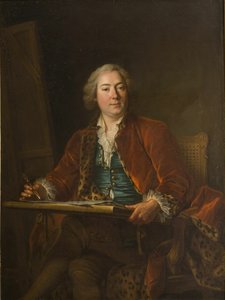
Charles-André van Loo
1705 - 1765 , Frankreich
Eckdaten zum Künstler
- Beeinflusste Kunststile: ['Moderne französische Schule']
- Beeinflusste Künstler:
- Benedetto Luti
- Pierre Le Gros
- Bemerkenswerte Werke:
- Venus und Amor
- Halt der Jagd
- Porträt Marie Leszczynska
- Jupiter und Antiope
- Selbstbildnis
- Perseus und Andromeda
- Geburtsdatum: 15. Februar 1705
- Geburtsort: Nizza, Frankreich
- Künstlerischer Stil: Rokoko-Malerei
- Nationalität: Französisch
- Sterbedatum: 15. Juli 1765
- Vollständiger Name: Charles-André van Loo
Verwandte Artikel

Charles-André van Loo: A Study in Rococo Portraiture & the French Court's Artistic Dynamics
Explore the elegant world of Charles-André van Loo, a master of Rococo portraiture at the French court. Discover his life, techniques, and enduring influence on 18th-century art. Hand-painted reproductions available.

Rembrandts Meisterwerke: Die Top 25 Kunstwerke für Ihr Zuhause | OriginalUniqueArt
Entdecken Sie Rembrandts 25 berühmteste Kunstwerke! Tauchen Sie ein in die Welt des Barock, Licht und Schatten & historischer Porträts. Hochwertige Reproduktionen für Ihr Zuhause – jetzt auf OriginalUniqueArt.com!

Frühniederländische Meisterwerke: 10 Gemälde, die eine Epoche prägten | OriginalUniqueArt
Entdecken Sie die 10 prägendsten Meisterwerke der Frühniederländischen Malerei! Von Jan van Eyck bis Rogier van der Weyden – erleben Sie Kunstgeschichte hautnah. Hochwertige Reproduktionen & Inspiration für Ihr Interieur auf OriginalUniqueArt.com.

Rococo Meisterwerke: Die Top 10, die eine Epoche prägten |
Entdecken Sie die Top 10 Rokoko Meisterwerke von Watteau, Boucher & Fragonard! Erfahren Sie die Geschichten hinter diesen ikonischen Gemälden und lassen Sie sich für Ihre Inneneinrichtung inspirieren. Hochwertige Kunstdrucke auf .

Frühniederländische Renaissance: 10 Meisterwerke für Ihr Zuhause | OriginalUniqueArt
Entdecken Sie die 10 prägendsten Meisterwerke der Frühniederländischen Renaissance! Erfahren Sie mehr über Jan van Eyck, Rogier van der Weyden & Co. und ihre ikonischen Gemälde. Hochwertige Reproduktionen für Ihr Zuhause – jetzt auf OriginalUniqueArt.com!


