

 In echtem Maßstab anzeigen
 Versenden als Grußkarte
 Teilen
 Details anzeigen
 Leitfaden öffnen

 Herunterladen
 Ähnliche Objekte
 Röntgenaufnahme
 Diashow
 Besucherstatistiken
Eule am Grab
 Acryl auf Leinwand
- Wandkunst
- Romanticism
 1837
1837 25.0 x 22.0 cm
 Mehr anzeigen
Giclée / Kunstdruck
Giclée- oder Leinwanddruck in Museumsqualität mit schneller Produktion und flexiblen Veredelungsoptionen. ( Handgemalte Reproduktion kaufen Zum digitalen Bild wechseln)




P118B $10

P118H $10

P118W $10

P438Z $10

P508JH $12

P508YH $12

P805H $10

P805Z $10

P919BZ $10

P919G $10

P919XJ $10

P959ZH $10

P968JZ $12

W106C $8

W218G $10

W218JH $8

W218Y $10

W307PJ $10

W316G $10

W316PJ $8

W316Y $10

W398PJ $8

W4111J $10

W500HY $15

W500JH $15

W692G $12

W849H $8

W940BG $15

W953PJ $8




Wählen Sie aus unseren vordefinierten Formaten, die den ursprünglichen Proportionen des Kunstwerks entsprechen.

Sie können Ihre eigenen Maße eingeben, um ein bestimmtes Format oder einen speziellen Platz einzupassen. Wenn das von Ihnen gewählte Format nicht den Proportionen des Originalbildes entspricht, werden wir das Kunstwerk entweder beschneiden oder das Bild mit einem gespiegelten oder einfarbigen Rand erweitern. Ein digitaler Entwurf wird Ihnen zur Genehmigung zugesandt, bevor die Produktion beginnt.
Bitte beachten Sie, dass die Vorschau auf dem Bildschirm nicht den tatsächlichen Zuschnitt oder die Erweiterung widerspiegelt. Nur der Entwurf zeigt die endgültige Komposition präzise an.
Obwohl Sondermaße verfügbar sind, empfehlen wir die Auswahl eines Maßes aus der vordefinierten Liste, um die ursprünglichen Proportionen zu bewahren.
Weltweiter Versand () innerhalb von 2 Wochen statt der üblichen 4/5 Wochen. (26 September)

Kostenloser weltweiter Expressversand

Hochwertige Leinenleinwand

Vollständiger Versicherungsschutz beim Versand

Zollgebühren-Rückerstattungsgarantie

Garantie für exakte Farbtreue

100-tägiges Rückgaberecht (nur bei Mängeln)

100% Geld-zurück-Garantie

Angebot für Mengenrabatt
 Die Glasoption ist nur für Größen unter 110 cm verfügbar.

Eule am Grab
Giclée / Kunstdruck
Format der Reproduktion
-


Gesamtpreis
$ 80
Landscape with Grave, Coffin and Owl
Caspar David Friedrich’s “Owl on a Grave” stands as an emblem of Romanticism—a movement that sought to transcend the rational Enlightenment in favor of emotion and intuition, channeling the profound influence of nature onto artistic expression. Created around 1837 in Germany, this painting transcends mere visual representation; it invites contemplation about mortality and humanity’s relationship with eternity, mirroring a broader cultural shift toward valuing experience over dogma. Friedrich's masterful technique—characterized by meticulous pencil shading—captures not just what he saw but how it *felt*, embodying the Romantic preoccupation with confronting existential questions.Composition and Symbolism: The Language of Silence
Friedrich’s compositional choices powerfully communicate his artistic vision. Dominating the canvas is an owl perched atop a weathered wooden post or grave marker, a deliberate symbol reflecting the pervasive preoccupation with death and decay within Romantic thought. The owl’s downward gaze establishes a palpable atmosphere of introspection, prompting viewers to confront fundamental questions about existence. Complementing this central figure are subtle additions: another bird nestled in the upper left corner – likely mirroring the owl’s solemn posture – and a solitary flower positioned on the right side, injecting a touch of fragile beauty into the otherwise austere landscape. The owl itself carries profound symbolic weight, representing wisdom, death, and the afterlife—themes central to Romantic spirituality. Similarly, the grave marker serves as a poignant reminder of mortality, grounding the viewer in the inescapable reality of human existence.Artistic Style and Technique: Gothic Influence Meets Pencil Precision
Friedrich’s artistic style is deeply rooted in gothic traditions – particularly the dramatic interplay of light and shadow – to evoke feelings of melancholy and spiritual contemplation. He skillfully employs pencil as his medium, achieving remarkable detail and textural nuance. This technique allows him to capture the subtle nuances of atmospheric perspective, conveying a sense of depth and realism that distinguishes it from earlier neoclassical styles. The muted palette—primarily browns, greys, and ochres—further reinforces the painting’s solemn mood and aligns with Friedrich’s desire to depict nature as an arena for profound spiritual experience. Unlike many Romantic painters who favored bold brushstrokes and vibrant colors, Friedrich prioritized tonal gradation, creating a visual harmony that underscores the painting’s contemplative character.Context and Significance: Friedrich’s Vision of Humanity’s Place in Nature
Friedrich’s artistic endeavors were profoundly influenced by the intellectual currents of his time — specifically the burgeoning Romantic movement’s rejection of Enlightenment rationalism in favor of emotion and intuition. He championed the notion that art should inspire awe and reverence for the natural world, mirroring a broader cultural shift toward valuing experience over dogma. Like Turner and Constable before him, Friedrich sought to capture not merely what he saw but how it *felt*. His paintings frequently featured solitary figures dwarfed by expansive landscapes—a deliberate strategy designed to convey the insignificance of human existence against the backdrop of cosmic grandeur. This visual motif powerfully communicates the Romantic preoccupation with confronting mortality and contemplating the sublime—the experience of encountering something beyond comprehension that simultaneously inspires terror and delight.Preservation and Display: A Testament to Artistic Legacy
The original “Owl on a Grave” resides within the Pomerania State Museum, Greifswald, Germany—a repository of art and cultural heritage that houses over 14,000 years of Pomeranian history. The museum’s architectural ensemble—characterized by its harmonious blend of Gothic and neo-classical styles—provides an ideal setting for appreciating Friedrich's masterpiece alongside other significant artworks from the Romantic era. Its careful curation ensures that future generations can experience the enduring beauty and intellectual depth of this iconic painting. Experience the beauty and symbolism of Caspar David Friedrich's "Owl on a Grave" through OriginalUniqueArt’s handmade oil painting reproductions. Photo Description: The painting is a beautiful depiction of an owl perched on top of a wooden post or grave marker. The owl appears to be looking downward as it sits atop the post. The scene takes place in front of a sky background that adds depth and perspective to the image. In addition to the main subject, there are several other elements present in the painting. There is a bird located near the top left corner of the image, possibly another owl or a different species. A small flower can be seen on the right side of the painting, adding a touch of natural beauty to the scene. The overall composition of the painting creates an atmosphere of tranquility and contemplation. Size: 25 x 22 cm Date: 1837 ARTIST INFORMATION: ================== Artist: Caspar David Friedrich Birth Year: 1774 Death Year: 1840 Birth City: Greifswald Birth Country: Germany Biography:A Solitary Vision: The Life and Art of Caspar David Friedrich
Born in the Baltic port city of Greifswald on September 5, 1774, Caspar David Friedrich’s life was steeped in a melancholic atmosphere that would profoundly shape his artistic vision. He was the sixth of ten children, raised in the strict Lutheran creed of his father Adolf Gottlieb Friedrich, a candle-maker and soap boiler. Records of the family's financial circumstances are contradictory; while some sources indicate the children were privately tutored, others record that they were raised in relative poverty. He became familiar with death from an early age. His mother, Sophie, died in 1781 when he was seven. A year later, his sister Elisabeth died, and a second sister, Maria, succumbed to typhus in 1791. Arguably the greatest tragedy of his childhood happened in 1787 when his brother Johann Christoffer died: at the age of thirteen, Caspar David witnessed his younger brother fall through the ice of a frozen lake and drown. Some accounts suggest that Johann Christoffer perished while trying to rescue Caspar David, who was also in danger on the ice. Friedrich began his formal study of art in 1790 as a private student of artist Johann Gottfried Quistorp at the University of Greifswald, where he studied theology alongside art. Quistorp took his students on outdoor drawing excursions; as a result, Friedrich was encouraged to sketch from life at an early age. Through Quistorp, Friedrich met and was subsequently influenced by the theologian Ludwig Gotthard Kosegarten, who taught that nature was a revelation of God. Quistorp introduced Friedrich to the work of the German 17th-century artist Adam Elsheimer, whose works often included religious subjects dominated by landscape, and nocturnal subjects. During this period he also studied literature and aesthetics with Swedish professor Thomas Thorild. Friedrich entered the prestigious Academy of Copenhagen four years later, where he studied under teachers such as Christian August Lorentzen and the landscape painter Jens Juel. These artists were inspired by the Sturm und Drang movement and represented a midpoint between the dramatic intensity and expressive manner of the budding Romantic aesthetic and the waning neo-classical ideal. Mood was paramount"Biografie des Künstlers
frühes Leben und Karriere
Caspar David Friedrich, eine bedeutende Figur der deutschen Romantik, wurde am 5. September 1774 in Greifswald, damals Teil Pommeraniens (Schweden), geboren. Seine prägenden Jahre waren von einer natürlichen Neigung zum Kunstschaffen geprägt, die ihn dazu veranlasste, an der Universität Leipzig und später in Kopenhagen zu studieren.Künstlerischer Stil und Themen
Friedrichs Werk ist durch den tiefgründigen Einsatz gotischer Elemente und natürlicher Phänomene gekennzeichnet, um tiefe Kontemplation und ein Gefühl des Erhabenen hervorzurufen. Seine Landschaften reduzieren oft menschliche Figuren, um die Weite der natürlichen Welt zu unterstreichen, was seine Epoche's gesellschaftlichen Wandel hin zu Spiritualität gegenüber materiellen Gewinnen widerspiegelt.- Abtei zwischen Eichen, ein Zwischenzustand nach Entfernung alter Spachtelmasse und Retusche, zeigt Friedriches Meisterschaft beim Festhalten der Essenz der Natur (Alte Nationalgalerie, Berlin, Deutschland, Fotografie).
- Morgen (Öl) veranschaulicht seine Fähigkeit, ruhige und kontemplative Szenen darzustellen.
- Nordlandschaft, Frühling (Öl) und Landschaft in den Riesigen Bergen (Öl) demonstrieren seine Begabung, die Schönheit der Natur in verschiedenen Jahreszeiten und Landschaften einzufangen.
Einfluss und Vermächtnis
Friedriches Einfluss auf die Kunstgeschichte ist tiefgreifend, wobei sein Werk ein Pionier der deutschen Romantik war. Sein kontemplativer Stil, der zunächst gefeiert wurde, fiel später aus dem Einklang mit Deutschlands industriellen Fortschritt. Dennoch wurde er bis zum späten 20. Jahrhundert als Künstler internationaler Renommee geehrt. Wichtige Punkte in Friedriches Karriere:- frühe Anerkennung für seine 'Tragödie der Landschaft' in seinem Werk.
- Rückgang der Beliebtheit während seines späteren Lebens aufgrund des industriellen Fortschritts in Deutschland.
- postumme Anerkennung als Pionier der deutschen Romantik im späten 20. Jahrhundert.
Erfahren Sie mehr bei OriginalUniqueArt
Für eine umfassende Datenbank von Kunstwerken und Künstlerbiografien, einschließlich der Werke von Caspar David Friedrich, besuchen Sie [https://OriginalUniqueArt.com](https://OriginalUniqueArt.com). Entdecken Sie die Entwicklung der westlichen Kunst im Laufe der Jahrhunderte, vom frühen Mittelalter bis zur modernen Ära, mit dem OriginalUniqueArt-Zeitlinie. Lernen Sie wichtige Persönlichkeiten der Kunstgeschichte kennen und erkunden Sie die verschiedenen Stile und Bewegungen, die die Welt der Kunst geprägt haben.
Caspar David Friedrich
1774 - 1840 , Deutschland
Eckdaten zum Künstler
- Beeinflusste Künstler:
- Symbolisten
- Surrealisten
- Bemerkenswerte Werke:
- Das Eismeer
- Mann am Meer
- Kreidefelsen auf Rügen
- Abtei im Eichwald
- Winterlandschaft
- Geburtsdatum: 1774-09-05
- Geburtsort: Greifswald, Deutschland
- Künstlerische Bewegung: Deutsche Romantik
- Künstlerische Einflüsse:
- Jacob van Ruisdael
- Immanuel Kant
- Nationalität: Deutsch
- Todatum: 1840-05-07
- Vollständiger Name: Caspar David Friedrich
Verwandte Artikel

John Constable: Die 25 Meisterwerke des englischen Landschaftsgenies – OriginalUniqueArt
Entdecken Sie die 25 Meisterwerke von John Constable! Erleben Sie englische Landschaftsmalerei vom Hay Wain bis zur Stour Valley. Hochwertige Reproduktionen & Kunst für Ihr Zuhause auf OriginalUniqueArt.com.

Evocations of Place: A Historical Journey Through Landscape Art
Explore the rich history of landscape art with OriginalUniqueArt. Discover renowned artists, movements like Impressionism & Romanticism, and expert guidance for collecting timeless pieces. Find your perfect serene escape today!

Romantische Landschaften: Die 10 Meisterwerke, die eine Epoche prägten | OriginalUniqueArt
Entdecken Sie die 10 Meisterwerke der Romantischen Landschaftsmalerei! Von Caspar David Friedrich bis Turner – erleben Sie die Kunst, Emotion & Natur. Hochwertige Reproduktionen auf OriginalUniqueArt.com

The Sublime and the Picturesque: Exploring Emotion & Nature in Romantic Landscape Painting
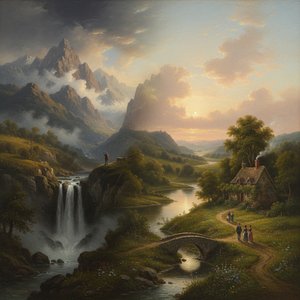
Explore the emotional power of Romantic landscape painting! Discover the sublime & picturesque traditions, key artists like Friedrich & Cole, and find your perfect artwork at OriginalUniqueArt.
The Sublime and the Picturesque: Exploring Emotion & Nature in Romantic Landscape Painting
Explore the emotional power of Romantic landscape painting! Discover the sublime & picturesque aesthetics, key artists like Friedrich & Cole, and lasting influence on art history. Find your perfect piece at OriginalUniqueArt.


