Vorschau anzeigen
 Versenden
 Teilen
 Details anzeigen

 Herunterladen
 Ähnliche Objekte
 Röntgenaufnahme
 Diashow
 Statistiken
Self-portrait
 Graphite
- WallArt
- Baroque
 1684
1684- Renaissance
 37.0 x 27.0 cm
 British Museum
 Weiterlesen
Giclée / Kunstdruck
Giclée- oder Leinwanddruck in Museumsqualität mit schneller Produktion und flexiblen Veredelungsoptionen. ( Handgemalte Reproduktion bestellen Zum digitalen Bild wechseln)




P118B $10

P118H $10

P118W $10

P438Z $10

P508JH $12

P508YH $12

P805H $10

P805Z $10

P919BZ $10

P919G $10

P919XJ $10

P959ZH $10

P968JZ $12

W106C $8

W218G $10

W218JH $8

W218Y $10

W307PJ $10

W316G $10

W316PJ $8

W316Y $10

W398PJ $8

W4111J $10

W500HY $15

W500JH $15

W692G $12

W849H $8

W940BG $15

W953PJ $8




Wählen Sie aus unseren vordefinierten Formaten, die den ursprünglichen Proportionen des Kunstwerks entsprechen.

Sie können Ihre eigenen Maße eingeben, um ein bestimmtes Format oder einen speziellen Platz einzupassen. Wenn das von Ihnen gewählte Format nicht den Proportionen des Originalbildes entspricht, werden wir das Kunstwerk entweder beschneiden oder das Bild mit einem gespiegelten oder einfarbigen Rand erweitern. Ein digitaler Entwurf wird Ihnen zur Genehmigung zugesandt, bevor die Produktion beginnt.
Bitte beachten Sie, dass die Vorschau auf dem Bildschirm nicht den tatsächlichen Zuschnitt oder die Erweiterung widerspiegelt. Nur der Entwurf zeigt die endgültige Komposition präzise an.
Obwohl Sondermaße verfügbar sind, empfehlen wir die Auswahl eines Maßes aus der vordefinierten Liste, um die ursprünglichen Proportionen zu bewahren.
Weltweiter Versand () innerhalb von 2 Wochen statt der üblichen 4/5 Wochen. (13 September)

Kostenloser weltweiter Expressversand

Hochwertige Leinenleinwand

Umfassender Versicherungsschutz beim Versand

Zollgebühren-Rückerstattungsgarantie

Garantie für exakte Farbtreue

100-Tage-Rückgaberecht (nur bei Mängeln)

100% Geld-zurück-Garantie

Mengenrabatt verfügbar
 Die Glasoption ist nur für Größen unter 110 cm verfügbar.

Self-portrait
Giclée / Kunstdruck
Format der Reproduktion
-


Gesamtpreis
$ 80
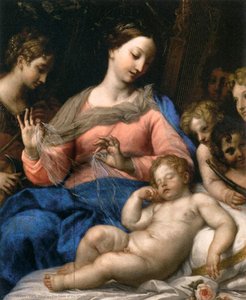
A Portrait of Quiet Dignity: Carlo Maratta's 1684 Self-Portrait
This meticulously rendered graphite drawing, created in 1684 by the Roman master Carlo Maratta, offers a remarkably intimate glimpse into the mind and artistry of one of the Baroque period’s most influential figures. Measuring just 37 x 27 cm, this seemingly modest work belies the profound depth of observation and technical skill it embodies. It's not merely a likeness; it’s a carefully constructed statement about self-awareness, artistic discipline, and the enduring legacy of classical ideals within a distinctly Baroque framework.
The image presents a frontal view of Maratta himself, captured with an almost unnerving directness. The composition is strikingly focused – the entire canvas devoted to his face and upper torso, devoid of any distracting background elements. This deliberate framing intensifies the viewer’s attention, forcing a contemplative engagement with the subject's gaze. The style leans heavily towards realism, yet it’s tempered by Maratta’s commitment to classical principles, evident in the balanced proportions and restrained emotionality. Notice how geometric shapes – circles for the eyes, ovals defining the head and torso, and rectangles outlining the collar – are used to create a structured, almost architectural representation of the figure.
The Language of Line: Technique and Detail
Maratta’s mastery lies in his command of line. Predominantly linear, these lines aren't simply outlines; they’re carefully calibrated to define every contour with precision. Varying line weights – from delicate hairlines to bolder strokes delineating the clothing – create a dynamic sense of texture and volume. Hatching techniques are employed subtly yet effectively, simulating the appearance of fabric folds and the intricate strands of hair, adding a tactile quality to the image. The slight blurring effect inherent in graphite lends a softness to the overall rendering, suggesting both age and the artist’s deliberate control over the medium.
The monochromatic palette – solely shades of grey – further emphasizes the drawing's formal qualities. It’s a testament to Maratta’s ability to convey form, light, and shadow entirely through line and tone. The single, implied light source, positioned above and slightly in front of the subject, casts carefully rendered shadows that sculpt the figure’s three-dimensional form with remarkable accuracy. This attention to detail speaks volumes about Maratta's dedication to anatomical study and his understanding of how light interacts with surfaces.
Contextualizing a Baroque Classicist
Created in 1684, this self-portrait places Maratta firmly within the context of late Baroque Rome. He was a pivotal figure in transitioning from the more dramatic excesses of the High Baroque to a style characterized by greater clarity, balance, and a renewed interest in classical forms – a movement he largely spearheaded. As documented in his biography by Bellori, Maratta’s early training under Andrea Sacchi instilled within him a deep respect for intellectual rigor and harmonious design. This influence is clearly evident here; the composition feels deliberately controlled, reflecting a philosophical approach to art that prioritized reason and order over flamboyant spectacle.
Maratta's work was commissioned by prominent figures in Rome, including Popes, demonstrating his status as one of the leading artists of his time. His dedication to meticulous draftsmanship and classical principles made him highly sought after for portraits and frescoes alike. This self-portrait serves not only as a visual record of Maratta’s appearance but also as a window into his artistic philosophy – a quiet testament to the enduring power of observation, discipline, and the pursuit of beauty.
Über den Künstler
Frühes Leben und Ausbildung
Carlo Maratta, ein bedeutender italienischer Maler, wurde am 15. Mai 1625 in Camerano, Kirchenstaat (heute Italien), geboren. Im Alter von 11 Jahren zog er nach Rom, wo er in der Werkstatt von Andrea Sacchi Lehrling wurde. Dies markierte den Beginn seiner künstlerischen Reise, die ihn schließlich zu einer führenden Figur der römischen Malerschule machen sollte.Künstlerischer Stil und Einflüsse
Marattas Gemälde zeichnen sich durch einen klassisierenden Stil aus, ausgeführt in einer späten barocken klassischen Manier. Obwohl er Teil der klassischen Tradition war, die von Raffael ausgeht, war er nicht frei von dem Einfluss der Barockmalerei, insbesondere bei seiner Farbgebung. Sein Zeitgenosse und Freund, Giovanni Bellori, verfasste eine frühe Biographie über Maratta und hob seinen einzigartigen künstlerischen Ansatz hervor.Wichtige Werke und Aufträge
Zu Marattas bemerkenswertesten Werken gehören:- Die Verkündigung (1656) für Santa Maria della Pace, die seine Meisterschaft von Licht und Bewegung zeigt.
- Das Geheimnis der Dreifaltigkeit, das St. Augustinus offenbart wurde (ca. 1655), das seine Fähigkeit demonstriert, klassische Ideale mit barocken Elementen in Einklang zu bringen.
- Das Erscheinen der Jungfrau vor St. Philipp Neri (ca. 1675), jetzt im Palazzo Pitti in Florenz, was sein begabtes Verständnis des Themas veranschaulicht.
Karriere und Ehrungen
Marattas künstlerische Karriere umfasste über sechs Jahrzehnte, während derer er zahlreiche Aufträge von bedeutenden Mäzenen erhielt, darunter sechs Päpste. Er wurde von Innozenz XI. zum Surintendent des chambres du Vatican ernannt und beauftragt, die Fresken von Raffael im Vatikan zwischen 1702 und 1703 zu restaurieren. Marattas Vermächtnis als Meister der späten barocken klassischen Manier wird durch seine Werke fortgesetzt, die sich in verschiedenen Museen befinden, darunter auch auf OriginalUniqueArt.com.- Betrachten Sie Marattas Kunstwerke auf OriginalUniqueArt: Carlo Marattas Kunstwerke
- Lesen Sie mehr über Marattas Leben und Werk auf Wikipedia: Carlo Maratta - Wikipedia
Wichtige Daten
1625: Geburt in Camerano, Kirchenstaat (heute Italien) 1636: Umzug nach Rom und Lehrling bei Andrea Sacchi 1713: Verstarb in Rom und hinterließ ein Erbe klassisierender Gemälde
Carlo Maratta
1625 - 1713 , Italien
Kurzinfos
- Beeinflusste Künstler:
- Andrea Sacchi
- Raffael
- Annibale Carracci
- Bemerkenswerte Werke:
- Die Bewilderung
- Das Geheimnis der Dreifaltigkeit
- Erscheinung der Jungfrau
- Geburtsdatum: 15. Mai 1625
- Geburtsort: Camerano, Italien
- Künstlerische Bewegung: Spätbarock, Klassizismus
- Nationalität: Italienisch
- Sterbedatum: 1713
- Vollständiger Name: Carlo Maratta
Ähnliche Artikel
The Alchemy of Graphite: An Expert Guide to Mastering Detail and Depth in Pencil Sketching
Unlock the secrets of graphite sketching with our expert guide for art students. Learn to master pencil grades, create realistic depth, and capture intricate textures through professional techniques designed to elevate your observational drawing skills.
The Alchemy of Carbon: Mastering Depth, Texture, and Precision in the Art of Graphite Drawing
Discover the sophisticated mastery of graphite drawing. Explore expert techniques for achieving profound depth, intricate texture, and hyper-realistic detail through the alchemy of carbon, curated for the discerning art enthusiast and professional collector.
The Power of Graphite: Mastering Depth, Texture, and Detail in the Art of Pencil Drawing
Explore the profound artistry of graphite drawing. Discover professional techniques for mastering depth, texture, and detail through a lens of art history, from classical sketches to modern masterpieces. Elevate your understanding of the pencil medium with our expert guide.
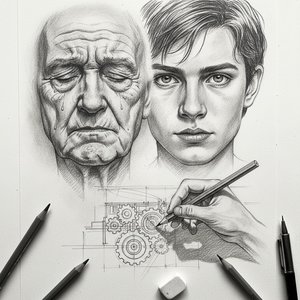
The Nuances of Graphite: Exploring Emotional Depth & Technical Mastery in Pencil Drawing
Explore the captivating world of graphite drawing! Discover its rich history, master essential techniques like chiaroscuro, and learn how artists evoke emotion through this timeless medium. Expert insights for art enthusiasts.

Baroque Classicism: The Grandeur of Order and Drama in 17th-Century Art History
Explore the profound elegance of Baroque Classicism. Discover how 17th-century masters synthesized dramatic emotion with classical order through the lens of the Counter-Reformation and the works of legends like Carlo Maratta and Andrea Sacchi.