In echtem Maßstab anzeigen
 Versenden als Grußkarte
 Teilen
 Details anzeigen
 Leitfaden öffnen

 Herunterladen
 Ähnliche Objekte
 Röntgenaufnahme
 Diashow
 Besucherstatistiken
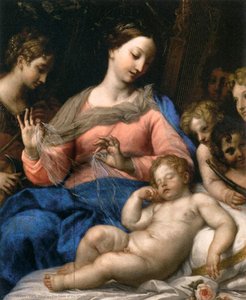
Apollo verfolgt Daphne
 Acryl auf Leinwand
- Wandkunst
- Barocker klassizistischer Stil
 1681
1681 221.0 x 224.0 cm
 Musées Royaux des Beaux-Arts
 Mehr anzeigen
Handgefertigte Ölreproduktion
Handgemaltes Ölgemälde auf Leinwand in Ihrer Wunschgröße und mit Rahmen, auf Bestellung von unseren Künstlern angefertigt. ( Zum Druck wechseln Zum digitalen Bild wechseln)




P118B €10

P118H €10

P118W €10

P438Z €10

P508JH €12

P508YH €12

P805H €10

P805Z €10

P919BZ €10

P919G €10

P919XJ €10

P959ZH €10

P968JZ €12

W106C €8

W218G €10

W218JH €8

W218Y €10

W307PJ €10

W316G €10

W316PJ €8

W316Y €10

W398PJ €8

W4111J €10

W500HY €15

W500JH €15

W692G €12

W849H €8

W940BG €15

W953PJ €8




Wählen Sie aus unseren vordefinierten Formaten, die den ursprünglichen Proportionen des Kunstwerks entsprechen.

Geben Sie die Breite und die Höhe an, die Sie für Ihren Rahmen oder Ihre Wand benötigen. Da dieses Werk handgemalt ist, kann der Künstler bei einer anderen Form etwas mehr um das Bild herum malen oder etwas abschneiden – Sie entscheiden. Wir senden Ihnen ein digitales Mockup zur Freigabe, bevor mit dem Malen begonnen wird. Das auf dieser Seite gezeigte Bild stellt nicht das tatsächliche Ergebnis dar – dies tut nur das Mockup.
Nach der Bestellung wird das OriginalUniqueArt.com-Team dem Kunden Anweisungen per E-Mail zusenden und eine Mockup-Vorschau bereitstellen.
Weltweiter Versand () in nur 3 bis 4 Wochen statt der üblichen 5 Wochen. (24 Oktober). Keine Kompromisse bei der Qualität.

Kostenloser weltweiter Expressversand

Hochwertige Leinenleinwand

Vollständiger Versicherungsschutz beim Versand

Zollgebühren-Rückerstattungsgarantie

Garantie für exakte Farbtreue

100-tägiges Rückgaberecht (nur bei Mängeln)

100% Geld-zurück-Garantie

Angebot für Mengenrabatt
 Die Glasoption ist nur für Größen unter 110 cm verfügbar.

Apollo verfolgt Daphne
Reproduktionsmedium
Format der Reproduktion
-


Gesamtpreis
€ 263
A Moment Frozen in Myth and Marble
Carlo Maratta’s “Apollo Chasing Daphne,” completed in 1681, isn't merely a depiction of Greek mythology; it’s an exquisitely crafted distillation of humanist ideals within the Baroque aesthetic. Hanging proudly at the Musées Royaux des Beaux-Arts in Brussels—a testament to Belgian cultural heritage—the canvas commands attention with its serene composure and subtle dynamism.
- Dimensions: 221 x 224 cm
- Medium: Oil on Canvas
- Location: Musées Royaux des Beaux-Arts, Brussels
The Narrative of Eros and Resistance
The painting recounts the legendary pursuit of Apollo—god of music, poetry, and archery—by Daphne, a nymph who embodies feminine resilience. Driven by desire, Apollo relentlessly pursues Daphne, attempting to seduce her with his divine charisma. However, Daphne refuses his advances, recognizing the danger posed by his obsession. Faced with imminent capture, she pleads for her father’s intervention, resulting in a miraculous transformation: Daphne is metamorphosed into laurel—a symbol of honor and victory—precisely as Apollo reaches for her.
Baroque Composition and Dramatic Lighting
Maratta's masterful technique exemplifies the Baroque style’s commitment to realism blended with theatrical illusion. He employs a pyramidal composition, anchoring the figures in stability while simultaneously directing the viewer’s gaze upwards towards Apollo and Daphne. The artist utilizes chiaroscuro—the dramatic interplay of light and shadow—to heighten emotional intensity and sculpt the forms of his subjects. Notice how the luminous glow illuminates Daphne's face, conveying her vulnerability and determination.
Symbolism Beyond Mythological Allegory
Beyond its retelling of a classic tale, “Apollo Chasing Daphne” resonates with deeper symbolic meanings. The laurel wreath represents Daphne’s triumph over Apollo’s desire—a visual affirmation of feminine autonomy and spiritual fortitude. Furthermore, the bird circling above Daphne underscores the fleeting nature of beauty and the inevitability of change. Maratta skillfully integrates these motifs into a harmonious whole, elevating the painting beyond mere narrative illustration.
Emotional Resonance: Tranquility Amidst Tension
Despite the palpable tension between Apollo and Daphne—expressed through their postures and gestures—the overall mood of “Apollo Chasing Daphne” is remarkably tranquil. Maratta achieves this effect by prioritizing balance and restraint, avoiding excessive ornamentation or flamboyant color palettes. Instead, he invites contemplation, prompting viewers to consider themes of love, loss, and transformation. It’s a painting that speaks to the human condition—a reminder that even in moments of vulnerability, grace and dignity can prevail.
Fragen & Antworten
Welche Maße hat das Originalwerk "Apollo verfolgt Daphne"?
Das Originalwerk "Apollo verfolgt Daphne" von Carlo Maratta hat die Maße 221 x 224 cm.
Welches Format hat "Apollo verfolgt Daphne"?
"Apollo verfolgt Daphne" von Carlo Maratta ist eine Komposition im Quadratisch-Format. Die Proportionen sollten vor der Wahl der Druckgröße überprüft werden.
Wie fügt sich „Apollo verfolgt Daphne“ in die Themen und den Stil von Carlo Maratta ein?
Innerhalb des Œuvres von Carlo Maratta steht „Apollo verfolgt Daphne“ im Stil der Barocker klassizistischer Stil, geprägt von den Themen sacchis stil, klassische ideale, mythologische erzählung, ausgewogene komposition, römischer barock-erbe.
Biografie des Künstlers
Frühes Leben und Ausbildung
Carlo Maratta, ein bedeutender italienischer Maler, wurde am 15. Mai 1625 in Camerano, Kirchenstaat (heute Italien), geboren. Im Alter von 11 Jahren zog er nach Rom, wo er in der Werkstatt von Andrea Sacchi Lehrling wurde. Dies markierte den Beginn seiner künstlerischen Reise, die ihn schließlich zu einer führenden Figur der römischen Malerschule machen sollte.Künstlerischer Stil und Einflüsse
Marattas Gemälde zeichnen sich durch einen klassisierenden Stil aus, ausgeführt in einer späten barocken klassischen Manier. Obwohl er Teil der klassischen Tradition war, die von Raffael ausgeht, war er nicht frei von dem Einfluss der Barockmalerei, insbesondere bei seiner Farbgebung. Sein Zeitgenosse und Freund, Giovanni Bellori, verfasste eine frühe Biographie über Maratta und hob seinen einzigartigen künstlerischen Ansatz hervor.Wichtige Werke und Aufträge
Zu Marattas bemerkenswertesten Werken gehören:- Die Verkündigung (1656) für Santa Maria della Pace, die seine Meisterschaft von Licht und Bewegung zeigt.
- Das Geheimnis der Dreifaltigkeit, das St. Augustinus offenbart wurde (ca. 1655), das seine Fähigkeit demonstriert, klassische Ideale mit barocken Elementen in Einklang zu bringen.
- Das Erscheinen der Jungfrau vor St. Philipp Neri (ca. 1675), jetzt im Palazzo Pitti in Florenz, was sein begabtes Verständnis des Themas veranschaulicht.
Karriere und Ehrungen
Marattas künstlerische Karriere umfasste über sechs Jahrzehnte, während derer er zahlreiche Aufträge von bedeutenden Mäzenen erhielt, darunter sechs Päpste. Er wurde von Innozenz XI. zum Surintendent des chambres du Vatican ernannt und beauftragt, die Fresken von Raffael im Vatikan zwischen 1702 und 1703 zu restaurieren. Marattas Vermächtnis als Meister der späten barocken klassischen Manier wird durch seine Werke fortgesetzt, die sich in verschiedenen Museen befinden, darunter auch auf OriginalUniqueArt.com.- Betrachten Sie Marattas Kunstwerke auf OriginalUniqueArt: Carlo Marattas Kunstwerke
- Lesen Sie mehr über Marattas Leben und Werk auf Wikipedia: Carlo Maratta - Wikipedia
Wichtige Daten
1625: Geburt in Camerano, Kirchenstaat (heute Italien) 1636: Umzug nach Rom und Lehrling bei Andrea Sacchi 1713: Verstarb in Rom und hinterließ ein Erbe klassisierender Gemälde
Carlo Maratta
1625 - 1713 , Italien
Eckdaten zum Künstler
- Beeinflusste Künstler:
- Andrea Sacchi
- Raffael
- Annibale Carracci
- Bemerkenswerte Werke:
- Die Bewilderung
- Das Geheimnis der Dreifaltigkeit
- Erscheinung der Jungfrau
- Geburtsdatum: 15. Mai 1625
- Geburtsort: Camerano, Italien
- Künstlerische Bewegung: Spätbarock, Klassizismus
- Nationalität: Italienisch
- Sterbedatum: 1713
- Vollständiger Name: Carlo Maratta
Verwandte Artikel

Barock Meisterwerke: Die 10 prägendsten Kunstwerke für Ihr Zuhause |
Entdecken Sie die 10 prägendsten Meisterwerke des Barock! Caravaggio, Rembrandt & Co. – Erfahren Sie die Geschichten hinter ikonischen Gemälde und finden Sie hochwertige Kunst Reproduktionen für Ihr Zuhause auf .

Barocke Pracht: Wie Sie Opulenz und Emotionen in zeitgenössische Innenräume bringen
Entdecken Sie die Pracht des Barock! Expertenratgeber für luxuriöse Innenräume mit barocken Elementen. Inspiration, Tipps & hochwertige Kunst bei .

Baroque Classicism: The Grandeur of Order and Drama in 17th-Century Art History
Explore the profound elegance of Baroque Classicism. Discover how 17th-century masters synthesized dramatic emotion with classical order through the lens of the Counter-Reformation and the works of legends like Carlo Maratta and Andrea Sacchi.

The Visceral Stage: Exploring Dramatic Narratives & Emotional Intensity in Baroque Art
Explore the dramatic world of Baroque art! Discover iconic masters like Caravaggio & Rembrandt, their techniques, and the movement's lasting impact. Expert insights for collectors & enthusiasts at OriginalUniqueArt.

The Dramatic Flourish: Exploring the Baroque Movement's Enduring Legacy in Art History
Explore the dramatic world of Baroque art! Discover iconic artists like Caravaggio & Rubens, defining techniques, and its lasting impact on art history. Expert insights for collectors & enthusiasts at OriginalUniqueArt.