

 In echtem Maßstab anzeigen
 Versenden als Grußkarte
 Teilen
 Details anzeigen
 Leitfaden öffnen

 Herunterladen
 Ähnliche Objekte
 Röntgenaufnahme
 Diashow
 Besucherstatistiken
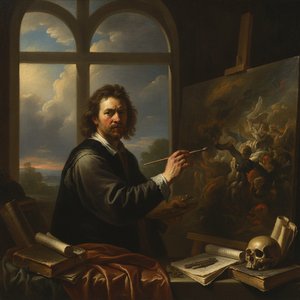
Self-Portrait
 Oil On Panel
- Baroque Painting
 1645
1645 65.0 x 49.0 cm
 Museum Boijmans Van Beuningen
 Mehr anzeigen
Giclée / Kunstdruck
Giclée- oder Leinwanddruck in Museumsqualität mit schneller Produktion und flexiblen Veredelungsoptionen. ( Handgemalte Reproduktion kaufen Zum digitalen Bild wechseln)




P118B €10

P118H €10

P118W €10

P438Z €10

P508JH €12

P508YH €12

P805H €10

P805Z €10

P919BZ €10

P919G €10

P919XJ €10

P959ZH €10

P968JZ €12

W106C €8

W218G €10

W218JH €8

W218Y €10

W307PJ €10

W316G €10

W316PJ €8

W316Y €10

W398PJ €8

W4111J €10

W500HY €15

W500JH €15

W692G €12

W849H €8

W940BG €15

W953PJ €8




Wählen Sie aus unseren vordefinierten Formaten, die den ursprünglichen Proportionen des Kunstwerks entsprechen.

Geben Sie die Breite und die Höhe an, die Sie benötigen, damit der Druck perfekt in Ihren Rahmen oder an Ihre Wand passt. Ein Druck kann nur beschnitten werden und niemals größer als das Originalbild gemacht werden; daher verliert ein Format mit einer anderen Proportion einen Teil des Bildes. Wir senden Ihnen ein digitales Mockup zur Freigabe, bevor wir den Druck ausführen. Das auf dieser Seite gezeigte Bild zeigt nicht den tatsächlichen Beschnitt – dies ist nur im Mockup ersichtlich.
Weltweiter Versand () innerhalb von 2 Wochen statt der üblichen 4/5 Wochen. (22 Oktober)

Kostenloser weltweiter Expressversand

Hochwertige Leinenleinwand

Vollständiger Versicherungsschutz beim Versand

Zollgebühren-Rückerstattungsgarantie

Garantie für exakte Farbtreue

100-tägiges Rückgaberecht (nur bei Mängeln)

100% Geld-zurück-Garantie

Angebot für Mengenrabatt
 Die Glasoption ist nur für Größen unter 110 cm verfügbar.

Self-Portrait
Giclée / Kunstdruck
Format der Reproduktion
-


Gesamtpreis
€ 70
A Window Into the Soul: Carel Fabritius’s “Self-Portrait”
The year is 1645. Within the bustling studio of Rembrandt in Amsterdam, a young artist named Carel Fabritius was meticulously crafting a portrait unlike any seen before. This wasn't merely a likeness; it was an intimate unveiling – the "Self-Portrait," a remarkably candid and profoundly moving depiction of the artist himself. More than just paint on panel, this work offers a rare glimpse into the mind of a man grappling with his craft, his identity, and perhaps, the anxieties inherent in artistic creation. The painting, now housed within the Museum Boijmans Van Beuningen in Rotterdam, is a testament to Fabritius’s burgeoning talent and his willingness to experiment with light, shadow, and the very nature of self-representation.
Fabritius's early work was deeply influenced by Rembrandt, inheriting his masterful use of chiaroscuro – the dramatic interplay of light and dark. However, this self-portrait marks a decisive shift. While retaining Rembrandt’s foundational techniques, Fabritius develops a distinctly personal style, prioritizing color and an almost palpable sense of immediacy. The painting isn't about formal perfection; it’s about capturing a fleeting moment, a particular mood. The loose brushstrokes and slightly asymmetrical composition contribute to this feeling of raw authenticity, as if the artist is offering us not just a portrait, but a fragment of his inner world.
Deconstructing the Image: Technique and Detail
Examining the details reveals Fabritius’s meticulous approach. The painting is executed in oil on panel, a medium that allowed for rich color saturation and subtle gradations of tone – crucial to achieving the dramatic lighting effects characteristic of his style. Notice how he renders the texture of his clothing: the folds of the open-necked shirt, the rough weave of the fabric, all rendered with remarkable precision. The artist’s hands, resting casually on his lap, are particularly noteworthy; they possess a delicate sensitivity and an evident awareness of their own form. The long, curly hair, falling across his shoulders, adds to the sense of relaxed contemplation, while the slightly off-center gaze invites the viewer into a silent conversation.
The background is deliberately dark and indistinct, serving not as a mere backdrop but as a powerful tool for emphasizing the subject’s face. This technique draws our attention directly to Fabritius's features – his thoughtful expression, the subtle lines around his eyes hinting at both intelligence and weariness. The careful modeling of light and shadow creates a three-dimensional effect, giving depth and volume to the image, as if we are truly observing him in person.
A Reflection on Identity and Art
Beyond its technical brilliance, the "Self-Portrait" is imbued with a profound sense of introspection. Fabritius’s contemplative gaze suggests a moment of quiet reflection – perhaps a consideration of his own artistic journey, or simply a pause in the creative process. The painting speaks to the universal human desire for self-understanding and the challenges inherent in defining one's identity. It is a remarkably vulnerable work, offering an unprecedented level of intimacy with its creator.
The historical context further enriches our understanding of this compelling image. Fabritius’s brief but impactful career coincided with the flourishing of Dutch Golden Age painting – a period marked by artistic innovation and a celebration of realism. His association with Rembrandt, coupled with his membership in the Delft School, positioned him within a vibrant artistic community that valued both technical skill and emotional expression. The tragic circumstances surrounding his death—caught in the devastating explosion of the Delft gunpowder magazine—only amplify the poignant beauty of this self-portrait, transforming it into a powerful meditation on life, loss, and the enduring legacy of art.
Bringing Fabritius Home: Reproductions and Legacy
Today, reproductions of “Self-Portrait” are available through OriginalUniqueArt.com, offering art lovers the opportunity to own a piece of this remarkable artistic achievement. These meticulously crafted hand-painted reproductions capture not only the visual details of the original but also its emotional depth and atmospheric quality. Whether displayed in a private residence or a corporate space, this iconic image will undoubtedly serve as a source of inspiration and contemplation for years to come.
For those seeking to delve deeper into the life and work of Carel Fabritius, we encourage you to visit https://en.wikipedia.org/wiki/Carel_Fabritius for further information. And don’t miss the Google Arts & Culture page: https://artsandculture.google.com/asset/self-portrait/JwGBKHEZH4veSA?hl=en, where you can explore high-resolution images and learn more about this extraordinary artist.
Fragen & Antworten
Welche Maße hat "Self-Portrait" von Carel Fabritius in der Realität?
Das Originalwerk "Self-Portrait" hat die Maße 65 x 49 cm. Die Originalmaße dienen als hilfreiche Orientierungshilfe bei der Wahl der Reproduktionsgröße.
Welche Phase in der Entwicklung von Carel Fabritius repräsentiert "Self-Portrait"?
"Self-Portrait" repräsentiert die Mature Period von Carel Fabritius.
Um welche Art von Kunstwerk handelt es sich bei "Self-Portrait"?
"Self-Portrait" ist ein Werk der Art wall art.
Biografie des Künstlers
Carel Fabritius (1622 - 1654)
Carel Fabritius, geboren im Jahr 1622 in Muiden, Niederlande, gilt als eine außergewöhnliche Persönlichkeit innerhalb der niederländischen Malerei des Goldenen Zeitalters und wird vor allem für seinen innovativen Umgang mit Licht und Schatten sowie für sein tiefes Verständnis künstlerischer Perspektiven und Detailtreue bekannt. Sein Leben und Werk sind geprägt von einer einzigartigen Verbindung zum Werk seines Meistere Rembrandt van Rijn und einem besonderen Fokus auf die Darstellung der menschlichen Erfahrung durch die Kunst.Leben und Ausbildung
Fabritius erhielt seine erste künstlerische Ausbildung von seinem Vater, Pieter Carelsz Fabritius, einem Kirchenschreiber und zugleich Maler, dessen eigene künstlerische Praxis ebenfalls einen bedeutenden Einfluss auf seinen Sohn hatte. Er wurde im Reformierten Chor von Middenbeemster am 27. Februar 1622 getauft und heiratete später Aeltge Velthuys, die Schwester des Pfarrers Tobias Velthusius. Fabritius zog um 1641 nach Amsterdam und absolvierte dort seine Ausbildung unter Rembrandt – eine Begegnung, die sein künstlerisches Leben entscheidend prägte. Er wurde Mitglied der Delft Schule, einer Künstlergruppe, die sich durch ihre Betonung von Realismus und Aufmerksamkeit für Details auszeichnete und somit einen wichtigen Beitrag zur Entwicklung des niederländischen Kunstverständnisses leistete. Fabritius arbeitete eng mit anderen bedeutenden Künstlern seiner Zeit zusammen und entwickelte seinen eigenen Stil weiter, der sich insbesondere durch eine besondere Sensibilität für Licht und Schatten auszeichnete.Künstlerischer Stil und Beiträge
Fabritius's Werk zeichnet sich durch einen außergewöhnlichen Einsatz von chiaroscuro aus – einer künstlerischen Technik, die starke Kontraste zwischen Licht und Dunkelheit nutzt, um Volumen und Tiefe zu erzeugen. Seine Gemälde präsentieren oft Szenen des alltäglichen Lebens, wobei das Zusammenspiel von Licht und Schatten eine Atmosphäre von Wärme und Intimität schafft. Besonders beeindruckend sind seine Meisterwerke *Die Erhebung Lazarus* und *Der Gefährte*, die Fabritius' außergewöhnliche Fähigkeit zur Darstellung atmosphärischer Perspektiven und zum Ausdruck tiefgründiger Emotionen demonstrieren. Sein Einfluss auf andere Künstler, insbesondere Johannes Vermeer, ist enorm und wird bis heute gewürdigt. Fabritius entwickelte eine besondere Methode zur Darstellung von Raum und Licht, die sich durch einen sogenannten Zylinderperspektivrahmen auszeichnete – eine Technik, die auch andere niederländische Maler der Zeit prägte und somit einen wichtigen Beitrag zum künstlerischen Fortschritt darstellt. Er war besonders geschickt darin, natürliche Effekte wie Wetter und Licht zu imitieren und seine Gemälde zeichnen sich durch eine hohe Detailtreue und eine außergewöhnliche Sensibilität für Farbgebung aus. Fabritius' Werk wird bis heute in renommierten Museen auf der ganzen Welt gezeigt und gilt als eines der bedeutendsten Werke des niederländischen Goldenen Zeitalters.Historische Bedeutung und Vermächtnis
Fabritius starb unerwartet im Jahr 1654 beim Ausbruch einer großen Explosion im Delftschen Pulvermagazin und hinterließ damit ein außergewöhnliches künstlerisches Erbe. Trotz seiner kurzen Lebensspanne hat Fabritius einen wichtigen Beitrag zur Entwicklung der niederländischen Kunstgeschichte geleistet und wird bis heute für seine einzigartige künstlerische Vision und seinen innovativen Umgang mit Licht und Schatten gefeiert. Sein Werk inspiriert weiterhin Künstler und Kunstliebhaber weltweit und erinnert daran, dass auch außergewöhnliche Talente manchmal nur eine kurze Zeit auf dieser Welt existieren können. Fabritius' Gemälde sind ein beeindruckendes Zeugnis für die künstlerische Kreativität des Goldenen Zeitalters und werden weiterhin intensiv studiert und bewundert. Seine Werke tragen dazu bei, unser Verständnis der niederländischen Kunstgeschichte zu erweitern und erinnern uns daran, dass Schönheit und Ausdruckskraft auch in einfachen Szenen und alltäglichen Objekten gefunden werden können.
Carel Fabritius
1622 - 1654 , Niederlande
Eckdaten zum Künstler
- Artistic Movement Or Style: Barockkunst
- Artists Or Movements Influenced By This Artist: ['Caravaggisti']
- Artists Who Influenced This Artist: ['Rembrandt van Rijn']
- Date Of Birth: Feb 27, 1622
- Date Of Death: Oct 12, 1654
- Full Name: Carel Pietersz Fabritius
- Nationality: Niederländisch
- Notable Artworks:
- Das Auferstehung Jesu
- Eine Stadtansicht Delft
- Place Of Birth: Muiden, Niederlande
Verwandte Artikel

Barock Meisterwerke: Die 10 prägendsten Kunstwerke für Ihr Zuhause |
Entdecken Sie die 10 prägendsten Meisterwerke des Barock! Caravaggio, Rembrandt & Co. – Erfahren Sie die Geschichten hinter ikonischen Gemälde und finden Sie hochwertige Kunst Reproduktionen für Ihr Zuhause auf .

Rembrandt van Rijn: Licht und Schatten der Seele – Innovation, Emotion und das niederländische Goldene Zeitalter
Entdecken Sie Rembrandts revolutionäre Kunst! Erfahren Sie mehr über das Goldene Zeitalter, die Meisterschaft des Chiaroscuro und seine tiefgründigen Porträts. Expertenwissen & hochwertige Reproduktionen auf OriginalUniqueArt.

Rembrandts Meisterwerke: Die Top 25 Kunstwerke für Ihr Zuhause | OriginalUniqueArt
Entdecken Sie Rembrandts 25 berühmteste Kunstwerke! Tauchen Sie ein in die Welt des Barock, Licht und Schatten & historischer Porträts. Hochwertige Reproduktionen für Ihr Zuhause – jetzt auf OriginalUniqueArt.com!
Dutch Baroque Unlocked: Mastering Chiaroscuro, Epic Drama, and the High-Impact Legacy of Rembrandt
Explore the dramatic power of Dutch Baroque art. Master the secrets of Rembrandt’s chiaroscuro, discover the epic scale of the Golden Age, and learn how to bring high-impact, hand-painted historical masterpieces into your modern collection with expert precision.

Die 10 Meisterwerke der niederländischen Barockmalerei – Kunst für Ihr Zuhause | OriginalUniqueArt
Entdecken Sie die 10 prägendsten Meisterwerke der niederländischen Barockmalerei! Von Rembrandt bis Vermeer – erleben Sie Kunstgeschichte, Techniken & Emotionen. Hochwertige Reproduktionen für Ihr Zuhause auf OriginalUniqueArt.com.

