

 In echtem Maßstab anzeigen
 Versenden als Grußkarte
 Teilen
 Details anzeigen
 Leitfaden öffnen

 Herunterladen
 Ähnliche Objekte
 Röntgenaufnahme
 Diashow
 Besucherstatistiken
The Cook
 Oil On Canvas
- WallArt
- Baroque Painting
 1625
1625- Renaissance
 176.0 x 185.0 cm
 Galleria di Palazzo Rossi
 Mehr anzeigen
Giclée / Kunstdruck
Giclée- oder Leinwanddruck in Museumsqualität mit schneller Produktion und flexiblen Veredelungsoptionen. ( Handgemalte Reproduktion kaufen Zum digitalen Bild wechseln)




P118B €10

P118H €10

P118W €10

P438Z €10

P508JH €12

P508YH €12

P805H €10

P805Z €10

P919BZ €10

P919G €10

P919XJ €10

P959ZH €10

P968JZ €12

W106C €8

W218G €10

W218JH €8

W218Y €10

W307PJ €10

W316G €10

W316PJ €8

W316Y €10

W398PJ €8

W4111J €10

W500HY €15

W500JH €15

W692G €12

W849H €8

W940BG €15

W953PJ €8




Wählen Sie aus unseren vordefinierten Formaten, die den ursprünglichen Proportionen des Kunstwerks entsprechen.

Geben Sie die Breite und die Höhe an, die Sie benötigen, damit der Druck perfekt in Ihren Rahmen oder an Ihre Wand passt. Ein Druck kann nur beschnitten werden und niemals größer als das Originalbild gemacht werden; daher verliert ein Format mit einer anderen Proportion einen Teil des Bildes. Wir senden Ihnen ein digitales Mockup zur Freigabe, bevor wir den Druck ausführen. Das auf dieser Seite gezeigte Bild zeigt nicht den tatsächlichen Beschnitt – dies ist nur im Mockup ersichtlich.
Weltweiter Versand () innerhalb von 2 Wochen statt der üblichen 4/5 Wochen. (22 Oktober)

Kostenloser weltweiter Expressversand

Hochwertige Leinenleinwand

Vollständiger Versicherungsschutz beim Versand

Zollgebühren-Rückerstattungsgarantie

Garantie für exakte Farbtreue

100-tägiges Rückgaberecht (nur bei Mängeln)

100% Geld-zurück-Garantie

Angebot für Mengenrabatt
 Die Glasoption ist nur für Größen unter 110 cm verfügbar.

The Cook
Giclée / Kunstdruck
Format der Reproduktion
-


Gesamtpreis
€ 70
Bernardo Strozzi’s ‘The Cook’: A Glimpse into Genoese Domesticity
Bernardo Strozzi's “The Cook,” painted in 1625, offers a remarkably intimate and subtly powerful portrait of daily life within a wealthy Genoese household. Measuring 176 x 185 cm, this work transcends the simple depiction of a domestic scene; it’s a carefully constructed tableau brimming with symbolic resonance and reflecting the evolving artistic sensibilities of the early Baroque period. Strozzi, already establishing himself as a significant figure in Genoa's vibrant art community, demonstrates here a nuanced understanding of human character and a burgeoning interest in naturalism, honed through his training under both Cesare Corte and Pietro Sorri.
- Subject & Composition: The central figure is a woman – likely a cook or maid – seated at a table laden with the tools of her trade. Her posture suggests quiet concentration, while the surrounding chaos of scattered birds speaks to both the practical demands and perhaps a touch of melancholy inherent in her role. The composition isn't overtly dramatic; instead, it favors a restrained realism that invites the viewer into the heart of this domestic space.
- Technique & Style: Strozzi’s brushwork is characterized by a smooth, polished surface achieved through meticulous layering – a hallmark of Venetian painting at the time. The use of light and shadow is particularly effective in modeling the woman's form and highlighting the textures of the fabrics and objects on the table. The color palette leans towards earthy tones—ochres, browns, and muted greens—creating a sense of groundedness and authenticity.
Symbolism Within the Everyday
Beyond its immediate depiction, “The Cook” is rich in symbolic meaning. The presence of numerous birds – carefully arranged throughout the scene – is particularly noteworthy. Birds have long been associated with fertility, abundance, and even resurrection in Western art. Here, they could represent the nourishment provided by the cook to her family, or perhaps a subtle allusion to the cycle of life and death. The vases, though seemingly simple objects, add to the sense of order and refinement within the otherwise busy workspace. The cup on the table suggests a moment of respite, a brief pause in the demanding labor.
- Historical Context: Painted during Strozzi’s time in Genoa, the work reflects the city's position as a major maritime power and center of trade. The emphasis on domestic life—a common theme in Genoese art—mirrors the growing importance of the merchant class and their desire to project an image of wealth and stability.
- Influence of Venetian Painting: Strozzi’s work demonstrates the influence of Venetian painting, particularly its focus on naturalism and its sophisticated use of light and color. This was a period of significant artistic exchange between Genoa and Venice, contributing to the development of Strozzi's unique style.
Emotional Impact & Artistic Legacy
"The Cook" is not merely a portrait; it’s an evocative study of human experience. Strozzi captures a moment of quiet contemplation within a bustling environment, inviting us to consider the lives and labors of those who often remain unseen. The painting's enduring appeal lies in its ability to connect with viewers on a deeply emotional level – a testament to Strozzi’s artistic skill and his profound understanding of human nature. This piece represents a pivotal moment in Strozzi’s career, showcasing the burgeoning naturalism that would define much of his later work.
Fragen & Antworten
Gehört "The Cook" von Bernardo Strozzi zu den begehrten Kunstwerken der Baroque Painting-Epoche?
"The Cook" von Bernardo Strozzi wird als Recognized klassifiziert und gehört zur Baroque Painting-Strömung.
Welche Atmosphäre vermittelt "The Cook"?
Die allgemeine Stimmung von "The Cook" von Bernardo Strozzi ist Classic. Die Stimmung beschreibt die allgemeine Atmosphäre des Werkes.
Welche Farbe sticht in "The Cook" am meisten hervor?
Die dominante Farbe von "The Cook" von Bernardo Strozzi ist Phthalo Green (#231818).
Biografie des Künstlers
Frühes Leben und Ausbildung
Bernardo Strozzi, bekannt als Il Cappuccino und Il Prete Genovese, war ein bedeutender italienischer Maler des Frühbarock, der 1581 in Genua geboren wurde. Seine künstlerische Reise begann in den Werkstätten zweier einflussreicher Meister. Zunächst erhielt er seine Ausbildung im Atelier von Cesare Corte, einem weniger bekannten Genoer Maler, wo er die Grundlagen seiner Kunstfertigkeit bis 1596 verfeinerte. Diese frühe Phase war geprägt von der traditionellen Malerei des Manierismus, die in Genua weit verbreitet war. Nachdem er das Werkstatt-System verlassen hatte, trat er dem Atelier von Pietro Sorri bei, einem innovativen Maler aus Siena. Sorris Einfluss lenkte Strozzi hin zu einem realistischeren und lebendigeren Stil, der die zunehmende Bedeutung des Naturalismus in der Kunst widerspiegelte.Künstlerische Entwicklung und Karriere
Strozzis künstlerisches Schaffen lässt sich grob in zwei Hauptperioden unterteilen: seine frühen Jahre in Genua und seine spätere Tätigkeit in Venedig. In Genua arbeitete er an einer Vielzahl von Projekten, darunter Fresken im Chor der Kirche San Domenico, die von Mitgliedern des Doria-Geschlechts in Auftrag gegeben wurden. Diese Arbeiten zeugen von seinem wachsenden Können und seiner Fähigkeit, komplexe religiöse Szenen mit detailreicher Ausführung zu gestalten. Zu seinen bedeutendsten Werken aus dieser Zeit gehört der Vorbereitungsentwurf (Bozzetto) für die Deckenfresken im Himmelssaal des Museums dell’Accademia Ligustica in Genua – ein beeindruckendes Beispiel seiner frühen Planungskompetenz. Ein weiteres frühes Werk ist das Porträt von Doge Francesco Erizzo, entstanden kurz nach seinem Umzug nach Venedig und demonstrierend seine Fähigkeit, die Würde und den Charakter eines hochrangigen Beamten einzufangen. Strozzis Karriere erlebte einen Wendepunkt, als er 1610 nach Venedig zog, einer Stadt, die zu dieser Zeit das Zentrum der venezianischen Kunstszene war. In Venedig entwickelte er seinen Stil weiter und wurde zu einem wichtigen Vertreter des venezianischen Barock. Er arbeitete für bedeutende Auftraggeber wie den Doge Francesco Erizzo, den Kardinal Federico Baldissera und prominente venezianische Künstler wie Claudio Monteverdi und Barbara Strozzi (seine Schwester). Seine Werke zeichneten sich durch eine reiche Farbpalette, breite Pinselstriche und eine dynamische Komposition aus.Einflüsse und Vermächtnis
Strozzis Kunst hatte einen nachhaltigen Einfluss auf die künstlerischen Entwicklungen sowohl in Genua als auch in Venedig. Er gilt als einer der Hauptbegründer des venezianischen Barock, der durch seine Fähigkeit, religiöse Themen mit einer neuen Sensibilität und Lebendigkeit zu behandeln, den Stil der Stadt prägte. Seine Werke sind geprägt von einer Mischung aus italienischer Tradition und nordeuropäischen Einflüssen, insbesondere von der Arbeit von Peter Paul Rubens und Pieter Aertsen. Strozzis Kunst war nicht nur ein Ausdruck seiner eigenen künstlerischen Vision, sondern auch eine Reaktion auf die vorherrschenden stilistischen Konventionen seiner Zeit.Spätere Jahre und Tod
In seinen späteren Jahren widmete sich Strozzi neben der Malerei auch dem Ingenieurwesen. Er starb 1644 in Venedig und hinterließ ein reiches künstlerisches Erbe, das durch seine Vielseitigkeit und Produktivität geprägt war. Seine Werke sind heute in bedeutenden Museen und Sammlungen auf der ganzen Welt zu finden und zeugen von seinem Einfluss auf die Kunstgeschichte des 17. Jahrhunderts.
Bernardo Strozzi
1581 - 1644 , Italien
Eckdaten zum Künstler
- Artistic Movement Or Style: Barock
- Artists Or Movements Influenced By This Artist: ['Venezianer Barock']
- Artists Who Influenced This Artist:
- Corte
- Sorri
- Date Of Birth: 1581/1582
- Date Of Death: 1644
- Full Name: Bernardo Strozzi
- Nationality: Italiener
- Notable Artworks:
- Vision S. Domin.
- Portr. Doge Erizzo
- Place Of Birth: Genua, Italien
Verwandte Artikel

The Enduring Legacy of Fine Art Prints: Technique, History & Aesthetic Impact
Explore the rich history & techniques of fine art prints. Discover investment potential, assess authenticity, and learn how to preserve your collection with expert guidance. Trusted insights for discerning collectors.

Giclée Prints: Archival Quality & Aesthetic Nuances for the Discerning Collector
Explore the world of giclée prints with OriginalUniqueArt. Learn about archival quality, aesthetic nuances & investment potential. Expert guidance for discerning art collectors seeking museum-quality reproductions and lasting value.

Barocke Pracht: Wie Sie Opulenz und Emotionen in zeitgenössische Innenräume bringen
Entdecken Sie die Pracht des Barock! Expertenratgeber für luxuriöse Innenräume mit barocken Elementen. Inspiration, Tipps & hochwertige Kunst bei .
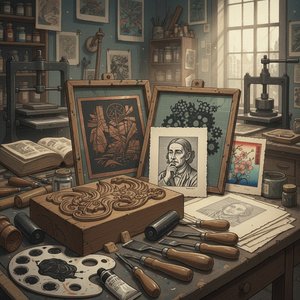
The Enduring Legacy of Printmaking: Techniques, Themes & Artistic Innovation Across Centuries
Explore the rich history of printmaking with OriginalUniqueArt. Discover techniques from intaglio to lithography, learn about collecting valuable prints & find museum-quality reproductions. Expert insights for art enthusiasts and collectors.

Barock Meisterwerke: Die 10 prägendsten Kunstwerke für Ihr Zuhause |
Entdecken Sie die 10 prägendsten Meisterwerke des Barock! Caravaggio, Rembrandt & Co. – Erfahren Sie die Geschichten hinter ikonischen Gemälde und finden Sie hochwertige Kunst Reproduktionen für Ihr Zuhause auf .


