

 In echtem Maßstab anzeigen
 Versenden als Grußkarte
 Teilen
 Details anzeigen
 Leitfaden öffnen

 Herunterladen
 Ähnliche Objekte
 Röntgenaufnahme
 Diashow
 Besucherstatistiken
LE SILENCE


 Mehr anzeigen
Giclée / Kunstdruck
Giclée- oder Leinwanddruck in Museumsqualität mit schneller Produktion und flexiblen Veredelungsoptionen. ( Handgemalte Reproduktion kaufen Zum digitalen Bild wechseln)




P118B €10

P118H €10

P118W €10

P438Z €10

P508JH €12

P508YH €12

P805H €10

P805Z €10

P919BZ €10

P919G €10

P919XJ €10

P959ZH €10

P968JZ €12

W106C €8

W218G €10

W218JH €8

W218Y €10

W307PJ €10

W316G €10

W316PJ €8

W316Y €10

W398PJ €8

W4111J €10

W500HY €15

W500JH €15

W692G €12

W849H €8

W940BG €15

W953PJ €8




Wählen Sie aus unseren vordefinierten Formaten, die den ursprünglichen Proportionen des Kunstwerks entsprechen.

Sie können Ihre eigenen Maße eingeben, um ein bestimmtes Format oder einen speziellen Platz einzupassen. Wenn das von Ihnen gewählte Format nicht den Proportionen des Originalbildes entspricht, werden wir das Kunstwerk entweder beschneiden oder das Bild mit einem gespiegelten oder einfarbigen Rand erweitern. Ein digitaler Entwurf wird Ihnen zur Genehmigung zugesandt, bevor die Produktion beginnt.
Bitte beachten Sie, dass die Vorschau auf dem Bildschirm nicht den tatsächlichen Zuschnitt oder die Erweiterung widerspiegelt. Nur der Entwurf zeigt die endgültige Komposition präzise an.
Obwohl Sondermaße verfügbar sind, empfehlen wir die Auswahl eines Maßes aus der vordefinierten Liste, um die ursprünglichen Proportionen zu bewahren.
Weltweiter Versand () innerhalb von 2 Wochen statt der üblichen 4/5 Wochen. (10 Oktober)

Kostenloser weltweiter Expressversand

Hochwertige Leinenleinwand

Vollständiger Versicherungsschutz beim Versand

Zollgebühren-Rückerstattungsgarantie

Garantie für exakte Farbtreue

100-tägiges Rückgaberecht (nur bei Mängeln)

100% Geld-zurück-Garantie

Angebot für Mengenrabatt
 Die Glasoption ist nur für Größen unter 110 cm verfügbar.

LE SILENCE
Giclée / Kunstdruck
Format der Reproduktion
-


Gesamtpreis
€ 69
Le Silence: A Renaissance Portrait of Introspection
Bernardino Luini’s “Le Silence” is not merely a portrait; it's an invitation into the quietude of the human spirit, a remarkably evocative work that speaks volumes through its deliberate restraint. Painted in Milan around 1527-1530, during the twilight years of his prolific career, this piece embodies Luini’s signature style – a graceful blend of Renaissance idealism and a subtly melancholic realism. It's a painting that whispers rather than shouts, inviting prolonged contemplation and revealing layers of meaning with each careful observation.
The subject is a young woman, likely depicted in the guise of a noblewoman or perhaps a pious lady of the court. Her pose—a gentle inclination of her head, a delicate hand resting lightly upon her lips—immediately establishes an atmosphere of profound stillness. The cropped composition, focusing intently on her face and upper torso, draws the viewer into this intimate space of introspection. Luini masterfully employs soft, diffused lighting, casting subtle shadows that enhance the contours of her features without resorting to dramatic contrasts. This deliberate lack of harshness contributes significantly to the painting’s overall sense of serenity.
The Language of Restraint: Technique and Materials
Luini's technique is characterized by a remarkable mastery of *sfumato*, a subtle blurring of edges that creates an almost dreamlike quality. He achieves this through meticulous layering of thin, translucent glazes of oil paint—a hallmark of his approach. The colors are muted and earthy – warm beiges, browns, and reddish hues dominate the palette, creating a sense of timelessness and understated elegance. There’s no flamboyant display of color here; instead, Luini utilizes a restrained range to amplify the painting's emotional impact.
The use of lines is equally deliberate. They are soft and blended, avoiding sharp outlines that would disrupt the overall feeling of tranquility. The head covering—a triangular shape—adds a touch of visual interest while remaining perfectly integrated within the composition’s harmonious flow. The surface texture suggests a smooth, almost polished quality, achieved through careful blending and manipulation of the paint – an impression of refined elegance and quiet dignity.
Symbolism and Emotional Resonance
The title itself, “Le Silence,” is profoundly symbolic. It immediately establishes the painting’s central theme: introspection, discretion, and perhaps even a plea for quietude. The woman's gesture—placing her finger to her lips—is universally understood as a symbol of secrecy or silence, reinforcing this thematic core. Luini doesn’t explicitly state these meanings; he trusts the viewer to interpret them through careful observation and emotional response.
Beyond the immediate symbolism, “Le Silence” evokes a broader sense of melancholy and contemplation. It's reminiscent of Leonardo da Vinci’s *sfumato* technique, which similarly creates an atmosphere of ambiguity and mystery. The painting invites us to consider the inner life of the subject—her thoughts, her feelings, her unspoken desires. It’s a portrait that transcends mere likeness, offering instead a glimpse into the soul.
A Legacy of Grace: Historical Context
Bernardino Luini was a pivotal figure in the artistic landscape of Renaissance Milan, deeply influenced by Leonardo da Vinci. His work represents a unique synthesis of classical ideals and northern European sensibilities. Luini’s style is often described as “Luinesque,” characterized by its graceful figures, elongated eyes, and subtle emotional depth. He worked primarily for religious institutions and private patrons, producing a vast body of paintings that continue to captivate viewers today.
“Le Silence” stands as one of Luini’s most poignant achievements—a testament to his artistic skill and profound understanding of the human condition. It's a painting that rewards careful study and invites repeated contemplation, offering a timeless meditation on beauty, silence, and the mysteries of the inner world.
Fragen & Antworten
Welche Motive sind in "LE SILENCE" von Bernardino Luini zu sehen?
Die Motive von "LE SILENCE" sind portrait, renaissance, silence, woman, contemplation, graceful, italian, fresco.
Welches Format hat "LE SILENCE" von Bernardino Luini?
"LE SILENCE" von Bernardino Luini hat ein Portrait-Format. Das Format beschreibt die Proportionen der Komposition.
Wo kann ich einen Druck von "LE SILENCE" von Bernardino Luini kaufen?
"LE SILENCE" ist als ein Fine Art Print auf Baumwollkanvas oder Archiv-Leinwandpapier erhältlich. Bestellungen können in der von Ihnen gewünschten Größe auf diese Seite aufgegeben werden.
Wo kann ich eine digitale Abbildung von "LE SILENCE" von Bernardino Luini kaufen?
Ein digitales Bild von "LE SILENCE" von Bernardino Luini kann auf diese Seite erworben werden: ein hochauflösender digitaler Bild-Download.
Um welche Art von Kunstwerk handelt es sich bei "LE SILENCE"?
"LE SILENCE" ist ein Werk der Art WallArt.
Wer verkauft handgemalte Kopien von "LE SILENCE" von Bernardino Luini?
Eine handgemalte Reproduktion von "LE SILENCE" von Bernardino Luini können Sie direkt auf diese Seite bestellen: eine handgemalte Ölreproduktion auf Leinenleinwand, auf Bestellung gefertigt.
Wer hat "LE SILENCE" erschaffen?
Der Künstler hinter „LE SILENCE“ ist Bernardino Luini. Das Werk ist unter dem Namen von Bernardino Luini katalogisiert.
Biografie des Künstlers
Frühes Leben und Ausbildung
Bernardino Luini, ein bedeutender norditalienischer Maler, wurde um 1480 in Runo bei Lago Maggiore geboren. Sein frühes Leben ist nicht gut dokumentiert, aber es ist bekannt, dass er 1500 mit seinem Vater nach Mailand zog. Einige Quellen deuten darauf hin, dass Luini bei Giovan Stefano Scotto ausgebildet wurde, während andere ihn als Schüler von Ambrogio Bergognone betrachten.Künstlerischer Stil und Einflüsse
Luinis Werk stand stark unter dem Einfluss von Leonardo da Vinci, mit dem er vermutlich direkt zusammenarbeitete. Dieser Einfluss zeigt sich in seiner Verwendung von Sfumato, einer Technik, die einen weichen, verschwommenen Effekt durch das Auftragen dünner Farbschichten erzeugt. Luinis Stil spiegelt auch die Manierismus-Bewegung wider, die durch ihre dramatischen und emotionalen Qualitäten gekennzeichnet ist.Wichtige Werke
- Anbetung der Heiligen Drei Könige (um 1505) in San Pietro, Luino.
- St. Antonius von Padua (1510er Jahre) im Museo Poldi Pezzoli, beeinflusst durch Bernardino Zenales Cantù-Polyptychon.
- Fresken für die Villa Pelucca (1509-1514), heute in der Pinacoteca di Brera, Mailand.
Museumssammlungen und Online-Ressourcen
- Pinacoteca di Brera, Mailand: beherbergt mehrere Werke von Luini, darunter seine Fresken für die Villa Pelucca.
- OriginalUniqueArt.com: Bernardino Luini: bietet eine umfassende Sammlung von Luinis Werken, einschließlich hochwertiger Reproduktionen und detaillierter Informationen.
Vermächtnis
Luinis Beitrag zur norditalienischen Malerei ist unbestreitbar. Sein Werk, geprägt von seinen anmutigen weiblichen Figuren mit verlängerten Augen, bekannt als "luinesk", wurde weithin bewundert und nachgeahmt. Luinis Sohn Aurelio wurde ebenfalls ein begabter Maler und setzte das künstlerische Erbe der Familie fort. Wichtige Daten:- Geboren: um 1480, Runo, Italien
- Gestorben: Juni 1532, Mailand, Italien

Bernardino Luini
1480 - 1532 , Italien
Eckdaten zum Künstler
- Beeinflusste Künstler/Bewegungen: ['Aurelio Luini']
- Bemerkenswerte Werke:
- Anbetung der Könige
- Sankt Antonius von Padua
- Fresken Villa Pelucca
- Einflüsse Durch Künstler: ['Leonardo da Vinci']
- Geburtsdatum: um 1480
- Geburtsort (Stadt, Land): Runo, Italien
- Künstlerische Bewegung/Stil: Renaissance, Manierismus
- Nationalität: Italienisch
- Sterbedatum: Juni 1532
- Vollständiger Name: Bernardino Luini
Verwandte Artikel
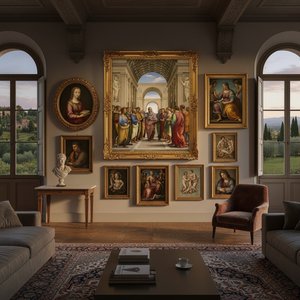
Raphael: Die 25 Meisterwerke des Renaissance-Genies – Kunst für Ihr Zuhause
Entdecken Sie die 25 schönsten Meisterwerke von Raphael! Tauchen Sie ein in die Welt der Renaissance-Kunst, erfahren Sie faszinierende Geschichten und lassen Sie sich von den Farben und Kompositionen inspirieren. Hochwertige Reproduktionen auf OriginalUniqueArt.com.

The Subdued Palette: Exploring Emotional Resonance & Aesthetic Impact in Muted Artworks
Explore the power of muted colors in art! Discover the history, psychology & techniques behind serene palettes. Find inspiration & expert advice for creating emotionally resonant spaces with OriginalUniqueArt.
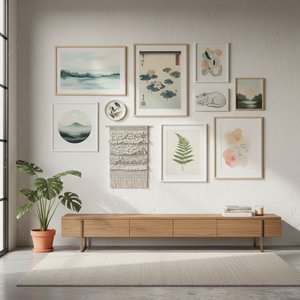
Ruhe und Harmonie: Die 10 schönsten Kunstwerke für ein friedvolles Zuhause |
Entdecken Sie die 10 schönsten Kunstwerke für ein friedvolles Zuhause! Von Monets Seerosen bis Van Goghs Sternennacht – erfahren Sie die Geschichten hinter den Meisterwerken und finden Sie Inspiration für Ihre Inneneinrichtung. Museum-Qualität auf
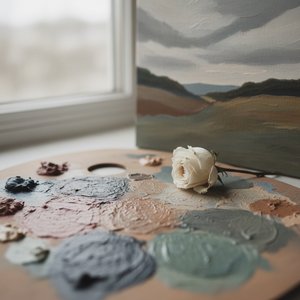
The Subdued Resonance: Exploring Emotional Depth & Artistic Nuance within Muted Color Palettes
Explore the captivating world of muted colors in art & design! Discover historical context, psychological effects, techniques, and inspiration for creating serene spaces. Elevate your aesthetic with OriginalUniqueArt.
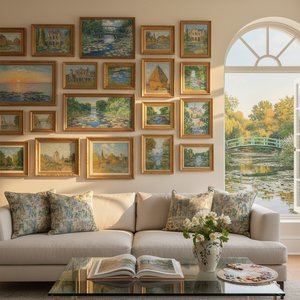
Claude Monet: Die 25 Meisterwerke des Impressionismus für Ihr Zuhause | OriginalUniqueArt
Entdecken Sie die 25 Meisterwerke von Claude Monet! Tauchen Sie ein in die Welt des Impressionismus, erleben Sie Seerosen, Sonnenaufgänge & Kathedralen. Hochwertige Reproduktionen für Ihr Zuhause – exklusiv auf OriginalUniqueArt.com.


