

 Vorschau anzeigen
 Versenden
 Teilen
 Details anzeigen
 Leitfaden

 Herunterladen
 Ähnliche Objekte
 Röntgenaufnahme
 Diashow
 Statistiken
The Charity


 Weiterlesen
Giclée / Kunstdruck
Giclée- oder Leinwanddruck in Museumsqualität mit schneller Produktion und flexiblen Veredelungsoptionen. ( Handgemalte Reproduktion bestellen Zum digitalen Bild wechseln)




P118B €10

P118H €10

P118W €10

P438Z €10

P508JH €12

P508YH €12

P805H €10

P805Z €10

P919BZ €10

P919G €10

P919XJ €10

P959ZH €10

P968JZ €12

W106C €8

W218G €10

W218JH €8

W218Y €10

W307PJ €10

W316G €10

W316PJ €8

W316Y €10

W398PJ €8

W4111J €10

W500HY €15

W500JH €15

W692G €12

W849H €8

W940BG €15

W953PJ €8




Wählen Sie aus unseren vordefinierten Formaten, die den ursprünglichen Proportionen des Kunstwerks entsprechen.

Geben Sie die benötigte Breite und Höhe an, damit der Druck perfekt in Ihren Rahmen oder an Ihre Wand passt. Ein Druck kann nur beschnitten, aber niemals größer als das Originalbild angefertigt werden; daher verliert ein Format mit anderen Proportionen einen Teil des Bildes. Wir senden Ihnen ein digitales Mockup zur Freigabe, bevor wir den Druck ausführen. Das auf dieser Seite gezeigte Bild zeigt nicht den tatsächlichen Beschnitt – dies ist nur im Mockup ersichtlich.
Weltweiter Versand () innerhalb von 2 Wochen statt der üblichen 4/5 Wochen. (27 Oktober)

Kostenloser weltweiter Expressversand

Hochwertige Leinenleinwand

Umfassender Versicherungsschutz beim Versand

Zollgebühren-Rückerstattungsgarantie

Garantie für exakte Farbtreue

100 Tage Rückgaberecht (nur bei Mängeln)

100% Geld-zurück-Garantie

Mengenrabatt verfügbar
 Die Glasoption ist nur für Größen unter 110 cm verfügbar.

The Charity
Giclée / Kunstdruck
Format der Reproduktion
-


Endpreis
€ 70
Bartolomeo Schedoni’s ‘The Charity’: A Baroque Meditation on Compassion
Bartolomeo Schedoni's “The Charity,” painted in 1611, is more than just a depiction of an act of generosity; it’s a profound meditation on human compassion rendered with the dramatic intensity characteristic of the Parma Baroque. This work, currently residing within the Museo Nazionale di Capodimonte in Naples, offers a captivating glimpse into the artistic sensibilities of a young master grappling with the burgeoning stylistic currents of his time. Schedoni, born in Modena in 1578, benefited from an unusual upbringing – his father’s involvement in mask-making instilled a deep understanding of theatricality and visual spectacle, skills that would undoubtedly inform his later work. His early training included a brief but significant apprenticeship with Federico Zuccari in Rome, securing the patronage of Ranuccio I Farnese, Duke of Parma, a connection that firmly established him within the influential Famese court – a crucible for artistic innovation.
- Subject and Composition: The scene unfolds with meticulous detail, focusing on five figures arranged around an act of giving. A central figure, robed in red and white, extends a loaf of bread to a child clad in blue and white stripes – the recipient of this charitable offering. Surrounding them are three additional individuals: a contemplative woman observing from the left, a woman assisting with a basket on the right, and a distant child adding to the scene’s depth.
- Baroque Technique: Schedoni masterfully employs the hallmarks of the Baroque style – dramatic chiaroscuro, utilizing strong contrasts between light and shadow to heighten emotional impact and create a sense of movement within the composition. The use of rich pigments and meticulous detail in rendering fabrics and textures further enhances the painting’s visual richness.
- Historical Context: Painted in 1611, “The Charity” reflects the religious and social anxieties of the early 17th century. The Catholic Church was actively promoting charitable works as a means of combating the spread of Protestantism, and Schedoni's depiction aligns with this broader societal imperative.
Symbolic Layers: Faith, Humanity, and Divine Grace
Beyond its surface narrative, “The Charity” is laden with symbolic meaning. The act of giving bread itself represents sustenance – both physical and spiritual – a core tenet of Christian faith. The central figure’s red robe, often associated with Christ's sacrifice, elevates the scene to a higher plane, suggesting divine grace at work through human action. The contemplative woman, holding a staff, embodies wisdom and reflection, while the children represent innocence and vulnerability – figures frequently depicted in religious art as emblems of purity and hope. The carefully orchestrated spatial arrangement contributes to the painting’s overall sense of harmony and balance, reflecting a desire for order within a world often characterized by chaos.
The Artist's Vision: Schedoni's Place in Parma Baroque
Bartolomeo Schedoni’s artistic trajectory was tragically cut short; he succumbed to illness in 1615 at the young age of thirty-seven. Despite his brief career, Schedoni left a significant mark on the artistic landscape of Parma. His work demonstrates a remarkable ability to synthesize influences from Roman classicism and the more emotionally charged style of the Famese court. While overshadowed by some of his contemporaries, Schedoni’s “The Charity” stands as a testament to his talent and vision – a poignant reminder of a master whose brief but brilliant career illuminated the Baroque period.
Recreating ‘The Charity’: A Hand-Painted Reproduction
OriginalUniqueArt.com offers meticulously crafted hand-painted reproductions of Bartolomeo Schedoni’s “The Charity,” capturing the essence and emotional power of this iconic Baroque masterpiece. Each reproduction is created by skilled artisans, employing traditional techniques to faithfully recreate Schedoni's original composition and color palette. Whether for a grand salon or a smaller interior space, a hand-painted reproduction of "The Charity" will bring a touch of timeless beauty and profound meaning to your surroundings.
Fragen & Antworten
Aus welcher Schaffensperiode von Bartolomeo Schedoni stammt "The Charity"?
„The Charity“ entstammt der Early Baroque von Bartolomeo Schedoni. Diese Einordnung setzt das Werk in Bezug zur künstlerischen Entwicklung des Künstlers.
Erlaubt das Urheberrecht von "The Charity" von Bartolomeo Schedoni Reproduktionen?
Das Original "The Charity" befindet sich im Palast von Capodimonte; das Werk ist gemeinfrei – das Urheberrecht ist abgelaufen.
Wie kann ich "The Charity" von Bartolomeo Schedoni als Diashow ansehen?
Eine Diashow ist verfügbar: die Seite Diashow von "The Charity" von Bartolomeo Schedoni.
Künstlerbiografie
Der Visionär von Parma: Das Leben und das Erbe des Bartolomeo Schedoni
Bartolomeo Schedoni bleibt eine der fesselndsten und zugleich rätselhaftesten Figuren des frühen italienischen Barock. Geboren 1578 in Modena, begann seine Reise in die Welt der bildenden Kunst nicht mit einem Pinsel, sondern durch das kunstvolle Handwerk des Maskenmachers, dem sein Vater nachging. Dieses frühe Eintauchen in das Theatralische und Ornamentale verlieh ihm eine einzigartige Perspektive auf Spektakel und Charakter – ein Fundament, das sich später in der dramatischen Intensität seiner Gemälde manifestieren sollte. Sein Talent trieb ihn schnell in das Herz der Abenddämmerung der italienischen Renaissance und führte ihn im Jahr 1595 nach Rom. Hier, unter der Anleitung von Federico Zuccari, begann Schedoni, seine technische Meisterschaft zu verfeinern, und sicherte sich schließlich die prestigeträchtige Schirmherrschaft von Ranuccio I. Farnese, dem Herzog von Parma. Diese Verbindung zum Hof der Farnese sollte zum Eckpfeiler seiner beruflichen Identität werden und seine Karriere in den einflussreichsten künstlerischen Kreisen jener Ära verankern.Eine Meisterschaft von Licht und Schatten
Die Entwicklung von Schedonis Stil ist ein Zeugnis seiner tiefgreifenden Auseinandersetzung mit den Meistern, die ihm vorausgingen. Während historische Berichte gelegentlich über seine genaue Ausbildung debattieren, besteht eine spürbare Verbindung zu den revolutionären Techniken von Annibale Carracci und der leuchtenden Anmut von Correggio. Sein Werk dient als Brücke zwischen den sanften, ätherischen Qualitäten der Spätrenaissance und dem aufkeimenden, kontrastreichen Drama des Barock. Schedoni wurde zu einem Meister des Chiaroscuro, indem er kühne, theatralische Kontraste zwischen Licht und Dunkel einsetzte, um Formen zu modellieren und tiefe emotionale Reaktionen hervorzurufen. Diese Technik erlaubte es ihm, seinen Figuren eine gewisse Schwere und Präsenz einzuhauchen, oft geprägt von kantigem Faltenwurf und einer ernsten, kontemplativen Atmosphäre. Seine Fähigkeit, das Licht zu manipulieren, war nicht nur eine technische Leistung, sondern ein erzählerisches Werkzeug, um das Auge des Betrachters durch komplexe Kompositionen direkt zum spirituellen Kern seiner Sujets zu führen.Monumentale Errungenschaften und künstlerische Wirkung
Während seiner kurzen, aber wirkungsvollen Karriere hinterließ Schedoni Werke, die durch ihre emotionale Tiefe und strukturelle Grandiosität bis heute nachwirken. Eine seiner bedeutendsten Leistungen war die Zusammenarbeit mit Ercole dell’Abate an dem monumentalen Deckenfresko für die Sala del Consiglio Vecchio im Palazzo Comunale in Parma – ein Projekt, das seinen Ruf als herausragender Dekorateur bürgerlicher und religiöser Räume festigte. Seine individuellen Meisterwerke, wie der Auftrag von 1607 mit dem Titel „La Speranza“ (Die Caritas), demonstrieren seine Fähigkeit, komplexe theologische Narrative in visuell fesselnde Kompositionen zu verweben. Durch diese Werke trug Schedoni zu einem entscheidenden Moment der Kunstgeschichte bei, in dem die Stabilität der Renaissance der Bewegung und Spannung des Barock wich. Obwohl sein Leben 1615 durch eine Krankheit tragischerweise vorzeitig endete, blieb sein Einfluss bestehen und hinterließ eine unauslöschliche Spur in der künstlerischen Landschaft von Parma und im weiteren Verlauf der italienischen Malerei.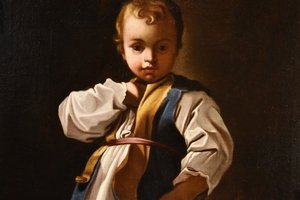
Bartolomeo Schedoni
1578 - 1615 , Italien
Kurzinfos
- Artistic Movement Or Style: Barock
- Artists Who Influenced This Artist:
- Federico Zuccari
- Michelangelo Merisi da Caravaggio
- Date Of Birth: 1578
- Date Of Death: 1615
- Full Name: Bartolomeo Schedoni
- Nationality: Italienisch
- Notable Artworks:
- Die Güte
- Das zweite Mariengewehr
- Place Of Birth: Modena, Italien
Ähnliche Artikel

Die Top 10 Gemälde in Schattierungen von 'Slate Blue': Kunst für Ihr Zuhause
Entdecken Sie die Top 10 Gemälde in faszinierenden 'Slate Blue' Tönen! Von Monet bis Manet – erleben Sie Kunstgeschichte und lassen Sie sich von Meisterwerken inspirieren. Hochwertige Kunstdrucke auf

Drama and Light: A Definitive Guide to the Italian Baroque Masterpieces and the Revolution of Chiaroscuro
Explore the dramatic world of Italian Baroque art. Discover how masters like Caravaggio used chiaroscuro and tenebrism to revolutionize painting through light, shadow, and profound realism. A definitive guide for history lovers and art collectors.

Serene Blue Backgrounds: Discover Soulful Art to Transform Your Space with Timeless Elegance
Transform your home with soulful blue art. From serene Monet impressions to modern textured sculptures, discover curated masterpieces designed to inspire calm. Explore expert art consultations and bespoke hand-painted reproductions to create your personal sanctuary.

The Allure of Azure: Exploring the Symbolic & Aesthetic Depths of Blue in Art History
Explore the rich history of blue in art! Discover its symbolism, from ancient pigments to modern masterpieces by Kandinsky & Seurat. Uncover the psychological impact and cultural meanings behind this captivating hue.

Weiße Meisterwerke: Die Top 10 berühmtesten Gemälde und ihre zeitlose Eleganz
Entdecken Sie die Top 10 berühmter Gemälde, dominiert von Weiß! Von Malewitsch bis Rothko – erfahren Sie Geschichten hinter ikonischen Kunstwerke und lassen Sie sich für Ihre Wohnraumgestaltung inspirieren. Kunstreproduktionen in Museumsqualiät auf
