

 Vorschau anzeigen
 Versenden
 Teilen
 Details anzeigen

 Herunterladen
 Ähnliche Objekte
 Röntgenaufnahme
 Diashow
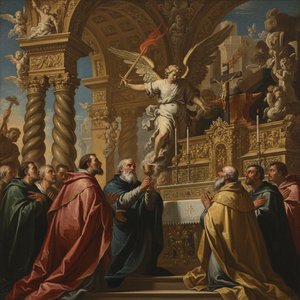
The Flight into Egypt
 Acrylic On Canvas
- WallArt
- Baroque Painting
 1670
1670 155.0 x 125.0 cm
 Museum of Fine Arts (Budapest)
 Weiterlesen
Giclée / Kunstdruck
Giclée- oder Leinwanddruck in Museumsqualität mit schneller Produktion und flexiblen Veredelungsoptionen. ( Handgemalte Reproduktion bestellen Bild kaufen)




P118B $10

P118H $10

P118W $10

P438Z $10

P508JH $12

P508YH $12

P805H $10

P805Z $10

P919BZ $10

P919G $10

P919XJ $10

P959ZH $10

P968JZ $12

W106C $8

W218G $10

W218JH $8

W218Y $10

W307PJ $10

W316G $10

W316PJ $8

W316Y $10

W398PJ $8

W4111J $10

W500HY $15

W500JH $15

W692G $12

W849H $8

W940BG $15

W953PJ $8




Wählen Sie aus unseren vordefinierten Formaten, die den ursprünglichen Proportionen des Kunstwerks entsprechen.

Sie können Ihre eigenen Maße eingeben, um ein bestimmtes Format oder einen speziellen Platz einzupassen. Wenn das von Ihnen gewählte Format nicht den Proportionen des Originalbildes entspricht, werden wir das Kunstwerk entweder beschneiden oder das Bild mit einem gespiegelten oder einfarbigen Rand erweitern. Ein digitaler Entwurf wird Ihnen zur Genehmigung zugesandt, bevor die Produktion beginnt.
Bitte beachten Sie, dass die Vorschau auf dem Bildschirm nicht den tatsächlichen Zuschnitt oder die Erweiterung widerspiegelt. Nur der Entwurf zeigt die endgültige Komposition präzise an.
Obwohl Sondermaße verfügbar sind, empfehlen wir die Auswahl eines Maßes aus der vordefinierten Liste, um die ursprünglichen Proportionen zu bewahren.
Weltweiter Versand () innerhalb von 2 Wochen statt der üblichen 4/5 Wochen. (4 September)

Kostenloser weltweiter Expressversand

Hochwertige Leinenleinwand

Umfassender Versicherungsschutz beim Versand

Zollgebühren-Rückerstattungsgarantie

Garantie für exakte Farbtreue

60 Tage Rückgaberecht (nur bei Mängeln)

100% Geld-zurück-Garantie

Mengenrabatt verfügbar
 Die Glasoption ist nur für Größen unter 110 cm verfügbar.

The Flight into Egypt
Giclée / Kunstdruck
Format der Reproduktion
-


Gesamtpreis
$ 80
Bartolomé Esteban Murillo’s “The Flight into Egypt”: A Seville Sunset of Faith and Family
Bartolomé Esteban Murillo's "The Flight into Egypt," painted around 1645-1650, isn’t merely a depiction of a biblical narrative; it’s a luminous distillation of Seville’s golden age, a moment captured in oil on canvas that radiates with both religious devotion and the quiet intimacy of family. Born into a modest barber-surgeon's household in 1617, Murillo’s early life was marked by loss – the deaths of his parents casting him under the care of his sister’s husband, a circumstance that subtly shaped his artistic trajectory. This formative period instilled within him a deep appreciation for realism and an ability to imbue everyday scenes with profound emotional resonance, qualities he would later master in his celebrated religious works.
The painting immediately draws the eye with its masterful use of light – a hallmark of Murillo’s style. He employs a warm, diffused glow, reminiscent of the late afternoon sun filtering through the orange groves surrounding Seville, bathing the figures in a soft, almost ethereal radiance. This isn't the stark illumination favored by earlier Baroque masters like Zurbarán; instead, it creates an atmosphere of gentle serenity and familial warmth. The colors are rich and earthy – deep browns, ochres, and reds—grounded in the vibrant hues of Andalusian life, yet elevated through Murillo’s delicate handling of pigment.
A Study in Composition and Symbolism
The composition is remarkably balanced, guiding the viewer's eye seamlessly across the scene. Mary, depicted as a youthful and serene figure, sits astride a horse, her posture conveying both strength and vulnerability. She holds the infant Jesus close to her breast, radiating an aura of protective love. Joseph, positioned beside her, appears steadfast and watchful, his gaze fixed on the horizon—a subtle suggestion of their perilous journey ahead. The two horses, rendered with meticulous detail, are not simply mounts but symbols of movement and destiny, propelling them towards an uncertain future.
Beyond the immediate narrative, Murillo subtly incorporates symbolic elements. The angels, depicted as benevolent observers in the upper corners of the painting, represent divine guidance and protection. Their presence underscores the idea that this flight is not merely a physical journey but also a spiritual one, guided by God’s grace. The landscape itself—a stylized representation of the Judean wilderness—adds to the sense of mystery and foreboding, hinting at the challenges awaiting the family.
The Seville School and Murillo's Legacy
Murillo’s style is often categorized as part of the “Seville School,” a movement that emerged in the mid-17th century and distinguished itself from the more dramatic and emotionally charged works produced by artists like Ribera. While influenced by Flemish masters, Murillo developed his own distinctive approach—one characterized by its realism, luminous color palette, and focus on intimate scenes of everyday life. He skillfully blended religious iconography with secular subjects, creating a unique visual language that resonated deeply with the bourgeois clientele of Seville.
His “Flight into Egypt” exemplifies this synthesis perfectly. It’s not just a retelling of a biblical story; it's a celebration of family, faith, and the enduring spirit of humanity. Murillo’s ability to capture such profound emotion within a seemingly simple composition is what continues to captivate viewers centuries later. Reproductions of this iconic work offer a window into the heart of Seville during its golden age—a testament to the artistry and vision of one of Spain's most beloved painters.
Technical Details & Reproduction Considerations
Originally executed on canvas, “The Flight into Egypt” showcases Murillo’s mastery of oil painting techniques. Note the delicate layering of glazes, creating a remarkable sense of depth and luminosity. The artist’s attention to detail is evident in every brushstroke—from the texture of Mary's robes to the musculature of the horses. When considering reproductions, it’s crucial to select a high-quality print on archival canvas or fine art paper to accurately capture the painting’s rich colors and subtle nuances.
OriginalUniqueArt offers meticulously crafted reproductions that faithfully recreate Murillo’s original vision, ensuring that this timeless masterpiece continues to inspire and delight for generations to come. Explore our selection of prints and discover how you can bring a touch of Seville's golden age into your home or office.
Über den Künstler
Frühes Leben und Ausbildung
Bartolomé Esteban Murillo, ein bedeutender spanischer Barockmaler, wurde Ende Dezember 1617 in Sevilla, Spanien, geboren und am 1. Januar 1618 getauft. Er war der jüngste von vierzehn Kindern von Gaspar Esteban und María Pérez. Nach dem Tod seiner Eltern im Jahr 1627 bzw. 1628 geriet Murillo unter die Obhut seines Schwagers, Juan Agustín Lagares. Seine künstlerische Ausbildung begann in Sevilla bei Juan del Castillo, einem Verwandten seiner Mutter, der ebenfalls Künstler war. Seine frühen Werke waren von dem stark realistischen Ansatz Zurbaráns, Jusepe de Ribera und Alonzo Canos beeinflusst.Künstlerischer Werdegang und Stil
Murillos künstlerischer Stil entwickelte sich im Laufe der Zeit weiter. Anfangs wurde er vom flämischen Malen und der "Abhandlung über heilige Bilder" Molanus' beeinflusst. Mit zunehmendem Reifegrad entwickelte seine Arbeit einen polierten Stil, der den bürgerlichen und aristokratischen Geschmäckern der Zeit entsprach, insbesondere in seinen religiösen Werken. Ein junger Mann mit einem Obstkorb oder Personifikation des Sommers (ca. 1640-50) zeigt seinen frühen, realistischen Ansatz. Der junge Bettler (ca. 1645, Musée du Louvre, Paris, Frankreich) demonstriert den Einfluss Velázquez's. St. Hieronymus (ca. 1650-52) veranschaulicht seinen reifen, weich leuchtenden Stil.Wichtige Werke und Themen
Murillo widmete sich hauptsächlich religiösen Themen, insbesondere Darstellungen der Jungfrau Maria mit dem Jesuskind. Diese Bilder zeichnen sich durch ihre zarte Schönheit, ihren idealisierten Charakter und eine warme, einladende Atmosphäre aus. Neben religiösen Werken schuf er auch Genreszenen, die das alltägliche Leben in Sevilla widerspiegeln, darunter Darstellungen von Blumenmädchen, Straßenköpfen und Bettlern. Diese Werke bieten einen faszinierenden Einblick in die Gesellschaft seiner Zeit. Seine Fähigkeit, Licht und Schatten einzusetzen, verlieh seinen Gemälden eine besondere Tiefe und Lebendigkeit.Einfluss und Vermächtnis
Murillo hatte zahlreiche Schüler und Anhänger, was seine Reputation in Spanien und seinen Ruhm in ganz Europa sicherstellte. Sein Stil beeinflusste Künstler wie Gainsborough und Greuze. Er gilt als einer der wichtigsten Vertreter des spanischen Barock und trug maßgeblich zur Entwicklung der religiösen Malerei des 17. Jahrhunderts bei. Seine Werke werden bis heute für ihre Schönheit, Anmut und ihren Ausdruck von Glauben und Mitgefühl geschätzt.Museen und Sammlungen
Murillos Gemälde sind in verschiedenen Museen auf der ganzen Welt zu finden, darunter:- Das Museo del Prado (Madrid, Spanien)
- Die Eremitage (Sankt Petersburg, Russland)
- Die Wallace Collection (London)
- Das Timken Museum of Art (San Diego, mit Christus am Kreuz)
- Das Krannert Art Museum (Champaign, Illinois, mit Christus nach der Geißelung)

Bartolomé Esteban Murillo
1618 - 1682 , Spanien
Kurzinfos
- Beeinflusste Künstler:
- Gainsborough
- Greuze
- Bemerkenswerte Werke:
- Junger Mann mit Obstkorb
- Der junge Bettler
- St. Hieronymus
- Anbetung der Hirten
- Geburtsdatum: Spätes Dezember 1617
- Geburtsort: Sevilla, Spanien
- Künstlerische Einflüsse:
- Zurbarán
- Jusepe de Ribera
- Alonzo Cano
- Velázquez
- Künstlerischer Stil: Spanischer Barock
- Nationalität: Spanisch
- Todatum: 3. April 1682
- Vollständiger Name: Bartolomé Esteban Murillo
Ähnliche Artikel
The Golden Age Reforged: Dramatic Realism & Religious Zeal in Spanish Baroque Art
Explore the dramatic world of Spanish Baroque art! Discover masters like Zurbarán & the powerful influence of religious zeal on painting techniques – a guide for collectors and enthusiasts.

Bartolomé Esteban Murillo: Göttliches Licht und soziale Kommentare im goldenen Zeitalter von Sevilla
Entdecken Sie das Leben und Werk von Bartolomé Esteban Murillo, einem Meister der Barockmalerei! Analysieren Sie seine religiösen Gemälde, sozialen Botschaften und seinen bleibenden Einfluss auf die Kunstgeschichte. Jetzt lesen!

The Dramatic Flourish: Exploring the Baroque Movement's Enduring Legacy in Art History
Explore the dramatic world of Baroque art! Discover iconic artists like Caravaggio & Rubens, defining techniques, and its lasting impact on art history. Expert insights for collectors & enthusiasts at OriginalUniqueArt.

The Visceral Stage: Exploring Dramatic Narratives & Emotional Intensity in Baroque Art
Explore the dramatic world of Baroque art! Discover iconic masters like Caravaggio & Rembrandt, their techniques, and the movement's lasting impact. Expert insights for collectors & enthusiasts at OriginalUniqueArt.

Theatricality & Triumph: Baroque Drama in Painting & Sculpture
Explore the dramatic world of Baroque art! Discover its history, defining characteristics, & lasting influence on painting & sculpture. Expert insights into Caravaggio, Zurbarán, and Bernini – plus high-quality reproductions at OriginalUniqueArt.



