

 In echtem Maßstab anzeigen
 Versenden als Grußkarte
 Teilen
 Details anzeigen
 Leitfaden öffnen

 Herunterladen
 Ähnliche Objekte
 Röntgenaufnahme
 Diashow
 Besucherstatistiken
Classical Landscape with Ruins
 Watercolor
- WallArt
- Romantic Landscape Painting
 1629
1629- Early Modern
 21.0 x 21.0 cm
 Fitzwilliam-Museum
 Mehr anzeigen
Handgefertigte Ölreproduktion
Handgemaltes Ölgemälde auf Leinwand in Ihrer Wunschgröße und mit Rahmen, auf Bestellung von unseren Künstlern angefertigt. ( Zum Druck wechseln Zum digitalen Bild wechseln)




P118B $10

P118H $10

P118W $10

P438Z $10

P508JH $12

P508YH $12

P805H $10

P805Z $10

P919BZ $10

P919G $10

P919XJ $10

P959ZH $10

P968JZ $12

W106C $8

W218G $10

W218JH $8

W218Y $10

W307PJ $10

W316G $10

W316PJ $8

W316Y $10

W398PJ $8

W4111J $10

W500HY $15

W500JH $15

W692G $12

W849H $8

W940BG $15

W953PJ $8




Wählen Sie aus unseren vordefinierten Formaten, die den ursprünglichen Proportionen des Kunstwerks entsprechen.

Sie können Ihre eigenen Maße eingeben, um einen bestimmten Rahmen oder Platz auszufüllen. Wenn die gewählte Größe nicht den Proportionen des Originalbildes entspricht, werden wir das Kunstwerk entweder beschneiden oder das Gemälde durch zusätzliche, handgemalte Elemente erweitern. Ein digitales Mockup wird Ihnen zur Genehmigung zugesandt, bevor die Produktion beginnt.
Bitte beachten Sie, dass die Bildschirmvorschau nicht die tatsächliche Beschneidung oder Erweiterung widerspiegelt. Nur das Mockup zeigt die endgültige Komposition exakt an.
Obwohl Sondermaße verfügbar sind, empfehlen wir, eine Größe aus der vordefinierten Liste zu wählen, um die ursprünglichen Proportionen beizubehalten.
Nach der Bestellung wird das OriginalUniqueArt.com-Team dem Kunden Anweisungen per E-Mail zusenden und eine Mockup-Vorschau bereitstellen.
Weltweiter Versand () in nur 3 bis 4 Wochen statt der üblichen 5 Wochen. (26 September). Keine Kompromisse bei der Qualität.

Kostenloser weltweiter Expressversand

Hochwertige Leinenleinwand

Vollständiger Versicherungsschutz beim Versand

Zollgebühren-Rückerstattungsgarantie

Garantie für exakte Farbtreue

100-tägiges Rückgaberecht (nur bei Mängeln)

100% Geld-zurück-Garantie

Angebot für Mengenrabatt
 Die Glasoption ist nur für Größen unter 110 cm verfügbar.

Classical Landscape with Ruins
Reproduktionsmedium
Format der Reproduktion
-


Gesamtpreis
$ 300
A Vision of Roman Decay: The Melancholy Beauty of Breenbergh
In the quiet corners of the Fitzwilliam Museum, there exists a window into a lost era—a watercolor titled Classical Landscape with Ruins by the Dutch master Bartholomeus Breenbergh. Created around 1629, this delicate work is far more than a mere topographical record; it is a profound meditation on the passage of time and the inevitable triumph of nature over human ambition. As one gazes upon the crumbling stone structures in the foreground, there is an immediate sense of the sublime—that intoxicating mixture of awe and terror that comes from witnessing the slow, relentless decay of once-great civilizations. Breenbergh captures a moment where the grandeur of Rome meets the quiet persistence of the earth, inviting the viewer to contemplate their own place within the vast, cyclical rhythm of history.
The composition is masterfully orchestrated to lead the eye through a narrative of light and shadow. In the foreground, the skeletal remains of classical architecture serve as a poignant memento mori, while life continues in its humble, unbothered forms around them. Two figures wander near the ruins, perhaps travelers or shepherds lost in thought, their small scale emphasizing the monumental weight of the past. Scattered throughout this pastoral scene are the gentle rhythms of rural life: cows and sheep graze peacefully, a horse rests in the mid-ground, and a solitary bird drifts through the sky. Even the presence of a tranquil body of water near the right edge of the frame adds a layer of reflective stillness, mirroring the contemplative mood that permeates the entire landscape.
The Alchemy of Light and Italianate Grace
Technically, Breenbergh departs from the rigid, microscopic realism often associated with his Dutch contemporaries. Instead, he embraces an Italianate sensibility, characterized by a soft, atmospheric perspective that breathes life into the paper. His brushwork is loose and expressive, eschewing sharp outlines in favor of luminous transitions. Light is the true protagonist of this piece; shafts of sunlight pierce through the architectural debris, illuminating patches of verdant foliage and casting long, dramatic shadows that stretch across the terrain. This manipulation of light creates a sense of depth and drama, pulling the viewer into a world where the air feels heavy with humidity and history.
The color palette is a sophisticated study in muted elegance. Dominated by earthy browns, deep ochres, and mossy greens, the painting evokes the feeling of an ancient, sun-drenched landscape. Yet, Breenbergh punctuates these somber tones with subtle splashes of crimson and gold, reminiscent of the dramatic chiaroscuro found in the works of Caravaggio. For the discerning collector or interior designer, this piece offers a remarkable versatility. Its tonal depth and classical subject matter allow it to serve as a sophisticated focal point in a traditional study, a serene anchor in a contemporary minimalist space, or a soulful addition to a gallery wall dedicated to the Golden Age of painting.
An Eternal Echo for the Modern Collector
To possess a reproduction of this work is to bring a piece of the 17th-century soul into the modern home. Breenbergh’s ability to weave together the architectural ghosts of antiquity with the living, breathing pulse of nature creates an emotional resonance that transcends centuries. The painting does not merely depict a scene; it evokes a feeling of nostalgia for a greatness we can no longer touch, yet still deeply admire. It is an invitation to slow down, to observe the play of light upon stone, and to find beauty in the ephemeral. Whether you are drawn to its historical significance, its masterful use of atmospheric perspective, or its quiet, melancholic grace, this artwork remains a timeless testament to the enduring power of the classical spirit.
Biografie des Künstlers
Frühes Leben und Ausbildung
- Name: Bartholomeus Breenbergh
- Geboren: Vor dem 13. November 1598 in Deventer, Niederlande
- Gestorben: Nach dem 5. Oktober 1657 in Amsterdam, Niederlande
- Details zum frühen Leben sind spärlich. Die Familie zog nach Hoorn, nachdem sein Vater 1607 gestorben war.
- Er war zeitgenössisch mit Jacques Waben und erhielt wahrscheinlich eine frühe Ausbildung dort.
- Registrierte Lehrer umfassen Pieter Lastman und Jacob Symonsz Pynas.
Karriere: Rom und der italienische Stil
- Erstmals 1619 als Maler in Amsterdam registriert.
- 1619 reiste er nach Rom, wo er bis etwa 1630 lebte.
- Arbeitete mit dem flämischen Maler Frans van de Kasteele zusammen und wurde stark von Paul Bril beeinflusst.
- Entwickelte einen unverwechselbaren italienischen Landschaftsstil, der durch idealisierte Darstellungen der Campagna Romana (ländliche Region) gekennzeichnet ist.
- Beeinflusst von den Landschaften Cornelis van Poelenburghs; ihre Stile wurden manchmal schwer zu unterscheiden.
- Wurde zu einem der Gründer der Bentvueghels ("Malerzunft") in Rom und erhielt den Spitznamen "het fret" (das Ferkel).
Rückkehr nach Amsterdam und künstlerische Entwicklung
- Kehrte um 1630 nach Amsterdam zurück.
- Heiratete 1633 und erhielt ein jährliches Gehalt von König Karl I. von Großbritannien.
- Seine Arbeit begann, mythologische und biblische Figuren in italienischen Landschaften zu integrieren, beeinflusst von Künstlern wie Pieter Lastman.
- Entwickelte einen monumentaleren Stil mit ausdrucksstarken Figurentypen.
- Sein einziger registrierter Schüler war Jan de Bisschop, der in den 1640er Jahren bei ihm studierte.
Einflüsse und Vermächtnis
- Einflüsse: Pieter Lastman, Nicolaes Moeyaert, Paul Bril, Cornelis van Poelenburgh, Claude Lorrain.
- Einfluss auf Andere: Jan Linsen, Scipione Compagno, Laurens Barata, Charles Cornelisz. de Hooch, Pieter Anthonisz. van Groenewegen, Francois van Knibbergen und Catharina van Knibbergen.
- Breenbergh war eine Schlüsselfigur bei der Entwicklung des italienischen Landschaftsstils in den Niederlanden.
- Seine Arbeit trug dazu bei, Darstellungen klassischer Ruinen und idealisierter Landschaften unter nordeuropäischen Künstlern zu popularisieren.
- Er schloss die Lücke zwischen früheren niederländischen Meistern und späteren, raffinierteren Landschaftsmalern.
Historische Bedeutung
- Breenberghs Beitrag liegt in seiner Pionierrolle bei der Etablierung des italienischen Stils innerhalb der niederländischen Kunst.
- Seine Fähigkeit, Einflüsse verschiedener Künstler zu synthetisieren – Lastman, Moeyaert, Bril, Poelenburgh – schuf eine einzigartige und wiedererkennbare künstlerische Stimme.
- Er spielte einen bedeutenden Teil bei der Gestaltung der ästhetischen Vorlieben des Goldenen Zeitalters der Niederlande und inspirierte nachfolgende Generationen von Landschaftsmalern.
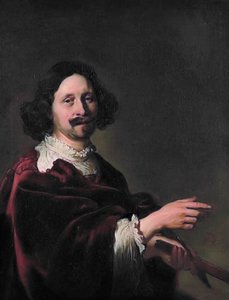
Bartholomeus Breenbergh
1598 - 1657 , Niederlande
Eckdaten zum Künstler
- Beeinflusste Künstler: ['Claude Lorrain']
- Einflüsse:
- Paul Bril
- Cornelis van Poelenburgh
- Geburtsdatum: 1598-11-13
- Geburtsort: Deventer, Niederlande
- Künstlerischer Stil: Italienische Landschaftsmalerei
- Nationalität: Niederländisch
- Todestag: 1657-10-05
- Vollständiger Name: Bartholomeus Breenbergh
Verwandte Artikel

Die 10 Meisterwerke des Goldenen Zeitalters der niederländischen Malerei |
Entdecken Sie die 10 Meisterwerke des Niederländischen Goldenen Zeitalters! Von Rembrandt bis Vermeer – erleben Sie Kunstgeschichte, Techniken & Emotionen. Hochwertige Gemäldereproduktionen für Ihr Zuhause auf .

Golden Light & Dutch Skies: The Timeless Magic of Dutch Golden Age Landscapes
Discover the breathtaking beauty of Dutch Golden Age landscapes. Explore the mastery of light, chiaroscuro, and 17th-century realism through an expert art history lens, celebrating the enduring legacy of the Dutch Masters for discerning collectors and art lovers.

Golden Light & Dutch Skies: Bringing the Magic of Dutch Golden Age Landscapes into Your Home
Transform your home with the breathtaking light of Dutch Golden Age landscapes. Discover how hand-painted oil reproductions of masterworks like Ruisdael and Vermeer bring timeless elegance, atmosphere, and soulful texture to modern interiors. Elevate your space with museum-quality art.

Golden Age Reflections: Dutch Baroque Painting & Cultural Innovation
Explore the Dutch Golden Age of painting! Discover key artists like Vermeer & ter Borch, their innovative techniques, and the rich cultural context behind these Baroque masterpieces. Learn about collecting & appreciating this iconic art period.
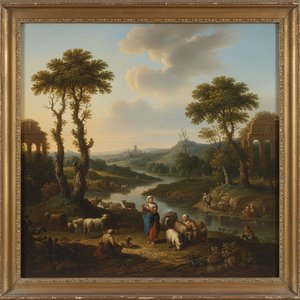
Nicolaes Berchem und das Goldene Zeitalter: Pastoralismus, Idealisierung & Künstlerische Innovation
Entdecken Sie die faszinierende Welt von Nicolaes Berchem und das Goldene Zeitalter der niederländischen Landschaftsmalerei. Expertenanalyse, Hintergrundinformationen & künstlerische Innovationen.
