Versenden
 Teilen
 Details anzeigen
 Leitfaden

 Herunterladen
 Ähnliche Objekte
 Diashow
 Fragen & Antworten
 Statistiken
Torso


 Weiterlesen
Die auf dieser Seite dargestellten Kunstwerke sind urheberrechtlich geschützt, was bedeutet, dass wir keine identische Reproduktion rechtmäßig erstellen oder verkaufen dürfen. Dieser Schutz wird durch internationale Abkommen wie die Berner Übereinkunft und durch nationale Gesetze, einschließlich derer, die von den US-Urheberrecht – Titel 17.
Diese Methode entspricht vollumfänglich den Urheberrechtsbestimmungen, da sie keine Kopie oder Vervielfältigung des geschützten Kunstwerks darstellt. Stattdessen handelt es sich um eine kreative Neuinterpretation – ein neues Gemälde, das vom Original inspiriert, aber nicht identisch mit ihm ist.
Giclée / Kunstdruck
Giclée- oder Leinwanddruck in Museumsqualität mit schneller Produktion und flexiblen Veredelungsoptionen. ( Handgemalte Reproduktion bestellen Zum digitalen Bild wechseln)




































Wählen Sie aus unseren vordefinierten Formaten, die den ursprünglichen Proportionen des Kunstwerks entsprechen.

Geben Sie die benötigte Breite und Höhe an, damit der Druck perfekt in Ihren Rahmen oder an Ihre Wand passt. Ein Druck kann nur beschnitten, aber niemals größer als das Originalbild angefertigt werden; daher verliert ein Format mit anderen Proportionen einen Teil des Bildes. Wir senden Ihnen ein digitales Mockup zur Freigabe, bevor wir den Druck ausführen. Das auf dieser Seite gezeigte Bild zeigt nicht den tatsächlichen Beschnitt – dies ist nur im Mockup ersichtlich.
Weltweiter Versand () innerhalb von 2 Wochen statt der üblichen 4/5 Wochen. (8 November)

Kostenloser weltweiter Expressversand

Hochwertige Leinenleinwand

Umfassender Versicherungsschutz beim Versand

Zollgebühren-Rückerstattungsgarantie

Garantie für exakte Farbtreue

100 Tage Rückgaberecht (nur bei Mängeln)

100% Geld-zurück-Garantie

Mengenrabatt verfügbar
 Die Glasoption ist nur für Größen unter 110 cm verfügbar.

Torso
Giclée / Kunstdruck
Format der Reproduktion
-


Endpreis
€ 72
A Sculptural Embrace: Barbara Hepworth’s ‘Torso’
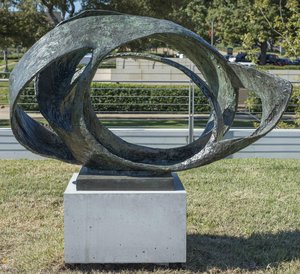
Barbara Hepworth's “Torso,” created in 1928, isn’t merely a depiction of the human form; it’s an embodiment of movement and quiet contemplation. This remarkable sculpture, rendered in the rich, dark tones of mahogany wood, immediately draws the viewer into its world – a world where form and space intertwine with a profound sense of stillness. Hepworth, a pivotal figure in the development of modern sculpture, masterfully eschews traditional representation, opting instead to capture an essence, a feeling, rather than a literal likeness. The piece speaks volumes about her pioneering approach to abstraction, prioritizing the inherent qualities of materials and the interplay between positive and negative space.
The Language of Form: Technique and Material
Hepworth’s technique is characterized by subtractive carving – a painstaking process of carefully removing material from a solid block of wood to reveal the desired shape. This method, demanding immense skill and patience, allows her to coax forth organic forms that seem to grow naturally from the raw material. Notice the subtle variations in texture across the surface; these aren’t simply cosmetic details but rather evidence of the sculptor's hand, each ridge and curve a testament to the physical act of creation. The choice of mahogany is particularly significant. Its deep, resonant color provides a dramatic backdrop for the sculpted form, while its grain adds layers of visual complexity – hints of light and shadow that dance across the surface. The smooth, polished finish further enhances the tactile quality of the piece, inviting viewers to imagine running their hands along its contours.
Roots in Modernism: Context and Influences
“Torso” emerged during a period of intense artistic experimentation and a rejection of academic traditions. Hepworth was deeply influenced by movements like Abstraction-Création, which sought to explore the fundamental qualities of form and material. Her work reflects this spirit of innovation, moving away from representational art towards a more conceptual approach. The sculpture’s emphasis on geometric shapes and its exploration of negative space align with the broader trends of early 20th-century modernism, where artists were increasingly interested in reducing forms to their essential elements. Hepworth's time spent studying Italian Renaissance sculpture also informed her work, particularly her understanding of classical anatomy, which she then reinterpreted through a distinctly modernist lens.
A Study in Quietude: Symbolism and Emotional Resonance
While “Torso” avoids overt symbolism, it possesses a powerful emotional resonance. The pose itself – a relaxed yet alert stance – suggests a state of contemplative awareness. The smooth curves and flowing lines evoke a sense of grace and fluidity, while the solidity of the wood grounds the form in the physical world. There’s an inherent vulnerability in the exposed torso, inviting viewers to contemplate themes of beauty, strength, and mortality. It's not a celebration of physicality but rather an exploration of the human condition – a quiet meditation on the essence of being. The sculpture’s timeless quality speaks to its ability to connect with viewers across generations, offering a moment of stillness in our increasingly frenetic world.
Reproductions and Display
A high-quality reproduction of “Torso” can bring the spirit of this iconic work into any space. Consider framing it within a simple, elegant setting to allow the sculpture’s form and texture to take center stage. The rich tones of the wood will complement a wide range of interior design styles, from minimalist modern to classic contemporary. When selecting a reproduction, prioritize materials that accurately capture the depth and nuance of Hepworth's original work – archival-quality prints on textured paper are ideal for achieving a truly authentic effect.
Fragen & Antworten
Wie harmonisch sind die Farben von "Torso" von Barbara Hepworth?
Die Farbharmonie von „Torso“ wird als Strong Color Unity beschrieben.
Welche emotionale Stimmung vermittelt "Torso" von Barbara Hepworth?
"Torso" von Barbara Hepworth vermittelt eine Reflective emotionale Stimmung.
Wo kann ich einen Druck von "Torso" von Barbara Hepworth kaufen?
"Torso" ist als ein Fine Art Print auf Baumwollkanvas oder Archiv-Leinwandpapier erhältlich. Bestellungen können in der gewünschten Größe auf der Kunstdruck in Premiumqualität-Seite aufgegeben werden.
Künstlerbiografie
Frühes Leben und Ausbildung
Dame Barbara Hepworth, eine renommierte englische Künstlerin und Bildhauerin, wurde am 10. Januar 1903 in Wakefield geboren. Ihr Vater, Herbert Hepworth, war Bezirksvermessungsingenieur des West Riding County Council und später Alderman. Als Mädchen begleitete sie ihn auf den Autofahrten, die er im Zuge seiner Arbeit durch das West Riding von Yorkshire unternahm. Sie besuchte die Wakefield Girls' High School und erhielt 1915 ein Musikstipendium. 1917 gewann sie einen Schulterscholarship. Die Sommerferien verbrachte sie in Robin Hood's Bay, nahe Whitby, North Yorkshire. Von 1920 bis 1921 besuchte sie die Leeds School of Art, wo sie eine lebenslange Freundschaft mit dem Kommilitonen Henry Moore pflegte. Anschließend erhielt sie ein County-Stipendium für ein Studium an der Royal College of Art in London von 1921 bis 1924.Künstlerische Karriere
- Dame Barbara Hepworth's Werk verkörpert den Modernismus, insbesondere die moderne Bildhauerei. Sie war eine der wenigen Künstlerinnen, die internationale Anerkennung erlangte.
- 1933 gründete sie gemeinsam mit Ben Nicholson, Paul Nash und anderen die Unit One Kunstbewegung, um Surrealismus und Abstraktion in der britischen Kunst zu vereinen.
- Hepworths frühe Arbeit war durch Abstraktion und ihre Beteiligung an der in Paris ansässigen Kunstbewegung Abstraction-Création gekennzeichnet.
Wichtige Werke und Ausstellungen
- Oval Form (Trezion), eine Bronzeskulptur, ist Teil der Sammlung des Kimbell Art Museum in Fort Worth, Vereinigte Staaten. (siehe auf OriginalUniqueArt)
- Two Forms, eine Skulptur, wird im Hepworth Wakefield in Wakefield, Großbritannien, ausgestellt. (siehe auf OriginalUniqueArt)
- Totem, eine Marmor Skulptur, ist ebenfalls Teil der Sammlung im Hepworth Wakefield. (siehe auf OriginalUniqueArt)
Einflüsse und Entwicklung
Hepworths künstlerische Entwicklung war von verschiedenen Einflüssen geprägt. Ihre frühen Werke zeigten noch vereinfachte, naturalistische Formen, doch sie konzentrierte sich zunehmend auf formale Aspekte. Die Begegnung mit Künstlern wie Brancusi und Arp in Paris trug maßgeblich zu ihrer Hinwendung zur Abstraktion bei. Sie experimentierte mit Collage, Fotogrammen und Drucken und entwickelte eine einzigartige Sensibilität für ihre Materialien. Ihre Arbeit wurde von der direkten Bearbeitung des Materials geprägt, wobei sie oft Fäden, Drähte und farbiges Pigment in ihre Skulpturen integrierte.
Vermächtnis und Bedeutung
Barbara Hepworths Werk hat einen bleibenden Eindruck in der Kunstwelt hinterlassen. Sie gilt als eine Pionierin der modernen britischen Bildhauerei und beeinflusste Generationen von Künstlern. Ihre Skulpturen sind Teil bedeutender Museumskollektionen weltweit, und das Hepworth Wakefield ist ein Denkmal für ihr Leben und Werk. Ihr Beitrag zur Entwicklung der abstrakten Bildhauerei wird weiterhin geschätzt und gefeiert. Mehr über Barbara Hepworth auf Wikipedia
Barbara Hepworth
1903 - 1975 , Vereinigtes Königreich
Kurzinfos
- Beeinflusste Künstler: ['Henry Moore']
- Bemerkenswerte Werke:
- Oval Form (Trezion)
- Two Forms
- Totem
- Geburtsdatum: 10. Januar 1903
- Geburtsort: Wakefield, Vereinigtes Königreich
- Künstlerische Richtung: Moderne Skulptur
- Nationalität: Britisch
- Todatum: 1975
- Vollständiger Name: Barbara Hepworth
- Von Künstlern Beeinflusst:
- Brancusi
- Arp
Ähnliche Artikel

The Enduring Form: Exploring Themes & Techniques in Sculpture Across Historical Periods
Explore the rich history of sculpture from ancient masterpieces to contemporary innovations. Discover key techniques, influential artists & investment potential for discerning art collectors.

Bronze-Meisterwerke: Die 10 Skulpturen, die Kunstgeschichte schrieben | OriginalUniqueArt
Entdecken Sie die 10 legendärsten Bronze Skulpturen der Kunstgeschichte! Von Michelangelo bis Rodin – erfahren Sie die Geschichten hinter den Meisterwerken und lassen Sie sich von Wanddeko-Ideen inspirieren. Hochwertige Kunstdrucke auf OriginalUniqueArt.com.

Die Essenz der Materie: Ein Leitfaden zur Meisterschaft und Technik der Bildhauerei
Erfahren Sie alles über die Meisterschaft der Bildhauerei und Materialkunde. Entdecken Sie die Kunst der Form jetzt!

Die 10 legendärsten Bronzestatuen: Meisterwerke, die Kunstgeschichte schrieben | OriginalUniqueArt
Entdecken Sie die 10 legendärsten Bronzestatuen der Kunstgeschichte! Von Rodin bis Michelangelo – erfahren Sie die Geschichten hinter ikonischen Skulpturen und finden Sie hochwertige Reproduktionen für Ihr Zuhause. Jetzt bei OriginalUniqueArt entdecken!
Barbara Hepworth: Skulpturale Dialoge mit Form, Raum und menschlicher Existenz
Entdecken Sie das Werk von Barbara Hepworth – einer Meisterin der abstrakten Skulptur. Erfahren Sie mehr über ihre einzigartige Formensprache, Materialien und ihren Einfluss auf die moderne Kunst. Wertvolle Einblicke für Sammler und Kenner.