Vorschau anzeigen
 Versenden
 Teilen
 Details anzeigen
 Leitfaden

 Herunterladen
 Ähnliche Objekte
 Röntgenaufnahme
 Diashow
 Q&A
Q&A Statistiken
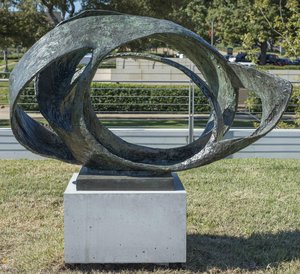
Genesis III

- 111.0 x 76.0 cm


 Weiterlesen
Die auf dieser Seite dargestellten Kunstwerke sind urheberrechtlich geschützt, was bedeutet, dass wir keine identische Reproduktion rechtmäßig erstellen oder verkaufen dürfen. Dieser Schutz wird durch internationale Abkommen wie die Berner Übereinkunft und durch nationale Gesetze, einschließlich derer, die von den US-Urheberrecht – Titel 17.
Diese Methode entspricht vollumfänglich den Urheberrechtsbestimmungen, da sie keine Kopie oder Vervielfältigung des geschützten Kunstwerks darstellt. Stattdessen handelt es sich um eine kreative Neuinterpretation – ein neues Gemälde, das vom Original inspiriert, aber nicht identisch mit ihm ist.
Giclée / Kunstdruck
Giclée- oder Leinwanddruck in Museumsqualität mit schneller Produktion und flexiblen Veredelungsoptionen. ( Handgemalte Reproduktion bestellen Zum digitalen Bild wechseln)




P118B €10

P118H €10

P118W €10

P438Z €10

P508JH €12

P508YH €12

P805H €10

P805Z €10

P919BZ €10

P919G €10

P919XJ €10

P959ZH €10

P968JZ €12

W106C €8

W218G €10

W218JH €8

W218Y €10

W307PJ €10

W316G €10

W316PJ €8

W316Y €10

W398PJ €8

W4111J €10

W500HY €15

W500JH €15

W692G €12

W849H €8

W940BG €15

W953PJ €8




Wählen Sie aus unseren vordefinierten Formaten, die den ursprünglichen Proportionen des Kunstwerks entsprechen.

Geben Sie die benötigte Breite und Höhe an, damit der Druck perfekt in Ihren Rahmen oder an Ihre Wand passt. Ein Druck kann nur beschnitten, aber niemals größer als das Originalbild angefertigt werden; daher verliert ein Format mit anderen Proportionen einen Teil des Bildes. Wir senden Ihnen ein digitales Mockup zur Freigabe, bevor wir den Druck ausführen. Das auf dieser Seite gezeigte Bild zeigt nicht den tatsächlichen Beschnitt – dies ist nur im Mockup ersichtlich.
Weltweiter Versand () innerhalb von 2 Wochen statt der üblichen 4/5 Wochen. (3 November)

Kostenloser weltweiter Expressversand

Hochwertige Leinenleinwand

Umfassender Versicherungsschutz beim Versand

Zollgebühren-Rückerstattungsgarantie

Garantie für exakte Farbtreue

100 Tage Rückgaberecht (nur bei Mängeln)

100% Geld-zurück-Garantie

Mengenrabatt verfügbar
 Die Glasoption ist nur für Größen unter 110 cm verfügbar.

Genesis III
Giclée / Kunstdruck
Format der Reproduktion
-


Endpreis
€ 71
A Quiet Universe of Circles
Barbara Hepworth’s Genesis III, a seminal work from 1966, isn't merely a depiction of two circles; it’s an invitation to contemplate the fundamental geometries of existence. Created during a period of profound personal and artistic evolution for the sculptor, this piece embodies her signature exploration of form, texture, and the interplay between abstraction and suggestion. The stark white background acts as a luminous void, amplifying the presence of the circular forms and drawing the viewer into their contained space. It’s a deliberate choice – Hepworth often favored simplicity to allow the inherent qualities of materials and shapes to speak for themselves.
- Material & Technique: Crafted primarily in oil paint on canvas, Genesis III showcases Hepworth's masterful control over layering and texture. The circles aren’t rendered with sharp edges but rather possess a subtly eroded quality, as if sculpted from memory or suggestion. The application of paint is deliberately loose, creating a sense of movement and dynamism that contrasts sharply with the stillness implied by the forms themselves.
- Compositional Balance: The asymmetrical arrangement of the circles – one positioned slightly higher left, the other lower right – generates an immediate visual tension. This imbalance isn’t jarring but rather creates a subtle push and pull, preventing the composition from feeling static or predictable. It mirrors Hepworth's broader interest in exploring balance and equilibrium within her sculptures.
- Color Palette: The restrained color palette—a dominant white punctuated by terracotta and grey—further emphasizes the forms’ presence. These earthy tones evoke a sense of grounding, anchoring the abstract shapes within a more tangible realm. The strategic use of black spots adds an element of spontaneity and visual interest, hinting at the underlying process of creation.
Echoes of Modernism & Sculpture
To fully appreciate Genesis III, it’s crucial to understand Hepworth's place within the broader context of mid-20th century art. She was a key figure in the movement towards abstraction, influenced by European avant-garde artists like Piet Mondrian and Constantin Brâncuși. However, unlike purely geometric abstractions, Hepworth retained a deep connection to her sculptural roots. The circular forms resonate with the organic shapes found in her three-dimensional works – particularly her celebrated “oval forms.” This piece can be seen as a translation of sculptural principles into a two-dimensional format, demonstrating how she explored similar themes of form, space, and material through different mediums.
Historical Context:Created in 1966, the artwork reflects a period of significant artistic experimentation. Hepworth was increasingly focused on exploring the relationship between surface and volume, often referencing her own sculptural practice. The work also aligns with the broader trends of Minimalism and Abstract Expressionism that were gaining prominence during this time.
Symbolic Resonance & Emotional Depth
The circles themselves are open to interpretation, inviting viewers to project their own meanings onto the artwork. They can be seen as representations of wholeness, cycles, or interconnectedness – fundamental concepts explored throughout Hepworth’s career. The scattered black spots, like fleeting moments in time, suggest spontaneity and energy, hinting at the dynamic process of creation. The overall mood is one of quiet contemplation—a serene invitation to lose oneself within the simplicity of form and color.
A Legacy of Form & Texture
Genesis III stands as a testament to Barbara Hepworth’s enduring legacy as one of the most innovative sculptors of the 20th century. It's a deceptively simple work, yet brimming with subtle complexities and emotional depth. Reproductions capture the delicate texture and layered application of paint that are so vital to the original’s impact. It remains a powerful example of how abstraction can be used to explore profound philosophical questions about existence, form, and the human experience.
Fragen & Antworten
Wofür wird eine Reproduktion von "Genesis III" von Barbara Hepworth empfohlen?
Die empfohlene Verwendung eines Drucks von „Genesis III“ ist Statement.
Für welchen Raum wird "Genesis III" von Barbara Hepworth empfohlen?
Der empfohlene Raum für "Genesis III" von Barbara Hepworth ist ein Living Room. Dieser Vorschlag kann natürlich an Ihr Interieur angepasst werden.
Kann "Genesis III" heruntergeladen werden?
Das Bild von "Genesis III" von Barbara Hepworth kann auf der Download-Seite des Kunstwerks heruntergeladen werden: hochauflösender digitaler Bild-Download.
Künstlerbiografie
Frühes Leben und Ausbildung
Dame Barbara Hepworth, eine renommierte englische Künstlerin und Bildhauerin, wurde am 10. Januar 1903 in Wakefield geboren. Ihr Vater, Herbert Hepworth, war Bezirksvermessungsingenieur des West Riding County Council und später Alderman. Als Mädchen begleitete sie ihn auf den Autofahrten, die er im Zuge seiner Arbeit durch das West Riding von Yorkshire unternahm. Sie besuchte die Wakefield Girls' High School und erhielt 1915 ein Musikstipendium. 1917 gewann sie einen Schulterscholarship. Die Sommerferien verbrachte sie in Robin Hood's Bay, nahe Whitby, North Yorkshire. Von 1920 bis 1921 besuchte sie die Leeds School of Art, wo sie eine lebenslange Freundschaft mit dem Kommilitonen Henry Moore pflegte. Anschließend erhielt sie ein County-Stipendium für ein Studium an der Royal College of Art in London von 1921 bis 1924.Künstlerische Karriere
- Dame Barbara Hepworth's Werk verkörpert den Modernismus, insbesondere die moderne Bildhauerei. Sie war eine der wenigen Künstlerinnen, die internationale Anerkennung erlangte.
- 1933 gründete sie gemeinsam mit Ben Nicholson, Paul Nash und anderen die Unit One Kunstbewegung, um Surrealismus und Abstraktion in der britischen Kunst zu vereinen.
- Hepworths frühe Arbeit war durch Abstraktion und ihre Beteiligung an der in Paris ansässigen Kunstbewegung Abstraction-Création gekennzeichnet.
Wichtige Werke und Ausstellungen
- Oval Form (Trezion), eine Bronzeskulptur, ist Teil der Sammlung des Kimbell Art Museum in Fort Worth, Vereinigte Staaten. (siehe auf OriginalUniqueArt)
- Two Forms, eine Skulptur, wird im Hepworth Wakefield in Wakefield, Großbritannien, ausgestellt. (siehe auf OriginalUniqueArt)
- Totem, eine Marmor Skulptur, ist ebenfalls Teil der Sammlung im Hepworth Wakefield. (siehe auf OriginalUniqueArt)
Einflüsse und Entwicklung
Hepworths künstlerische Entwicklung war von verschiedenen Einflüssen geprägt. Ihre frühen Werke zeigten noch vereinfachte, naturalistische Formen, doch sie konzentrierte sich zunehmend auf formale Aspekte. Die Begegnung mit Künstlern wie Brancusi und Arp in Paris trug maßgeblich zu ihrer Hinwendung zur Abstraktion bei. Sie experimentierte mit Collage, Fotogrammen und Drucken und entwickelte eine einzigartige Sensibilität für ihre Materialien. Ihre Arbeit wurde von der direkten Bearbeitung des Materials geprägt, wobei sie oft Fäden, Drähte und farbiges Pigment in ihre Skulpturen integrierte.
Vermächtnis und Bedeutung
Barbara Hepworths Werk hat einen bleibenden Eindruck in der Kunstwelt hinterlassen. Sie gilt als eine Pionierin der modernen britischen Bildhauerei und beeinflusste Generationen von Künstlern. Ihre Skulpturen sind Teil bedeutender Museumskollektionen weltweit, und das Hepworth Wakefield ist ein Denkmal für ihr Leben und Werk. Ihr Beitrag zur Entwicklung der abstrakten Bildhauerei wird weiterhin geschätzt und gefeiert. Mehr über Barbara Hepworth auf Wikipedia
Barbara Hepworth
1903 - 1975 , Vereinigtes Königreich
Kurzinfos
- Beeinflusste Künstler: ['Henry Moore']
- Bemerkenswerte Werke:
- Oval Form (Trezion)
- Two Forms
- Totem
- Geburtsdatum: 10. Januar 1903
- Geburtsort: Wakefield, Vereinigtes Königreich
- Künstlerische Richtung: Moderne Skulptur
- Nationalität: Britisch
- Todatum: 1975
- Vollständiger Name: Barbara Hepworth
- Von Künstlern Beeinflusst:
- Brancusi
- Arp
Ähnliche Artikel

Bronze-Meisterwerke: Die 10 Skulpturen, die Kunstgeschichte schrieben | OriginalUniqueArt
Entdecken Sie die 10 legendärsten Bronze Skulpturen der Kunstgeschichte! Von Michelangelo bis Rodin – erfahren Sie die Geschichten hinter den Meisterwerken und lassen Sie sich von Wanddeko-Ideen inspirieren. Hochwertige Kunstdrucke auf OriginalUniqueArt.com.

Meister der Abstraktion: Die 25 ikonischsten Werke von Wassily Kandinsky
Entdecken Sie die 25 Meisterwerke Kandinskys und die Magie der Abstraktion. Erleben Sie die volle Sammlung auf OriginalUniqueArt.com.

The Enduring Form: Exploring Themes & Techniques in Sculpture Across Historical Periods
Explore the rich history of sculpture from ancient masterpieces to contemporary innovations. Discover key techniques, influential artists & investment potential for discerning art collectors.

Die Essenz der Materie: Ein Leitfaden zur Meisterschaft und Technik der Bildhauerei
Erfahren Sie alles über die Meisterschaft der Bildhauerei und Materialkunde. Entdecken Sie die Kunst der Form jetzt!
Barbara Hepworth: Skulpturale Dialoge mit Form, Raum und menschlicher Existenz
Entdecken Sie das Werk von Barbara Hepworth – einer Meisterin der abstrakten Skulptur. Erfahren Sie mehr über ihre einzigartige Formensprache, Materialien und ihren Einfluss auf die moderne Kunst. Wertvolle Einblicke für Sammler und Kenner.