In echtem Maßstab anzeigen
 Versenden als Grußkarte
 Teilen
 Details anzeigen
 Leitfaden öffnen

 Herunterladen
 Ähnliche Objekte
 Röntgenaufnahme
 Diashow
 Besucherstatistiken
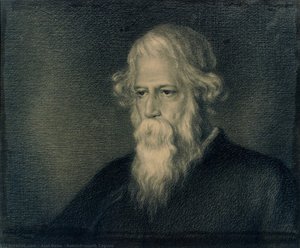
Rabindranath Tagore
 Oil On Canvas
- WallArt
- Contemporary Realism
 1952
1952- 19th Century
 60.0 x 50.0 cm
 Victoria-Gedenkstätte
 Mehr anzeigen
Die auf dieser Seite dargestellten Kunstwerke sind urheberrechtlich geschützt, was bedeutet, dass wir keine identische Reproduktion rechtmäßig erstellen oder verkaufen dürfen. Dieser Schutz wird durch internationale Abkommen wie die Berner Übereinkunft und durch nationale Gesetze, einschließlich derer, die von den ... festgelegt wurden US-Urheberrecht – Titel 17.
Diese Methode entspricht vollumfänglich den Urheberrechtsbestimmungen, da sie keine Kopie oder Vervielfältigung des geschützten Kunstwerks darstellt. Stattdessen handelt es sich um eine kreative Neuinterpretation – ein neues Gemälde, das vom Original inspiriert, aber nicht identisch mit ihm ist.
Giclée / Kunstdruck
Giclée- oder Leinwanddruck in Museumsqualität mit schneller Produktion und flexiblen Veredelungsoptionen. ( Handgemalte Reproduktion kaufen Zum digitalen Bild wechseln)




P118B €10

P118H €10

P118W €10

P438Z €10

P508JH €12

P508YH €12

P805H €10

P805Z €10

P919BZ €10

P919G €10

P919XJ €10

P959ZH €10

P968JZ €12

W106C €8

W218G €10

W218JH €8

W218Y €10

W307PJ €10

W316G €10

W316PJ €8

W316Y €10

W398PJ €8

W4111J €10

W500HY €15

W500JH €15

W692G €12

W849H €8

W940BG €15

W953PJ €8




Wählen Sie aus unseren vordefinierten Formaten, die den ursprünglichen Proportionen des Kunstwerks entsprechen.

Geben Sie die Breite und die Höhe an, die Sie benötigen, damit der Druck perfekt in Ihren Rahmen oder an Ihre Wand passt. Ein Druck kann nur beschnitten werden und niemals größer als das Originalbild gemacht werden; daher verliert ein Format mit einer anderen Proportion einen Teil des Bildes. Wir senden Ihnen ein digitales Mockup zur Freigabe, bevor wir den Druck ausführen. Das auf dieser Seite gezeigte Bild zeigt nicht den tatsächlichen Beschnitt – dies ist nur im Mockup ersichtlich.
Weltweiter Versand () innerhalb von 2 Wochen statt der üblichen 4/5 Wochen. (25 Oktober)

Kostenloser weltweiter Expressversand

Hochwertige Leinenleinwand

Vollständiger Versicherungsschutz beim Versand

Zollgebühren-Rückerstattungsgarantie

Garantie für exakte Farbtreue

100-tägiges Rückgaberecht (nur bei Mängeln)

100% Geld-zurück-Garantie

Angebot für Mengenrabatt
 Die Glasoption ist nur für Größen unter 110 cm verfügbar.

Rabindranath Tagore
Giclée / Kunstdruck
Format der Reproduktion
-


Gesamtpreis
€ 70
A Portrait of Intellectual Grace: Rabindranath Tagore by Atul Basu
This evocative portrait of Rabindranath Tagore, rendered in 1952 by the esteemed Indian painter Atul Basu, transcends a simple likeness; it’s an embodiment of the poet and philosopher's profound intellect and contemplative spirit. Painted during a pivotal period of his life – shortly after receiving the Nobel Prize for Literature – the artwork captures Tagore not merely as a celebrated figure, but as a man steeped in wisdom and perhaps a touch of melancholy, qualities that resonate deeply within the painting’s carefully constructed composition.
Artistic Technique and Historical Context
- Style & Medium: The work exemplifies representational portraiture executed with a mastery of oil paint on canvas. Basu's brushwork, subtly visible in the photograph, reveals a traditional technique rooted in post-impressionist influences, particularly evident in Walter Sickert’s approach to capturing human emotion through light and shadow.
- Artist Background: Atul Basu (1898-1977), born in Mymensingh, India, was a significant figure in the development of Indian modern art. His training at the Royal Academy in London exposed him to European artistic trends while firmly grounding his work within an Eastern sensibility. He played a crucial role in establishing and directing institutions like the Indian School of Oriental Art, contributing significantly to the preservation and promotion of traditional Indian artistic values.
- Historical Significance: Created in 1952, the painting reflects a moment of international recognition for Tagore’s literary achievements, solidifying his place as one of the world's most influential thinkers and writers. The artwork serves as a visual testament to this legacy.
Compositional Elements and Symbolism
The portrait adheres to a classic bust-length format, centering Tagore’s face and upper torso – a deliberate choice that fosters a direct connection with the viewer. The dark, indistinct background serves to heighten the subject's presence, emphasizing his dignified gaze. Notably, Tagore is depicted in a red robe, a color often associated with spirituality and authority within Indian traditions, subtly reinforcing his role as a respected intellectual leader and perhaps hinting at his Upanishadic ideals of education.
Color Palette and Emotional Impact
Basu’s masterful use of warm tones – reds, yellows, and whites – creates an atmosphere of serenity and contemplation. The soft, diffused lighting eliminates harsh shadows, further contributing to the painting's sense of wisdom and introspection. Tagore’s expression, a blend of intelligence and melancholy, invites viewers to contemplate the complexities of human thought and experience. The layering of colors within the robe adds depth and texture, enhancing the overall visual richness of the piece.
Dimensions and Materials
This reproduction is presented in a substantial 60 x 50 cm format, ensuring that it will make a significant statement within any interior space. The artwork is meticulously crafted using high-quality materials to faithfully replicate the original’s texture and color depth, offering collectors and art enthusiasts alike an authentic representation of Atul Basu's remarkable talent.
Fragen & Antworten
Für welchen Ort und welchen Zweck wird "Rabindranath Tagore" empfohlen?
"Rabindranath Tagore" von Atul Basu wird für Reflective empfohlen, idealerweise in einem Living Room. Verwendung und Raumgestaltung geben gemeinsam Aufschluss darüber, wo eine Reproduktion am besten zur Geltung kommt.
Wie kann ich eine Reproduktion von "Rabindranath Tagore" von Atul Basu in der Vorschau ansehen?
Auf der Vorschau-Seite von „Rabindranath Tagore“ können Sie das Kunstwerk vor der Bestellung in einer Vorschau betrachten.
Wie intensiv sind die Farben in "Rabindranath Tagore" von Atul Basu?
Die Farbsättigung von „Rabindranath Tagore“ ist Monochromatic. Die Intensität beschreibt, wie kräftig die Farben wirken.
Biografie des Künstlers
Frühes Leben und Ausbildung
Atul Basu, ein renommierter indischer Maler, wurde am 22. Februar 1898 in Mymensingh geboren, das damals zur Präsidentschaft Bengalen gehörte. Seine Kindheit in der Stadt Mymensingh legte den Grundstein für sein späteres künstlerisches Schaffen. Basus primäre Ausbildung begann am National Council of Education, Zweigstelle Mymensingh, gefolgt von seinem Studium an der Jubilee Art Academy in Kalkutta.Karriere und Einflüsse
Durch ein Stipendium der Universität Kalkutta erhielt Basu die Möglichkeit, seine Kunst an der Royal Academy in London (1924–1926) zu studieren, wo er maßgeblich vom Post-Impressionisten Walter Sickert beeinflusst wurde. Bemerkenswert ist, dass Basu eine Einladung ablehnte, den Pavillon der British Empire Exhibition zu dekorieren, was seine tiefe Verbundenheit mit seiner eigenen künstlerischen Vision unterstreicht. Im Jahr 1921 gründete er gemeinsam mit Bhabani Charan Laha die Indian School of Oriental Art und wurde später Direktor des Government College of Art & Craft. Zu seinen bedeutendsten Werken zählen Sphinx (Öl auf Sperrholz) und sein Selbstporträt (1945), die seine meisterhafte Beherrschung der Ölfarben eindrucksvoll demonstrieren.Bedeutende Werke und Sammlungen
- Sphinx (Öl auf Sperrholz)
- Selbstporträt (1945)
- Porträts aus den Originalsammlungen von Windsor Castle und dem Buckingham Palace, in Auftrag gegeben von der indischen Regierung
Auszeichnungen und Anerkennung
Basu wurde im Jahr 1970 mit dem Ehrendoktortitel (D.Litt.) der Rabindra Bharati University in Kalkutta geehrt. Weitere Kunstwerke von Atul Basu auf OriginalUniqueArt.com ansehen: Entdecken Sie weitere indische Künstler und ihre Werke auf OriginalUniqueArt.com:
Atul Basu
1898 - 1977 , Indien
Eckdaten zum Künstler
- Artistic Movement Or Style: Grafische Kunst, Druckgrafik
- Artists Or Movements Influenced By This Artist:
- René Magritte
- Martin Gardner
- Artists Who Influenced This Artist:
- George Arnold Escher
- Frank Reaugh
- Date Of Birth: 17. Juni 1898
- Date Of Death: 27. März 1972
- Full Name: Maurits Cornelis Escher
- Nationality: Niederländisch
- Notable Artworks:
- Hand mit reflektierender Kugel
- Zeichnende Hände
- Relativität
- Wasserfall
- Aufsteigend und absteigend
- Place Of Birth: Leeuwarden, Niederlande
Verwandte Artikel
George Catlin und die Bewahrung des amerikanischen Westens: Eine visuelle Dokumentation indigener Lebensweisen im Zeitalter des Wandels
Entdecken Sie das faszinierende Werk von George Catlin und seine einzigartige Dokumentation der indigenen Kulturen des amerikanischen Westens. Erfahren Sie mehr über die Lebensweisen, Rituale und Traditionen der Native Americans im Zeitalter des Wandels.
Joseph Henry Sharp: Capturing the Spirit of the Plains – Life, Art & Legacy
Explore the life & art of Joseph Henry Sharp, a founding member of the Taos Society of Artists renowned for his realistic depictions of Native American culture and Western landscapes. Discover his legacy with OriginalUniqueArt.

Panoramic Visions of Empire: The Daniells’ Artistic Collaboration & Legacy
Explore the captivating 'Oriental Scenery' by Thomas & William Daniell. Discover their pioneering aquatint prints of India, imperial context, artistic collaboration, and lasting legacy. A deep dive for history lovers.
Shadow Catcher: Edward S. Curtis & the Ethnographic Portraiture of a Vanishing West
Explore the life & work of Edward S. Curtis, the 'Shadow Catcher,' and his groundbreaking photographic documentation of Native American cultures. Discover iconic images from *The North American Indian* and a critical look at his lasting legacy.

Raja Ravi Varma: Bridging Tradition & Modernity in 19th-Century Indian Art
Explore the life & art of Raja Ravi Varma, a pioneer who fused European techniques with Indian iconography. Discover his iconic paintings, lasting legacy, and influence on modern Indian art at OriginalUniqueArt.