

 Vorschau anzeigen
 Versenden
 Teilen
 Details anzeigen

 Herunterladen
 Ähnliche Objekte
 Röntgenaufnahme
 Diashow
Sandridge
 Oil On Canvas
- WallArt
- Australian Impressionism
 1888
1888- 19th Century
 233.0 x 128.0 cm
 National Gallery of Australia
 Weiterlesen
Handgefertigte Ölreproduktion
Handgemaltes Ölgemälde auf Leinwand in Ihrer Wunschgröße und mit Rahmen, auf Bestellung von unseren Künstlern angefertigt. ( Druck bestellen Bild kaufen)




P118B $10

P118H $10

P118W $10

P438Z $10

P508JH $12

P508YH $12

P805H $10

P805Z $10

P919BZ $10

P919G $10

P919XJ $10

P959ZH $10

P968JZ $12

W106C $8

W218G $10

W218JH $8

W218Y $10

W307PJ $10

W316G $10

W316PJ $8

W316Y $10

W398PJ $8

W4111J $10

W500HY $15

W500JH $15

W692G $12

W849H $8

W940BG $15

W953PJ $8




Wählen Sie aus unseren vordefinierten Formaten, die den ursprünglichen Proportionen des Kunstwerks entsprechen.

Sie können Ihre eigenen Maße eingeben, um einen bestimmten Rahmen oder Platz auszufüllen. Wenn die gewählte Größe nicht den Proportionen des Originalbildes entspricht, werden wir das Kunstwerk entweder beschneiden oder das Gemälde durch zusätzliche, handgemalte Elemente erweitern. Ein digitales Mockup wird Ihnen zur Genehmigung zugesandt, bevor die Produktion beginnt.
Bitte beachten Sie, dass die Bildschirmvorschau nicht die tatsächliche Beschneidung oder Erweiterung widerspiegelt. Nur das Mockup zeigt die endgültige Komposition exakt an.
Obwohl Sondermaße verfügbar sind, empfehlen wir, eine Größe aus der vordefinierten Liste zu wählen, um die ursprünglichen Proportionen beizubehalten.
Nach der Bestellung wird das OriginalUniqueArt.com-Team dem Kunden Anweisungen per E-Mail zusenden und eine Mockup-Vorschau bereitstellen.
Weltweiter Versand () in nur 3 bis 4 Wochen statt der üblichen 5 Wochen. (21 August). Keine Kompromisse bei der Qualität.

Kostenloser weltweiter Expressversand

Hochwertige Leinenleinwand

Umfassender Versicherungsschutz beim Versand

Zollgebühren-Rückerstattungsgarantie

Garantie für exakte Farbtreue

60 Tage Rückgaberecht (nur bei Mängeln)

100% Geld-zurück-Garantie

Mengenrabatt verfügbar
 Die Glasoption ist nur für Größen unter 110 cm verfügbar.

Sandridge
Art der Reproduktion
Format der Reproduktion
-


Gesamtpreis
$ 300
Beschreibung des Kunstwerks
A Moment Frozen in Time: The Drama of Sandridge
In the vast expanse of Australian Impressionism, few works capture the raw, unscripted tension of maritime life as poignantly as Arthur Streeton’s Sandridge. Painted in 1888, this monumental oil on canvas serves as a window into a bustling, high-stakes moment within a busy harbor. At first glance, the viewer is drawn into a scene of profound movement and uncertainty; the central focus is a vessel caught in a state of distress, appearing to sink or having just succumbed to the elements. This focal point acts as the emotional anchor of the composition, pulling the eye toward the center of a swirling maritime drama where the calm of the water meets the sudden chaos of an emergency.
Streeton, a pioneer of the Heidelberg School, was a master at capturing what his contemporaries called the "Australian Light." In Sandridge, he utilizes this expertise to paint not just a scene, and not just a location, but an atmosphere. The light dances across the hulls of various boats—ranging from large, dominating vessels to smaller, more agile craft—creating a sense of depth and shimmering heat. Through his brushwork, one can almost feel the humidity of the harbor and the frantic energy of the at least twelve figures scattered throughout the scene. Some onlookers stand in stunned proximity to the sinking boat, while others are mere silhouettes against the horizon, their presence adding to the collective weight of the unfolding tragedy.
Technique and the Impressionist Spirit
The technical execution of Sandridge is a testament to Streeton’s ability to blend large-scale composition with delicate, impressionistic touches. The sheer scale of the work, measuring an impressive 233 x 128 cm, allows the viewer to become immersed in the harbor's geography. Streeton employs a palette that reflects the gritty yet luminous reality of a working port. His use of oil on canvas provides a rich texture that gives weight to the wooden hulls and life to the churning water. The way he manages the interplay between light and shadow is crucial; it is through these subtle shifts in tone that the sense of "chaos" is communicated without relying on overt, messy strokes.
For the discerning collector or interior designer, this piece offers a sophisticated balance of narrative intensity and aesthetic harmony. The painting does not merely depict a disaster; it captures the structural beauty of a maritime landscape. The composition guides the eye through a rhythmic arrangement of masts, sails, and figures, making it a powerful statement piece for any grand space. It possesses that rare quality in fine art: the ability to command attention through its historical gravity while simultaneously complementing a modern or classical interior with its masterful use of color and light.
A Legacy of Australian Identity
To understand Sandridge is to understand the birth of a national artistic identity. During the late 19th century, Streeton and his peers were moving away from European traditions to find a way to paint the unique, harsh, yet beautiful Australian landscape. While much of his work focuses on the golden hues of the bush, Sandridge explores the industrial and social heartbeat of the coast. The painting symbolizes the vulnerability of human endeavor when faced with the unpredictable forces of nature, a theme that resonates deeply across generations.
Owning a high-quality reproduction of this masterpiece allows one to bring a piece of Australian history into the contemporary home. It is more than a decoration; it is an invitation to contemplate the fleeting nature of stability and the enduring strength of human observation. Whether placed in a library, a formal dining room, or a curated gallery space, Sandridge serves as a profound conversation starter, embodying the spirit of an era defined by discovery, struggle, and the breathtaking beauty of the Australian light.
Über den Künstler
Frühes Leben und Ausbildung
Arthur Streeton, ein bedeutender australischer Landschaftsmaler, wurde am 8. April 1867 in Duneed, Victoria, geboren. Er begann seine künstlerische Laufbahn 1882 an der National Gallery School unter der Anleitung von George Folingsby. Diese frühe Ausbildung legte den Grundstein für seinen späteren Erfolg als führendes Mitglied der Heidelberg School, auch bekannt als australischer Impressionismus.Karriere-Höhepunkte und die Heidelberg School
Streetons Arbeit verbesserte sich während seiner Formjahre rasch, und er wurde 1888 weithin als einer der talentiertesten jungen Maler Victorias angesehen. Seine Verbindung zu den Künstlern Tom Roberts und Frederick McCubbin führte zur Bildung einer zweijährigen Periode enger kreativer Zusammenarbeit, die schließlich als Heidelberg School Bewegung bekannt wurde. Diese Bewegung war geprägt von einem Fokus auf das Malen im Freien (Plein Air) und der Darstellung australischer Landschaften mit impressionistischen Techniken. Die Heidelberg School trug maßgeblich zur Entwicklung einer eigenständigen australischen Kunst bei, die sich von europäischen Traditionen löste.Das Eaglemont Camp und bedeutende Werke
Streetons Zeit im Eaglemont Camp im Jahr 1888 markierte einen wichtigen Wendepunkt in seiner Karriere. Diese Periode sah die Entstehung bemerkenswerter Werke wie "Goldener Sommer, Eaglemont" (1889) und "'Still glides the stream, and shall for ever glide'" (1890). Diese sonnendurchfluteten pastorale Szenen zeigten Streetons einzigartigen Stil, der später in der Royal Academy in London ausgestellt wurde und 1892 eine lobende Erwähnung im Pariser Salon erhielt. Diese Werke zeichnen sich durch ihre leuchtenden Farben, lockeren Pinselstriche und die Darstellung des flüchtigen Lichts aus.Späteres Leben und Vermächtnis
Streeton segelte 1897 nach London und hatte dort 1900 weitere Ausstellungen in der Royal Academy. Obwohl er in Australien einen beträchtlichen Ruf entwickelte, erreichte er in England keinen vergleichbaren Erfolg. Während des Ersten Weltkriegs diente Streeton als Kriegskünstler und dokumentierte die Erfahrungen australischer Soldaten. Arthur Ernest Streeton verstarb am 1. September 1943. Sein Vermächtnis lebt in seinen Landschaftsbildern weiter, die einen wichtigen Beitrag zur Entwicklung der australischen Kunst darstellen und das Land mit einem einzigartigen Blickwinkel einfangen.- Betrachten Sie Arthurs Streetons Werke auf OriginalUniqueArt: https://OriginalUniqueArt.com/@/arthur_streeton
- Erforschen Sie die Heidelberg School Bewegung und ihren Einfluss auf die australische Kunst: https://en.wikipedia.org/wiki/heidelberg_school
- Entdecken Sie mehr über Streetons Leben und Werk im virtuellen Museum von OriginalUniqueArt: /de/art/show/art-d3c5zh-de/
- Lesen Sie über die Geschichte der Malerei und ihre Entwicklung im Laufe der Zeit: https://en.wikipedia.org/wiki/history_of_painting
- 8. April 1867: Geburt von Arthur Streeton
- 1882: Beginn des Kunststudiums an der National Gallery School
- 1888: Gründung des Eaglemont Camps mit anderen Künstlern
- 1. September 1943: Tod

Arthur Streeton
1867 - 1943 , Australien
Kurzinfos
- Beeinflusste Künstler/Bewegungen: ['Heidelberg School']
- Bemerkenswerte Werke:
- Goldener Sommer, Eaglemont
- Still glides the stream
- Der Geist der Dürre
- Früher Sommer - Gorse in Blüte
- Geburtsdatum: 8. April 1867
- Geburtsort: Mount Moriac, Australien
- Künstler Beeinflusst Von: ['Girolamo Nerli']
- Künstlerische Bewegung: Australischer Impressionismus
- Nationalität: Australisch
- Todatum: 1. September 1943
- Vollständiger Name: Arthur Ernest Streeton
Ähnliche Artikel

Boote in der Kunst: Die 10 schönsten Meisterwerke & ihre Geschichten | OriginalUniqueArt
Entdecken Sie die 10 schönsten Bootsgemälde der Kunstgeschichte! Von Monet bis Van Gogh – erfahren Sie die Geschichten hinter ikonischen Werken, Techniken & Marinemalerei. Hochwertige Reproduktionen auf OriginalUniqueArt.com.

Impressionismus Meisterwerke: Die Top 10 Kunstwerke für Ihr Zuhause | OriginalUniqueArt
Entdecken Sie die Top 10 Meisterwerke des Impressionismus! Von Monet bis Renoir – erfahren Sie die Geschichten hinter berühmten Gemälden, Techniken & Farben. Hochwertige Kunstdrucke auf OriginalUniqueArt.com.
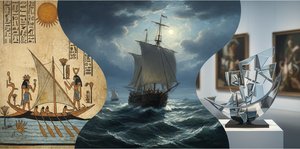
Navigating Symbolism & Sentiment: A Comprehensive Exploration of Boats in Art History
Explore the rich history of boats in art! Discover symbolism & style from ancient myths to Impressionist masterpieces. Expert insights for collectors at OriginalUniqueArt.

Paul Cézanne: Die 25 Meisterwerke des Impressionismus | OriginalUniqueArt
Entdecken Sie die 25 Meisterwerke von Paul Cézanne! Tauchen Sie ein in die Welt des Impressionismus und Postimpressionismus. Erfahren Sie mehr über seine Stillleben, Landschaften & berühmten Gemälde – jetzt hochwertige Kunstdrucke auf OriginalUniqueArt.com.

Impressionismus und Postimpressionismus: Eine vergleichende Analyse
Entdecken Sie die Welt des Impressionismus und Postimpressionismus! Expertenwissen über Künstler wie Monet, Van Gogh & Cézanne. Jetzt lesen!



