

 Druck bestellen Gemälde kaufen
 Versenden
 Teilen
 Details anzeigen
 Zu Favoriten hinzufügen

 Herunterladen
 Ähnliche Objekte
 Röntgenaufnahme
 Diashow anzeigen
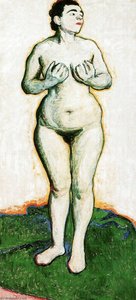
Nude
 1910
1910 156.0 x 72.0 cm
 Rippl-rónai Museum
 Weiterlesen
Erwerben Sie ein hochauflösendes, optimiertes digitales Bild, das der Online-Vorschau weit überlegen ist.
Jede Datei wird von unseren hauseigenen Spezialisten mit modernsten Werkzeugen und fachmännischer manueller Retusche sorgfältig vorbereitet. Wir stellen sicher, dass jedes Bild eine außergewöhnliche Klarheit, präzise Farbgenauigkeit und feinste Details aufweist.
Die endgültige Datei wird innerhalb von 72 Stunden per E-Mail zugestellt und ist für den sofortigen Einsatz in professionellen, redaktionellen und Druckumgebungen optimiert. Es handelt sich um dieselbe Qualität, der führende Designstudios, Verlage und Galerien vertrauen.
Digitales Kunstwerk
Laden Sie eine hochauflösende Datei für die persönliche Präsentation, den Druck und kreative Projekte herunter.
In jeder Bestellung digitaler Bilder enthalten
Professionelle digitale Bereitstellung, garantiert
Wenn Sie sich für OriginalUniqueArt.com entscheiden, erhalten Sie nicht nur ein Bild – Sie erhalten ein professionell aufbereitetes digitales Kunstwerk, das mit höchster Präzision erstellt und durch eine Zufriedenheitsgarantie abgesichert wird. Hier ist alles, was automatisch mit Ihrer Bestellung geliefert wird:

Schnelle E-Mail-Zustellung
Ihre hochauflösende digitale Bilddatei wird Ihnen innerhalb von 72 Stunden nach der Bestellung per E-Mail zugestellt – bereit zur sofortigen Verwendung.

KI-optimierte digitale Datei
Ihre Kunstwerke werden professionell mithilfe fortschrittlicher KI-Tools und manueller Bearbeitung optimiert, um maximale Detailtreue, Klarheit und Farbgenauigkeit zu gewährleisten.

Kostenloser lebenslanger erneuter Versand
Datei versehentlich gelöscht oder verloren? Keine Sorge – wir senden sie Ihnen jederzeit kostenlos erneut zu.

Keine Einfuhrgebühren – jemals
Genießen Sie Ihr Kunstwerk sofort ohne Zollgebühren, Einfuhrabgaben oder Versandkosten – digitale Downloads sind immer steuerfrei.

Garantierte Farbtreue
Wir garantieren, dass Ihr digitales Bild die Originalfarben mithilfe professioneller Werkzeuge und Farbmanagement so präzise wie möglich wiedergibt.

60-Tage-Zufriedenheitsgarantie
Sollten Sie mit Ihrem digitalen Bild nicht zufrieden sein, werden wir es überarbeiten oder Ihnen innerhalb von 60 Tagen 100% erstatten – ohne Wenn und Aber.

100% Geld-zurück-Garantie
Nicht zufrieden? Erhalten Sie innerhalb von 60 Tagen nach Erhalt Ihrer digitalen Datei eine vollständige Rückerstattung – ohne Angabe von Gründen.

Rabatte bei Großbestellungen
3 Bilder kaufen, 10% sparen – 5 Bilder kaufen, 15% sparen – Ab 10 Bildern 20% sparen. Ideal für kreative Projekte, Galerien und Agenturen.
Biografie des Künstlers
Arnold Gara: A Hungarian Visionary of the Twenties
The art world of the 1920s was a crucible, forging new styles and challenging established norms. Amidst this vibrant period of experimentation, Arnold Gara (1882-1929) emerged as a singular voice in Hungarian art – a master of meticulous detail, evocative symbolism, and a deeply personal vision that blended influences from Symbolism, Art Nouveau, and the burgeoning world of graphic design. Born in Budapest, Gara’s life was tragically cut short at the age of 47, leaving behind a remarkably rich body of work that continues to captivate viewers with its haunting beauty and subtle emotional depth.
Gara's early artistic training began at the School of Applied Arts in Nagybánya (present-day Gyula), where he honed his skills in copper etching. This foundational experience proved crucial, as it introduced him to a technique that would become synonymous with his style – the “pointing” method, a complex and demanding process involving multiple layers of etched lines to create subtle tonal variations and intricate details. He later studied in Germany, absorbing European artistic trends while simultaneously developing his own distinct aesthetic. His move to Budapest marked a pivotal moment, establishing him as a key figure within the Hungarian art scene.
The Language of Still Life and Nude
Gara’s oeuvre is primarily defined by his masterful still lifes and intimate self-portraits. These works are not merely depictions of objects or individuals; they are carefully constructed narratives imbued with symbolism and a profound sense of melancholy. His still lifes, often featuring everyday items like teapots, glass bottles, and flowers, are rendered with an almost obsessive attention to detail – the glint of light on polished surfaces, the delicate folds of fabric, the subtle textures of fruit and foliage. These seemingly simple scenes become portals into a world of quiet contemplation, inviting viewers to consider themes of beauty, mortality, and the passage of time.
His self-portraits are perhaps even more revealing, offering glimpses into the artist’s inner life. These works are characterized by a vulnerability and introspection rarely seen in portraiture of the era. Gara doesn't shy away from depicting his own aging features, capturing the lines etched on his face as evidence of experience and sorrow. The use of muted colors and carefully controlled lighting further enhances the mood of quiet reflection.
Technique and Influences
Gara’s technical skill is undeniable. His mastery of copper etching allowed him to achieve an extraordinary level of precision and tonal control, creating images that are both visually stunning and emotionally resonant. He was a pioneer in utilizing the “pointing” technique, developing innovative methods for layering lines to build up complex textures and subtle gradations of light and shadow. This meticulous approach demanded immense patience and dedication, reflecting his commitment to artistic excellence.
While Gara’s work is undeniably rooted in Hungarian tradition, it also reveals a clear influence from European Symbolism and Art Nouveau. The evocative symbolism found throughout his paintings – references to death, beauty, and the ephemeral nature of life – are hallmarks of the Symbolist movement. Similarly, the flowing lines, decorative motifs, and emphasis on natural forms characteristic of Art Nouveau can be seen in his compositions. However, Gara’s work transcends mere stylistic imitation; he synthesized these influences into a uniquely personal vision.
Legacy and Recognition
Despite his untimely death at the age of 47, Arnold Gara left an indelible mark on Hungarian art. His innovative techniques, evocative imagery, and profound emotional depth continue to resonate with viewers today. He was recognized during his lifetime for his contributions to the Hungarian artistic community, receiving prestigious awards including the Stalin Prize in 1948 for his ballet *Seven Beauties*. Today, Gara’s work is housed in prominent museums and private collections throughout Hungary and abroad, ensuring that this remarkable artist's vision will continue to inspire generations of artists and art lovers.
His paintings, particularly those depicting the Sió River and scenes of everyday life, offer a poignant glimpse into a bygone era – a time of both artistic innovation and personal tragedy. Arnold Gara’s legacy is not simply that of a skilled artist; it is that of a sensitive observer who captured the beauty and melancholy of the human condition with unparalleled grace and precision.
arnold gara
1882 - 1929
Kurzinfos
- Artistic Movement Or Style: Nude Art, Landscape Artist
- Date Of Birth: 1882
- Date Of Death: 1929
- Full Name: Arnold Gara
- Nationality: Hungarian
- Notable Artworks:
- Fishing Boats on the Sió
- Hillside in Sunshine
- Self Portrait
- Place Of Birth: WahooArt

