

 Vorschau anzeigen
 Versenden
 Teilen
 Details anzeigen
 Leitfaden

 Herunterladen
 Ähnliche Objekte
 Röntgenaufnahme
 Diashow
 Statistiken
Untitled
 Oil On Canvas
- WallArt
- Expressionism
 1923
1923 27.0 x 21.0 cm
 Centro de Arte Moderna Gulbenkian
 Weiterlesen
Giclée / Kunstdruck
Giclée- oder Leinwanddruck in Museumsqualität mit schneller Produktion und flexiblen Veredelungsoptionen. ( Handgemalte Reproduktion bestellen Zum digitalen Bild wechseln)




P118B €10

P118H €10

P118W €10

P438Z €10

P508JH €12

P508YH €12

P805H €10

P805Z €10

P919BZ €10

P919G €10

P919XJ €10

P959ZH €10

P968JZ €12

W106C €8

W218G €10

W218JH €8

W218Y €10

W307PJ €10

W316G €10

W316PJ €8

W316Y €10

W398PJ €8

W4111J €10

W500HY €15

W500JH €15

W692G €12

W849H €8

W940BG €15

W953PJ €8




Wählen Sie aus unseren vordefinierten Formaten, die den ursprünglichen Proportionen des Kunstwerks entsprechen.

Geben Sie die benötigte Breite und Höhe an, damit der Druck perfekt in Ihren Rahmen oder an Ihre Wand passt. Ein Druck kann nur beschnitten, aber niemals größer als das Originalbild angefertigt werden; daher verliert ein Format mit anderen Proportionen einen Teil des Bildes. Wir senden Ihnen ein digitales Mockup zur Freigabe, bevor wir den Druck ausführen. Das auf dieser Seite gezeigte Bild zeigt nicht den tatsächlichen Beschnitt – dies ist nur im Mockup ersichtlich.
Weltweiter Versand () innerhalb von 2 Wochen statt der üblichen 4/5 Wochen. (27 Oktober)

Kostenloser weltweiter Expressversand

Hochwertige Leinenleinwand

Umfassender Versicherungsschutz beim Versand

Zollgebühren-Rückerstattungsgarantie

Garantie für exakte Farbtreue

100 Tage Rückgaberecht (nur bei Mängeln)

100% Geld-zurück-Garantie

Mengenrabatt verfügbar
 Die Glasoption ist nur für Größen unter 110 cm verfügbar.

Untitled
Giclée / Kunstdruck
Format der Reproduktion
-


Endpreis
€ 70
A Study in Leisure and Shadow: Exploring António Teixeira Carneiro Júnior's Vision
To gaze upon this painting is to step into a moment suspended in time—a tableau of quiet contemplation amidst the rich textures of early 20th-century life. The central figure, seated with an air of studied nonchalance, commands the viewer's attention. His posture, legs crossed over the chair, suggests a man at ease, yet there is an underlying intensity captured by the artist’s hand. The cigar, held casually between his lips, acts as both a prop and a punctuation mark in this silent narrative, hinting at untold stories whispered on the smoke-filled air.
António Teixeira Carneiro Júnior, a master of Portuguese Expressionism, imbues this scene with a palpable psychological depth. His work transcends mere portraiture; it becomes an exploration of character etched against the backdrop of everyday existence. The inclusion of the second chair and the watchful cat in the lower corner adds layers to the composition, suggesting a domestic intimacy or perhaps a momentary pause during a larger social gathering.
Technique and Atmosphere: The Painterly Touch
The execution speaks to Carneiro’s mastery of capturing mood. While the subject matter is grounded in realism—the man, the chairs, the feline companion—the overall atmosphere leans toward the evocative rather than the purely documentary. One can almost feel the weight of the cigar smoke and hear the low murmur of conversation that might have preceded this stillness. The artist utilizes a palette that speaks to the muted tones of an afternoon spent in repose, allowing the focus to remain intensely on the man’s bearing and the interplay of light across his form.
For those considering bringing this piece into your own space, understanding the technique is key. Reproductions capture the rich materiality of oil paint, allowing you to replicate the subtle gradations of shadow and highlight that define Carneiro's expressive style. It offers a sophisticated anchor for any room, whether it be a masculine study or a richly decorated lounge.
Historical Echoes: Portugal in the Early 1920s
Dating to 1923, this artwork emerges from a period of significant cultural ferment in Portugal. Carneiro’s career was marked by profound personal experiences that fueled his artistic output, leading him to become a pivotal voice within Portuguese Expressionism. This painting, therefore, is not just about one man on a chair; it is a reflection of an era grappling with identity, leisure, and the weight of lived experience. The casual elegance mixed with underlying tension speaks volumes about the cultural currents flowing through Lisbon during those years.
The piece invites us to look beyond the surface glamour—the hat, the cigar—and consider the enduring human condition: the need for a moment of quiet self-possession.
Symbolism and Emotional Resonance
The symbolism here is wonderfully understated. The cat often represents independence or mystery, observing the scene from its corner perch. The man himself embodies a kind of sophisticated melancholy; he is present, yet seems lost in thought. This duality—the outward display of relaxation versus the inward depth suggested by his gaze—is what gives the painting its enduring emotional pull. It resonates with anyone who has ever needed to sit quietly and simply *be*.
Acquiring a reproduction of this work is acquiring more than just decoration; it is curating an atmosphere steeped in artistic contemplation, inviting moments of pause and reflection into your daily life.
Fragen & Antworten
Wann wurde "Untitled" geschaffen und welcher Stilrichtung lässt es sich zuordnen?
"Untitled" entstand im Jahr 1923 als Werk der Expressionism-Bewegung. Entstehungsjahr und Stilrichtung verankern das Kunstwerk in der Kunstgeschichte.
Welche Farben dominieren in "Untitled" von António Teixeira Carneiro Júnior?
"Untitled" von António Teixeira Carneiro Júnior verwendet eine Neutrals-Palette, wobei Putty (#ebe0d0) die dominierende Farbe ist.
Welcher Kunstrichtung lässt sich "Untitled" von António Teixeira Carneiro Júnior zuordnen?
Die mit "Untitled" von António Teixeira Carneiro Júnior verbundene Stilrichtung ist Expressionism. Diese Klassifizierung ordnet das Werk in den Kontext verwandter Künstler und Kunstwerke ein.
Künstlerbiografie
Leben und künstlerische Entwicklung von António Teixeira Carneiro Júnior
António Teixeira Carneiro Júnior, ein bedeutender portugiesischer Maler, Illustrator, Dichter und Kunstprofessor, wurde am 16. September 1872 in Amarante, Portugal, geboren. Sein Leben war geprägt von frühen Verlusten und Entbehrungen. Nach dem Verlassenwerden durch seinen Vater und dem Tod seiner Mutter fand er im Alter von sieben Jahren Zuflucht im Waisenhaus Santa Casa da Misericórdia in Porto. Dort erhielt er seine erste schulische Bildung und begann, sich für das Zeichnen zu begeistern.
Künstlerische Ausbildung und frühe Einflüsse
- Ausbildung in Porto: Carneiro zeigte frühzeitig Talent und wurde 1884 an der Escola Superior de Belas-Artes do Porto aufgenommen, wo er bei João Marques de Oliveira studierte.
- Pariser Jahre: Ein entscheidender Wendepunkt war sein Aufenthalt in Paris. An der Académie Julien lernte er von Jean-Paul Laurens und Jean-Joseph Benjamin-Constant. Diese Begegnungen hatten einen nachhaltigen Einfluss auf seinen Stil und seine künstlerische Entwicklung.
- Einflüsse: Seine frühen Arbeiten zeigten Einflüsse des Symbolismus und der französischen Malerei des späten 19. Jahrhunderts, doch er entwickelte bald eine eigene, unverwechselbare Ausdrucksweise.
Künstlerischer Stil und Hauptwerke
- Expressionistische Züge: Carneiros Werk ist durch seinen expressionistischen Stil gekennzeichnet. Er konzentrierte sich darauf, die psychologische Tiefe seiner Motive einzufangen und Emotionen auf eindringliche Weise darzustellen.
- Das Triptychon "Das Leben": Ein Meilenstein in seinem Schaffen ist das 1900 mit einer Silbermedaille bei der Weltausstellung in Paris ausgezeichnete Triptychon "Das Leben" (A Vida). Dieses Werk gilt als eines der bedeutendsten Gemälde der portugiesischen Kunstgeschichte.
- Weitere wichtige Werke: Zu seinen weiteren bekannten Werken gehören Landschaftsbilder von Leça da Palmeira, Studien des Kircheninneren von Saint Marie of Victory in Porto und Porträts wie das Profilstudie von Dionísio Pinheiro.
Lehre und Vermächtnis
- Professor in Porto: Ab 1918 war Carneiro als Professor für Zeichnen an der Escola de Belas-Artes do Porto tätig. Er beeinflusste Generationen von Künstlern und trug maßgeblich zur Förderung der Kunst in Portugal bei.
- Beiträge zum kulturellen Leben: Seine Beiträge zu Zeitschriften wie Atlantida und Renascença Portuguesa unterstreichen seine vielseitige künstlerische Persönlichkeit. Er war ein wichtiger Vertreter der portugiesischen Renaissance-Bewegung.
- Nachwirkung: António Teixeira Carneiro Júnior gilt als einer der wichtigsten portugiesischen Künstler des frühen 20. Jahrhunderts und sein Werk hat bis heute einen großen Einfluss auf die Kunstszene in Portugal.
Ausstellungen und Sammlungen
- Werke von António Teixeira Carneiro Júnior sind in bedeutenden Museen und Galerien Portugals ausgestellt, darunter das Centro de Arte Moderna Gulbenkian in Lissabon und das Museu da Fundação Dionísio Pinheiro e Alice Cardoso Pinheiro in Águeda.
- Eine umfassende Sammlung seiner Werke ist auf OriginalUniqueArt.com verfügbar, wo man sein Profil und eine große Auswahl an Reproduktionen finden kann.

António Teixeira Carneiro Júnior
1872 - 1930 , Portugal
Kurzinfos
- Bemerkenswerte Kunstwerke:
- Landschaft – Leça da Palmeira
- Studie der Kirche von Victory
- Dionísio Pinheiro Profilstudie
- Das Leben (Triptychon)
- Geburtsdatum: 1872
- Geburtsort (Stadt, Land): Amarante, Portugal
- Künstler, Die Diesen Künstler Beeinflussten:
- João Marques de Oliveira
- Jean-Paul Laurens
- Benjamin-Constant
- Künstlerische Bewegung/Stil: Expressionismus
- Nationalität: Portugiesisch
- Sterbedatum: 1930
- Vollständiger Name: António Teixeira Carneiro Júnior
Ähnliche Artikel

Impressionistic Realism's Finest: 10 Masterpieces for Your Home | OriginalUniqueArt
Journey through Impressionistic Realism with 10 iconic masterpieces by Monet, Renoir & Van Gogh. Explore art history, techniques & find museum-quality reproductions for your home at OriginalUniqueArt.com. Discover all masterpieces online!
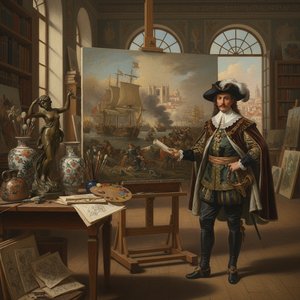
Alfredo Roque Gameiro: A Portuguese Master of Historical Painting & Artistic Eclecticism
Discover Alfredo Roque Gameiro (1864-1935), a renowned Portuguese painter celebrated for his vibrant watercolors and historical illustrations. Explore his legacy & artworks at OriginalUniqueArt.
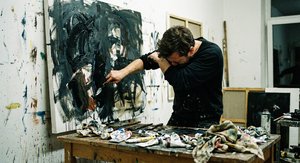
The Raw Emotion of Expressionism: A Deep Dive into its History, Characteristics & Enduring Influence
Explore the raw emotion of Expressionism with OriginalUniqueArt. Discover its history, key artists like Kirchner & Munch, and lasting influence on modern art. Expert insights for collectors & enthusiasts.
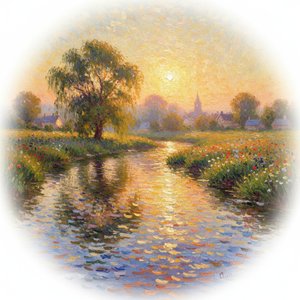
Capturing Light: A Masterclass in the Ethereal Beauty of Impressionistic Landscapes
Explore the ethereal beauty of Impressionist landscapes. Discover how masters like Monet captured fleeting light through color and texture, and learn to curate these timeless, luminous masterpieces for your home collection.

Impressionistische Landschaften: Die 10 Meisterwerke, die eine Kunstrichtung prägten | OriginalUniqueArt
Entdecken Sie die 10 Meisterwerke des Impressionismus! Von Monet bis Van Gogh – erleben Sie die Geschichten hinter berühmten Landschaftsbildern. Hochwertige Kunst Reproduktionen für Ihr Zuhause auf OriginalUniqueArt.com.


