

 Vorschau anzeigen
 Versenden
 Teilen
 Details anzeigen
 Leitfaden

 Herunterladen
 Ähnliche Objekte
 Röntgenaufnahme
 Diashow
 Q&A
Q&A Statistiken
Wildcat with kite
 Oil On Canvas
- WallArt
- Naïve Art
 1960
1960- Modern
 90.0 x 125.0 cm
 Fondazione - Archivio Antonio Ligabue di Parma
 Weiterlesen
Die auf dieser Seite dargestellten Kunstwerke sind urheberrechtlich geschützt, was bedeutet, dass wir keine identische Reproduktion rechtmäßig erstellen oder verkaufen dürfen. Dieser Schutz wird durch internationale Abkommen wie die Berner Übereinkunft und durch nationale Gesetze, einschließlich derer, die von den US-Urheberrecht – Titel 17.
Diese Methode entspricht vollumfänglich den Urheberrechtsbestimmungen, da sie keine Kopie oder Vervielfältigung des geschützten Kunstwerks darstellt. Stattdessen handelt es sich um eine kreative Neuinterpretation – ein neues Gemälde, das vom Original inspiriert, aber nicht identisch mit ihm ist.
Giclée / Kunstdruck
Giclée- oder Leinwanddruck in Museumsqualität mit schneller Produktion und flexiblen Veredelungsoptionen. ( Handgemalte Reproduktion bestellen Zum digitalen Bild wechseln)




P118B €10

P118H €10

P118W €10

P438Z €10

P508JH €12

P508YH €12

P805H €10

P805Z €10

P919BZ €10

P919G €10

P919XJ €10

P959ZH €10

P968JZ €12

W106C €8

W218G €10

W218JH €8

W218Y €10

W307PJ €10

W316G €10

W316PJ €8

W316Y €10

W398PJ €8

W4111J €10

W500HY €15

W500JH €15

W692G €12

W849H €8

W940BG €15

W953PJ €8




Wählen Sie aus unseren vordefinierten Formaten, die den ursprünglichen Proportionen des Kunstwerks entsprechen.

Geben Sie die benötigte Breite und Höhe an, damit der Druck perfekt in Ihren Rahmen oder an Ihre Wand passt. Ein Druck kann nur beschnitten, aber niemals größer als das Originalbild angefertigt werden; daher verliert ein Format mit anderen Proportionen einen Teil des Bildes. Wir senden Ihnen ein digitales Mockup zur Freigabe, bevor wir den Druck ausführen. Das auf dieser Seite gezeigte Bild zeigt nicht den tatsächlichen Beschnitt – dies ist nur im Mockup ersichtlich.
Weltweiter Versand () innerhalb von 2 Wochen statt der üblichen 4/5 Wochen. (28 Oktober)

Kostenloser weltweiter Expressversand

Hochwertige Leinenleinwand

Umfassender Versicherungsschutz beim Versand

Zollgebühren-Rückerstattungsgarantie

Garantie für exakte Farbtreue

100 Tage Rückgaberecht (nur bei Mängeln)

100% Geld-zurück-Garantie

Mengenrabatt verfügbar
 Die Glasoption ist nur für Größen unter 110 cm verfügbar.

Wildcat with kite
Giclée / Kunstdruck
Format der Reproduktion
-


Endpreis
€ 71
A Dramatic Encounter in the Heart of Nature
In the evocative masterpiece Wildcat with kite, created in 1960 by the profound Italian painter Antonio Laccabue—better known as Antonio Ligabue—the viewer is thrust into a visceral moment of primal struggle. Set within an imaginary landscape that feels both dreamlike and startlingly real, the canvas captures a violent clash for survival amidst a serene spring day. A wildcat, its fur puffed in a display of predatory fury, lunges at a kite that desperately clutches its prey. The scene is one of raw, unbridified emotion, where the delicate beauty of flowery fields and transalpine architecture stands in stark, almost haunting contrast to the bloody reality of the hunt. Ligabue’s ability to freeze this moment of intense kinetic energy allows us to witness the very essence of the struggle for life.
The composition is a masterclass in tension and atmospheric depth. While the foreground is dominated by the ferocity of the melee, the background offers a vista of high, snow-capped mountains and a quiet village, suggesting an eternal, indifferent world that continues its cycle regardless of the drama unfolding below. This juxtaposition creates a profound sense of isolation for the combatants, emphasizing the solitary nature of survival in the wild. The artist’s eye for detail is nothing short of extraordinary; one can almost feel the texture of the cat's agitated fur and the frantic beating of the kite's wings as it attempts to maintain its grip on a wounded bird.
Symbolism and the Shadow of Mortality
Beyond the immediate spectacle of the hunt, Wildcat with kite is steeped in a complex layer of symbolism that invites deep contemplation. Ligabue, an artist whose life was marked by significant personal tragedy and psychological complexity, often infused his works with themes of life, death, and the cyclical nature of existence. Upon closer inspection, the painting reveals subtle, lugubrious details that ground the violence in a larger philosophical context. At the bottom right of the canvas, a small insect rests near a single lost feather—a quiet, chilling symbol of death and the inevitable decay that follows even the most vibrant life. Above, four black birds hover in the sky like silent sentinels, adding a layer of mourning to the bright spring landscape.
This interplay between the vivid colors of the flora and the dark, omens of mortality creates an emotional resonance that is both unsettling and deeply moving. For the collector or art enthusiast, this piece offers more than just a visual feast; it provides a window into the Naïve art movement's ability to convey profound truths through a seemingly simplified, yet intensely expressive, lens. The painting does not merely depict animals; it depicts the very heartbeat of nature—its beauty, its cruelty, and its relentless persistence.
A Timeless Addition for Discerning Interiors
For interior designers and collectors of fine art reproductions, Wildcat with kite represents a powerful statement piece. Its large scale of 90 x 125 cm allows the intricate details and sweeping landscapes to command attention in any sophisticated setting. Whether placed in a contemporary gallery-style living room or a classic study, the painting’s rich palette and dramatic subject matter serve as a conversation starter, evoking feelings of wonder and introspection. The work's unique blend of realism and Naïve expressionism makes it a versatile choice for those looking to introduce a sense of narrative depth and organic energy into their decor.
Owning a high-quality reproduction of this Ligabue masterpiece means bringing home a fragment of 20th-century art history. It is an opportunity to surround oneself with the raw, uninhibited spirit of an artist who found his greatest voice in the wild, untamed corners of the natural world. This painting is not merely an ornament; it is an immersive experience that invites the viewer to pause, observe, and reflect on the beautiful, brutal dance of life.
Fragen & Antworten
Aus welcher Epoche stammt "Wildcat with kite" von Antonio Ligabue?
"Wildcat with kite" von Antonio Ligabue stammt aus der Epoche der Modern. Diese Zeitspanne liefert den historischen Kontext des Werkes.
Welche emotionale Stimmung prägt den Stil der Naïve Art-Epoche in „Wildcat with kite“?
Innerhalb der Naïve Art-Strömung ist „Wildcat with kite“ mit einem Dramatic Ton festgehalten.
Sind die Farben von "Wildcat with kite" von Antonio Ligabue gesättigt oder gedämpft?
Die Farbpalette von "Wildcat with kite" weist eine Sättigung von Clear Color Presence auf.
Künstlerbiografie
Early Life and Struggles
Antonio Ligabue, also known as Antonio Laccabue, was born in Zurich, Switzerland, on December 18, 1899. His formative years were profoundly shaped by tragedy; his mother and three brothers succumbed to food poisoning in 1913 – a devastating event that irrevocably altered the trajectory of his life. Consequently, he was forcibly expelled from Switzerland and subsequently admitted to a psychiatric clinic, experiences which undoubtedly instilled within him an enduring sensitivity to human suffering and fueled his artistic vision.Artistic Journey
Ligabue’s foray into painting commenced in 1920, where he received invaluable instruction from Renato Marino Mazzacurati, who championed the expressive potential of oil painting techniques. This mentorship proved instrumental in shaping his distinctive style – characterized by vibrant hues and meticulous depictions of animals and landscapes. His artwork embodies a remarkable fusion of realism and naive aesthetic principles, earning him recognition as one of Switzerland’s foremost representatives of naïve art during the 20th century. Mazzacurati's guidance instilled in Ligabue a profound appreciation for capturing raw emotion and conveying visual narratives with uncompromising honesty.Notable Works and Museums
Ligabue’s artistic legacy rests upon several iconic pieces that exemplify his singular approach to representation. Among these are “Eagles with Fox” (1944), a masterful illustration demonstrating his ability to harmonize meticulous detail with childlike spontaneity; "The Roar," which powerfully communicates the primal energy of wildlife; and “Self-Portrait with Dog” (1957), an introspective exploration of identity marked by subtle experimentation. These artworks are proudly displayed in prestigious institutions such as Kunsthaus Zürich, where visitors can immerse themselves in the breadth and depth of Ligabue’s oeuvre. The Kunsthaus Zürich houses a comprehensive collection showcasing his artistic evolution and cementing his place within Swiss art history.Influences and Artistic Style
Ligabue's distinctive style owes considerable debt to Expressionism, albeit filtered through the lens of naïve observation. Artists like Renato Marino Mazzacurati recognized and nurtured his talent for conveying emotion through color and form—a stylistic hallmark that distinguishes him from many contemporaries. His unwavering commitment to portraying animals with palpable vitality reflects a deep connection to the natural world and underscores his artistic conviction in capturing authentic human experience.Historical Significance
Antonio Ligabue stands as a pivotal figure in Swiss art history, representing a unique confluence of psychological insight and visual artistry. His contribution to naïve art transcends mere stylistic convention; it embodies a profound empathy for humanity’s vulnerability and resilience—themes that resonate powerfully across generations. He remains an enduring inspiration for artists striving to communicate emotion with uncompromising sincerity and unwavering conviction.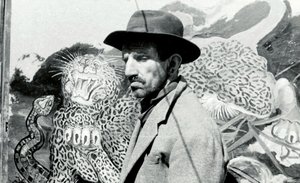
Antonio Ligabue
1899 - 1965 , Schweiz
Kurzinfos
- Artistic Movement Or Style: Naive Art
- Artists Or Movements Influenced By This Artist: ['Expressionismus']
- Artists Who Influenced This Artist: ['Renato Marino Mazzacurati']
- Date Of Birth: Zurich, Schweiz (1899)
- Full Name: Antonio Ligabue
- Nationality: Schweizer
- Notable Artworks:
- Eulen mit Fuchs
- Der Sturm
- Selbstbildnis mit Hund
- Place Of Birth: Schweiz
Ähnliche Artikel
OriginalUniqueArt.com F.A.Q.: Premium Giclée Canvas Prints – Archival Quality & Vivid Detail
Discover the technical excellence of OriginalUniqueArt.com's premium Giclée prints. Featuring 12-color archival pigments and museum-grade canvas, our prints offer unparalleled vivid detail and longevity for the discerning art collector seeking world-class reproductions.
OriginalUniqueArt.com F.A.Q.: Premium Art Poster Prints – Vivid Colors & Versatile Sizing
Discover OriginalUniqueArt.com's premium art poster prints. Featuring 12-color archival pigments for vivid color fidelity and versatile sizing for bespoke decor. Expertly crafted museum-quality reproductions designed for discerning collectors and professional decorators.
