In echtem Maßstab anzeigen
 Versenden als Grußkarte
 Teilen
 Details anzeigen
 Leitfaden öffnen

 Herunterladen
 Ähnliche Objekte
 Röntgenaufnahme
 Diashow
 Besucherstatistiken
Descent from the Cross
 Oil On Canvas
- WallArt
- Neoclassical Revival
 Early Modern
 366.0 x 183.0 cm
 St John's College
 Mehr anzeigen
Giclée / Kunstdruck
Giclée- oder Leinwanddruck in Museumsqualität mit schneller Produktion und flexiblen Veredelungsoptionen. ( Handgemalte Reproduktion kaufen Zum digitalen Bild wechseln)




P118B €10

P118H €10

P118W €10

P438Z €10

P508JH €12

P508YH €12

P805H €10

P805Z €10

P919BZ €10

P919G €10

P919XJ €10

P959ZH €10

P968JZ €12

W106C €8

W218G €10

W218JH €8

W218Y €10

W307PJ €10

W316G €10

W316PJ €8

W316Y €10

W398PJ €8

W4111J €10

W500HY €15

W500JH €15

W692G €12

W849H €8

W940BG €15

W953PJ €8




Wählen Sie aus unseren vordefinierten Formaten, die den ursprünglichen Proportionen des Kunstwerks entsprechen.

Type the width and the height you need, to fit your frame or your wall. A print can only be cut, never made bigger than the picture, so a size with a different shape loses a part of the image. We send you a digital mockup to approve before we print anything. The picture shown on this page does not show the real cut — only the mockup does.
Weltweiter Versand () innerhalb von 2 Wochen statt der üblichen 4/5 Wochen. (14 Oktober)

Kostenloser weltweiter Expressversand

Hochwertige Leinenleinwand

Vollständiger Versicherungsschutz beim Versand

Zollgebühren-Rückerstattungsgarantie

Garantie für exakte Farbtreue

100-tägiges Rückgaberecht (nur bei Mängeln)

100% Geld-zurück-Garantie

Angebot für Mengenrabatt
 Die Glasoption ist nur für Größen unter 110 cm verfügbar.

Descent from the Cross
Giclée / Kunstdruck
Format der Reproduktion
-


Gesamtpreis
€ 69
A Monumental Vision of Faith
In the quiet, hallowed halls of St John's College, Cambridge, hangs a masterpiece that commands both silence and profound contemplation. Anton Raphael Mengs’s "Descent from the Cross" is not merely a depiction of a biblical event; it is a monumental vision of faith captured in oil on canvas. Executed around 1760, this expansive work—measuring an imposing 366 x 183 cm—serves as a bridge between the spiritual intensity of the past and the emerging intellectual clarity of the Enlightenment. The scene captures the heavy, somber moment when the body of Christ is lowered from the cross, surrounded by a group of mourners whose faces reflect a spectrum of human grief, reverence, and devotion.
The composition is masterfully orchestrated to draw the eye toward the central, cruciform arrangement of Christ’s limp form. As the light catches the pale, sculptural anatomy of the Savior, the viewer is struck by the physical weight of the moment. The figures surrounding him—some draped in religious vestments, others clutching sacred texts—create a rhythmic movement that guides the gaze through the crowded, emotional landscape. There is a palpable sense of stillness amidst the sorrow, an atmosphere where the divine meets the earthly in a singular, breathless instant of transition.
The Dawn of Neoclassical Elegance
To understand this work is to understand the pivotal shift in European aesthetics during the mid-18th century. Mengs, a titan of the Neoclassical movement, consciously sought to move away from the dizzying, ornate excesses of the Rococo style. Influenced by the rigorous theories of Johann Joachim Winckelmann, Mengs embraced a philosophy of restraint, clarity, and balanced proportions. In "Descent from the Cross," this is evident in the way he avoids unnecessary flourish, opting instead for a structured composition that mirrors the stability and moral fortitude prized during the Enlightenment.
His technique is nothing short of extraordinary. Utilizing meticulous oil glazing, Mengs achieved a luminous quality that breathes life into the skin tones and fabric of his subjects. Every brushstroke is disciplined, contributing to a sense of hyper-realistic precision that elevates the figures from mere characters to idealized icons of virtue. This technical mastery allows for subtle tonal variations that create depth and volume, making the monumental canvas feel as though it possesses its own internal light, casting a soft, spiritual glow over the entire assembly.
A Timeless Legacy for the Discerning Collector
For the art lover or the interior designer, a reproduction of this magnitude offers more than just decoration; it offers a focal point of historical and emotional gravity. The painting’s symbolism—the intersection of human suffering and divine sacrifice—resonates across centuries, making it an ideal centerpiece for spaces designed for reflection, study, or grand architectural statements. Whether placed in a private library, a formal gallery, or a sophisticated living space, the work brings with it the prestige of the Cambridge collection and the intellectual weight of the Neoclassical era.
Owning a high-quality hand-painted reproduction of Mengs’s masterpiece allows one to invite this profound sense of history into the modern home. It is an opportunity to surround oneself with the beauty of classical ideals—balance, harmony, and truth—and to celebrate a period of art history where the brush was used to capture the very essence of the human soul.
Fragen & Antworten
Welche Grundfarbe durchzieht "Descent from the Cross" von Anton Raphael Mengs?
Ein Golden Yellow Range Farbton durchzieht "Descent from the Cross" von Anton Raphael Mengs.
Welches Format hat "Descent from the Cross" von Anton Raphael Mengs?
"Descent from the Cross" von Anton Raphael Mengs hat ein Portrait-Format. Das Format beschreibt die Proportionen der Komposition.
Welche Reproduktionsgröße wird für "Descent from the Cross" von Anton Raphael Mengs empfohlen?
Für "Descent from the Cross" wird ein Druckformat von Large empfohlen. Weitere Größen sind im gleichen Seitenverhältnis verfügbar.
Biografie des Künstlers
Anton Raphael Mengs: Ein Pionier der Neoklassischen Malerei
- Geboren: 22. März 1728, Ústí nad Labem (Aussig), Böhmen (heute Tschechische Republik)
- Gestorben: 29. Juni 1779, Rom, Italien
Anton Raphael Mengs war ein deutsch-böhmischer Maler, der den Übergang von der Rokoko- zur Neoklassischen Malerei maßgeblich beeinflusste. Er war vor allem in Rom, Madrid und Sachsen tätig, seine Werke verkörpern eine Mischung aus Barockpracht und aufkommenden klassischen Idealen und etablierten ihn als eine zentrale Figur der Kunst des 18. Jahrhunderts.
Frühes Leben und Ausbildung: Im Schatten Ismael Mengs
Mengs’ künstlerische Reise begann unter der Anleitung seines Vaters, Ismael Mengs, einem dänischen Maler, der sich in Dresden niedergelassen hatte. Ismael erkannte sein frühzeitig sein Talent und brachte ihn 1741 nach Rom. Diese prägende Erfahrung umfasste das Kopieren von Werken Raffaels für den Kurfürsten von Sachsen, was Anton Raphaels ästhetische Sensibilität tiefgreifend formte. Die Auseinandersetzung mit Raffaels Meisterschaft weckte in ihm eine tiefe Wertschätzung für klassische Formen und Kompositionen, die zu Kennzeichen seines eigenen Stils werden sollten.
Künstlerisches Schaffen: Fresken, Porträts und Klassische Ideale
Mengs’ Karriere blühte am Hof mehrerer europäischer Höfe auf. 1749 wurde er zum ersten Maler Friedrich Augusts, Kurfürst von Sachsen, ernannt, eine Position, die ihm beträchtliche Förderung ermöglichte, während er seinen römischen Standort beibehielt. Sein bekanntestes Werk ist wohl das Fresko Parnass in der Villa Albani in Rom, das weitreichenden Beifall erhielt und seinen Ruf als führender Künstler festigte. Weitere bedeutende Aufträge umfassten ein hervorragendes Fresko auf der Kuppel der Kirche Sant’Eusebio in Rom, das seine Fähigkeiten bei monumentalen Dekorationen unter Beweis stellte, sowie die Decke des Bankettsaals des Königspalastes von Madrid, der als eine seiner besten Leistungen gilt.
- Bemerkenswerte Werke: Parnass (Villa Albani), Fresken in Sant’Eusebio, Decke des Bankettsaals (Königspalast, Madrid), Johann Joachim Winckelmann (1717–1768)
Obwohl er von der römischen Barocktradition beeinflusst war, nahm Mengs zunehmend die Ideale der klassischen Antike an. Dieser Wandel wurde maßgeblich durch seine enge Zusammenarbeit mit Johann Joachim Winckelmann befördert, einem bedeutenden Kunsthistoriker und Theoretiker, der die Wiederbelebung griechischer und römischer Ästhetik propagierte. Gemeinsam plädierten sie für eine Rückkehr zu Einfachheit, Klarheit und idealisierten Formen in der Kunst und legten damit den Grundstein für die Neoklassizistische Bewegung.
Wichtige Aspekte & Rivalitäten
- Konversion und Rolle an der Vatikanischen Malerschule: Mengs konvertierte 1754 zum Katholizismus und wurde anschließend Direktor der Vatikanischen Malerschule, was seine Position innerhalb der künstlerischen Elite weiter festigte.
- Die Schule der Athener: Er malte "Die Schule der Athener" für den Duke of Northumberland (heute im Victoria and Albert Museum), ein bedeutendes Werk, das seine Beherrschung klassischer Themen und Kompositionen demonstriert.
- Winckelmann-Zusammenarbeit: Seine Partnerschaft mit Winckelmann war maßgeblich an der Gestaltung neoklassizistischer künstlerischer Prinzipien beteiligt.
- Rivalität & Freundschaft: Mengs erlebte sowohl Rivalitäten (insbesondere mit Pompeo Batoni) als auch Freundschaften (mit Giacomo Casanova), was die komplexen Dynamiken der römischen Kunstszene seiner Zeit widerspiegelte.
Vermächtnis und Historische Bedeutung
Anton Raphael Mengs starb 1779 in Rom und hinterließ ein umfangreiches Werk, das die Kluft zwischen Barock- und Neoklassizistischen Stilen überbrückte. Sein Schwerpunkt auf klassischen Idealen, gepaart mit seinem technischen Können, machte ihn zu einer entscheidenden Figur bei der Entwicklung des Neoklassizismus. Er wird nicht nur für seine beeindruckenden Fresken und Porträts erinnert, sondern auch für seine intellektuellen Beiträge zur Kunsttheorie durch seine Zusammenarbeit mit Winckelmann. Sein Einfluss ist in nachfolgenden Generationen von Künstlern sichtbar, die die Klarheit, Ordnung und idealisierten Formen annahmen, die die neoklassische Malerei auszeichneten.

Anton Raphael Mengs
1728 - 1779 , Böhmen
Eckdaten zum Künstler
- Beeinflusste Künstler: ['Raphael']
- Bemerkenswerte Werke:
- Parnassus (Villa Albani)
- Fresken Sant’Eusebio
- Decke des Bankettsaals, Madrid
- Geburtsdatum: 22. März 1728
- Geburtsort: Ústí nad Labem, Tschechien
- Künstlerische Richtung: Neoklassizismus
- Nationalität: Deutsch-Böhmisch
- Todatum: 29. Juni 1779
- Vollständiger Name: Anton Raphael Mengs
- Von Künstlern Beeinflusst:
- Barock
- Rococo
Verwandte Artikel
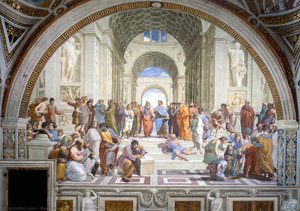
The Timeless Elegance of Academic Classicism: A Journey Through Order, Precision, and the Pursuit of Perfection
Explore the profound beauty of Academic Classicism. Discover how masters used order, precision, and classical ideals to achieve timeless perfection in art history, from Neoclassical portraits to the pursuit of ideal beauty.

The Enduring Legacy of Oil on Canvas: Technique, History & Aesthetic Impact
Explore the rich history & techniques of oil painting – from Renaissance masters to Impressionism. Discover pigments, layering methods, and why this timeless medium endures. Expert insights for artists & art enthusiasts.

Neoclassical Art: The Timeless Elegance of Order, Virtue, and Classical Grace
Explore the profound elegance of Neoclassical art. Discover the principles of order, symmetry, and virtue through the works of masters like David and Mengs. Immerse yourself in a journey of classical grace and timeless aesthetic perfection.
Timeless Elegance: The Ultimate Buyer's Guide to Choosing Classical Portraits for Sophisticated Interiors
Discover how to select the perfect classical portrait for your home. Our expert guide explores matching art styles to interiors, choosing between hand-painted oils and Giclée prints, and transforming personal photos into timeless masterpieces with professional artistry.

Öl auf Leinwand: Eine historische und technische Erkundung eines zeitlosen künstlerischen Mediums
Entdecken Sie die faszinierende Welt der Ölmalerei! Von historischen Techniken bis zur modernen Anwendung – wir bieten Expertenwissen, Restaurierungstipps und hochwertige Reproduktionen. Jetzt informieren!