Pop Art
Mickey Mouse (Andy Warhol)
Andy Warhol (1928–1987) schuf Mickey Mouse. Es gehört zur Pop Art-Strömung. Es ist aus Acryl auf Leinwand gefertigt.
- Acryl auf Leinwand

 Vorschau anzeigen

 Handgemaltes Ölgemälde
 Versenden
 Teilen
 Datenblatt


 Herunterladen
 Ähnliche Objekte
 Röntgenaufnahme
 Diashow
 Fragen & Antworten

 Statistiken
Mickey Mouse im Überblick
- Titel
- Mickey Mouse
- Künstler
- Andy Warhol (1928–1987)
- Geburtsjahr des Künstlers
- Pittsburgh, Vereinigte Staaten
- Medium
- Acryl auf Leinwand
- Bewegung
- Pop Art
- Epoche
- – Zeitgenössische Kunst
- Motiv
- mickey mouse, andy warhol, pop art, celebrity, reproduction, screenprint
Was stellt Mickey Mouse dar?
Andy Warhol’s ‘Mickey Mouse’: A Pop Icon Reimagined
Andy Warhol’s “Mickey Mouse” isn't merely a depiction of Disney’s beloved cartoon character; it’s a profound meditation on celebrity, mass culture, and the very nature of iconography in the heart of the 20th century. Created in 1981 as part of his seminal “Myths” series, this silkscreen transcends simple representation, dissecting and elevating Mickey Mouse to the status of a high art subject – a bold statement about our relationship with manufactured desire and the relentless reproduction of images that define modern life. The image, often presented as a dynamic grid of subtly varying Mickeys, immediately resonates with viewers, tapping into a collective nostalgia for childhood innocence while simultaneously questioning its authenticity.
Warhol’s masterful use of the silkscreen technique is integral to understanding the artwork's core message. Rejecting traditional notions of artistic originality and authorship, he embraced mechanical reproduction – a deliberate choice that mirrors the pervasive repetition inherent in advertising and popular media. The flat planes of color, applied with remarkable precision, create an almost graphic quality, devoid of brushstrokes or individualistic touch. This controlled execution underscores Warhol’s fascination with the industrial process and his desire to blur the boundaries between art and commerce. Adding a layer of shimmering glamour, he incorporated diamond dust into many versions of “Mickey Mouse,” transforming the image into something both familiar and undeniably luxurious – a commentary on the commodification of art itself.
The ‘Myths’ Series: Exploring American Icons
“Mickey Mouse” exists within the broader context of Warhol's "Myths" series, a collection designed to explore figures deeply embedded in the American psyche. These weren’t simply portraits; they were carefully selected icons – Superman, Santa Claus, Dracula, and countless others – representing idealized narratives, collective fantasies, and the enduring power of storytelling. Within this framework, Mickey Mouse isn't just a cartoon character; he embodies childhood innocence, American optimism, and the very essence of Disney’s brand. Warhol’s intervention transforms him into something more complex: a symbol of manufactured desire, relentlessly reproduced and endlessly consumed.
The choice of subject matter was deliberate. Warhol, a lifelong collector of Disney animation cels, possessed a genuine appreciation for the artistry behind Mickey Mouse – yet his artistic treatment fundamentally alters the character’s perception. He doesn't present Mickey as a purely innocent figure; instead, he dissects him, replicates him, and elevates him to the status of a high art subject. This strategic juxtaposition invites us to consider how these seemingly harmless icons shape our perceptions and influence our values in a society saturated with images.
Disney, Dreams, and American Mythology
The “Myths” series as a whole delves into the foundational narratives that have shaped American culture. Warhol’s selection of figures reflects a deep understanding of the myths and legends that underpin the nation's identity – stories passed down through generations and endlessly reinterpreted in popular media. Mickey Mouse, within this context, becomes an embodiment of childhood dreams and the promise of a perfect world. Warhol’s engagement with Disney’s creation is particularly poignant, considering Disney’s own legacy as a master storyteller and innovator.
Interestingly, Warhol's fascination with Disney extended beyond mere admiration; he actively sought to understand the mechanics of Disney animation, recognizing the intricate process behind creating these beloved characters. This pursuit of knowledge informs his artistic approach, allowing him to manipulate images and techniques in ways that both celebrate and critique the cultural phenomenon of Disney. The diamond dust application, for instance, adds a layer of artificiality, mirroring the manufactured nature of celebrity and consumerism.
A Lasting Legacy: Warhol’s Impact on Contemporary Art
Andy Warhol's “Mickey Mouse” remains an enduringly relevant artwork today, continuing to resonate with audiences across generations. It serves as a potent reminder of the artist’s profound impact on contemporary art, challenging conventional notions of artistic expression and paving the way for new forms of creative exploration. The work’s accessibility – its instantly recognizable imagery – makes it a compelling conversation starter and a striking addition to any collection. For interior designers seeking to inject a dose of Pop Art energy into modern living spaces, a reproduction of “Mickey Mouse” offers a playful yet sophisticated touch, embodying both nostalgia and critical commentary.
Hochauflösende Bilder von Mickey Mouse

Protected by copyright: these files are for personal reference, not a licence to republish.
Andy Warhol, Mickey Mouse.
Fragen zu Mickey Mouse, beantwortet
Welche Technik wurde für "Mickey Mouse" von Andy Warhol verwendet?
"Mickey Mouse" wurde in Acryl auf Leinwand ausgeführt.
Was stellt "Mickey Mouse" von Andy Warhol dar?
Die Motive von "Mickey Mouse" sind mickey mouse, andy warhol, pop art, celebrity, reproduction, screenprint, diamond dust.
Ist "Mickey Mouse" von Andy Warhol gemeinfrei?
Die urheberrechtliche Situation für "Mickey Mouse" von Andy Warhol: Das Werk ist noch urheberrechtlich geschützt. Dies bestimmt, ob Reproduktionen des Bildes frei erstellt werden dürfen.
Wer hat "Mickey Mouse" geschaffen?
"Mickey Mouse" wird Andy Warhol zugeschrieben.
Welcher Kunstrichtung lässt sich "Mickey Mouse" von Andy Warhol zuordnen?
"Mickey Mouse" von Andy Warhol lässt sich der Strömung des Pop Art zuordnen. Diese Stilrichtung bildet den künstlerischen Kontext des Werkes.
Aus welcher Schaffensperiode von Andy Warhol stammt "Mickey Mouse"?
"Mickey Mouse" repräsentiert die Late Period von Andy Warhol.
Warum ist der Urheberrechtsstatus von "Mickey Mouse" so, wie er ist?
"Mickey Mouse" von Andy Warhol ist noch urheberrechtlich geschützt. Die Urheberrechtsfristen werden ab dem Todesjahr des Künstlers berechnet, und Andy Warhol verstarb im Jahr 1987.
Welche Gemeinsamkeiten weist "Mickey Mouse" mit dem restlichen Werk von Andy Warhol auf?
Innerhalb des Gesamtwerks von Andy Warhol steht „Mickey Mouse“ im Stil der Pop Art und greift die Themen consumerism, celebrity, mass media, american mythology, nostalgia, icons, pop art, replication auf.
Inwiefern steht das Sujet von „Mickey Mouse“ in Beziehung zu den üblichen Themen von Andy Warhol?
Unter den dokumentierten Themen von Andy Warhol – consumerism, celebrity, mass media, american mythology, nostalgia, icons, pop art, replication – setzt „Mickey Mouse“ einen ganz eigenen Fokus auf mickey mouse, andy warhol, pop art, celebrity, reproduction, screenprint, diamond dust.
Über den Künstler, Andy Warhol

1928–1987, Vereinigte Staaten
Andy Warhol
Das frühe Leben von Andy Warhol Um die Mechanik des modernen Bildes zu verstehen, muss man zurückblicken in den industriellen Schmutz von Pittsburgh, Pennsylvania. Andy Warhol wurde am 6. August 1928 als Andrew Warhola Jr. in ein Arbeiterumfeld hineingeboren, dem jeglicher Anspruch auf Hochkultur fehlte.
Ebenfalls von Andy Warhol
 Campbell's Suppenkanister1962
 Marilyn Diptych1962
 Weiße Autopanne 19 Mal, Privat1963
 Marilyn, leo castelli galerie, new york1964
Essays zu Mickey Mouse
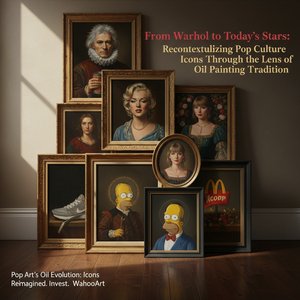 Von Warhol zu heutigen Stars: Popkultur-Ikonen neu interpretiert durch die Tradition der ÖlmalereiEntdecken Sie die Welt der Pop Art! Von Warhol bis heute – hochwertige Ölmalereien & individuelle Kunstwerke von Experten gefertigt. Jetzt …
 25 Top-Werke von Andy Warhol: Die wichtigsten Bilder der Pop ArtEntdecken Sie 25 ikonische Werke von Andy Warhol und die Pop Art. Erforschen Sie die gesamte Kollektion auf OriginalUniqueArt.com.
 Top 10 legendäre Siebdruck-Meisterwerke, die die Pop Art revolutioniertenEntdecken Sie legendäre Siebdruck-Meisterwerke von Warhol bis Lichtenstein. Erleben Sie Pop Art auf OriginalUniqueArt.com. Jetzt die Kollek…