

 Vorschau anzeigen
 Versenden
 Teilen
 Details anzeigen
 Leitfaden

 Herunterladen
 Ähnliche Objekte
 Röntgenaufnahme
 Diashow
 Statistiken
Flash—November 22


 Weiterlesen
Die auf dieser Seite dargestellten Kunstwerke sind urheberrechtlich geschützt, was bedeutet, dass wir keine identische Reproduktion rechtmäßig erstellen oder verkaufen dürfen. Dieser Schutz wird durch internationale Abkommen wie die Berner Übereinkunft und durch nationale Gesetze, einschließlich derer, die von den US-Urheberrecht – Titel 17.
Diese Methode entspricht vollumfänglich den Urheberrechtsbestimmungen, da sie keine Kopie oder Vervielfältigung des geschützten Kunstwerks darstellt. Stattdessen handelt es sich um eine kreative Neuinterpretation – ein neues Gemälde, das vom Original inspiriert, aber nicht identisch mit ihm ist.
Giclée / Kunstdruck
Giclée- oder Leinwanddruck in Museumsqualität mit schneller Produktion und flexiblen Veredelungsoptionen. ( Handgemalte Reproduktion bestellen Zum digitalen Bild wechseln)




P118B €10

P118H €10

P118W €10

P438Z €10

P508JH €12

P508YH €12

P805H €10

P805Z €10

P919BZ €10

P919G €10

P919XJ €10

P959ZH €10

P968JZ €12

W106C €8

W218G €10

W218JH €8

W218Y €10

W307PJ €10

W316G €10

W316PJ €8

W316Y €10

W398PJ €8

W4111J €10

W500HY €15

W500JH €15

W692G €12

W849H €8

W940BG €15

W953PJ €8




Wählen Sie aus unseren vordefinierten Formaten, die den ursprünglichen Proportionen des Kunstwerks entsprechen.

Geben Sie die benötigte Breite und Höhe an, damit der Druck perfekt in Ihren Rahmen oder an Ihre Wand passt. Ein Druck kann nur beschnitten, aber niemals größer als das Originalbild angefertigt werden; daher verliert ein Format mit anderen Proportionen einen Teil des Bildes. Wir senden Ihnen ein digitales Mockup zur Freigabe, bevor wir den Druck ausführen. Das auf dieser Seite gezeigte Bild zeigt nicht den tatsächlichen Beschnitt – dies ist nur im Mockup ersichtlich.
Weltweiter Versand () innerhalb von 2 Wochen statt der üblichen 4/5 Wochen. (26 Oktober)

Kostenloser weltweiter Expressversand

Hochwertige Leinenleinwand

Umfassender Versicherungsschutz beim Versand

Zollgebühren-Rückerstattungsgarantie

Garantie für exakte Farbtreue

100 Tage Rückgaberecht (nur bei Mängeln)

100% Geld-zurück-Garantie

Mengenrabatt verfügbar
 Die Glasoption ist nur für Größen unter 110 cm verfügbar.

Flash—November 22
Giclée / Kunstdruck
Format der Reproduktion
-


Endpreis
€ 70
A Fragmented Reflection on National Trauma
Andy Warhol’s Flash—November 22, 1963 is not merely an artistic endeavor; it’s a poignant distillation of collective grief—a visual echo reverberating through the cultural landscape of its time. Created in 1968, five years after President John F. Kennedy’s assassination, this work transcends simple commemoration. Warhol wasn’t attempting to recreate the event itself but rather to capture *how* we experienced it: filtered through the relentless, fragmented prism of mass media—a phenomenon he meticulously documented.
The Power of Repetition and the Media Landscape
Warhol’s profound fascination stemmed from his acute awareness of television’s transformative influence on public emotion. He recounted hearing Kennedy’s assassination while painting, noting his detachment wasn’t indifference but a recognition that media “programmed” our responses. The *Flash* series—consisting of eleven screenprints—directly confronted this reality. Each print draws upon campaign posters, newspaper photographs, and wire service reports—the raw materials of instantaneous historical documentation. Warhol’s deliberate repetition serves as more than just stylistic choice; it compels us to confront not only the tragedy itself but also our complicity in its mediated representation.
A Pointillist Approach to Grief
Warhol's signature pointillist technique—a method pioneered by artists like Seurat and Signac—is central to conveying this sense of overwhelming sensory overload. Instead of blending colors seamlessly, Warhol painstakingly applies tiny dots of pigment onto the canvas, creating an image that appears textured and subtly blurred. This stylistic decision isn’t simply aesthetic; it symbolizes the fractured nature of our perception during a time when information flooded the public consciousness—a visual metaphor for the difficulty of grasping the totality of experience.
Exploring Celebrity Culture Through Mass Media
The *Flash* series exemplifies Warhol's exploration of celebrity culture and its intersection with artistic expression. He wasn’t interested in portraying Kennedy as a heroic figure or crafting sentimental memorial; rather, he aimed to document the *experience* of grief within an era dominated by media spectacle. The selection of images—primarily photographs from the assassination event—underscores Warhol's preoccupation with how public opinion is shaped by visual narratives.
A Legacy of Reflection
Born in Pittsburgh in 1928, Andy Warhol ascended from humble beginnings as a commercial illustrator to become one of the most influential artists of the second half of the 20th century. His work continues to resonate today because it anticipates our current media landscape—an age characterized by instant information and viral imagery. *Flash—November 22, 1963* remains a powerful statement about the importance of critical engagement with images and their ability to shape our understanding of history and human emotion. A reproduction of this piece serves as an invitation for contemplation—a reminder that art can illuminate profound truths about our collective experience.
Fragen & Antworten
Wer hat "Flash—November 22" geschaffen und in welchem Jahr?
"Flash—November 22" wurde von Andy Warhol im Jahr 1968 geschaffen.
Ist "Flash—November 22" von Andy Warhol im Hoch-, Quer- oder Quadratformat angeordnet?
"Flash—November 22" von Andy Warhol hat ein Quadratisch-Format. Das Format beschreibt die Proportionen der Komposition.
Für welches Format wird die Platzierung von „Flash—November 22“ im Format Quadratisch empfohlen?
Format (Quadratisch) und der empfohlene Raum (Wohnbereich) sind die beiden Platzierungshinweise für "Flash—November 22" von Andy Warhol.
Künstlerbiografie
Andy Warhol: Ein Leben in der Pop Art
Frühes Leben und Ausbildung
- Geboren: 6. August 1928, in Pittsburgh, Pennsylvania.
- Warhols frühe Kindheit war von einer schweren Krankheit geprägt – Sydenham’s Chorea (St. Vitus’ Tanz) –, die zu langen Krankenhausaufenthalten führte und sein Interesse an Kunst förderte.
- Er studierte Gestaltung am Carnegie Institute of Technology (jetzt Carnegie Mellon University) und schloss 1949 ab.
- Nach seinem Abschluss zog er nach New York City, um eine Karriere als Werbefillustrator zu verfolgen.
Kommerzielle Kunst und Anfängliche Karriere
- Anfangs arbeitete Warhol in der Magazinillustration und im Anzeigenwesen und erlangte mit seinen markanten Linienzeichnungen für Modemagazine Erfolg.
- Durch seine kommerzielle Arbeit entwickelte er ein tiefes Verständnis für Massenproduktion und visuelle Kommunikation, das seinen späteren künstlerischen Stil stark beeinflussen sollte.
- Seine frühen Werke konzentrierten sich oft auf Alltagsgegenstände und Konsumgüter, was die Themen vorausahndete, die er in der Pop Art erkunden würde.
Der Aufstieg der Pop Art
- In den 1960er Jahren wurde Warhol zu einer führenden Figur der Pop-Art-Bewegung, die traditionelle Vorstellungen von Kunst in Frage stellte.
- Die Pop Art nahm populäre Kultur – Werbung, Comicbücher und massenproduzierte Gegenstände – als legitimes Thema für künstlerischen Ausdruck an.
- Wichtige Werke dieser Zeit sind: Campbell’s Soup Cans (1962) und Marilyn Diptych (1962).
- Warhols Technik des Siebdrucks ermöglichte die Massenproduktion von Bildern, was den Konsumkultur widerspiegelte, die er darstellte.
Die Fabrik und künstlerische Produktion
- Warhol gründete “The Factory”, einen Studio-Raum, der zu einem Zentrum für Künstler, Musiker, Filmemacher und Prominente wurde.
- Die Fabrik war nicht nur ein Arbeitsplatz, sondern auch eine Szene: Sie förderte die Zusammenarbeit und Experimente über verschiedene künstlerische Disziplinen hinweg.
- Warhol nahm das Konzept von Kunst als Geschäft an und verwischte die Grenzen zwischen Hochkultur und Kommerzialismus.
- Er erkundete Themen wie Prominenz, Tod und Katastrophen in seinem Werk und nutzte Wiederholung und kräftige Farben, um auffällige visuelle Effekte zu erzeugen.
Wichtige Werke und künstlerischer Stil
- Bekannte Werke: Che Guevara, Nan Kempner, Mona Lisa, Flowers, Ummalben Albumcover.
- Warhols Stil ist durch den Einsatz von Siebdruck, kräftigen Farben und Wiederholung gekennzeichnet.
- Er entwendete oft Bilder aus der Populärkultur, die er in ikonische Kunstwerke verwandelte.
- Seine Porträts von Prominenten – Marilyn Monroe, Elvis Presley, Elizabeth Taylor – fangen die Faszination für Ruhm und Image in der amerikanischen Gesellschaft ein.
Vermächtnis und historische Bedeutung
- Warhols Werk hatte einen tiefgreifenden Einfluss auf die Kunstwelt, traditionelle Definitionen von Kunst in Frage gestellt und den Weg für neue künstlerische Bewegungen geebnet.
- Er war auch eine bedeutende kulturelle Figur: bevor die Gay Liberation Movement entstand, lebte er offen als Homosexueller.
- Seine Auseinandersetzung mit Konsumismus, Prominentenkultur und Massenmedien hallt bis heute nach.
- Warhols Einfluss ist in der zeitgenössischen Kunst, Mode, Musik und im Film zu sehen.
- Seine Werke werden in wichtigen Museen auf der ganzen Welt ausgestellt, darunter das Andy Warhol Museum in Pittsburgh.

Andy Warhol
1928 - 1987 , Vereinigte Staaten von Amerika
Kurzinfos
- Bemerkenswerte Werke:
- Campbell’s Suppendosen
- Marilyn Diptych
- Che Guevara
- Blumen
- Velvet Underground Albumcover
- Geburtsdatum: 06. August 1928
- Geburtsort: Pittsburgh, USA
- Künstlerische Richtung: Pop Art
- Nationalität: Amerikanisch
- Todatum: 1987
- Vollständiger Name: Andy Warhol
Ähnliche Artikel
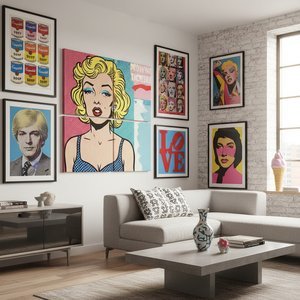
Pop Art Ikonen: Die 10 Meisterwerke, die eine Kunstrevolution auslösten –
Entdecken Sie die 10 Meisterwerke der Pop Art! Von Warhol bis Lichtenstein – erfahren Sie die Geschichten hinter ikonischen Gemälden, Techniken & Farben. Museumsgalerie-Qualität bei entdecken.
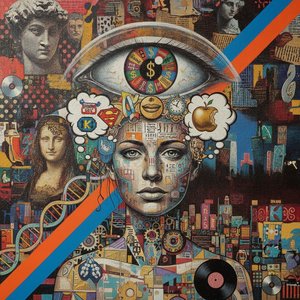
More Than Meets the Eye: Decoding the Hidden Symbols and Bold Layers of Allegorical Pop Art
Unlock the secrets of Pop Art. From Warhol's influence to aggressive modern aesthetics, we decode the bold layers and hidden symbols in contemporary icons. Elevate your urban space with high-impact, hand-painted reproductions and custom commissions designed for the bold.

Pop Art Technik: Wie Siebdruck und Ben-Day-Punkte die Kunst revolutionierten
Erfahren Sie alles über die revolutionäre Technik von Lichtenstein und den Siebdruck. Entdecken Sie die Ästhetik der Pop Art jetzt!

Andy Warhols Meisterwerke: Die 25 ikonischsten Kunstwerke für Ihr Zuhause | OriginalUniqueArt
Entdecken Sie die 25 ikonischsten Kunstwerke von Andy Warhol! Von den Campbell's Soup Dosen bis zum Marilyn Diptychon – erfahren Sie die Geschichten hinter den Meisterwerken der Pop Art. Hochwertige Kunstdrucke & Wohnideen auf OriginalUniqueArt.com.

Die Top 10 berühmter Gemälde im Reich der dunklen Töne |
Entdecken Sie die Top 10 berühmter Gemälde, beherrscht von dunklen Tönen! Von Caravaggio bis Manet – erfahren Sie die Geschichten hinter Meisterwerken der Kunstgeschichte. Finden Sie Ihre perfekte Reproduktion auf .


