
 Preview
 Druck bestellen Bild kaufen
 Versenden
 Teilen
 Details anzeigen
 Zu Favoriten hinzufügen

 Herunterladen
 Ähnliche Objekte
 Röntgenaufnahme
 Diashow anzeigen
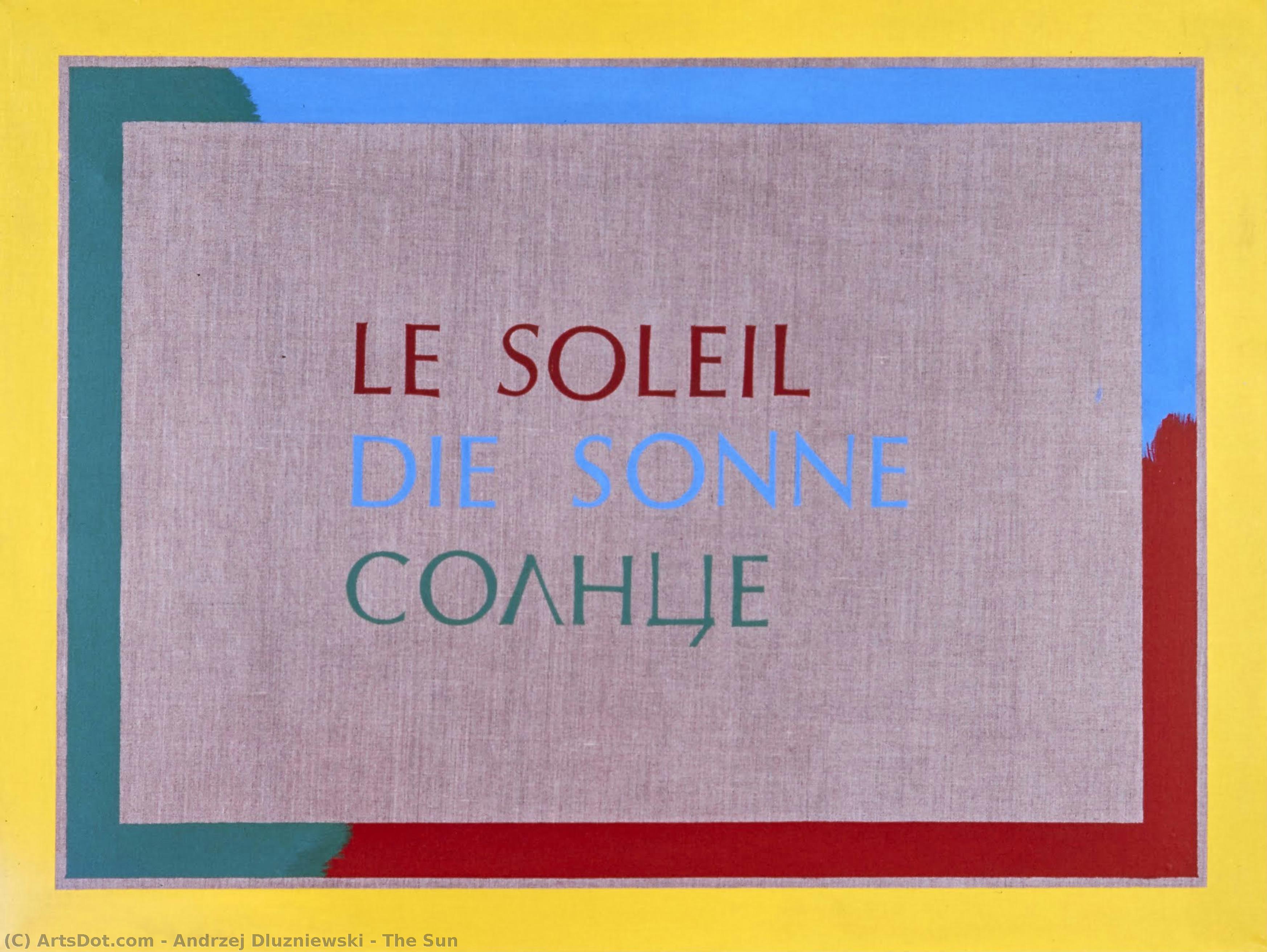
The Sun
 1989
1989 80.0 x 120.0 cm
 Ujazdowski Schloss Zentrum für zeitgenössische Kunst
 Weiterlesen
Handgefertigte Öl-Reproduktion
Handgemaltes Ölgemälde auf Leinwand in Ihrer Wunschgröße und mit Rahmen, auf Bestellung von unseren Künstlern angefertigt.




































Wählen Sie aus unseren vordefinierten Größen, die den ursprünglichen Proportionen des Kunstwerks entsprechen.

Sie können Ihre eigenen Maße eingeben, um einen bestimmten Rahmen oder Platz auszufüllen. Wenn die gewählte Größe nicht den Proportionen des Originalbildes entspricht, werden wir das Kunstwerk entweder beschneiden oder das Gemälde durch zusätzliche, handgemalte Elemente erweitern. Ein digitales Mockup wird Ihnen zur Genehmigung zugesandt, bevor die Produktion beginnt.
Bitte beachten Sie, dass die Bildschirmvorschau nicht die tatsächliche Beschneidung oder Erweiterung widerspiegelt. Nur das Mockup zeigt die endgültige Komposition exakt an.
Obwohl Sondermaße verfügbar sind, empfehlen wir, eine Größe aus der vordefinierten Liste zu wählen, um die ursprünglichen Proportionen beizubehalten.
Nach der Bestellung wird das OriginalUniqueArt.com-Team dem Kunden Anweisungen per E-Mail zusenden und eine Mockup-Vorschau bereitstellen.
Weltweiter Versand () in nur 3 bis 4 Wochen statt der üblichen 5 Wochen. (24 Juli). Keine Kompromisse bei der Qualität.

Kostenloser weltweiter Expressversand

Hochwertige Leinenleinwand

Umfassender Versicherungsschutz beim Versand

Zollsteuer-Rückerstattungsgarantie

Garantie für echte Farbtreue

60-Tage-Rückgaberecht (nur bei Mängeln)

100% Geld-zurück-Garantie

Mengenrabatt verfügbar
 Die Glasoption ist nur in Größen unter 110 cm verfügbar.

The Sun
Art der Reproduktion
Größe der Reproduktion
-


Endpreis aller Optionen
-
Biografie des Künstlers
Andrzej Dłużniewski: Sculpting the Unseen
Andrzej Dłużniewski (1939-2012) stands as a towering figure in contemporary Polish sculpture, an artist whose profound impact extends far beyond the purely visual. Often described as a poet of form and material, he carved a unique space for himself within the art world—one characterized by intellectual rigor, symbolic depth, and a persistent questioning of perception. Born in Poznań, Poland, Dłużniewski’s artistic journey was shaped not only by formal training but also by a deeply ingrained philosophical sensibility, a willingness to challenge conventional notions of representation, and an enduring fascination with the interplay between language, image, and reality. His career spanned nearly six decades, marked by a constant evolution in style and technique, culminating in works that are both monumental in scale and intensely intimate in their exploration of human experience.Early Influences and Artistic Formation
Dłużniewski’s artistic trajectory began with studies at the Wrocław University of Technology, initially focused on architecture—a discipline that instilled within him a fundamental understanding of spatial relationships and structural principles. However, his true calling lay in sculpture, leading him to pursue further education at the Warsaw Academy of Fine Arts under the tutelage of prominent figures like Marian Wnuk and Oskar Hansen. These formative years were crucial, exposing him to diverse artistic approaches—from the expressive dynamism of Wnuk’s work to the conceptual rigor of Hansen’s design philosophy. Crucially, his time in Warsaw also coincided with a period of significant social and political change in Poland, an environment that fostered critical thinking and a desire to engage with pressing societal issues through art. The influence of Fluxus, a loosely organized international artistic movement emphasizing spontaneity, collaboration, and the blurring of boundaries between art and life, is evident in his early explorations of performance and object-based sculpture.The Language of Form: Iconograms and Beyond
A defining characteristic of Dłużniewski’s oeuvre is his deliberate manipulation of language within the visual realm. His series of “Iconograms” (1974), exhibited at Foksal Gallery in Warsaw, exemplifies this approach. These meticulously crafted works—featuring fifty-five pieces that combined images with text—demonstrated a profound understanding of semiotics and the ways in which meaning is constructed through the interplay of symbols. The title itself suggests a desire to move beyond literal representation, hinting at a deeper, more elusive truth. Later, in 1978, he produced “Image of an Absent Picture,” a photographic documentation of a blank wall—a seemingly simple gesture that nonetheless interrogated the very nature of perception and the role of the artist’s intervention. This work, along with his exploration of grammatical gender in language (“Rodzaj i cień”, 1984-1994), reveals a sustained interest in deconstructing established systems of thought and exposing their inherent contradictions.A World Without Sight: The Geonauts and the Shift in Perspective
The tragic loss of Dłużniewski’s sight in 1997 marked a pivotal moment in his artistic practice, forcing him to re-evaluate his relationship with form and space. Remarkably, rather than succumbing to despair, he embraced this new sensory experience, creating an astonishing body of work—including the miniature bronze sculptures known as “Geonauts” (1998-2004)—that are imbued with a unique poignancy and depth. These tiny figures, seemingly poised on the brink of departure, represent a profound meditation on human existence, mortality, and the search for meaning in an indifferent universe. The creation of these sculptures, often undertaken with the assistance of his wife and son, became a deeply collaborative process—a testament to the enduring power of artistic connection.Legacy and Historical Significance
Andrzej Dłużniewski’s legacy extends far beyond the confines of the Polish art world. His work has been exhibited internationally, earning him critical acclaim and recognition as one of the most important sculptors of his generation. He was awarded the Katarzyna Kobro Award (2003) and the Jan Cybis Award (2006), both prestigious accolades recognizing his contributions to contemporary art. More importantly, Dłużniewski’s artistic practice serves as a powerful reminder of the transformative potential of art—its ability to challenge assumptions, provoke thought, and offer new perspectives on the world around us. His willingness to embrace ambiguity, to question established conventions, and to explore the hidden depths of human experience ensures that his work will continue to resonate with audiences for generations to come. He remains a sculptor who dared to sculpt the unseen, revealing profound truths through the language of form.
andrzej dluzniewski
1939 - 2012 , Poland
Kurzinfos
- Artistic Movement Or Style: Monumental sculpture
- Artists Or Movements Influenced By This Artist: ['Fluxus']
- Artists Who Influenced This Artist: ['Oskar Hansen']
- Date Of Birth: August 3, 1939
- Date Of Death: December 16, 2012
- Full Name: Andrzej Dłużniewski
- Nationality: Polish
- Notable Artworks:
- The Sun
- Geonauts
- Iconograms
- Place Of Birth: Poznań, Poland

