
 Vorschau anzeigen
 Versenden
 Teilen
 Details anzeigen
 Leitfaden

 Herunterladen
 Ähnliche Objekte
 Röntgenaufnahme
 Diashow
 Fragen & Antworten
 Statistiken
St Sebastian

- 255.0 x 140.0 cm


 Weiterlesen
Giclée / Kunstdruck
Giclée- oder Leinwanddruck in Museumsqualität mit schneller Produktion und flexiblen Veredelungsoptionen. ( Handgemalte Reproduktion bestellen Zum digitalen Bild wechseln)




P118B €10

P118H €10

P118W €10

P438Z €10

P508JH €12

P508YH €12

P805H €10

P805Z €10

P919BZ €10

P919G €10

P919XJ €10

P959ZH €10

P968JZ €12

W106C €8

W218G €10

W218JH €8

W218Y €10

W307PJ €10

W316G €10

W316PJ €8

W316Y €10

W398PJ €8

W4111J €10

W500HY €15

W500JH €15

W692G €12

W849H €8

W940BG €15

W953PJ €8




Wählen Sie aus unseren vordefinierten Formaten, die den ursprünglichen Proportionen des Kunstwerks entsprechen.

Geben Sie die benötigte Breite und Höhe an, damit der Druck perfekt in Ihren Rahmen oder an Ihre Wand passt. Ein Druck kann nur beschnitten, aber niemals größer als das Originalbild angefertigt werden; daher verliert ein Format mit anderen Proportionen einen Teil des Bildes. Wir senden Ihnen ein digitales Mockup zur Freigabe, bevor wir den Druck ausführen. Das auf dieser Seite gezeigte Bild zeigt nicht den tatsächlichen Beschnitt – dies ist nur im Mockup ersichtlich.
Weltweiter Versand () innerhalb von 2 Wochen statt der üblichen 4/5 Wochen. (3 November)

Kostenloser weltweiter Expressversand

Hochwertige Leinenleinwand

Umfassender Versicherungsschutz beim Versand

Zollgebühren-Rückerstattungsgarantie

Garantie für exakte Farbtreue

100 Tage Rückgaberecht (nur bei Mängeln)

100% Geld-zurück-Garantie

Mengenrabatt verfügbar
 Die Glasoption ist nur für Größen unter 110 cm verfügbar.

St Sebastian
Giclée / Kunstdruck
Format der Reproduktion
-


Endpreis
€ 72
St Sebastian: A Renaissance Echo of Antiquity
Andrea Mantegna’s *Saint Sebastian*, completed around 1480, stands as an extraordinary testament to the burgeoning Renaissance fascination with classical ideals and artistic innovation. More than just a depiction of martyrdom—a poignant narrative rooted in Christian piety—the painting embodies Mantegna's meticulous approach to art history and his unwavering commitment to capturing the spirit of Rome within the Italian landscape. Housed at the Musée du Louvre in Paris, this monumental oil on canvas offers viewers an unparalleled glimpse into the artistic sensibilities of a pivotal era.The Martyrdom Revisited: Myth and Faith Converge
The story underpinning *Saint Sebastian* is familiar to anyone acquainted with Christian lore: Saint Sebastian, a Roman soldier devoted to Christianity, endured agonizing torture and death at the behest of Emperor Diocletian—a ruler determined to eradicate pagan beliefs. Unlike many depictions of saints from earlier centuries, Mantegna eschewed traditional iconography, opting instead for a dramatic reimagining of the biblical tale. Rather than portraying Sebastian as a supplicant kneeling before God, he presents him as a figure of defiant endurance, embodying unwavering faith amidst unimaginable suffering. This deliberate choice reflects the humanist impulse to interpret religious narratives through the lens of classical philosophy and aesthetics—a hallmark of the Renaissance spirit.Compositional Mastery: Perspective and Spatial Illusion
Mantegna’s genius lies not merely in his subject matter but also in his masterful execution. The painting's composition is strikingly balanced, centering on St Sebastian himself amidst a backdrop of crumbling Roman buildings. This architectural setting isn’t simply decorative; it serves as a deliberate allusion to the ruins of Rome—a city Mantegna had studied extensively during his formative years under Francesco Squarcione. Employing linear perspective with remarkable precision, Mantegna creates an illusion of depth and space that draws the viewer into the scene's dramatic unfolding. The archers surrounding Sebastian are positioned strategically, emphasizing the saint’s vulnerability while simultaneously reinforcing the narrative’s tension.Technique and Artistic Significance: Chiaroscuro and Sfumato
Mantegna’s artistic technique—characterized by *chiaroscuro* (the dramatic interplay of light and shadow) and *sfumato* (a subtle blending of colors to achieve atmospheric haze)—elevates the painting beyond mere representation. These techniques imbue St Sebastian with palpable physicality, conveying the agonizing pain endured by the martyr. The artist meticulously renders textures—from the rough stone of the buildings to the smooth flesh of Sebastian’s body—demonstrating an unparalleled level of artistic virtuosity. Furthermore, Mantegna's stylistic choices align perfectly with the humanist ideals prevalent during his time, prioritizing anatomical accuracy and psychological realism alongside classical influences.Beyond Saint Sebastian: Mantegna’s Legacy at the Louvre
Andrea Mantegna’s oeuvre extends far beyond *Saint Sebastian*, encompassing other notable works such as *LE CALVAIRE* (The Crucifixion), *SAINT SEBASTIEN*, and *MARS ET VENUS DIT LE PARNASSE*. These paintings—primarily housed at the Musée du Louvre Département Des Peintures—underscore Mantegna’s versatility and mastery of diverse artistic genres. They stand as enduring symbols of Renaissance art, inviting contemplation on themes of faith, mortality, and the transformative power of classical inspiration. For those seeking to immerse themselves in the grandeur of Italian Renaissance painting, a visit to the Musée du Louvre is an indispensable experience—a chance to witness firsthand the brilliance of Mantegna’s artistic vision.- Painting Details: Oil On Canvas, 255 x 140 cm, Musée du Louvre (Paris, France), 1480.
- Artist: Andrea Mantegna.
Fragen & Antworten
Welche Stellung nimmt „St Sebastian“ unter den wiederkehrenden Motiven von Andrea Mantegna ein?
"St Sebastian" stellt martyrdom, renaissance art, classical antiquity, perspective, human suffering, religious iconography, medieval art influence dar, während die dokumentierten Themen von Andrea Mantegna classical inspiration, humanist values, christian martyrdom narrative, architectural detail accuracy, memento mori symbolism, monumental composition, notable piece in mantegna's oeuvre sind. Ein Vergleich der beiden zeigt, wie das Werk mit den üblichen Sujets des Künstlers in Verbindung steht.
Wer ist der Künstler hinter "St Sebastian"?
"St Sebastian" wird Andrea Mantegna zugeschrieben.
Wie verbinden sich Kontrast und Harmonie in "St Sebastian"?
Die Farbanalyse von "St Sebastian" von Andrea Mantegna offenbart einen Sanft Kontrast und eine Ausgewogene Harmonie Harmonie.
Künstlerbiografie
frühes Leben und Karriere
Andrea Mantegna, ein innovativer italienischer Maler und Gelehrter der römischen Archäologie, wurde 1431 in Italien geboren. Sein Leben ist durch eine bedeutende Abweichung von den weichen Formen seiner Zeit gekennzeichnet, wobei er sich für eine kühne, volumetrische Darstellung von Raum und Form entschied.Beitrag zur Perspektive
Mantegnas Werk war entscheidend bei der Erforschung der Perspektive und nutzte Techniken wie das Anpassen der Horizontlinie, um seinen Werken einen größeren Maßstab und Schwere zu verleihen. Dieser Ansatz stellte eine bedeutende Abweichung von den weichen Formen seiner Zeit dar und zeigte seinen einzigartigen Stil.Bekannte Werke und Verbindungen
* Mantegnas Gemälde sind für ihre robuste, skulpturale Qualität bekannt und zeigen harte, reflektierende Landschaften und Figuren, die seine Bildhauer-Sensibilität für Form und Textur verraten. * Seine Verbindung zur Bellini-Familie durch Heirat ist bemerkenswert, da sie die Vernetzung künstlerischer Familien während der Renaissance widerspiegelt.Vermächtnis in der Kunstgeschichte
Mantegnas Einfluss auf die Entwicklung der Kunst in Italien und darüber hinaus ist unbestreitbar. Sein kühner Ansatz zur Perspektive und Form hat Generationen von Künstlern inspiriert. Wie in seiner Sammlung auf OriginalUniqueArt zu sehen ist, fesseln seine Werke die Zuschauer weiterhin mit ihrer Pracht und ihrem innovativen Stil.- Schlüssel künstlerische Bewegungen: Renaissance, frühe Perspektive.
- Bekannte Werke: Umfassen "Die Klage über den toten Christus" und "St. Georg".
- Museen, die seine Werke ausstellen: Die Nationalgalerie in London und die Pinacoteca Brera in Mailand unter anderem.
Weitere Literatur und Erkundung
* Für mehr Informationen über Mantegnas Leben und Werk siehe die Palumbo-Fossati-Sammlung (Venedig, Italien), die einen kurzen Überblick über die Sammlung und ihre bemerkenswerten Stücke bietet. * Erkunden Sie die Geschichte der Kunst in Italien mit der Kultur Italiens auf Wikipedia.
Andrea Mantegna
1431 - 1506 , Italien
Kurzinfos
- Beeinflusste Künstler:
- Raphael
- Michelangelo
- Bemerkenswerte Werke:
- Die Klage über den toten Christus
- St. Georg und der Drache
- Camera degli Sposi Fresken
- Die Siege Caesars
- Geburtsdatum: 1431
- Geburtsort: Carturu, Italien
- Künstlerische Bewegung: Renaissance, Frühe Perspektive
- Künstlerische Einflüsse:
- Donatello
- Jacopo Bellini
- Nationalität: Italienisch
- Sterbedatum: 1506
- Vollständiger Name: Andrea Mantegna
Ähnliche Artikel
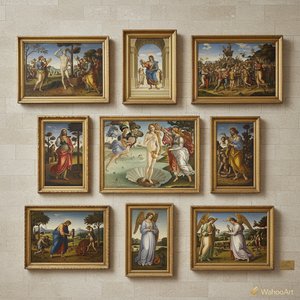
Frührenaissance: Die 10 Meisterwerke, die eine Epoche prägten – Kunst für Ihr Zuhause
Entdecken Sie die 10 prägendsten Meisterwerke der Frührenaissance! Von Giotto bis Botticelli – erleben Sie Kunstgeschichte hautnah. Hochwertige Reproduktionen für Ihr Zuhause auf .
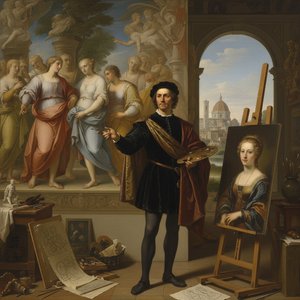
Andrea del Sarto: Florentinische Eleganz und die Meisterschaft der Renaissance
Entdecken Sie das Werk von Andrea del Sarto, einem Meister der Florentiner Renaissance. Erfahren Sie mehr über seine Fresken, seinen Stil und sein Vermächtnis in diesem umfassenden Artikel. Hochwertige Reproduktionen bei OriginalUniqueArt!

Mastering Devotion: The Most Iconic Depictions of Saint Jerome in Art History
Explore the profound iconography of Saint Jerome through art history's most iconic masterpieces. From Renaissance serenity to Baroque drama, discover how legendary painters captured divine devotion in breathtaking oil paintings and fine art reproductions.

Giovanni Fattori: Realismus, Identität und die toskanische Landschaft – Ein Meister der Macchiaioli
Entdecken Sie Giovanni Fattori und die Macchiaioli! Erfahren Sie mehr über den italienischen Realismus, seine historischen Wurzeln und die einzigartige Darstellung der toskanischen Landschaft. Expertenwissen für Kunstliebhaber.
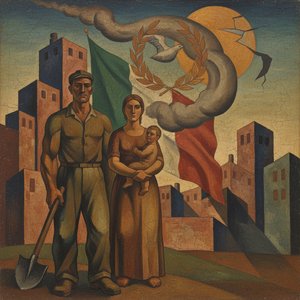
Mario Sironi: Eine Poetik der modernen italienischen Identität zwischen Symbolismus und Gesellschaftskritik
Entdecken Sie Mario Sironis wegweisendes Werk und seine Auseinandersetzung mit der italienischen Identität. Analysen, Biografie, Novecento Italiano & die politische Dimension – Expertenwissen auf OriginalUniqueArt.


