In echtem Maßstab anzeigen
 Versenden als Grußkarte
 Teilen
 Details anzeigen
 Leitfaden öffnen

 Herunterladen
 Ähnliche Objekte
 Röntgenaufnahme
 Diashow
 Besucherstatistiken
The Moon


 Mehr anzeigen
Handgefertigte Ölreproduktion
Handgemaltes Ölgemälde auf Leinwand in Ihrer Wunschgröße und mit Rahmen, auf Bestellung von unseren Künstlern angefertigt. ( Zum Druck wechseln Zum digitalen Bild wechseln)




P118B €10

P118H €10

P118W €10

P438Z €10

P508JH €12

P508YH €12

P805H €10

P805Z €10

P919BZ €10

P919G €10

P919XJ €10

P959ZH €10

P968JZ €12

W106C €8

W218G €10

W218JH €8

W218Y €10

W307PJ €10

W316G €10

W316PJ €8

W316Y €10

W398PJ €8

W4111J €10

W500HY €15

W500JH €15

W692G €12

W849H €8

W940BG €15

W953PJ €8




Wählen Sie aus unseren vordefinierten Formaten, die den ursprünglichen Proportionen des Kunstwerks entsprechen.

Geben Sie die Breite und die Höhe an, die Sie für Ihren Rahmen oder Ihre Wand benötigen. Da dieses Werk handgemalt ist, kann der Künstler bei einer anderen Form etwas mehr um das Bild herum malen oder etwas abschneiden – Sie entscheiden. Wir senden Ihnen ein digitales Mockup zur Freigabe, bevor mit dem Malen begonnen wird. Das auf dieser Seite gezeigte Bild stellt nicht das tatsächliche Ergebnis dar – dies tut nur das Mockup.
Nach der Bestellung wird das OriginalUniqueArt.com-Team dem Kunden Anweisungen per E-Mail zusenden und eine Mockup-Vorschau bereitstellen.
Weltweiter Versand () in nur 3 bis 4 Wochen statt der üblichen 5 Wochen. (21 Oktober). Keine Kompromisse bei der Qualität.

Kostenloser weltweiter Expressversand

Hochwertige Leinenleinwand

Vollständiger Versicherungsschutz beim Versand

Zollgebühren-Rückerstattungsgarantie

Garantie für exakte Farbtreue

100-tägiges Rückgaberecht (nur bei Mängeln)

100% Geld-zurück-Garantie

Angebot für Mengenrabatt
 Die Glasoption ist nur für Größen unter 110 cm verfügbar.

The Moon
Reproduktionsmedium
Format der Reproduktion
-


Gesamtpreis
€ 262
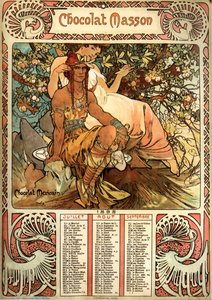
The Moon by Alphonse Mucha: A Nocturne of Femininity and Celestial Grace
Alphonse Mucha’s “The Moon” is more than just a beautiful image; it's a portal to the heart of Art Nouveau, a movement defined by its celebration of natural forms, flowing lines, and an almost dreamlike quality. This captivating poster, depicting a woman bathed in the ethereal glow of a crescent moon, embodies Mucha’s signature style – a harmonious blend of decorative elegance and profound symbolism. It's a piece that speaks to our enduring fascination with the night sky, the allure of feminine beauty, and the power of artistic embellishment.
The composition immediately draws the eye to the central figure, a woman whose pose is both graceful and slightly melancholic. Her upward gaze towards the moon suggests contemplation, perhaps even a yearning for something beyond the earthly realm. The surrounding floral motifs – lilies, irises, and other blooms – aren’t merely decorative; they are integral to the artwork's narrative, echoing themes of rebirth, beauty, and the cyclical nature of life itself. Mucha masterfully utilizes symmetry, creating a balanced yet dynamic visual experience that invites prolonged observation.
A Symphony of Color and Line
Mucha’s palette is a testament to his understanding of color theory. The dominant warm tones – rich browns, golds, and creamy whites – evoke a sense of warmth and tranquility, while subtle accents of pink and blue-green introduce an element of mystery and dreaminess. This careful orchestration of hues contributes significantly to the artwork's overall mood, creating a visual experience that is both soothing and stimulating. The prevalence of flowing, curvilinear lines—a hallmark of Art Nouveau—is particularly striking. They ripple across the woman’s gown, intertwine with the floral elements, and even seem to emanate from the moon itself, conveying a sense of movement and fluidity.
Crafting Illusion: Technique and Materials
“The Moon” was almost certainly created using the lithographic process, a technique Mucha expertly employed throughout his career. Lithography allowed for incredibly detailed renderings and vibrant colors – essential elements in achieving the poster’s distinctive aesthetic. The artist meticulously layered inks to build up the intricate patterns and textures, creating a surface that appears both smooth and richly embellished. The use of paper was carefully considered, likely a high-quality stock chosen to best capture the nuances of color and detail. It's fascinating to consider how this image was originally produced – a testament to the skill and dedication required to create such a visually arresting work.
Symbolism and Legacy
Beyond its purely aesthetic qualities, “The Moon” is rich in symbolism. The moon itself has long been associated with femininity, intuition, and the cycles of nature. The woman’s pose, gazing upwards towards this celestial body, reinforces these associations. Furthermore, Mucha's work frequently featured idealized female figures, representing a romanticized vision of beauty and grace. “The Moon” stands as a powerful example of Art Nouveau’s ability to blend decorative art with profound symbolism, creating an image that continues to resonate with viewers today. It remains a timeless representation of feminine allure and the captivating mystery of the night.
Fragen & Antworten
Gibt es für "The Moon" eine Augmented-Reality-Vorschau?
"The Moon" von Alphonse Maria Mucha kann mithilfe der AR-Vorschau-Seite des Kunstwerks in Ihrem eigenen Raum mit Augmented Reality auf einem kompatiblen Gerät an Ihrer Wand vorab betrachtet werden.
Welche Druckgröße wird für "The Moon" von Alphonse Maria Mucha empfohlen?
Für "The Moon" von Alphonse Maria Mucha wird eine Reproduktion im Format Large empfohlen. Die Größe kann angepasst werden, wobei die Proportionen erhalten bleiben.
Welches Gefühl vermitteln die Farben von "The Moon" von Alphonse Maria Mucha?
Die Earthy-Palette von "The Moon" von Alphonse Maria Mucha harmoniert mit seinem Mysterious emotionalen Tonfall. Farbe ist eine der Arten und Weisen, wie ein Werk Gefühle vermittelt.
Biografie des Künstlers
Frühes Leben und Ausbildung
- Geboren: 15. Juli 1860 in Ivanačice, Mähren (heute Teil der Tschechischen Republik)
- Zeigte schon in jungen Jahren künstlerisches Talent.
- Studierte an der Akademie der Schönen Künste in Prag, war aber von traditionellen Ansätzen enttäuscht.
- Zog 1887 nach Paris, um seinen eigenen Stil zu verfolgen.
Künstlerischer Stil und bemerkenswerte Werke
- Bekannt für seinen unverwechselbaren Jugendstil, der sich durch fließende Linien, organische Formen und eine Bewegungsempfindung auszeichnet.
- Beeinflusst von Künstlern wie Pierre-Auguste Renoir und Gustave Moreau.
- Bemerkenswerte Werke:
- Der slawische Aufstand – Zeigt die Verbindung traditioneller tschechischer Motive mit modernen Jugendstilelementen.
- Salon des Cent
- Gemälde, inspiriert von Werken wie Die Töchter des Tespio von Gustave Moreau und La Ribambelle des Gobelins von Piero Dorazio.
- Illustrationen basierend auf Junge Landwirte ernten Leinen von Sir Hubert von Herkomer.
- Stellte häufig idealisierte Frauen in fließenden Gewändern inmitten üppiger Blumen dar.
Karrierehöhepunkte und wichtige Aufträge
- Zusammenarbeit mit Sarah Bernhardt: Erschuf Plakate und Designs für die Schauspielerin Sarah Bernhardt, beginnend mit dem Plakat für Gismonda (1894), das seine Karriere startete.
- Weltausstellung in Paris (1900): Sein Jugendstil erlangte bei dieser Ausstellung internationale Anerkennung. Er dekorierte den Pavillon von Bosnien und Herzegowina und arbeitete an der Gestaltung des österreichischen Pavillons mit.
- Förderung durch Charles Richard Crane: Erhielt Unterstützung von Charles Richard Crane, die es ihm ermöglichte, die monumentale Serie Der slawische Epos (1912-30) zu schaffen.
- Unabhängiges Tschechoslowakei: Entwarf Briefmarken, Banknoten und Regierungsdokumente für das neu unabhängige Tschechoslowakei.
Einflüsse und Vermächtnis
- Beeinflusst von tschechischen künstlerischen Traditionen und modernen europäischen Kunstbewegungen.
- Sein einzigartiger Stil ebnete den Weg für zukünftige Generationen von Künstlern im Jugendstil und der Sezession.
- Inspirierte andere Künstler wie Eva Prokopcová.
- Sein Vermächtnis erstreckt sich über seine Kunstwerke hinaus und beeinflusst Design und Ästhetik.
Späteres Leben und Tod
- Vermählte sich 1906 mit Maruska (Marie/Maria) Chytilová.
- Besuchte von 1906 bis 1910 die Vereinigten Staaten, wo ihre Tochter Jaroslava geboren wurde.
- Starb am 14. Juli 1939 in Prag, Tschechoslowakei.

Alphonse Maria Mucha
1860 - 1939 , Tschechien
Eckdaten zum Künstler
- Beeinflusste Künstler:
- Pierre-Auguste Renoir
- Gustave Moreau
- Bemerkenswerte Werke:
- Slavonic Uprising
- Salon des Cent
- The Slav Epic
- Geburtsdatum: 15. Juli 1860
- Geburtsort: Brno, Tschechien
- Künstlerische Richtung: Art Nouveau
- Nationalität: Tschechisch
- Todatum: 14. Juli 1939
- Vollständiger Name: Alphonse Maria Mucha
- Von Künstlern Beeinflusst: ['Eva Prokopcová']