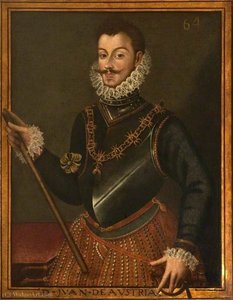
In echtem Maßstab anzeigen
 Versenden als Grußkarte
 Teilen
 Details anzeigen
 Leitfaden öffnen

 Herunterladen
 Ähnliche Objekte
 Röntgenaufnahme
 Diashow
 Besucherstatistiken
St Sebastian between St Bernard and St Francis
 Oil On Panel
- WallArt
- Baroque Renaissance Painting
 1582
1582- Renaissance
 295.0 x 196.0 cm
 Museo del Prado
 Mehr anzeigen
Handgefertigte Ölreproduktion
Handgemaltes Ölgemälde auf Leinwand in Ihrer Wunschgröße und mit Rahmen, auf Bestellung von unseren Künstlern angefertigt. ( Zum Druck wechseln Zum digitalen Bild wechseln)




P118B $10

P118H $10

P118W $10

P438Z $10

P508JH $12

P508YH $12

P805H $10

P805Z $10

P919BZ $10

P919G $10

P919XJ $10

P959ZH $10

P968JZ $12

W106C $8

W218G $10

W218JH $8

W218Y $10

W307PJ $10

W316G $10

W316PJ $8

W316Y $10

W398PJ $8

W4111J $10

W500HY $15

W500JH $15

W692G $12

W849H $8

W940BG $15

W953PJ $8




Wählen Sie aus unseren vordefinierten Formaten, die den ursprünglichen Proportionen des Kunstwerks entsprechen.

Sie können Ihre eigenen Maße eingeben, um einen bestimmten Rahmen oder Platz auszufüllen. Wenn die gewählte Größe nicht den Proportionen des Originalbildes entspricht, werden wir das Kunstwerk entweder beschneiden oder das Gemälde durch zusätzliche, handgemalte Elemente erweitern. Ein digitales Mockup wird Ihnen zur Genehmigung zugesandt, bevor die Produktion beginnt.
Bitte beachten Sie, dass die Bildschirmvorschau nicht die tatsächliche Beschneidung oder Erweiterung widerspiegelt. Nur das Mockup zeigt die endgültige Komposition exakt an.
Obwohl Sondermaße verfügbar sind, empfehlen wir, eine Größe aus der vordefinierten Liste zu wählen, um die ursprünglichen Proportionen beizubehalten.
Nach der Bestellung wird das OriginalUniqueArt.com-Team dem Kunden Anweisungen per E-Mail zusenden und eine Mockup-Vorschau bereitstellen.
Weltweiter Versand () in nur 3 bis 4 Wochen statt der üblichen 5 Wochen. (25 September). Keine Kompromisse bei der Qualität.

Kostenloser weltweiter Expressversand

Hochwertige Leinenleinwand

Vollständiger Versicherungsschutz beim Versand

Zollgebühren-Rückerstattungsgarantie

Garantie für exakte Farbtreue

100-tägiges Rückgaberecht (nur bei Mängeln)

100% Geld-zurück-Garantie

Angebot für Mengenrabatt
 Die Glasoption ist nur für Größen unter 110 cm verfügbar.

St Sebastian between St Bernard and St Francis
Reproduktionsmedium
Format der Reproduktion
-


Gesamtpreis
$ 300
A Renaissance Dialogue of Faith and Dignity
In the grand tapestry of the Spanish Renaissance, few works capture the profound intersection of spiritual devotion and artistic mastery as exquisitely as Alonso Sánchez Coello’s “St Sebastian between St Bernard and St Francis.” Completed in 1582, this monumental painting serves as a breathtaking window into an era defined by the fervor of the Counter-Reformation. The scene is not merely a religious tableau but a deeply moving encounter between three pillars of Christian virtue. At its heart stands St Sebastian, the resilient martyr, flanked by the contemplative St Bernard and the humble St Francis. Through his brush, Coello transforms a theological arrangement into a living, breathing narrative that resonates with an almost palpable sense of sanctity.
The composition is a masterclass in balance and symbolic depth. By positioning St Sebastian centrally, Coello creates a focal point of spiritual fortitude, while the presence of St Bernard and St Francis introduces a spectrum of monastic piety and compassionate humility. This arrangement invites the viewer to participate in a silent dialogue of faith, where each figure embodies a facet of the human soul's journey toward the divine. The surrounding figures—a celestial assembly of angels and religious characters—add layers of complexity to the scene, set against a backdrop of ethereal clouds and an expansive sky that lends the entire work a sense of infinite, heavenly dimension.
The Fusion of Flemish Precision and Venetian Light
Technically, the painting is a triumph of stylistic synthesis. Coello, a painter uniquely positioned at the crossroads of European traditions, skillfully blended the Flemish objectivity—noted for its meticulous attention to detail and anatomical accuracy—with the Venetian sensuality that emphasizes luminous color and atmospheric depth. Using oil paint on panel, the artist achieved a remarkable richness of texture; one can almost feel the weight of the heavy drapery and the subtle gradations of skin tones under the soft, celestial light. This technique allows for a level of realism that grounds the miraculous elements of the painting in a tangible, human reality.
For the discerning collector or interior designer, this piece offers more than just visual beauty; it provides an atmosphere of timeless elegance and intellectual depth. The interplay of light and shadow, combined with the intricate details of the figures' garments and expressions, ensures that the painting remains captivating from every angle. Whether placed in a grand gallery or as a sophisticated focal point in a curated living space, "St Sebastian between St Bernard and St Francis" brings with it an aura of historical prestige and a profound emotional resonance that transcends the centuries.
Biografie des Künstlers
Frühes Leben und Ausbildung
- Geboren: Benifaió, Spanien (1531)
- Verbrachte Kindheit in der Nähe von Valencia bis zum Tod seines Vaters.
- Um 1541/42 zog er nach Portugal, um bei seinem Großvater zu leben, einem Adligen im Dienst der portugiesischen Monarchen.
- Studierte um 1550 bei Anthonis Mor (Antonio Moro) in Flandern.
- Erhielt die Unterstützung von Antoine de Granville, Bischof von Arras, ebenfalls Förderer von Mor.
Karriere am spanischen Hof
- Arbeitete für die portugiesische Königsfamilie und später für den Hof von João Manuel, Prinz von Portugal.
- Zog 1555 an den spanischen Hof Philipps II., empfohlen von Juana, Schwester Philipps II.
- Wurde 1560 Hofmaler.
- Vermählte sich um 1560/61 mit Louisa Reyaltes, der Tochter eines Silberschmieds.
- Seine Tochter, Isabel Sánchez, wurde ebenfalls Malerin und assistierte in seiner Werkstatt.
- Zog mit dem Hof nach Toledo und ließ sich 1561 in Madrid nieder.
Künstlerischer Stil und Einflüsse
- Stil: Kombinierte flämische Objektivität mit venezianischer Sinnlichkeit.
- Einflüsse: Vor allem beeinflusst von Anthonis Mor und Tizian.
- Er lernte Präzision von Mor.
- Inkorporierte venezianische Goldtöne, großzügige Verarbeitung und die Verwendung von Licht von Tizian.
- Bekannt für Porträts, die durch eine leichte Pose, Würde, Nüchternheit und warme Farbgebung gekennzeichnet sind.
Hauptwerke und Errungenschaften
- Produzierte sowohl Porträts als auch religiöse Gemälde.
- Religiöse Werke waren konventionell, zeigten aber einen asketischen Stil.
- Bemerkenswerte Porträts:
- Philipp II mit Rosenkranz (1573)
- Porträts der Infantin Isabel Clara Eugenia (1571)
- Serie von Gemälden, die die Kinder Philipps II. darstellen.
- Doppelporträt der Infantinnen Isabella Clara Eugenia und Catalina Micaela (1568–9).
- Malte religiöse Werke für El Escorial.
- Erstellte eine topographische Ansicht des Hafens von Sevilla.
Vermächtnis und historische Bedeutung
- Sein Ruf als Porträtist wurde durch zahlreiche Kopien und Imitationen kompliziert.
- Gilt als bedeutende Figur in der spanischen Renaissancekunst, insbesondere für seine Hofporträts.
- Seine Arbeit beeinflusste spätere Künstler, darunter Velázquez, hinsichtlich der Darstellung von Texturen wie Rüstungen und Stoffen.
- Starb am 8. August 1588 in Madrid.

Alonso Sánchez Coello
1531 - 1588 , Spanien
Eckdaten zum Künstler
- Beeinflusste Künstler:
- Anthonis Mor
- Titian
- Bemerkenswerte Werke:
- Philipp II mit Rosenkranz
- Porträt einer Dame
- Anna von Österreich
- Don Juan von Österreich
- Katharina von Österreich
- Geburtsdatum: ca. 1531
- Geburtsort: Benifaió, Spanien
- Künstlerischer Stil: Spanische Renaissance
- Nationalität: Iberisch
- Sterbedatum: 1588
- Vollständiger Name: Alonso Sánchez Coello
- Von Künstlern Beeinflusst:
- Juan Pantoja de la Cruz
- Felipe de Liaño
Verwandte Artikel

Francisco de Zurbarán: Mystik, Realismus und das goldene Zeitalter der spanischen Malerei
Entdecken Sie das faszinierende Werk von Francisco de Zurbarán! Erfahren Sie mehr über den Meister des spanischen Barock, seine religiösen Gemälde und den Einfluss Caravaggios. Kunstgeschichte pur – jetzt lesen!
The Golden Age Reforged: Dramatic Realism & Religious Zeal in Spanish Baroque Art
Explore the dramatic world of Spanish Baroque art! Discover masters like Zurbarán & the powerful influence of religious zeal on painting techniques – a guide for collectors and enthusiasts.

Museo del Prado: Die 25 Meisterwerke – Kunst für Ihr Zuhause | OriginalUniqueArt
Entdecken Sie die 25 Meisterwerke des Museo del Prado! Von Velázquez bis Goya – Kunstgeschichte, Techniken & Geschichten berühmter Gemälde. Finden Sie hochwertige Reproduktionen für Ihr Zuhause auf OriginalUniqueArt.com.

El Greco: Die 25 Meisterwerke – Kunst für Ihr Zuhause | OriginalUniqueArt
Entdecken Sie die 25 bedeutendsten Meisterwerke von El Greco! Erleben Sie die spirituelle Tiefe und den dramatischen Stil des griechischen Malers. Hochwertige Kunstdrucke & Inspiration für Ihr Zuhause auf OriginalUniqueArt.com.
Jusepe de Ribera: Dramatische Realität und spirituelle Intensität im spanischen Goldenen Zeitalter
Entdecken Sie die dramatische Realität und spirituelle Tiefe von Jusepe de Ribera, einem Meister des spanischen Barock. Erfahren Sie mehr über seinen einzigartigen Stil und seine beeindruckenden Werke.